Showing posts with label metrology. Show all posts

Wednesday, April 9, 2025

Nothing to See Here


Scientists clarify the neuronal basis of the mathematical concept of 'zero'
Sep 2024, phys.org

"Unlike other numbers such as one, two or three, which represent countable quantities, zero means the absence of something countable and at the same time still has a numerical value."

They showed neurosurgical patients, who had had hair-thin microelectrodes inserted into their temporal lobes at the UKB in preparation for surgery, numerical values from zero to nine. The numerical values were shown as Arabic numerals on the one hand and as sets of dots on the other—including an empty set.

"Meanwhile, we were able to measure the activity of individual nerve cells and actually found neurons that signaled zero. Such neurons responded to either the Arabic numeral zero or the empty set, but not to both."

"So at the neuronal level, the concept of zero is not encoded as a separate category 'nothing,' but as a numerical value integrated with other, countable numerical values at the lower end of the number line." 

"Despite this integration, the empty set is encoded differently from other numbers at the neuronal population level, especially in the case of point sets. This could explain why the recognition of the empty set also takes longer at the behavioral level than for other small numbers."

FYI - The department of epileptology is for studying epilepsy.

via the Department of Epileptology at University Hospital Bonn, the University of Bonn and the University of Tübingen: Esther F. Kutter et al, Single-neuron representation of nonsymbolic and symbolic number zero in the human medial temporal lobe, Current Biology (2024). DOI: 10.1016/j.cub.2024.08.041


Wednesday, March 26, 2025

Sub-contracting the Subconscious

 
People just don't think like they used to!

Increased AI use linked to eroding critical thinking skills
Jan 2025, phys.org

Cognitive Offloading - where individuals rely on the tools to reduce mental effort; questions arise about long-term impacts on memory, attention, and problem-solving.

Younger participants showed higher dependence ... 

It's hard, or near impossible, not to remember that Socrates warned of the alphabet and reading as having the same effect on the youth of ancient Greece. Yet still, this is the recommendation:

The study's findings, if replicated, could have significant implications for educational policy and the integration of AI in professional settings. Schools and universities might want to emphasize critical thinking exercises and metacognitive skill development to counterbalance AI reliance and cognitive effects.

I am not marketing for the AI takeover in any way, but how about the idea that instead of these "tools" causing a decline in critical thinking, they might be allowing us to choose where we use critical thinking...like they might be allowing us to better decide when to decide, and when to leave it to the robots. It's likely that the majority of people, no matter their age, will not ask a robot how to best take care of their mom after their dad dies. Or whether to tell their spouse they've been unfaithful.

Maybe we're actually wasting precious brainpower on stupid decision all day; maybe we're wasting our most important skill over all skills, that of critical thinking, that which sets us apart from every other organism on this planet. And maybe it's the wasted decisions, the wasted thoughts, that we're getting rid of. And maybe it's a sign that the critical thinking tests we use today are actually part of that waste, and we need to devise even more complex surveys to detect the even more complex thinking that we can attain now that we've dumped all the less important stuff. 

I mean what happened to the youth of ancient Greece? How were we measuring their intelligence and how might it have changed? Could you imagine what the test would have looked like? And what it would leave out that today we take for granted as basic thinking skills?

via Swiss Business School: Michael Gerlich, AI Tools in Society: Impacts on Cognitive Offloading and the Future of Critical Thinking, Societies (2025). DOI: 10.3390/soc15010006


Post Script:
New essay warns of dangers in measurement illiteracy
Jan 2025, phys.org

"From the American eugenics movement to the 2008 market crash, history is replete with episodes showing the adverse impact that failures of measurement literacy can exact on the enterprise of science and everyday human affairs."

This essay is a good reminder of how complicated science is. 

via City College of New York's Grove School of Engineering and several others: Arthur Paul Pedersen et al, Discourse on measurement, Proceedings of the National Academy of Sciences (2025). DOI: 10.1073/pnas.2401229121

Saturday, March 22, 2025

Automatic Updates to Your Spacetime Matrix


You would think something as universal as time would be less susceptible to major changes like revised definitions or refined measurements. But no, that's not how it works. 

Awareness without time? A deep look into timelessness in deep meditative states
Dec 2024, phys.org

Some good distinctions on "coherent conceptualization of deep meditative states, focusing in particular on phenomenal temporality during meditation", dubbed the Extended Now Interpretation.

On Duration - According to Extended Now Interpretation, deep meditation occurs over an interval that the person perceives as an extended present, with no awareness of change, succession, temporal order, beginning, or end. Thus, "timelessness" refers to a lack of temporal structure but not a lack of duration.

On Alertness - Since the option of staying alert or not presents itself anew for each passing moment, the meditator is aware of time passing, and thus aware of a period of time, Dr. Frischhut argues. This does not require the meditator to consciously keep track of a succession of moments, as maintaining alertness during meditation may be enough to give them an awareness of duration even without an awareness of succession.

On Memory - Meditators report having no access to memory during deep meditative states, which would present a problem to her argument. She proposes that the experience of being alert at any given moment has a particular phenomenological character that would be different had it not been preceded by an essentially identical experience of alertness - a second knock on a door wouldn't be experienced the same without the first knock. Thus, even without engaging memory, a meditator still experiences duration in the form of instances of momentary alertness that each flows seamlessly from a previous one.

via Akiko Frischhut at Sophia University in Japan: Akiko Frischhut, Awareness without time, The Philosophical Quarterly (2024). DOI: 10.1093/pq/pqae081


Study claims all observables in nature can be measured with a single constant: The second
Dec 2024, phys.org

The group argues that the number of fundamental constants depends on the type of space-time in which the theories are formulated; and that in a relativistic space-time, this number can be reduced to a single constant, which is used to define the standard of time.

Okun stated that three basic units—meter (length), kilogram (mass), and second (time)—were necessary to measure all physical quantities. In other words, he reaffirmed the so-called MKS system (M, for meter; K, for kilogram; S, for second), which was later incorporated into the International System of Units (SI). Veneziano, for his part, argued that in certain contexts two units would suffice: one for time and one for length. Duff was equivocal, stating that the number of constants could vary depending on the theory in question.

According to their criteria, the number of fundamental constants is related to the minimum number of independent standards needed to express all physical quantities. To repeat, in Galileo's space-time, all observables can be expressed in terms of units of time and space, which are usually the "second" and the "meter." In relativistic space-time, the unit of time—that is, the "second"—is sufficient to express any observable.

And the definition of "second" is currently based on a natural constant: the energy difference between two specific levels of the electronic layer of caesium-133. One second (1s) corresponds to the time of 9,192,631,770 oscillations of the radiation emitted when an electron passes between these two states of caesium-133.

via Institute of Theoretical Physics at São Paulo State University, Institute of Mathematics Statistics and Scientific Computing at the State University of Campinas, São Carlos Institute of Physics at the University of São Paulo: George E. A. Matsas et al, The number of fundamental constants from a spacetime-based perspective, Scientific Reports (2024). DOI: 10.1038/s41598-024-71907-0


Scientists observe 'negative time' in quantum experiments
Dec 2024, phys.org

Don't get too excited: The researchers emphasize that these perplexing results highlight a peculiar quirk of quantum mechanics rather than a radical shift in our understanding of time.

via University of Toronto: Daniela Angulo et al, Experimental evidence that a photon can spend a negative amount of time in an atom cloud, arXiv (2024). DOI: 10.48550/arxiv.2409.03680 , arxiv.org/abs/2409.03680

Saturday, January 4, 2025

Measuring Things for Old Time's Sake


Starting with a stretch, this first one requires some concentration. We're talking about macro time vs micro time, and one where the time is measured by genetic changes. It's a new way to measure evolutionary time. Also it's scalar, which means fractals:

New research shows microevolution can be used to predict how evolution works on much longer timescales
May 2024, phys.org

By compiling and analyzing datasets from existing species and from fossils, researchers showed the evolvability responsible for microevolution (the evolution of a species over a few generations) of many different traits predicts the amount of change observed between populations and species separated by up to one million years (macroevolution).

"Darwin suggested that species gradually evolve, but what we found is that even though populations rapidly evolve over the short term, this (short-term) evolution doesn't accumulate over time. However, how divergent populations and species are, on average, over long periods of time still depends on their ability to evolve on the short term." 

via Norwegian University of Science and Technology Department of Biology: Agnes Holstad et al, Evolvability predicts macroevolution under fluctuating selection, Science (2024). DOI: 10.1126/science.adi8722

Further reading, from above: Traits with higher evolvability change rapidly because they are able to respond to environmental changes more quickly.

Highly evolvable traits can rapidly respond to these fluctuations in selection and will fluctuate over time with high amplitude. Traits with little evolvability will also fluctuate but more slowly and thus with lower amplitude.

"Populations or species that are geographically distant from each other are exposed to environments whose fluctuations are not synchronized. Consequently, these populations will have different trait values, and the size of this difference will depend on the amplitude of the trait's fluctuation, and therefore on the evolvability of the trait."

Note: "Evolvability" depends on the amount of heritable (genetic) variation in a species (which sounds like heterozygosity?).


Researchers more precisely calculate how much faster time passes on the moon
Jul 2024, phys.org

The team found that time on the moon ticks by at 0.0000575 seconds faster per day (57.50 µs/d) than it does on Earth. Based on that number, other calculations can be made - if a person were to live on the moon for 274 years, for example, they would be 5.76 seconds older than they would be had they lived on Earth all that time.

It doesn't seem like a big deal until you try to do something like dock with a space station.

via NASA's Jet Propulsion Laboratory at the California Institute of Technology: Slava G. Turyshev et al, Time transformation between the solar system barycenter and the surfaces of the Earth and Moon, arXiv (2024). DOI: 10.48550/arxiv.2406.16147


Why timekeeping is now on the verge of a giant leap forward in accuracy
Nov 2024, phys.org

Atomic clocks are about to be replaced by nuclear clocks that can use the Thorium atom instead of the Cesium or Strontium atom, because it has a faster electron transition, so with it we can measure time to the nineteenth decimal place, possibly redefining the second by 2030.

Some background:
  • Water clocks appeared around 2,000BC and measure time by regulating the flow of water into or out of a vessel.
  • The mechanical clock was established in the late 13th century.
  • Until 1967, a second was defined as 1/86,400 of a day.
  • The International System of Units then changed things: "The second… is defined by taking the… transition frequency of the cesium-133 atom, to be 9192631770 when expressed in the unit Hz, which is equal to s⁻¹."

Bonus: 
Scientists successfully create a time crystal made of giant atoms
Jul 2024, phys.org

via Vienna University of Technology Institute of Theoretical Physics and Tsinghua University: Xiaoling Wu et al, Dissipative time crystal in a strongly interacting Rydberg gas, Nature Physics (2024). DOI: 10.1038/s41567-024-02542-9.

Tuesday, July 23, 2024

The Multisensory Multiplex Measures More Than You Think


This title means absolutely nothing, but it's unsettling to think "time" is as malleable as it is. 

Physicists develop highly robust time crystal
Feb 2024, phys.org

It's made of indium gallium arsenide, in which the nuclear spins act as a reservoir for the time crystal. The crystal is continuously illuminated so that a nuclear spin polarization forms through interaction with electron spins. And it is precisely this nuclear spin polarization that then spontaneously generates oscillations, equivalent to a time crystal.

A periodic time crystal was demonstrated in 2022 in a Bose-Einstein condensate but lived for just a few milliseconds. This one lasted for 40 minutes, or 10 million times longer. 

via TU Dortmund University: A. Greilich et al, Robust continuous time crystal in an electron–nuclear spin system, Nature Physics (2024). DOI: 10.1038/s41567-023-02351-6


The intricate dance of time and touch: Insights from the somatosensory cortex
Feb 2024, phys.org

The perception of time is intricately intertwined with touch, emerging within the tactile sensory representation.

Optogenetic intervention influenced perceived intensity in rats trained to assess vibration intensity while disregarding duration. Conversely, optogenetic intervention influenced perceived duration in animals trained to evaluate vibration duration while disregarding intensity.

"Since both percepts involve an overlapping set of neurons, we describe the two signals as 'multiplexed' in the somatosensory cortex.

via International School of Advanced Studies SISSA: Sebastian Reinartz et al, Direct contribution of the sensory cortex to the judgment of stimulus duration, Nature Communications (2024). DOI: 10.1038/s41467-024-45970-0


White House wants Moon to have its own time zone
Apr 2024, BBC News

The White House wants US space agency Nasa to develop a new time zone for the Moon - Coordinated Lunar Time (LTC).

Because of the different gravitational field strength on the Moon, time moves quicker there relative to Earth - 58.7 microseconds every day.

This might not seem like much, but it can have a significant impact when trying to synchronise spacecraft.

Time is currently measured on Earth by hundreds of atomic clocks stationed around our planet which measure the changing energy state of atoms to record time to the nanosecond. If they were placed on the Moon, over 50 years they would be running one second faster.


Image viewing experiments challenge theory of universal internal clock
Apr 2024, phys.org

The Universal Internal Clock (does not exist)

  • 170 volunteers participated
  • In the first two experiments, volunteers looked at photographs with varying degrees of size and clutter, and were asked how long they believed they had been looking at the images.
  • In the second two experiments, volunteers also estimated how memorable the photos were.
  • The took a memory test the following day.

  • Volunteers tended to overestimate the amount of time they viewed cluttered scenes, while underestimating the amount of time they viewed tidy areas.
  • Perception of time varied depending on the memorability of an image.
  • Volunteers were more accurate in their assessment of how much time had passed for the most memorable images
  • Experiments suggest that time perception is influenced by sensory perception.

via George Mason University: Alex C. Ma et al, Memorability shapes perceived time (and vice versa), Nature Human Behaviour (2024). DOI: 10.1038/s41562-024-01863-2


Wednesday, January 10, 2024

So Many Metas


A somewhat systematic review of previous systematic reviews and meta-analyses about nutrition and Alzheimer's
May 2023, phys.org

The team conducted a review of systematic reviews aka meta-analysis studies around the topic of nutrition in disease. (So their's is a meta-meta-analysis.)

This is why kids need to go to school:

There is a risk that a systematic review of multiple meta-data studies could artificially weight specific study findings if they are included multiple times across the different meta-analyses.

What may be important to know is that both of these meta-analyses included the same study from 2015, titled "Intakes of fish and polyunsaturated fatty acids and mild-to-severe cognitive impairment risks: A dose-response meta-analysis of 21 cohort studies," which is itself a meta-analysis that could contain studies included in other meta-analyses covered by the current study.

Note: This is 100% related to the AI-feeding-AI problem we're not even beginning to talk about yet -- because when you use meta-analysis of past meta-analyses, you risk multiplying the dirty data. 

via International Education College of Zhejiang Chinese Medical University, Hangzhou: Inmaculada Xu Lou et al, Effect of nutrition in Alzheimer's disease: A systematic review, Frontiers in Neuroscience (2023). DOI: 10.3389/fnins.2023.1147177


Do measurements produce the reality they show us?
Aug 2023, phys.org

The observable values of a physical system depend on the dynamics of the measurement interaction by which they are observed. "This is a major step towards explaining the meaning of 'superposition' in quantum mechanics".

"Our results show that the physical reality of an object cannot be separated from the context of all its interactions with the environment, past, present and future, providing strong evidence against the widespread belief that our world can be reduced to a mere configuration of material building blocks," said Hofmann.

I've never heard it this way - 

Fully resolved measurements require a complete randomization of the system dynamics; this corresponds to a superposition of all possible system dynamics. 

"Context-dependent realities can explain a wide range of seemingly paradoxical quantum effects. We are now working on better explanations of these phenomena. Ultimately, the goal is to develop a more intuitive understanding of the fundamental concepts of quantum mechanics that avoids the misunderstandings caused by a naïve belief in the reality of microscopic objects," said Hofmann.

Hiroshima University: Tomonori Matsushita et al, Dependence of measurement outcomes on the dynamics of quantum coherent interactions between the system and the meter, Physical Review Research (2023). DOI: 10.1103/PhysRevResearch.5.033064


From stock markets to brain scans, new research harmonizes hundreds of scientific methods to understand complex systems
Sep 2023, phys.org

They looked at hundreds of different methods for measuring interaction patterns in complex system, and worked out which ones are most useful for understanding a given system. They call it the scientific orchestra, and each method is an instrument, and they thought maybe some instruments are better for certain kinds of data, so they tried to find out.

We're talking about methods like Brownian motion, coupled maps, coupled oscillators, simulated fMRI, simulated climate, wave equations, or uncorrelated noise to understand data like stock markets, river flow, brain waves, earthquakes.

In total, we applied our 237 methods to more than 1,000 datasets. By analyzing how these methods behave when applied to such diverse scientific systems, we found a way for them to "play in harmony" for the first time.

They found that the methods were grouped differently than what we traditionally think, and that when properly orchestrated, the full ensemble of scientific methods demonstrated improved performance over any single method on its own.

via Centre for Complex Systems, The University of Sydney: Oliver M. Cliff et al, Unifying pairwise interactions in complex dynamics, Nature Computational Science (2023). DOI: 10.1038/s43588-023-00519-x

AI Art - Mechanical Goddess - 2024

Five factors that assess well-being of science predict support for increasing US science funding
Sep 2023, phys.org

Drawing on 13 questions in APPC's 2022 nationally representative Annenberg Science Knowledge survey (ASK) survey of 1,154 U.S. adults, researchers identified five factors that form a Factors Assessing Science's Self-Preservation (FASS) model. The model can be used to assess the extent to which public perceptions align with the self-presentation of science and scientists live up to the ways in which they define themselves and their work to the public.
  • credible
  • prudent
  • unbiased
  • self-correcting
  • beneficial
via Annenberg Public Policy Center of the University of Pennsylvania: Yotam Ophir et al, Factors Assessing Science's Self-Presentation model and their effect on conservatives' and liberals' support for funding science, Proceedings of the National Academy of Sciences (2023). DOI: 10.1073/pnas.2213838120


Artificial intelligence predicts the future of artificial intelligence research
Oct 2023, phys.org

(Asimov's Foundation no?)

An algorithm that not only assists researchers in orienting themselves systematically but also predictively guides them in the direction in which their own research field is likely to evolve.

Science4Cast is a graph-based representation of knowledge which becomes more complex over time as more scientific articles are published. Each node in the graph represents a concept in AI, and the connections between nodes indicate whether and when two concepts were studied together.

For example, the question "What will happen" can be described as a mathematical question about the further development of the graph. Science4Cast is fed with real data from over 100,000 scientific publications spanning a 30-year period, resulting in a total of 64,000 nodes. 

via Max-Planck Institute for the Science of Light in Erlangen: Mario Krenn et al, Forecasting the future of artificial intelligence with machine learning-based link prediction in an exponentially growing knowledge network, Nature Machine Intelligence (2023). DOI: 10.1038/s42256-023-00735-0

Friday, April 29, 2022

Baselines, Biases and Big Data Problems - The Secrets of Statistics and the Magic of Metrology


The paradox of big data spoils vaccination surveys
Dec 2021, phys.org

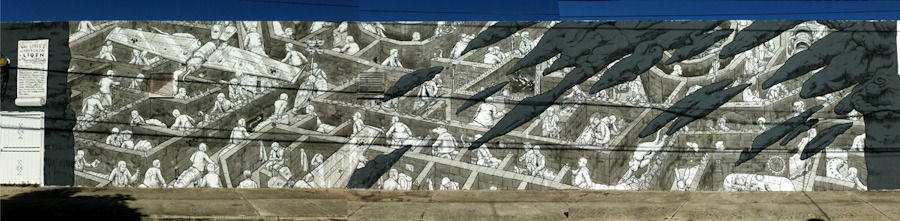
Image credit: Labyrinth by Liqen, Miami 2011

So guess what -- big data is really good at minimizing sample size errors, but also at magnifying systematic biases such as nonresponse bias like how vaccinated people are more likely to respond and marginalized groups less so -- in other words, bad data. Yet because the sample size is so large, we are tricked even more into thinking it must be good data. "Biases in the data get worse with bigger sample size." -phys.org

Here's an example: "Two in 10 respondents did not have a college degree, compared with four in 10 of all U.S. adults—and race and ethnicity—the fraction of black and Asian respondents was only half of what it is in the general population."

"Worse than no survey at all" they say.

Thanks Facebook, but you can keep your invasive mass surveillance system of the entire American population to yourself. 

via Harvard: Seth Flaxman, Unrepresentative big surveys significantly overestimate US vaccine uptake, Nature (2021). DOI: 10.1038/s41586-021-04198-4


On research methods and data quality:

Meng said he began thinking about the problems posed by big data during a visit to Harvard a decade ago by a U.S. Census Bureau official. The official met with a group of statisticians and asked them about the handling of data sets that were becoming available covering large percentages of the U.S. population. Using the hypothetical example of tax data collected by the IRS, he asked whether the statisticians would prefer a sample covering 5 percent of the population that they knew was representative of the larger population or IRS data that they weren't sure was representative but covered 80 percent of the population. The statisticians chose the 5 percent. "What if it was 90 percent?" the Census Bureau official asked. The statisticians still chose the 5 percent, because if they understood the data, their answer would likely be more accurate than even a much larger set with unknown biases.

And now for the hard stuff:
Completely unrelated image; I'm just collecting pictures from science articles of people holding vials in their fingers: Wastewater Filtration, Pacific Northwest National Laboratory and Andrea Starr, 2022

Drinking alcohol to stay healthy? That might not work, says new study
Nov 2021, phys.org

This is such a great example of how statistics works (and how it doesn't). The key word is "baseline".

We've been told for years, forever?, that one glass of red wine a day is not only not-bad, it's actually good for you. In health-speak, they call that "protective".

But this study shows us that there is no group of people that we can use as a baseline, who ---doesn't--- drink and yet who also ---doesn't--- have other health issues caused by having a history of substance abuse. In other words, when the only people who don't drink are people who are recovering from being addicted to alcohol (gross exaggeration), it means you can't find a baseline for a "normal" person. And if you can't find a baseline, then you can't measure anything. 

The majority of the alcohol abstainers at baseline were former alcohol consumers and had risk factors that increased the likelihood of early death. Former alcohol use disorders, risky alcohol drinking, ever having smoked tobacco daily, and fair to poor health were associated with early death among alcohol abstainers. Those without an obvious history of these risk factors had a life expectancy similar to that of low to moderate alcohol consumers. The findings speak against recommendations to drink alcohol for health reasons.

I tell my friends this story, and they ask the first question, a good question -- what about people like Seventh Day Adventists, or Muslims, they don't drink, why can't we use them? And the answer is the reason why health science is hard.

The reason you can't use groups of people who don't drink, is because that group would likely not represent the much larger group of, let's say, all the people in America. It doesn't even matter if it's a small group; making it bigger won't help. It doesn't work because it doesn't match. You can't compare the two groups because the people aren't the same. 

Another way we see this, and one which is becoming more evident to those who can fix it, is how certain groups of people (like undocumented immigrants) are under-represented in the data. If the majority of the datapoints are White, Christian and middle class, and you're none of those, then it's possible that the data is not relevant to you. Your baseline isn't represented, so whatever health effects you're trying to measure, they aren't being compared to someone like you. 

via Public Library of Science: John U, Rumpf H-J, Hanke M, Meyer C (2021) Alcohol abstinence and mortality in a general population sample of adults in Germany: A cohort study. PLoS Med 18(11): e1003819. doi.org/10.1371/journal.pmed.1003819

Partially Related:
This is also a correlate to the story of how lead was discovered in the air -- a geochemist was trying to do such sensitive work (to measure the age of the Earth!) that he kept picking up extra lead in his results, and could not figure out where it was coming from. But it turns out that it was in the air, having been vaporized in the internal combustion engines in our cars. And that story implies that until then, all other experiments being done were "wrong" because they didn't exclude the excess lead from the otherwise "normal" background. 

Last One -- Palmar Sweating:
During a nuclear war scare (1950's), all experiments into palmar sweating at a research institute had to be abandoned because the base level of the response had become so abnormal that the tests would have been meaningless.  (p188)
-The Naked Ape, Desmond Morris, 1967

Thursday, July 15, 2021

Measure This

I studied sustainable design in graduate school. By the end of my courses, before I even graduated, I was already disillusioned. The moment came during my last final exam. I was asked to run a carbon footprint calculator, inputting variables as close as possible to my living conditions, get the verdict on my contribution to the climate apocalypse (I think we were still calling it global warming at that time), and then give a critical opinion on the utility of such a thing as a carbon calculator. 

Image credit: Calculator, Encyclopedia Britannica

The purpose of the carbon calculator is to give you an idea about how "sustainable" your life is, and as a by-product, to give you some insight into how you can reduce your footprint. (And as I have now come to understand, the real reason for such a thing, by our own deception of course, is to deflect and divert the blame and the responsibility for this mess from consolidated corporate entities to private individuals, like me and you.)

They ask you questions about the square footage of your dwelling, number of windows, wall thickness and insulation values, and a million other things. I ran my numbers, got my expected dose of existential guilt, and proceeded to bash the buttons out of this carbon calculator with my recently-acquired knowledge of building performance, environmental control systems, and life cycle assessments of building materials. 

The calculator had good intentions, but I was just finishing a graduate program -- 7 years of studying how buildings use energy -- and I was not impressed.

For one, the calculator was asking the thickness of my walls and the insulation value (these are the number one variable in your energy usage*), but I was living in a basement at the time, so my walls were half buried in the ground, surrounded by the most insulating thing there is -- year-round 55-degree earth. They asked about square footage, but my ceiling was 12 inches lower than usual, because I was in a basement, which makes the volume of the room that needs to be heated/cooled substantially smaller; no metrics for ceiling height in the calculator. But that was just the beginning. They were asking questions about appliances and Energy Star ratings; I didn't even have a full-sized refrigerator, or a freezer, as a single adult, which is unusual to say the least. There was no option for "no freezer".

They never even got into food or food miles; 75% of my food at the time was coming from the bakery in town and the farm a half mile from my house. You eat a lot of food, which takes lots of energy, but the outsized bulk of that energy comes from moving it from the ground where it's grown to your mouth. I'm writing this from the New York metropolitan area; think how far that is from California, and how many miles per gallon, per pound of food you eat from Trader Joe's, and put that in your carbon calculator.

We had chickens; we fed them grain and they gave us eggs (and eventually chicken soup). Because so much of my food did not come from a supermarket, I had little garbage, and whatever garbage I had was composted or recycled; I didn't use the municipal garbage truck for 7 years. That wasn't measured in the calculator either. I rode my bike to get around as much as I could, and when I couldn't, I was driving a Honda Civic, one of the most fuel-efficient vehicles at the time. When I went on vacation, I took the bus instead of an airplane across the country. No vacation plans in the carbon calculator.  

I was into the challenge. I had joined together the nature-worshipping simplicity of Bodhi Thoreau with the science-based carbon accounting of the 21st century environmentalist movement. This wasn't just about buying an Energy Star refrigerator, this was about a way of life. I had rearranged in intricate detail myriad aspects of my life to lower my carbon impact, and yet my score on this calculator was pretty average.

I was pissed. And then I graduated. And then the American housing market collapsed, taking the world's economy with it, so I never did get a job as a sustainable architect. I survived nonetheless, and over the following decade, my unusual, low-impact, transcendental lifestyle changed by shades until I was putting ice cubes in my water (BTU points) and buying furniture from a store and not a garage sale (embodied energy points). I even had to start using an air conditioner because I moved out of the basement, and it got too hot sometimes, because you know, the climate apocalypse. 

I didn't give up on sustainability, but I did come to a realization about the individual approach to saving the planet -- it all evens out, and you're not making much of a difference. I'm not saying what you do has no effect, but I'll bet you don't realize that for just about every energy-saving task you commit yourself to, there's an energy-wasting by-product attached to that task on the other end that you don't even realize is there. You can't escape it; it's physics. The carbon calculator in the front of your mind is balanced by the calorie calculator in the back.


Just like the planet, we have limits too. And although we often ignore those limits, it doesn't make them go away. Keep filling that Solo cup at the backyard bbq, you know what I mean. Everything has to even out in the end. This report from the University of Geneva agrees:

Mental accounting is impacting sustainable behavior
Oct 2020, phys.org

"Human beings tend to create separate mental budget compartments where specific acts of consumption and payments are linked."

Hanging your clothes out to dry means you might be less likely to separate your recycling; your "sustainability budget" has been all used up. You just bought a brand new super-efficient air conditioner, so you're leaving all the windows open in the house, thinking you can afford a bit more waste now, with all that Energy Star bling.

They call it mental accounting in this report, but it's actually your subliminal physiological calorie counter that's running in the background of your front-end carbon calculator. "Being sustainable" takes energy, both mental and physical. Where do you think single-serving silverware came from?

The point here is to take it easy. I mean, the planet it is going to kill us for sure, but you're not going to stop it on your own by becoming a low-impact warrior. An electric car might help, maybe a weekday vegetarian? But to sacrifice your way of life at the altar of sustainability is not going to do what you think it's going to do. Carbon in, carbon out.

*Solar geometry is actually the most important of all, but it's too unlikely that you won't be able to do anything about. If you can, put the long side facing the south, with awnings angled to block the sun in the summer but allow it in the winter, i.e., solar geometry. 
Just the Gulf of Mexico, on fire. July 2021.

Notes:
via University of Geneva: Ulf J. J. Hahnel et al. Mental accounting mechanisms in energy decision-making and behaviour, Nature Energy (2020). DOI: 10.1038/s41560-020-00704-6

Post Script, on equilibrium and sociothermodynamics:
If you change the order of the questions on a survey, respondents will change their answer, BUT when compiling all the answers, they will always cancel out; ALWAYS, an absolute measure that is almost never seen in social science research: Quantum Question Equality, Network Address, 2014.

Mostly unrelated post script:
Lots of people think astrology and astronomy are the same thing: Astronomological, Network Address, 2014.

Monday, July 12, 2021

Artificial Olfactory Camouflage, Deep Forensics and Other Fake News

Scientists used 'fake news' to stop predators from killing endangered birds—and the result was remarkable
Mar 2021, phys.org

There's visual fakes and auditory imposters, but rarely do we get to hear about artificial olfactory camouflage: 
Odors emanating from the shorebirds' feathers and eggs attract these scent-hunting mammals, which easily find the nests.

Five weeks before the shorebirds arrived for their breeding season in 2016, we mixed the odors with Vaseline and smeared the concoction on hundreds of rocks over two 1,000-hectare study sites. We did this every three days, for three months.

The predators were initially attracted to the odors. But within days, after realizing the scent would not lead to food, they lost interest and stopped visiting the site.

via: Grant L. Norbury et al. Misinformation tactics protect rare birds from problem predators, Science Advances (2021). DOI: 10.1126/sciadv.abe4164
Image credit: Hard to believe, but this is a picture of Jezero Crater on Mars, taken by the robot named Perseverance, 2021.

How to spot deepfakes? Look at light reflection in the eyes
Mar 2021, phys.org

From the researchers who brought you the blinkrate solution to deepfake video (the fakes give it away because they blink funny).

This one is similar, and it's because both eyes are supposed to have the same image being reflected. And it happens that way every time, no matter what, because our eyeballs are always symmetrical, something about bilateria or binocular vision.

Whereas deepfake generators are good at picking out the idiosyncrasies, the imperfections, it's the perfect part that are their weakness. And I guess this is one of the few things we have that are perfect. Another one? Blowing spit bubbles out of your mouth, it's the only geometrically perfect thing the human body can create.   

The "Deepfake-o-meter," by the way.

via University at Buffalo: Exposing GAN-generated Faces Using Inconsistent Corneal Specular Highlights. arXiv:2009.11924v2 [cs.CV] arxiv.org/abs/2009.11924

Lawyers used sheepskin as anti-fraud device for hundreds of years to stop fraudsters pulling the wool
Mar 2021, phys.org

Just like modern quantum cryptography:
Legal documents dating from the 13th to 20th century, and have discovered they were almost always written on sheepskin, rather than goatskin or calfskin vellum. This may have been because the structure of sheepskin made attempts to remove or modify text obvious. Attempts to scrape off the ink would result in these layers detaching—known as delamination—leaving a visible blemish highlighting any attempts to change any writing.

via University of Exeter:  Scratching the surface: the use of sheepskin parchment to deter textual erasure in early modern legal deeds, Doherty et al. Heritage Science 2021, DOI: 10.1186/s40494-021-00503-6
MyHeritage offers 'creepy' deepfake tool to reanimate dead
Mar 2021, BBC News

Dead people brought back to life, just like you've always wanted. 

A growing problem of 'deepfake geography' - How AI falsifies satellite images
Apr 2021, phys.org

Let's say you wanted to make it look like the rainforest wasn't on fire -- you can take out the smoke plumes. Or maybe you want to create a story about a fake explosion somewhere, you put in some smoke plumes. Advanced technology can help you make really believable forgeries. 
The study's goal was not to show that geospatial data can be falsified, Zhao said. Rather, the authors hope to learn how to detect fake images so that geographers can begin to develop the data literacy tools, similar to today's fact-checking services, for public benefit.

via University of Washington: Cartography and Geographic Information Science, DOI: 10.1080/15230406.2021.1910075
Post Script: 
Don't forget that fake maps have been a thing forever. The mapmakers themselves would put fake towns or streets in their maps to stop people from making copies. Even dictionary-makers employ this security measure with fake words. It's called a copyright trap, and if you copied the trap and didn't know it, the real mapmaker could identify your copy as their original.

And Paper Street was where Tyler Durden lived in Fight Club, but we don't talk about that.

Post Post Script:
Recognizing liars from the sound of their voice
Feb 2021, phys.org

AI can tell us all the things we already know but couldn't prove with science until now (Maybe like fractals?). We know when people are lying. Lying is a two way street; it requires a kind of social permission that we give to each other for some reason. 

Thursday, January 14, 2021

On Self and Individuality

What is an individual? Information theory may provide the answer
Apr 2020, phys.org

via the Santa Fe Institute:
The information theory of individuality (or ITI) describes emergent agency at different scales and with distributed communication networks.

The researchers look to structured information flows between a system and its environment, seeing the individual in terms of "dynamical processes and not as stationary objects".

Their model balances self-regulation and environmental influence at different levels from environmentally-scaffolded forms like whirlpools, to partially-scaffolded colonial forms like coral reefs and spider webs, to organismal individuals that are sculpted by their environment but strongly self-organizing.

Each is a strategy for propagating information forward through time.

"Individuality is about temporal uncertainty reduction."


Post Script:
Perhaps the biggest implication of this work is in how it places the observer at the center of evolutionary theory. "Just as in quantum mechanics," Krakauer says, "where the state of a system depends on measurement, the measurements we call natural selection dictate the preferred form of the individual. Who does the measuring? What we find depends on what the observer is capable of seeing." [link]
Notes:
David Krakauer et al. The information theory of individuality, Theory in Biosciences (2020). DOI: 10.1007/s12064-020-00313-7
 

Yotta Yotta Yotta


The most personal device - Researchers probe how much psychological data smartphones generate
Jul 2020, phys.org

Your data is making me rich. 

Here's some of what I get from your identity-specific data collection device: communication patterns, social behavior and mobility, choice and consumption of music, selection of apps used, temporal distribution of phone usage throughout the day.

Granted, I will need a supercomputer to build and train my robot, but once I'm done, I can narrow down your Big 5, and sell you a vacuum, or a candidate. Maybe. But I do know who you are, maybe better than you do. 

Self-reported extraversion signals come from your social patterns, your degree of  conscientiousness can be seen in the timing of your daily rhythms, and to know if you score high on "openness" we needs lots and lots of random datapoints, like yottas of data. So thanks. 

Also:

Zeptoseconds - New world record in short time measurement
Oct 2020, phys.org

Thursday, August 8, 2019

In The Fractal Closet


Behold the Mandelbrot Set, a world-renowned image and a powerful symbol of infinity. The mathematical concept it illustrates is one of the most intuitive --it describes self-similarity-- and yet it remained unknown, even unbeckoned and unsought-after, until the advent of the modern computer. This dormant formula only came to life after iterations so numerous as to be considered infinite were the human hand the one computing. The computer showed us what a simple formula could do, if you scale it up. It shows us a behavior, not of things, but of space-time itself.


I wake up to the sound of rain, splattering. Then I wake up some more, and realize it's not rain.

It's coming from the ceiling. The plumbing. One hundred years of building and habitating and changing and changing has left me with an unfortunate design that is now leaking water from a ruptured pipe above the kitchen ceiling, and into my pantry closet.

Now I am fully awake, and fully out of bed, and pulling out all my things from the closet. I am transporting a 3x3' closet's worth of possessions to a 10x10' back room, and hastily.

The plumber has come and gone, and the handyman who repaired the closet. It's time to replace my things, to fill the closet again. But all I can do is stare at the sprawling piles of stuff, that was once compacted, compressed into a 3x3' closet. How did all this stuff possibly fit in that little closet. And it occurs to me -- this is fractals.

link
We are all familiar with the general idea of fractals, the Mandelbrot set, the self-similarity, the LSD. But that intuitively recognizable feature is an outcome of an underlying objective. The reason a fractal looks the way it does is because of its space-filling behavior, which itself is a function of growth limited by space. In order to keep jamming more and more stuff into that space, you have to follow the fractal formula.

A better example of fractals is not a tie-dye t-shirt but the coast of England. If you were to measure the coastline of England with a one-mile long measuring stick, it would be a pretty vague approximation of the coastline, but with a defined length.

Then if you were to measure with a one-foot stick (which would be ironic), you would get a much better approximation, but also a much larger coastline, because now that your shorter imperial stick can reach into all the nooks and crannies, it makes the total length that much longer. In fact, the smaller your measuring stick, the longer the coastline.

By this reasoning, the length of the coastline is infinite. In other words, it is not a 1-D line at all. Yet neither is it 2-D. It is 1.456-D, or maybe 1.879-D; it is a fraction of a dimension.


When you fill a closet with things, it doesn't just happen all at once. Sure, you start by "filling" the closet. But over time, as you use the things and remove things, add more things, and rearrange, you are filling the space more and more. But you're not just filling it with things now, you're filling it with intelligence.

The more time goes by, and the more you use things, remove, add and rearrange, you are going to fill all the nooks and crannies of that 3-D space until it is no longer 3-D. It becomes a fraction of a dimension.

Then, when you take everything back out, you collapse the extra fraction that you helped to create. When the things come back into normal 3-D space, they seem bigger in aggregate, they seem to have gained size in the process. The closet is now sprawling across an entire room. That difference is fractals. (It's also because the 3-D closet is now spread across a 2-D floor; but that doesn't account for all of it's 'enlargement', as the same phenomenon is experienced with filling a box truck on moving day).

If we could extrapolate this to the 4th dimension, what would we be talking about? Or do I need to be on acid to have that conversation. Maybe an easier question would be -- what does the airtight Tetris block have that the jumbled pile of pieces does not? (Well, it doesn't have air, obviously.) But besides that, it's the entropy. The block is ordered, and the pile disordered. The pile is a random mess, and the block an intelligent artifact.

I hadn't thought of my catch-all pantry closet as an intelligent artifact, yet here it is, an entropy-reversing portal that uses intelligence to loop out of it's limited dimensions.


Post Script:
It is still hard to see the pantry closet as having something to do with intelligence. Try taking it out and putting it all back so it fits. Then you'll see how much "intelligence" went into its arrangement. The difference is that in its natural state, the closet possesses an accumulated intelligence. Over time, as you use all the things in the closet, your intelligent behavior leaves its residue on the things in it. It is a storage depot, not of things, but of an arrangement.

Post Post Script:
[I start looking up these deepdream images and I have to post them all.]

link
link
[can't find source bc pinterest; thanks obama]


(Virtual Art) by Rein Bijlsma
link

Deep Dream Burger by Matthias Hauser

Style Transfer, which is not the same as DeepDream, but does use neural nets, i.e., robot brains. Link.


Wednesday, January 23, 2019

Measure Me


There is something recursive about measuring the thing that we use to measure things that we then use to measure.

A gram used to be the weight of a cubic centimeter of water, and a (centi-)meter was the circumference of the Earth divided a million times, thus the Earth is 40 million meters.

But dematerialization has been a thing for much longer than the macro image series mania (called memes nowadays) that has by now thoroughly taken over our cultural ecosystem.

And now, the standard of weight all around the world no longer comes from an object you can hold in your hand, but from a measurement of electricity. A meter, by the way, is no longer determined by the Earth, but by a measurement of an electromagnetic wave, which is about as close as you can get to being immaterial.

Post Script:
In a slight twist of categorical confusion, the British Thermal Unit (BTU) is the amount of energy it takes to heat one pound of water by one degree F, whereas the metric version is a Calorie, or the amount of energy it takes to heat one gram of water by 1 degree C. Regardless, I second the suggestion that we quick change everything to metric while the government is on pause.

Notes:
Kilogram gets a new definition
Dec 2018, BBC

Radiolab episode about the meter

Empericism
In philosophy, empiricism is a theory that states that knowledge comes only or primarily from sensory experience. 

Metronomy is a London-based electro rock band, check them out.