Showing posts with label biomimicry. Show all posts

Friday, April 4, 2025

Making Materials Progress


Make it stop: 

'Living' ceramics utilize bacteria for gas sensing and carbon capture
Dec 2024, phys.org

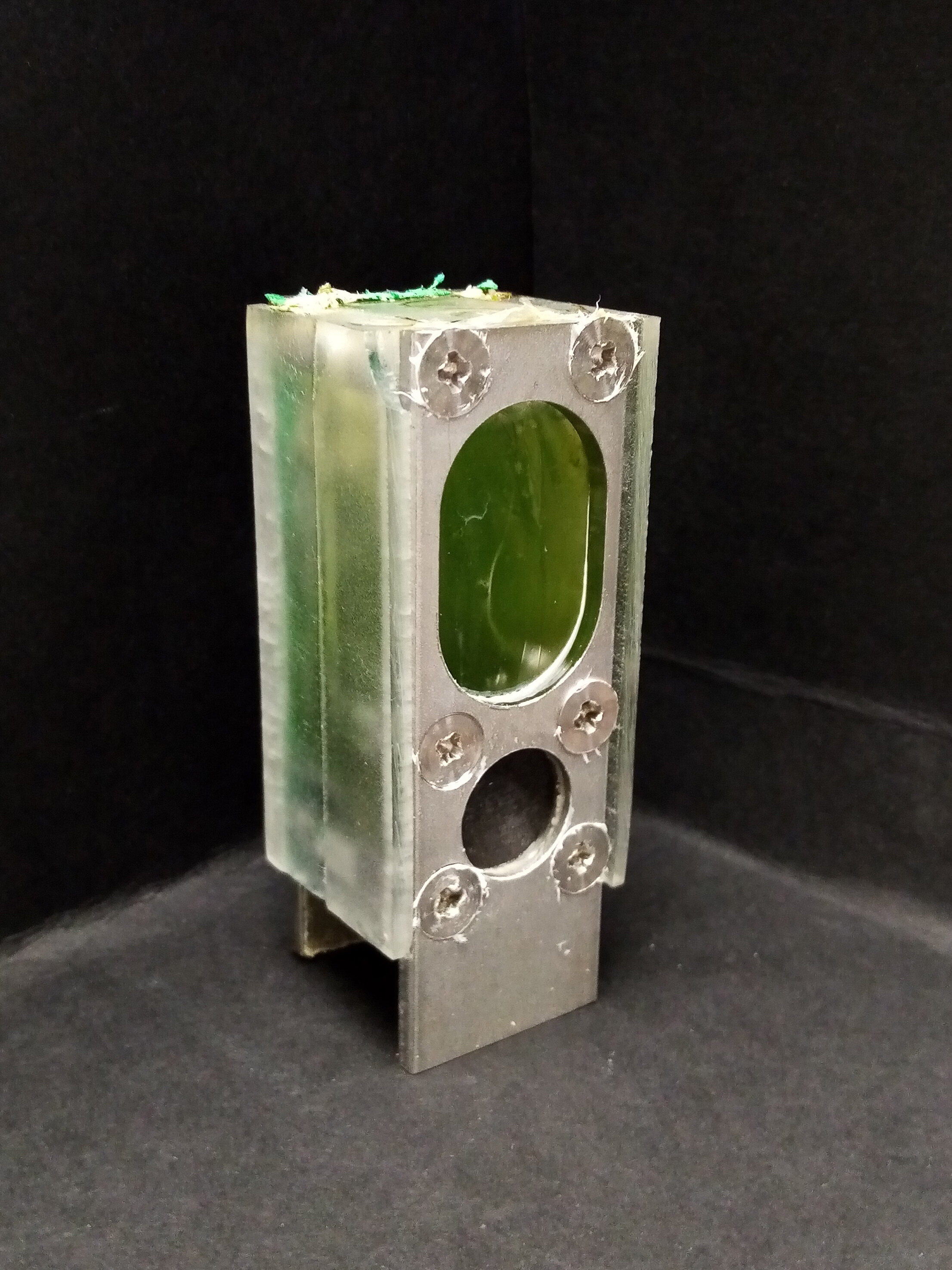
The work involved first 3D printing stacked, ceramic, spiral structures that could stand on their own. The structures were printed with pits on their outer surfaces to give bacteria a place to live. The larger pits were used as a way to channel nutrients to the bacteria.

To further ensure the bacteria could feed for an extended period of time, they set the structures in shallow pools of nutrient solutions. As the water in the solutions evaporated, the nutrients were pulled up to the pits containing the nutrients via capillary action. The bacteria were then allowed to multiply, filling the pores that had been designed for them. Testing showed they could survive without further nutrients for up to two weeks.

The research team used different types of bacteria for different purposes—with photosynthetic cyanobacteria, for example, the structure could serve as a CO2 extraction device, pulling the gas from the air. They also tried Escherichia coli and found that they made the structure a formaldehyde detector.

via ETH Zurich: Alessandro Dutto et al, Living Porous Ceramics for Bacteria‐Regulated Gas Sensing and Carbon Capture, Advanced Materials (2024). DOI: 10.1002/adma.202412555


Self-adjusting shading system mimics pine cones for energy-autonomous weather response
Jan 2025, phys.org

"We are achieving a shading system that opens and closes autonomously in response to changes in the weather, without the need for operational energy or any mechatronic elements. The bio-material structure itself is the machine."

It's based on pine cones. In high humidity, the cellulosic materials absorb moisture and expand, causing the printed elements to curl and open. Conversely, in low humidity, the cellulosic materials release moisture and contract, causing the printed elements to flatten and close.

via University of Stuttgart Institute for Computational Design and Construction: Tiffany Cheng et al, Weather-responsive adaptive shading through biobased and bioinspired hygromorphic 4D-printing, Nature Communications (2024). DOI: 10.1038/s41467-024-54808-8


Unoccupied housing in China's urban areas emitting massive amounts of carbon, study finds
Mar 2025, phys.org

Prior research has shown that by 2021, approximately 17% of homes built in cities in China were unoccupied. Some in the field have suggested that the number has only grown since then, to between 20 and 65 million unoccupied units. This new research found that approximately 17.4% of all new residential units built between 2001 and 2018 have never been occupied

The total the team came up with was 55.81 million tons of carbon emissions solely due to the unoccupied housing units, which they note represent approximately 6.9% of China's total residential emissions. (One source of emissions is the footprint of the materials, and the second comes from heating and cooling, because most of the units are apartment buildings with central heating and cooling.)

via Tsinghua University: Hefan Zheng et al, Unused housing in urban China and its carbon emission impact, Nature Communications (2025). DOI: 10.1038/s41467-025-57217-7

Thursday, August 1, 2024

Manplants, Transplants and Anthropologizing of the Biosphere


Researchers show that introduced tardigrade proteins can slow metabolism in human cells
Mar 2024, phys.org

This work examines the mechanisms used by tardigrades to enter and exit from suspended animation when faced by environmental stress, and provides additional evidence that tardigrade proteins eventually could be used to make life-saving treatments available to people where refrigeration is not possible—and enhance storage of cell-based therapies, such as stem cells.

"Amazingly, when we introduce these proteins into human cells, they gel and slow down metabolism, just like in tardigrades"

The whole process is reversible. "When the stress is relieved, the tardigrade gels dissolve, and the human cells return to their normal metabolism"

via University of Wyoming Department of Molecular Biology, University of Bristol, Washington University in St. Louis, University of California-Merced, University of Bologna, University of Amsterdam: S. Sanchez‐Martinez et al, Labile assembly of a tardigrade protein induces biostasis, Protein Science (2024). DOI: 10.1002/pro.4941


By growing animal cells in rice grains, scientists dish up hybrid food
Feb 2024, phys.org

"hybrid meat rice" 

Rice grains are porous and have organized structures, providing a solid scaffold to house animal-derived cells in the nooks and crannies. Certain molecules found in rice can also nourish and promote the growth of these cells, making rice an ideal platform.

The team first coated rice with fish gelatin, a safe and edible ingredient that helps cells latch onto the rice better. Cow muscle and fat stem cells were then seeded into the rice and left to culture in the petri dish for nine to 11 days. The harvested final product is a cell-cultured beef rice with main ingredients that meet food safety requirements and have a low risk of triggering food allergies.

via Yonsei University in Korea: Rice grains integrated with animal cells: A Shortcut to a Sustainable Food System, Matter (2024). DOI: 10.1016/j.matt.2024.01.015.


Montana man used animal tissue and testicles to breed 'giant' sheep for sale to hunting preserves
Mar 2024, AP News

Court documents describe a yearslong conspiracy, beginning in 2013, in which Schubarth and at least five other people sought to create “giant sheep hybrids” by cross-breeding different species. Their goal was to garner high prices from hunting preserves where people shoot captive trophy game animals for a fee.

Using biological tissue obtained from a hunter who killed a wild sheep in Kyrgyzstan belonging to the world’s largest species of the animals — Marco Polo argali sheep — Schubarth procured cloned embryos of the animal from a lab, according to court documents.

The embryos were later implanted in a ewe, resulting in a pure Marco Polo argali sheep that Schubert named “Montana Mountain King,” the documents show. Semen from Montana Mountain King was used to artificially impregnate other ewes to create a larger and more valuable species of sheep, including one offspring that he reached an agreement to sell to two people in Texas for $10,000, according to the documents.

In 2019, Schubarth paid $400 to a hunting guide for testicles from a trophy-sized Rocky Mountain bighorn sheep killed in Montana. Schubarth extracted semen from bighorn sheep testicles and used it to breed large bighorn sheep and sheep crossbred with the argali species, the documents show.

Wednesday, January 17, 2024

Color Check


Butterfly-inspired films create vibrant colors while passively cooling objects
Aug 2023, phys.org

Morpho-inspired nanofilms -- a disordered material of rough frosted glass under a multilayer material made of titanium dioxide and aluminum dioxide, then placed on a silver layer that reflects all light. Although this type of passive photonic thermal management has been accomplished before, it has only been used with white or clear objects because it is difficult to maintain a wide viewing angle and high color saturation. "Thanks to the layered structure we developed, we were able to extend the passive cooling method from colorless objects to colorful ones while preserving color performance," said Wang. "In other words, our blue film looks blue across a large range of viewing angles and doesn't heat up because it reflects all the light."

via Shenzhen University: Wanlin Wang et al, Cooling colors below the ambient temperature, Optica (2023). DOI: 10.1364/OPTICA.487561


Inspired by butterfly wings, researchers develop a soft, color-changing system for optical devices
Sep 2023, phys.org

The new pixelated, soft, color-changing system called a Morphable Concavity Array (MoCA) has a top layer of photonic crystal elastomer actuator (PC-EA) film and a bottom layer of a hole array (lattice with regularly spaced round holes), where ethanol can be added to make the one-half of the top layer swell, resulting in  tension that pulls the other-half of the top layer downward into the hole, producing a dish-like concave shape that acts as a pixel. 

MoCA was inspired by the structures on butterfly wings called dual-color micro-concavities that produce vibrant, iridescent colors and are called photonic crystals. 

via University of Hong Kong: Yi Pan et al, Pixelating Responsive Structural Color via a Bioinspired Morphable Concavity Array (MoCA) Composed of 2D Photonic Crystal Elastomer Actuators, Advanced Science (2023). DOI: 10.1002/advs.202300347


Chameleon-inspired coating could cool and warm buildings through the seasons
Sep 2023, phys.org

Namaqua chameleons of southwestern Africa use light gray to reflect sunlight and dark brown to absorb heat. These thermochromic microcapsules were sprayed or brushed onto a metal surface that when heated to 68 degrees, began to change from dark to light gray; at 86 degrees it reflected 93% of solar radiation.

For anyone who lived in the Northeast in October 2023 and had to use both their air conditioner and heater in the same week -

"During spring and fall, the new coating was the only system that could adapt to the widely fluctuating temperatures changes, switching from heating to cooling throughout the day."

via School of New Energy, Harbin Institute of Technology, Weihai China: "Warm in Winter and Cool in Summer" Scalable Biochameleons Inspired Temperature Adaptive Coating with Easy Preparation and Construction, Nano Letters (2023). DOI: 10.1021/acs.nanolett.3c02733

AI Art - Close Up of an Eye 2 - 2024

From glowing cats to wombats, fluorescent mammals are much more common than you'd think
Oct 2023, phys.org

Almost every mammal we studied showed some form of fluorescence in the  fur, spines and even skin and nails.

In particular, we noticed that white and light-colored fur is fluorescent, with dark pigmentation preventing fluorescence. For example, a zebra's white stripes fluoresced while the dark stripes didn't. Nocturnal mammals were more fluorescent, while aquatic species were less fluorescent than those that burrowed, lived in trees, or on land.

via Curtin University and the Western Australian Museum: Kenny J. Travouillon et al, All-a-glow: spectral characteristics confirm widespread fluorescence for mammals, Royal Society Open Science (2023). DOI: 10.1098/rsos.230325


Paint that can change colors? The skin of an octopus holds the key, researchers say
Oct 2023, phys.org

Xanthommatin is a naturally occurring dye present in the bodies of cephalapods like octopi and squid. Previously the researchers found that mixing different amounts of titanium dioxide with xanthommatin could speed up color change or add to the intensity of the color shift.

via Northeastern University: Cassandra L. Martin et al, Color‐Changing Paints Enabled by Photoresponsive Combinations of Bio‐Inspired Colorants and Semiconductors, Advanced Science (2023). DOI: 10.1002/advs.202302652


Morpho butterfly nanostructure inspires technology for bright, balanced lighting
Oct 2023, phys.org

Two-dimensional nanopatterns in common transparent polydimethylsiloxane elastomer are an effective optical diffuser for short- and long-wavelength light. The diffuser surface patterns were tailored to optimize the performance for blue and red light, and for self-cleaning properties.

via Osaka University: Kazuma Yamashita et al, Development of a High‐Performance, Anti‐Fouling Optical Diffuser Inspired by Morpho Butterfly's Nanostructure, Advanced Optical Materials (2023). DOI: 10.1002/adom.202301086


Tuesday, September 6, 2022

Imitation is the Sincerest Form of Flattery


Moth wing–inspired sound absorbing wallpaper in sight after breakthrough
Jun 2022, phys.org

Moth wing as a natural occurring acoustic absorbing metasurface.

via University of Bristol: Moth wings as sound absorber metasurface, Proceedings of the Royal Society A: Mathematical and Physical Sciences (2022). DOI: 10.1098/rspa.2022.0046


Dynamic building facades inspired by marine organisms could reduce heating, cooling and lighting costs
Jul 2022, phys.org

Optofluidic cells:
The prototype optofluidic cells consist of a layer of mineral oil approximately one millimeter thick, sandwiched between two transparent sheets of plastic. Through a tube connected to the center of the cell, the researchers can inject a small amount of water containing a pigment or dye that creates a bloom of color controlled via a digital pump that runs in both directions.

"I don't think it's stretching the analogy too much to see buildings as living organisms. They have a metabolism, in terms of inward and outward energy flow. And they must respond to changing environmental conditions to maintain a comfortable and well-functioning interior."

via University of Toronto: Raphael Kay et al, Decapod-inspired pigment modulation for active building facades, Nature Communications (2022). DOI: 10.1038/s41467-022-31527-6


Artificial cilia could someday power diagnostic devices
May 2022, phys.org

As a bonus, the team created a cilia device that is equipped with a complementary metal-oxide-semiconductor (CMOS) clock circuit—essentially an electronic "brain" that allows the cilia to operate without being tethered to a conventional computer system. That opens the door to developing a host of low-cost diagnostic tests that could be performed in the field.

via Cornell: Wei Wang et al, Cilia metasurfaces for electronically programmable microfluidic manipulation, Nature (2022). DOI: 10.1038/s41586-022-04645-w


Operating a 'smart home' by breath control
Jul 2022, phys.org

For users who can't speak or use their limbs to program a device, smart technology's benefits are nearly impossible to access. Cao and his collaborators used a technology known as triboelectric nanogenerators (TENGs), or triboelectrification, to make the "breathing-driven Human-Machine Interface (HMI) system".

via Case Western Reserve University: Yaokun Pang et al, Self‐Powered Multifunctional Human–Machine Interfaces for Respiratory Monitoring and Smart System Control, Advanced Materials Interfaces (2022). DOI: 10.1002/admi.202201202

Also: Dong Wook Kim et al, Material aspects of triboelectric energy generation and sensors, NPG Asia Materials (2020). DOI: 10.1038/s41427-019-0176-0


Skin So Soft


AKA Wearable Skin Asks What's My Retronym

New 'fabric' converts motion into electricity
Jun 2022, phys.org

In a proof-of-concept experiment reported in the scientific journal Advanced Materials in April, the NTU Singapore team showed that tapping on a 3cm by 4cm piece of the new fabric generated enough electrical energy to light up 100 LEDs (capable of 2.34 watts per square meter).

The electricity-generating fabric is an energy harvesting device that turns vibrations produced from the smallest body movements in everyday life into electricity either when pressed or squashed (piezoelectricity), or when in friction with other materials (triboelectric effect).

This stretchable electrode made by screenprinting an "ink" comprising silver and styrene-ethylene-butylene-styrene (SEBS) is then attached to a piece of nanofibre fabric made of poly(vinylidene fluoride)-co-hexafluoropropylene (PVDFHPF), and lead-free perovskites.

Very new meaning to Rainwater Harvesting:
The team recently developed a type of film that could potentially be mounted on roofs or walls to harness the energy produced from wind or raindrops falling onto the film.

via Nanyang Technological University: Feng Jiang et al, Stretchable, Breathable, and Stable Lead‐Free Perovskite/Polymer Nanofiber Composite for Hybrid Triboelectric and Piezoelectric Energy Harvesting, Advanced Materials (2022). DOI: 10.1002/adma.202200042

Image credit: interband collective excitations in twisted bilayer graphene, Matteo Ceccanti, 2021 [link


Artificial skin gives robots sense of touch and beyond
Jun 2022, phys.org

This new skin technology is part of a robotic platform that integrates the artificial skin with a robotic arm and sensors that attach to human skin. A machine-learning system that interfaces the two allows the human user to control the robot with their own movements while receiving feedback through their own skin.

Called the M-Bot:

Gelatinous hydrogel makes robot fingertips a lot more like our own, and are embedded with sensors to detect the world around it. These sensors are literally printed onto the skin in the same way that an inkjet printer applies text to a sheet of paper.

Some applications:

"Graphene impregnated with platinum detects the explosive TNT very quickly and selectively. For a virus, we are printing carbon nanotubes, which have very high surface area, and attaching antibodies for the virus to them. This is all mass producible and scalable."

via California Institute of Technology: You Yu et al, All-printed soft human-machine interface for robotic physicochemical sensing, Science Robotics (2022). DOI: 10.1126/scirobotics.abn0495


Artificial skin capable of feeling pain could lead to new generation of touch-sensitive robots
Jun 2022, phys.org

Artificial skin with a new type of processing system based on "synaptic transistors," which mimics the brain's neural pathways in order to learn to react to external stimuli.

Data from the electronic skin sensors is usually sent to a computer to be processed and interpreted, but that data is too big, introducing delays.

The Glasgow team uses the human peripheral nervous system as inspiration with artificial synapses on a circuit built into the skin that process stimuli at the point of contact, reducing it to only the vital information before it is sent to the brain. 

The team used the varying output of that voltage spike to teach the skin appropriate responses to simulated pain, which would trigger the robot hand to react. By setting a threshold of input voltage to cause a reaction, the team could make the robot hand recoil from a sharp jab in the center of its palm.

via University of Glasgow: Fengyuan Liu et al, Printed Synaptic Transistors based Electronic Skin for Robots to Feel and Learn, Science Robotics (2022). DOI: 10.1126/scirobotics.abl7286.

Intel's new Core i9-11980HK leads the 11th-gen laptop CPU lineup

Scientists develop novel pain-perception biomimetic skin enabled by strain-perception-strengthening effect
Jun 2022, phys.org

Proposed strain-perception-strengthening (SPS) enabled biomimetic soft skin, which realizes the dynamic transformation from tactile to pain perception.

Elastic and conductive film (ECF), composed of elastomeric thin-film and assembled graphene nanosheets with an interlocked structural interface.

Pufferfish-inspired.

via Chinese Academy of Sciences Ningbo Institute of Materials Technology and Engineering: Peng Xiao et al, Biomimetic Skins Enable Strain‐Perception‐Strengthening Soft Morphing, Advanced Functional Materials (2022). DOI: 10.1002/adfm.202201812


Researchers develop a wearable textile exomuscle
Jun 2022, phys.org

The Myoshirt: a soft, wearable exomuscle for the upper body

via ETH Zurich: Anna-Maria Georgarakis et al, A textile exomuscle that assists the shoulder during functional movements for everyday life, Nature Machine Intelligence (2022). DOI: 10.1038/s42256-022-00495-3


Rubbery camouflage skin exhibits smart and stretchy behaviors
Jun 2022, phys.org

Artificially intelligent bioelectronic skin devices that mimics both the elasticity and the neurologic functions of cephalopod skin, with potential applications for neurorobotics, skin prosthetics, artificial organs and more.  

"Although several artificial camouflage skin devices have been recently developed, they lack critical noncentralized neuromorphic processing and cognition capabilities, and materials with such capabilities lack robust mechanical properties," Yu said. "Our recently developed soft synaptic devices have achieved brain-inspired computing and artificial nervous systems that are sensitive to touch and light that retain these neuromorphic functions when biaxially stretched."  

The Future: Where every molecule computes, and every desire an algorithm (long live the mass transference device).

via Pennsylvania State University: Hyunseok Shim et al, Artificial neuromorphic cognitive skins based on distributed biaxially stretchable elastomeric synaptic transistors, Proceedings of the National Academy of Sciences (2022). DOI: 10.1073/pnas.2204852119


Personal health trackers may include smart face mask, other wearables
Jun 2022, phys.org

Metallic conductor called MoO2 for a bioelectronic facemask.

via University of Missouri: Zhilu Ye et al, A Breathable, Reusable, and Zero-Power Smart Face Mask for Wireless Cough and Mask-Wearing Monitoring, ACS Nano (2022). DOI: 10.1021/acsnano.1c11041

And: Ganggang Zhao et al, Laser-scribed conductive, photoactive transition metal oxide on soft elastomers for Janus on-skin electronics and soft actuators, Science Advances (2022). DOI: 10.1126/sciadv.abp9734


Future robots could 'see' using new type of electronic skin
Jul 2022, phys.org

The breakthrough development involves a newly-developed method of printing microscale semiconductors made from gallium arsenide onto a flexible plastic surface, and which could provide future robots with an electronic skin capable of "seeing" light beyond the range of human vision.

via University of Glasgow: Ayoub Zumeit et al, Printed GaAs Microstructures‐Based Flexible High‐Performance Broadband Photodetectors, Advanced Materials Technologies (2022). DOI: 10.1002/admt.202200772


Hearing better with skin than ears: Research team develops a sound-sensing skin-attachable acoustic sensor
Jul 2022, phys.org

"auditory electronic skin"

Microelectro-mechanical systems (MEMS)-based microphone structure using polymer materials, a quarter of a fingernail in size and thickness of a few hundred micrometers. The microphone can be attached to large surface areas of the body or even on the finger.

The research team plans to create auditory electronic skin by integrating it with skin-attachable pressure and temperature sensors, flexible displays, and others.

via Pohang University of Science & Technology: Siyoung Lee et al, A High‐Fidelity Skin‐Attachable Acoustic Sensor for Realizing Auditory Electronic Skin, Advanced Materials (2022). DOI: 10.1002/adma.202109545


Artificial skin sweats on command
Jul 2022, phys.org

Sweats on command.

via Eindhoven University of Technology: Yuanyuan Zhan et al, Light‐ and Field‐Controlled Diffusion, Ejection, Flow and Collection of Liquid at a Nanoporous Liquid Crystal Membrane, Angewandte Chemie International Edition (2022). DOI: 10.1002/anie.202207468


Stretchy computing device feels like skin—but analyzes health data with brain-mimicking artificial intelligence
Aug 2022, phys.org

Rather than work like a typical computer, the chip — called a neuromorphic computing chip — functions more like a human brain, able to both store and analyze data in an integrated way.

via University of Chicago Pritzker School of Molecular Engineering: Shilei Dai et al, Intrinsically stretchable neuromorphic devices for on-body processing of health data with artificial intelligence, Matter (2022). DOI: 10.1016/j.matt.2022.07.016


Researchers engineer biofilm capable of producing long-term, continuous electricity from your sweat
Aug 2022, phys.org

Biofilm that harvests the energy in evaporation and converts it to electricity.

That's because this biofilm—a thin sheet of bacterial cells about the thickness of a sheet of paper—is produced naturally by an engineered version of the bacteria Geobacter sulfurreducens. G. sulfurreducens is known to produce electricity and has been used previously in "microbial batteries" to power electrical devices. But such batteries require that G. sulfurreducens is properly cared for and fed a constant diet. By contrast, this new biofilm, which can supply as much, if not more, energy than a comparably sized battery, works, and works continuously, because it is dead. And because it's dead, it doesn't need to be fed.

It makes energy from the moisture on your skin. Since the surface of our skin is constantly moist with sweat, the biofilm can "plug-in" and convert the energy locked in evaporation into enough energy to power small devices.

via University of Massachusetts Amherst: Xiaomeng Liu et al, Microbial biofilms for electricity generation from water evaporation and power to wearables, Nature Communications (2022). DOI: 10.1038/s41467-022-32105-6


Wearable technology measures mental activity through the skin
Aug 2022, phys.org

Measures mental activity using electrodermal activity — an electrical phenomenon of the skin that is influenced by brain activity related to emotional status.

The overarching goal—a Multimodal Intelligent Noninvasive brain state Decoder for Wearable AdapTive Closed-loop arcHitectures, or MINDWATCH.

via NYU Tandon School of Engineering: Rafiul Amin et al, Physiological characterization of electrodermal activity enables scalable near real-time autonomic nervous system activation inference, PLOS Computational Biology (2022). DOI: 10.1371/journal.pcbi.1010275


Engineers fabricate a chip-free, wireless, electronic 'skin'
Aug 2022, phys.org

Conforms to the skin like electronic Scotch tape, using a film of piezoelectric gallium nitride paired with a conducting layer of gold.

The device was sensitive enough to vibrate in response to a person's heartbeat, as well as the salt in their sweat, and that the material's vibrations generated an electrical signal that could be read by a nearby receiver to wirelessly transmit sensing information, without the need for a chip or battery.

via MIT: Yeongin Kim et al, Chip-less wireless electronic skins by remote epitaxial freestanding compound semiconductors, Science (2022). DOI: 10.1126/science.abn7325.


A flexible device that harvests thermal energy to power wearable electronics
Aug 2022, phys.org

First-of-its kind flexible, wearable thermoelectric device that converts body heat to electricity

via University of Washington: Youngshang Han et al, Printing Liquid Metal Elastomer Composites for High‐Performance Stretchable Thermoelectric Generators, Advanced Energy Materials (2022). DOI: 10.1002/aenm.202201413


Self-charging, ultra-thin device that generates electricity from air moisture
Aug 2022, phys.org

Moisture-driven electricity generation (MEG) device containing two regions of different properties to perpetually maintain a difference in water content across the regions to generate electricity and allow for electrical output for hundreds of hours.

The device is a thin layer of commercially available fabric made of wood pulp and polyester and coated with carbon nanoparticles.

via National University of Singapore: Yaoxin Zhang et al, An Asymmetric Hygroscopic Structure for Moisture‐Driven Hygro‐Ionic Electricity Generation and Storage, Advanced Materials (2022). DOI: 10.1002/adma.202201228


A wearable textile-based pneumatic energy harvesting system for assistive robotics
Aug 2022, phys.org

Engineers have built a handy extra limb able to grasp objects and go, powered only by compressed air.

(Similar to, but not the same as, the "dead spider" robot approach)

via Rice University: Rachel A. Shveda et al, A wearable textile-based pneumatic energy harvesting system for assistive robotics, Science Advances (2022). DOI: 10.1126/sciadv.abo2418


Wednesday, July 27, 2022

Just Let Someone Else Do It


What if one day someone thought it would be a good idea to "protect" nature's ideas, and make it against the law to use biomimetic designs as being in violation of intellectual property? Kind of how one global superpower thinks that (highly protected) innovative technological advances grow on trees, so they're fair game to copy from another global superpower, when in fact they are the result of tons of investment in research and development, as well as the maintenance of an open market that encourages competition and novel solutions. 

So what if someone thought that if we can't respect the investment that Nature has made in creating all these really effective design solutions, then we're not allowed to use them in technologies that destroy nature's R&D factory (i.e. Earth)? Stranger things happen. 

Image credit: Powered a microprocessor continuously for a year using nothing but ambient light and water, Paolo Bombelli, 2022 [link]


The surprising structural reason your kitchen sponge is disgusting
Feb 2022, phys.org

Pattern Language already knows this.

Some bacteria thrive in a diverse community while others prefer a solitary existence. And a physical environment that allows both kinds to live their best lives leads to the strongest levels of biodiversity.

via Duke University: Feilun Wu et al, Modulation of microbial community dynamics by spatial partitioning, Nature Chemical Biology (2022). DOI: 10.1038/s41589-021-00961-w

Notes:
  • A Pattern Language - Towns, Buildings, Construction. Christopher Alexander, Sara Ishikawa, Murray Silverstein. Oxford University Press. New York. 1977.
  • Pattern 240 - Half Inch Trim


Water as a 'glue' for elasticity enhanced, wet attachment of biomimetic structures
Apr 2022, phys.org

Octopus, clingfish and larva use soft biological cups to attach to surfaces under water. Elasticity-enhanced hydrodynamics improved self-healing and high suction at the cup substrate interface to convert water into "glue." The concept of water glue can therefore be used for...

Did he just say "water glue?"

via Leibniz Institute for New Materials in Germany and Mechanical Science and Engineering at U. of Illinois at Urbana-Champaign: Yue Wang et al, Water as a "glue": Elasticity-enhanced wet attachment of biomimetic microcup structures, Science Advances (2022). DOI: 10.1126/sciadv.abm9341

Also, via Weizmann Institute and Oxford: Uri Raviv et al, Fluidity of water confined to subnanometre films, Nature (2002). DOI: 10.1038/35092523


Plant-inspired TransfOrigami microfluidics
May 2022, phys.org

Origami isn't biomimetic (is it?), but it does show up often in this arena...

Bioinspired transformable microfluidics with stimuli-responsive materials embedded to respond to temperature, humidity, and light irradiance.

via Mechanical Engineering at the University of Hong Kong: Yi Pan et al, Plant-inspired TransfOrigami microfluidics, Science Advances (2022). DOI: 10.1126/sciadv.abo1719

Also: Xiaoshi Qian et al, Artificial phototropism for omnidirectional tracking and harvesting of light, Nature Nanotechnology (2019). DOI: 10.1038/s41565-019-0562-3


A water-repellent nanomaterial inspired by nature
Sep 2021, phys.org

"Novel superhydrophobic films" can stay dry even when submerged underwater.

If you've been paying attention to biomimicry at all, you would already know this is based on the lotus leaf, which is really good at repelling water.

In this case, they're using fullerenes (a special Epcot-center-like arrangement of carbon molecules) to create finger-shaped fullerites. Instead of etching the surface of the material, which is what we would normally have to do, they add these fullerites to a gel and apply it.

via University of Central Florida NanoScience Technology Center: Rinku Saran et al, Organic Non‐Wettable Superhydrophobic Fullerite Films, Advanced Materials (2021). DOI: 10.1002/adma.202102108


Nature-inspired self-sensing materials could lead to new developments in engineering
May 2022, phys.org

Mixing a common form of industrial plastic with carbon nanotubes allows the otherwise nonconductive plastic to carry an electric charge throughout its structure.

When the structure is subjected to mechanical loads, its electrical resistance changes. This phenomenon, known as piezoresitivity, gives the material the ability to "sense" its structural health.

The high-resolution 3D printing method allows "mesoscale porous architecture, which helps to reduce each design's overall weight and maximize mechanical performance", but when I hear "porous", all I think is bacterials growth and chemical reservoirs. If this becomes a norm in the fabrication of building materials, it would make the microbiology of buildings into a whole new animal. We might even have to start seeing the building as being alive. 

via University of Glasgow: Jabir Ubaid et al, Multifunctionality of Nanoengineered Self‐Sensing Lattices Enabled by Additive Manufacturing, Advanced Engineering Materials (2022). DOI: 10.1002/adem.202200194


The future of data storage is double-helical, research indicates
Mar 2022, phys.org

I am the storage now.

"DNA is one of the best options, if not the best option, to store archival data especially," said Chao Pan, a graduate student at the University of Illinois Urbana-Champaign and a co-author on this study.

Its longevity rivaled only by durability, DNA is designed to weather Earth's harshest conditions—sometimes for tens of thousands of years—and remain a viable data source. Scientists can sequence fossilized strands to uncover genetic histories and breathe life into long-lost landscapes.

via Beckman Institute for Advanced Science and Technology: S. Kasra Tabatabaei et al, Expanding the Molecular Alphabet of DNA-Based Data Storage Systems with Neural Network Nanopore Readout Processing, Nano Letters (2022). DOI: 10.1021/acs.nanolett.1c04203


Immune to hacks: Inoculating deep neural networks to thwart attacks
Mar 2022, phys.org

An immune-inspired defense system for neural networks 

Immune systems are about to blast off into phase one of the hype cycle. 

via University of Michigan: Ren Wang et al, RAILS: A Robust Adversarial Immune-Inspired Learning System, IEEE Access (2022). DOI: 10.1109/ACCESS.2022.3153036

Sun-loving bacteria skyscrapers harvested for waste electrons, Gabriella Bocchetti, 2022. Researchers from the University of Cambridge used 3D printing to create grids of high-rise ‘skyscrapers’ where sun-loving bacteria can grow quickly. The researchers were then able to extract the bacteria’s waste electrons, left over from photosynthesis, which could be used to power small electronics. [link]

Tiny 'skyscrapers' help bacteria convert sunlight into electricity
Mar 2022, phys.org

Bacteria batteries that run on wasted electrons.

The approach is competitive against traditional methods of renewable bioenergy generation and has already reached solar conversion efficiencies that can outcompete many current methods of biofuel generation.

"The electrodes have excellent light-handling properties, like a high-rise apartment with lots of windows," said Zhang. 

via University of Cambridge: Jenny Zhang, 3D-printed hierarchical pillar array electrodes for high-performance semi-artificial photosynthesis, Nature Materials (2022). DOI: 10.1038/s41563-022-01205-5.


Algae-powered computing: Scientists create reliable and renewable biological photovoltaic cell
May 2022, phys.org

Comparable in size to an AA battery, contains a type of non-toxic algae called Synechocystis that naturally harvests energy from the sun through photosynthesis. The tiny electrical current this generates then interacts with an aluminum electrode and is used to power a microprocessor.

"We were impressed by how consistently the system worked over a long period of time—we thought it might stop after a few weeks but it just kept going"

via University of Cambridge and Arm:  P. Bombelli et al, Powering a microprocessor by photosynthesis, Energy & Environmental Science (2022). DOI: 10.1039/D2EE00233G


Self-propelled, endlessly programmable artificial cilia
May 2022, phys.org

Single-material, single-stimuli programmable microstructure that can outmaneuver even living cilia. 

Unlike previous research, which relied mostly on complex multi-component materials to achieve programmable movement of reconfigurable structural elements, Aizenberg and her team designed a microstructure pillar made of a single material—a photoresponsive liquid crystal elastomer that realign and change shape when light hits it.

"We showed that we can program the choreography of this dynamic dance by tailoring a range of parameters, including illumination angle, light intensity, molecular alignment, microstructure geometry, temperature, and irradiation intervals and duration," said Michael M. Lerch, a postdoctoral fellow in the Aizenberg Lab and co-first author of the paper.

"When these pillars are grouped together, they interact in very complex ways because each deforming pillar casts a shadow on its neighbor, which changes throughout the deformation process," said Li. "Programming how these shadow-mediated self-exposures change and interact dynamically with each other could be useful for such applications as dynamic information encryption."

via Harvard John A. Paulson School of Engineering and Applied Sciences: Shucong Li et al, Self-regulated non-reciprocal motions in single-material microstructures, Nature (2022). DOI: 10.1038/s41586-022-04561-z


Thursday, April 28, 2022

Frankensteining the Built Environment and the Internet of Occupants


Taking a look at this book, about the place where we all share 90% of our time, the great indoors. 

Image credit: Negative capacitance engineered crystals, Ella Maru Studio, University of California Berkeley, 2022 [link]

The Great Indoors: The Surprising Science of How Buildings Shape Our Behavior, Health and Happiness
Emily Anthes, Ferrar Straus and Giroux New York, 2020

This book is about how buildings shape our behavior, but I'd like to think about how we, as users in an increasingly omniscient complex of distributed sensors and datacrunchers, will become the driving force in shaping our buildings. 

A few loosely related ideas webbed between the indoor microbiome, the coming avalanche of chemical sensor technologies, and the never ending and insatiable appetite that humans have for more information, are all converging on a building that is designed, operated and improved by the Internet-of-Occupants. 

Fossil diatom Anthodiscina floreata - Michael Landgrebe for Nikon Small World Competition - 2021

Let's start with the reminder that our buildings are already alive -- they're filled with micro-organisms, which will one day be seen as legitimate occupants sharing our indoor space with us. (SARS-CoV-2 would like to have a word)

  • Microbial Forensics: Researchers tracked 3 families as they moved into new homes; each family's distinct blend of microbes colonized its new residents within hours. (p16-17) *Note: the residents didn't colonize the house, the house colonized the residents.
  • The bacteria come from us, the fungi from the building; a stone house feeds different fungi from a wooden house. "Because unlike the bacteria, they're eating the house." -Dunn (p18)
  • New techniques for reading DNA, which we're all now familiar with (PCR) is what allows us to finally do surveys like this, along with shotgun genomics for sequencing all the organisms in a random sample [link
  • They conducted the biggest indoor microbial survey ever, and here's what they found: "more than forty thousand species of fungi, a number larger than the number of named fungal species in North America. We have found more than eighty thousand kinds of bacteria. We have found more kinds of Archaea (once thought to be denizens exclusively of extreme environments such as hot springs and belly buttons) than were known from Earth just a decade ago. And there is more. We have not yet gotten to the insect legs (though Anne Madden is working on it). We are only beginning to consider the plants." [link]  
  • The Universal Sample Location: "Participants were instructed to sample the upper door trim on an interior door in the main living area of the home and the upper door trim on the outside surface of an exterior door" because a it's a sampling location that is found in every home, is unlikely to be cleaned frequently, and serves as a passive collector of indoor and outdoor aerosols and dust with little to no direct contact from the home occupants [link
  • Persistent Omniscient Surveillance: "The fungi on the outside of the house are a measure of where the house is and what is going on around it, so much so that if you give us a sample of dust from anywhere in the United States we can tell you where it came from within about 100 km. We can tell you based on the composition of fungal life."
This makes it hard to ignore the value of nothing more than dirt for conducting geographically precise forensics. Think about this -- the dirt on your shoe can now tell us where you were in the past few days. And that's today. Extrapolate that a few years. In 2030, I will be able to swab a doorknob and find out every person who touched it, and then one level deeper to every person those people touched that day. Fingerprints?? That's some 20th century sh** right there. Give me your belly button and I will tell you your entire life's history. (Except for the guy with the dust very specifically from Japan in his belly button, who had never been to Japan in his life.) [link
  • And further: They can tell whether you have a dog in the house, and what the male to female ratio is, and the secret is out, men, your lack of personal hygiene is showing up in the data: "Skin- and fecal-associated taxa were relatively more abundant in homes with fewer women. This pattern is probably driven by differences between the skin biology (and perhaps to body size and hygiene practices) of men and women." [link

Sources and further reading:

"Inner Life of Network" - Hard time finding a source on this one.

Next, a reminder that the extent of the datastream coming from a building, today, is basically a thermometer in an HVAC duct. Sure there are occupant sensors for smart lights and CO2-based ventilation, but this is nothing compared to what can and hopefully will happen when we start using the small, cheap chemosensors being refined in labs today and tomorrow marketed to facilities managers, and maybe even the human resources department (and hopefully not federal and local authorities! just kidding Clearview).

  • Montoring real-time environmental conditions inside: "Buildings are the last black boxes of the information age" -Marc Syp, architect (p99)

This guy is talking about thermal comfort like temperature and humidity. But I'm talking about microbiomes and biomarkers. Datalogging exhaled isoprene can tell you about rising levels of employee stress. Profiling microbiomes on door handles can give you some idea of different diseases floating around in the air. Monitoring sewage data can tell you how many of your staff members are taking drugs like amphetamines, caffeine, nicotine, anti-depressants, wow you name it. And the sensors won't have to be in the sewer, they can be deployed right on the fixtures. 

And why would you want to know all these things? Your imagination will have to take over from here. 

Breathing BioMetal Regulates Building Temperature - A Moonshot Project w Doris Kim Sung 2013

Finally, the end result of all this integration between occupant behavior and building design and operation looks like a building that really is alive. Nothing says "I'm alive" like a heaving hunk of Frankenbricks:

  • The Breathing Building (Adaptive Buildings) matches your own breathing pattern, a tent-like structure "inhales and exhales" with you ... strong occupant reactions ... when the system shut off abruptly, one person felt a jolt in his chest. -Holger Schnadelbach and the Exo Building via Nottingham University (p178-179) [link]

Notes:
How indoor environmental quality affects occupants’ cognitive functions: A systematic review. Chao Wang, et al. Building and Environment, Volume 193, 2021, 107647, ISSN 0360-1323.

Wednesday, April 27, 2022

Calling All Biophiles


Biophilia: The Human Bond with Other Species 
E. O. Wilson, Harvard University Press, 1984


This book is full of inspiration, and quotes so good they should be etched in stone:

  • In the Prologue - Biophilia - the innate tendency to focus on life and lifelike processes.
  • Also in the Prologue - existential = exotic - "The word extraterrestrial evokes reveries about still unexplored life, displacing the old and once potent exotic that drew earlier generations to remote islands and jungled interiors."
  • On an ecosystem he observes, and on "the uncounted products of evolution" - "Their long cenazoic history was encyphered into a genetic code I could not understand." (p7)
  • Caprophage (eat, shit)
  • "Penetralia of the soil" (things in the dirt) (p9)
  • "Coexistence was an incidental by-product of Darwinian advantage that accrued from the avoidance of competition." (p9) "During the long span of evolution the species divided the environment among themselves so that now each tenuously preempted certain of the capillaries of energy flow. Through repeated genetic changes they sidestepped competitors and built elaborate defenses against the host of predator species that relentlessly tracked them through matching genetic countermoves. The result was a special array of specialists, including moths that live in the fur of three-toed sloths." (p9-10)
  • But further - "The unique operations of the brain are the result of natural selection operating through the filter of culture." (p12)
  • New York, greatest of machines (p12)
  • On Superorganisms and Agency-Flipping (a la What Technology Wants and the Extended Phenotype) - The leafcutter ant colony is a superorganism. ... The social master plan is partitioned into the brains of the all-female workers, whose separate programs fit together to form a balanced whole. ... The superorganism's brain is the entire society; the workers are the crude analog of its nerve cells. ... Through a unique step in evolution taken millions of years ago, the ants captured a fungus, incorporated it into the superorganism, and so gained the power to digest leaves or perhaps the relation is the other way around: perhaps the fungus captured the ants and employed them as a mobile extension to take leaves into the moist underground chambers. (p36-37)
  • On Sudden Perception: "One commanding image synthesized from several units, such that a single complex idea is attained not by analysis but by the sudden perception of an objective revelation." (p67) ... He then goes on to explain how science is a combination of creative imagination and scientific process. "Through the repeated alternation between flights of the imagination and the accretion of hard data, a mutual agreement of the workings of the world is written, in the form of natural law." (p67)
  • On the First Stages of Original Thought (a la Fleck) - "It is controlled growth, a disciplined spread of the mind into hidden recesses where concepts and linkages are still embryonic or non-existent." (p78)
  • The 20% Redundancy Rule?! - Using electroencephalograms in the study of response to graphic designs the Belgian psychologist Gerda Swets found the maximal arousal (measure by the blockage of the aplpah wave) occurs when the figure contains about 20 percent redundancy. That is the amount present in a spiral with two or three turns, or a relatively simple maze, or a neat cluster of ten or so triangles. Less arousal occurs when the figure consists of only one triangle or square, maze or an irregular scattering of twenty triangles. (p79) (This is some art theory I've never heard of.)
  • Culture in turn is a product of the mind, which can be interpreted as an image-making machine that recreates the outside world through symbols arranged into maps and stories. (p101)

Friday, April 8, 2022

Building the Future


Cosmic concrete developed from space dust and astronaut blood
Sep 2021, phys.org

A common protein from blood plasma — human serum albumin — could act as a binder for simulated moon or Mars dust to produce a concrete-like material. The resulting novel material, termed AstroCrete, is a concrete-like material made of extra-terrestrial dust along with the blood, sweat and tears of astronauts. Scientists found that incorporating urea — which is a biological waste product that the body produces and excretes through urine, sweat and tears — could further increase the compressive strength by over 300%.

Note this is not the spit-bricks theorized by the Graphene Center at Manchester, which are related to their Concretene, a concrete-like mixture that uses graphene.

via University of Manchester: Aled D. Roberts et al, Blood, sweat and tears: extraterrestrial regolith biocomposites with in vivo binders, Materials Today Bio (2021). DOI: 10.1016/j.mtbio.2021.100136


Wood

Mandelboxmenger006 by krzysztofmarczak on Deviant Art

Pioneering new process creates versatile moldable wood
Oct 2021, phys.org

After extracting the lignin—a polymer which binds the cell walls inside wood that give it strength—which softens it, and then closing the fibers via evaporation, the research team re-swelled the wood by "shocking" it with water.

"The rapid water-shock process forms a distinct partially open, wrinkled cell wall structure that provides space for compression as well as the ability to support high strain, allowing the material to be easily folded and molded".

"The resulting 3D-Molded Wood is six-times stronger than the starting wood and comparable to widely used lightweight materials like aluminum alloys."

via University of Bristol: Shaoliang Xiao et al, Lightweight, strong, moldable wood via cell wall engineering as a sustainable structural material, Science (2021). DOI: 10.1126/science.abg9556


Researchers make hardened wooden knives that slice through steak
Oct 2021, phys.org

  • Makes wood 23 times harder, and a knife made from the material is nearly three times sharper than a stainless-steel dinner table knife
  • Can produce wooden nails as sharp as conventional steel nails but unaffected by rusting
  • Partially delignification is the first step (get all the lingin out), then heat and pressurize it to get all the water out, making it more dense; last step is to coat it in mineral oil for general protection
  • Made by boiling the wood at 100°C in a bath of chemicals, which could potentially be reused from batch to batch, whereas ceramics requires heating above 1,000°C

via University of Maryland: Teng Li, Hardened Wood as a Renewable Alternative to Steel and Plastic, Matter (2021). DOI: 10.1016/j.matt.2021.09.020


New lignin based material to replace fossil plastics and adhesives
Nov 2021, phys.org

I thought this was interesting because the hardened wood mentioned above removes the lignin and uses only the cellulose. This one is lingin-based. Closing the loop. 

via Stockholm University: Adrian Moreno et al, Catalyst-Free Synthesis of Lignin Vitrimers with Tunable Mechanical Properties: Circular Polymers and Recoverable Adhesives, ACS Applied Materials & Interfaces (2021). DOI: 10.1021/acsami.1c17412


Using fungus feeding on a woody waste product to create living building blocks
Dec 2021, phys.org

They feed wood waste to the fungus Ganoderma, which grows to almost completely fill the shape of its container, and which is still alive when put to use, so that it can be attached to others by "growing together". 

"Functional macro-objects"

via Columbia University, Ecovative Design and MIT: Ross M. McBee et al, Engineering living and regenerative fungal–bacterial biocomposite structures, Nature Materials (2021). DOI: 10.1038/s41563-021-01123-y

Windows

Alef for Fractal Forums - Fractal a Fossil Trilobite - 2018

Scientists invent energy-saving glass that 'self-adapts' to heating and cooling demand
Dec 2021, phys.org

Vanadium dioxide nanoparticles composite, poly(methyl methacrylate) (PMMA), and low-emissivity coating. No electrical components.

During summer, the glass suppresses solar heating (near infrared light), while boosting radiative cooling (long-wave infrared)—a natural phenomenon where heat emits through surfaces towards the cold universe—to cool the room. In the winter, it does the opposite to warm up the room.

via Nanyang Technological University: Shancheng Wang et al, Scalable thermochromic smart windows with passive radiative cooling regulation, Science (2021). DOI: 10.1126/science.abg0291


New research introduces adaptable smart window design that can heat or cool a house
Jan 2022, phys.org

"PCM-based tuneable low-e glass panels"

We don't think about it much I bet, but windows are a huge part of the energy problem. You don't notice it because it's not like it's an open hole in the wall letting all the cold air into your house. You can't exactly feel it, because it's happening at a rate too small for you to detect, but it's there. The air in a room on the other of a window is getting much colder much faster than the air on the other side of an insulated wall. You just can't compare - windows suck at blocking the temperature. The more windows you have and the worse their insulation value (from having less panes or damaged seals), the more energy there is pouring out of that part of your building envelope. Luckily there's a lot of interesting work being done in this area.

Smart windows -- they are tunable, so you can select which part of the sunlight you want to let pass. In the winter it can absorb the infrared, in the summer it can reflect it, and all by simply re-tuning the frequency of the material. Meanwhile, the visible part is unchanged. I imagine these advances in smart envelope science will be an essential part of new "sustainable" design projects from here out. 

via University of Pittsburgh: Nathan Youngblood et al, Reconfigurable Low-Emissivity Optical Coating Using Ultrathin Phase Change Materials, ACS Photonics (2021). DOI: 10.1021/acsphotonics.1c01128

Mandatory Graphene News

Bathing in Reds - Taurus Arts Fractal Forums - 2017

Researchers move closer to controlling two-dimensional graphene
Nov 2021, phys.org

Doped graphene. Doping controls the flow of electricity by injecting electron-adjusting dopants to introduce either negatively charged electrons or positively charged "holes" where electrons used to be. Doping for silicon doesn't work for graphene, but there's a new way to do it:

One promising direction is to alter graphene's electronic and optical properties by changing the pattern of the tungsten oxyselenide, and to imprint electrical circuits directly on the graphene itself. The team is also working to integrate the doped material into novel photonic devices, with potential applications in transparent electronics, telecommunications systems, and quantum computers.

via Columbia University: Min Sup Choi et al, High carrier mobility in graphene doped using a monolayer of tungsten oxyselenide, Nature Electronics (2021). DOI: 10.1038/s41928-021-00657-y


Nanomaterial 'aerographene' used to create extremely powerful pumps
Nov 2021, phys.org

More graphene things:

New method for the generation of controllable electrical explosions, repeatedly heating and cooling the air contained inside to very high temperatures in an extremely short period of time. Theoretically, it only takes 450 grams of this material to lift an elephant. This enables extremely powerful pumps, compressed air applications or sterilizing air filters in miniature.

via Kiel University: Fabian Schütt et al, Electrically powered repeatable air explosions using microtubular graphene assemblies, Materials Today (2021). DOI: 10.1016/j.mattod.2021.03.010


Origami, kirigami inspire mechanical metamaterials designs
Nov 2021,  phys.org

Where there's graphene, there's origami:

"Origami and kirigami are, by nature, mechanical metamaterials, because their properties are mainly determined by how the crease patterns and/or cuts are made and just slightly depend on the material that folds the origami or kiragami," said author Hanqing Jiang.

Nothing is new, no matter how new it sounds -- Two-dimensional materials? Materials that are so thin, only one atom thick, that they behave in ways completely unknown to science, and have made us create a new branch of science just to help us understand them? 

That's what graphene did when it hit the scene in 2004. But it turns out origami and kirigami have been 2-D the whole time!

via American Institute of Physics: "Mechanical metamaterials based on origami and kirigami" Applied Physics Reviews, aip.scitation.org/doi/full/10.1063/5.0051088


The Future - Ubiquitous Intelligence

Sabine62 via Fractal Forums - Roqen's Domain Mashup - 2018

Creating an artificial material that can sense, adapt to its environment
Nov 2021, phys.org

"Developed an artificial material, called a metamaterial, which can respond to its environment, independently make a decision, and perform an action not directed by a human being."

The mechanical design of their new artificial material incorporates three main functions also displayed by materials found in nature—sensing; information processing; and actuation, or movement.

Some examples of these natural materials include the quick reaction of a Venus fly trap's leafy jaws to capture an insect, chameleons changing the color of their skin to blend into their surroundings, and pine cones adjusting their shapes in response to changes in air humidity, Huang said.

The material uses a computer chip to control or manipulate the processing of information that's needed to perform the requested actions, then uses the electrical power to convert that energy into mechanical energy. The researchers' next step is to implement their idea in a real-world environment.

via University of Missouri and University of Chicago: Yangyang Chen et al, Realization of active metamaterials with odd micropolar elasticity, Nature Communications (2021). DOI: 10.1038/s41467-021-26034-z


Post Script:
Sustainable, biodegradable, vegan glitter—from your fruit bowl
Nov 2021, phys.org

Using structural color, and old trick used in biology (like butterfly wings), but new to industrial color technology, this thing uses cellulose nanocrystal films, and can be produced at the industrial scale.

Biodegradable glitter sounds like an oxymoron, but I'll take it.

via University of Cambridge: Silvia Vignolini, Large-scale fabrication of structurally coloured cellulose nanocrystal films and effect pigments, Nature Materials (2021). DOI: 10.1038/s41563-021-01135-8