Showing posts with label believability. Show all posts

Saturday, July 27, 2019

Empathic Intelligence and Digital Feelings


Making progress in the transition to cybernetic psycho-oppression, the Endocorporeal Datavore has released an ethical tribune to tame the wave of intelligentities at our doorstep.

In other words:
Google announces AI ethics panel
Mar 2019, BBC News
 
In a highly-cited thesis entitled Robots Should Be Slaves, Ms Bryson argued against the trend of treating robots like people.
"In humanising them," she wrote, "we not only further dehumanise real people, but also encourage poor human decision making in the allocation of resources and responsibility.
-Joanna Bryson
On the face of it, I think in the complete opposite direction. I think we need to be empathic to robots, because we already see them as people. Or to be more precise, we already personify them. Granted, it's the same as we do with a washing machine or even a car, but with robots it's different. We are making them in our own image, after all. We couldn't help that if we tried.

When that public service robot (DC?) fell into the pond, the articles joked that he offed himself on the first day on the job. Too stressful. How is that a good thing to model to those who look up to us, to poke fun at someone who has killed themselves. We know it's a robot, but kids don't know that. They don't know what anything means because we have to tell them first, to show them first. And if we treat things like crap, whether it's the washing machine or a pair of flip-flops, then they will treat things like crap too.

Not to mention, we're only a couple generations away from being robots ourselves. Prosthetic retinas, cochlear implants, pacemakers, exoskeletons. Did anyone not buy into the 'your cell phone is your exocortex' line by Jason Silva? We're already robots to some degree.

It is definitely good to hear what sounds to me like totally wrong and crazy talk, because this is an ethics panel, and you want to hear everything out there. We're still in such early phases of this, we want to shape the conversation to be as big as possible at this point. And I am pretty sure that Bryson's argument is one that needs to be digested at length, and not just from a small bite (she was chosen to be on this panel for a reason), so I look forward to getting more into it.

And while we're on the topic of empathic intelligence and robot feelings:
Britain's 'bullied' chatbots fight back
Mar 2019, BBC News

Service bots (chatbots) get abused. And I feel bad for them as I read this article.

Those who do research on these kinds of things say that humans are never-not going to test the boundaries. Like a child with their parent or a student and their teacher, we will always test the limits of another person. We do it to everyone in every relationship, but it's the asymmetrical ones where it's most evident (where one person has way more power than the other).

In the case of a chatbot, we also just want to test the believability. Sure they may have programmed this thing to help me return a defective dehumidifier, but did they program it to tell me to f*** off when I give it a hard time? How real is this thing?

Plum, a service chatbot who wants us to think xe's very real, is now programmed to respond: "I might be a robot but I have digital feelings. Please don't swear."

Digital. Feelings.

Sunday, May 27, 2018

May I Use the Restroom

It happened in a park in Portland. Some woman follows an "outdoor bathroom" sign into the woods and instead of relieving herself, is surprised to find a creepster waiting for her. Nothing dangerous happens, the guy just stands there staring at her, and she goes back out into civilization to find an indoor bathroom, or a "bathroom" as we call it.

The first thing that comes to mind is - Do we really need a sign indicating an "outdoor bathroom?" Isn't the whole outdoors a big bathroom? Do you need a sign for that?

Next, it's not that hard to make a fake bathroom sign. In fact, I think it's harder to find someone who would read this sign and follow it than it is to make the sign.

That's not to take anything away from our national treasure, the bathroom sign. You think I'm being hyperbolic. A tiny fact that goes mostly unknown - the bathroom sign as we know it was created in the 1970's in Bloomfield NJ by a graphic designer named Roger Cook, of Cook and Shanosky, as part of a competition put forth by the Federal Transportation Administration in response to the rise in global air travel. (See the collection of symbols here at the Cooper Hewitt website.)

The FTA wanted people who don't speak English to be able to navigate the US once they arrived, so they started this competition via the American Institute of Graphic Arts to get a set of navigational signs that would make sense to everyone, sans language.

Cook won the competition and the rest was history. Also part of this was the No Smoking sign. Not sure which one is more popular. Yes, it came from somewhere, and this is where. This is good one the next time you're trying to out-obscure your social media followers.

I bring all this up to point out that there is such thing as a "real" bathroom sign and a fake one. Cook didn't win this competition for the idea of the images alone, although that was important too. There are lots of other things to consider in the value of a a graphic design, such as line thickness, spacing between lines, positive space, negative space, line style, whether they are solid or dashed or fuzzy or clean or edged with right angles or curves, and the list goes on.

We, the general public, don't notice these things. We only notice that something looks good or doesn't, but we can't tell why. Cook knew why, and how, and so his version of the restroom sign is the real version, and all others are fakes. There are no rules about copying this, however, because it was never owned by Cook; he made it for this competition, and when he won, he gave it over to the Feds, so we all own it, and can butcher it and hold no accountability.

Woman lured by 'creepy' fake bathroom signs in public park
Apr 2018, KMOV

Monday, April 16, 2018

Mimetic Security 101


I ran network address through this bias-checking site, and we're all good. Just kidding; it's too popular and I can't get in.

Fake News is really called misinformation, for those who are keeping track of these things. And people are pulling out all the stops trying to get a hold on it. And by 'pulling out all the stops' I mean 'making algorithms do that sh**'.

Data scientist Zach Estela trained a neural network to scan a webpage and determine the type of news it promulgates. He forms the code for his News Bias Classifier using a couple projects already in the business of sniffing out these different information types. One is called OpenSources, and it's curated by humans whose purpose is to squash the Dubiosity Monster that is our current infostream. They read articles and tag them.

These are their taglots:
Fake News, Satire, Extreme Bias, Conspiracy Theory, Rumor Mill, State News, Junk Science, Hate News, Clickbait, Proceed With Caution, Political, Credible*
*Check out their site for their definitions of these types

And check out their methods; Network Address (.blogspot) is a bit disheartened to see this particular method:
Step 1: Title/Domain Analysis.
If “.wordpress” “.com.co” appear in the title -- or any slight variation on a well known website-- this is usually a sign there is a problem.

But the Art teacher in me likes this:
Step 5: Aesthetic Analysis.
Like the style-guide, many fake and questionable news sites utilize very bad design. Are screens are cluttered and they use heavy-handed photo-shopping or born digital images?

Next source used for this fake news detector is a semantic analysis tool called Media Bias Fact Check dedicated to educating the public on media bias and deceptive news practices.

I was drawn to some of their terminology, well, the meta-terminology they use to check news/information sources on the web:

Loaded Language (Words): (also known as loaded terms or emotive language) is wording that attempts to influence an audience by using appeal to emotion or stereotypes. Such wording is also known as high-inference language or language persuasive techniques.
Purr Words:  words used to describe something that is favored or loved.
Snarl Words: words used when describing something that a person is against or hates.

Notes:
Sick of Seeing Spam on His Facebook so He Built a Fake News Detector
Mar 2017, VICE

Text Analysis
Sentiment Analysis at Textbox
Fake News Detector at Fakebox

And here's some corresponding references about language and persuasion, from the sentiment analysis page:
Bolinger, Dwight. Language-the loaded weapon: the use and abuse of language today. Routledge, 2014.
Matthews, Jack. “The effect of loaded language on audience comprehension of speeches.” Communications Monographs 14.1-2 (1947): 176-186.
S.I. Hayakawa, Alan Hayakawa. “Language in Thought and Action: Fifth Edition.” New York: Harcourt Brace Jovanovich,

Post Script
Where would we be without Teilhard de Chardin's Noosphere

Friday, December 15, 2017

Mind Says What


Hypnotic suggestion prevents action, not recognition
Nov 2017, Chris Lee, Ars Technica

If someone under hypnosis is told that their view is obscured, do they really not see or are they unable act on what their brain is yelling at them?

So, what have we learned? First of all, in this task, we know that the brain still sees the objects on the screen, but that hypnosis suppresses a response to the object. -arstechnica


Good writer for Ars Technica describes this experiment in hypnosis in good technical detail - about the actions, reactions and preactions undertaken by the brain in its attempt to make us do things.

Taking direction 'from ourselves' is pretty new in human history. The Jaynes' theory of bicameral conscisouness says that it was our taking directions from others that eventually allowed us to 'tell ourselves what to do'.

Think what you will of hypnosis, but the fact that it seems to work on people is evidence that a part of our brain prioritizes following instructions over personal, subjective volition. The higher, more developed parts of our computer-for-a-head generate the instructions nowadays. But that apparatus may have originally been built to only listen, not to generate.

The generation of the instructions came from gods, from outerspace, from somewhere outside the person. Shamans, priests, king-gods were the people who caught the information first - when to raise crops, when to migrate. Everyone else would listen. They were either the only ones who could hear, or the only ones allowed to listen to the outer-body authority. At that time, we needed to prioritize following instructions - even if they seem counterproductive or impossible - over trying to come up with our own. And hypnosis is a vestige of this.


The Power of mind: Blocking visual perception by hypnosis
B. Schmidt, H. Hecht, E. Naumann & W. H. R. Miltner
Scientific Reports 7, Article number: 4889 (2017)
doi:10.1038/s41598-017-05195-2

There's a lot of references here more than 20 years old, but maybe that's the nature of hypnosis literature?

Also, check out the Julian Jaynes Society for info on his bicameral mind theory.

Thursday, November 23, 2017

Bots Gonna Bot

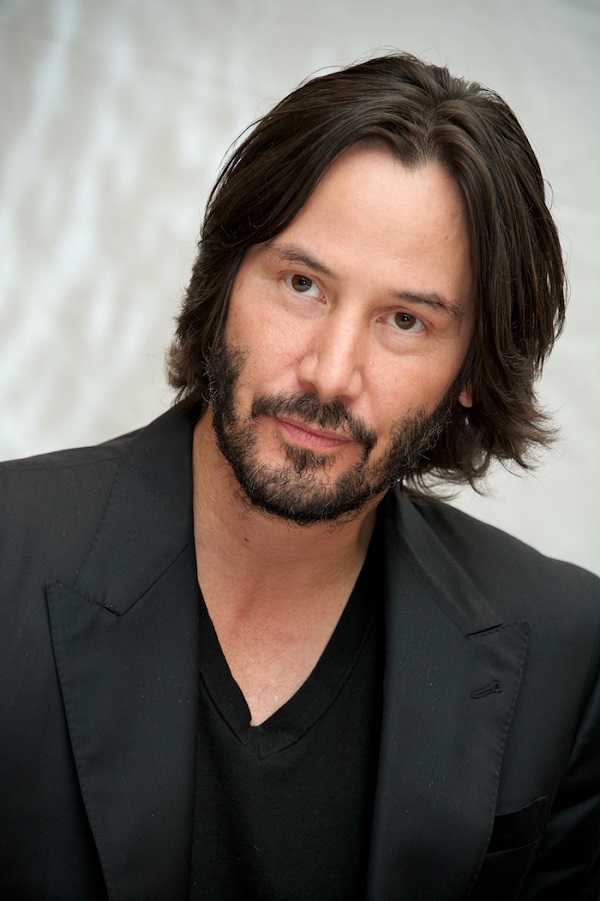
"ethnically ambiguous guy in white t shirt" returns me this picture of Keanu Reeves in a black t-shirt

Something about elves and the north pole:

Russian troll describes work in the infamous misinformation factory
Nov 2017, NBC News

“These troll farms can produce such a volume of content with hashtags and topics that it distorts what is normal organic conversation,” Clint Watts, senior fellow at the Foreign Policy Research Institute, told NBC News. “It’s called computational propaganda, the volume [at] which they push, false information or true, makes things appear more believable than they might normally be in an organic conversation.”

Writers were separated by floor, with those on the third level blogging to undermine Ukraine and promote Russia. Writers on the first floor — often former professional journalists like Bespalov — created news articles that referred to blog posts written on the third floor. Workers on the third and fourth floor posted comments on the stories and other sites under fake identities, pretending they were from Ukraine. And the marketing team on the second floor weaved all of this misinformation into social media.

Monday, August 7, 2017

Believability Likability Falliblity


Why humans find faulty robots more likeable
Aug 2017, phys.org

If you've never watched the robots from Boston Dynamics get pushed over while they try to stand, you really should. (just search robot fail videos). If you've never thought, aw man, I feel really bad for that guy, then you should watch definitely watch it. Because you know, one day when a real robot-looking robot is taking care of your feeble parents, or you, you're gonna want to like that robot. And as it turns out, watching something struggle, whether it's a robot or a bug, or ^this kid trying eat cereal, when you watch someone mess up, it makes you like them more.

Says science:

"...participants took a significantly stronger liking to the faulty robot than the robot that interacted flawlessly." ... This finding confirms the Pratfall Effect, which states that people's attractiveness increases when they make a mistake," says Nicole Mirnig, PhD candidate at the Center for Human-Computer Interaction, University of Salzburg, Austria. -phys.org


Source document:
Nicole Mirnig et al, To Err Is Robot: How Humans Assess and Act toward an Erroneous Social Robot, Frontiers in Robotics and AI (2017). DOI: 10.3389/frobt.2017.00021


Wednesday, January 4, 2017

Fake Police

You got that??

'Chemtrails' not real, say leading atmospheric science experts
Aug 2016, phys.org

"Well-understood physical and chemical processes can easily explain the alleged evidence of a secret, large-scale atmospheric spraying program, commonly referred to as "chemtrails" or "covert geoengineering," concludes a new study from Carnegie Science, University of California Irvine, and the nonprofit organization Near Zero."

POST SCRIPT

On the Illusion of Intent and Mass Conspiracy
Network Address, circa 2014

Culture Fail 
Network Address, circa 2012

Sunday, May 5, 2013

The Meme Wars Instruction Manual May Be Written By Robots

In light of the text presented here, I can't help but think about this story on using SocialBots to manipulate people online...we are in for one confusing future.

E-mail use model appears to follow "Clash of Civilizations" prediction
Bob Yirka, March 8, 2013

Researchers at Stanford University have built a model based on the frequency of e-mail interactions between groups of users of Yahoo! e-mail throughout the world. Their results appear to adhere to societal boundaries as described by Samuel Huntington's 1992 book "The Clash of Civilizations."

Huntington famously suggested in his book that the primary axis of global conflict was no longer ideological or economic but cultural and religious, and that this division would characterize the "battle lines of the future."

Their model is based on over ten million e-mail messages sent from Yahoo! users the world over. To show the degree of interaction between groups, the team used nodes and lines between them—the more transactions between groups, the closer they appear together on the model. To form geographic areas, the team compared IP numbers attached to messages with the location noted in a user's profile, using only those that coincided.

The resulting color-coded graphic model offers near instant visual clues regarding groups bound together by culture and perhaps religion. Perhaps more importantly it also shows boundaries, which State and his team claim, resemble the model first proposed by Huntington. Western nodes are clustered to form a single group with just a few outliers, for example, as are others such as those deemed Islamic, or South American.

The model doesn't hint at tensions between groups of course, but does seem to indicate that groups tend to communicate more via e-mail with others in their same group than they do with others from other groups, --even if they share a physical border.--
More information: The Mesh of Civilizations and International Email Flows, arXiv:1303.0045 [cs.SI]

The Mesh of Civilizations and International Email Flows, arXiv:1303.0045 [cs.SI]

Your favorite blogger could one day be a computer
a start up company that has developed computer software capable of generating articles that read as though they were written by a living, breathing person.
http://narrativescience.com/

The technology works by taking data — like sports statistics and company financial reports — and turning it into convincingly human-sounding news articles. According to Kris Hammond, one of Narrative Science's founders, the key concept behind the software is composition; "this is not just taking data and spilling it over into text," Hammond said.

The New York Times' Steve Lohr explains how the software might "compose" an article about a recent sporting event:

The Narrative Science software can make inferences based on the historical data it collects and the sequence and outcomes of past games. To generate story "angles," explains Mr. Hammond of Narrative Science, the software learns concepts for articles like "individual effort," "team effort," "come from behind," "back and forth," "season high," "player's streak" and "rankings for team." Then the software decides what element is most important for that game, and it becomes the lead of the article, he said. The data also determines vocabulary selection. A lopsided score may well be termed a "rout" rather than a "win."

[a commentor on io9 points out that the algorithm works well within subjects that have high statistical significance, like sports and finance; whereas it might be less impressive at deconstructing the layers of authenticity found in Banksi's Exit Through the Gift Shop.]
source
via

Racter: Writing Robots
March 7, 2013
SocialBots
September 14, 2012
Recombinant Memetics and Narrative Networks
05-2013