Showing posts with label memes. Show all posts

Friday, February 14, 2025

The Entelechy of Information


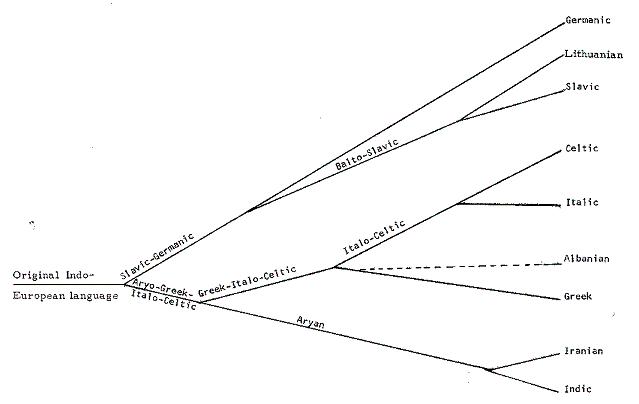
Things that aren't alive behave as if they are, making us question what life is.  Darwin's theory of evolution started with a Tree of Life for language, not for Life. This is a great piece, and she's the one who did the 'black traffic stop' study btw, very clever.


Study traces an infectious language epidemic
May 2024, phys.org

Note for context: More than 692,000 preventable hospitalizations were reported among unvaccinated patients from November to December 2021 alone, and at a minimum cost of $13.8 billion.

They used GPT-4 to find Covid prevention-opposed posts in banned subreddits. They were looking for something called "gists" - Reyna has shown that individuals learn and recall information better when it is expressed in a cause and effect relationship, and not just as rote information. This holds true even if the information is inaccurate or the implied connection is weak. Reyna calls this cause-and-effect construction a "gist."

The results show that, indeed, social media posts that linked a cause, such as "I got the COVID vaccine," with an effect, such as "I've felt like death ever since," quickly showed up in people's beliefs and affected their offline health decisions. In fact, the total and new daily COVID-19 cases in the U.S. could be significantly predicted by the volume of gists on banned subreddit groups.

Rho's work is grounded in a social science framework called Fuzzy Trace Theory that was pioneered by Valerie Reyna, a Cornell University professor of psychology and a collaborator on this Virginia Tech project.

via Eugenia Rho and Society + AI & Language Lab in the Department of Computing at the College of Engineering at Virginia Tech: Xiaohan Ding et al, Leveraging Prompt-Based Large Language Models: Predicting Pandemic Health Decisions and Outcomes Through Social Media Language, arXiv (2024). DOI: 10.48550/arxiv.2403.00994

And this, an important to note to stand by itself:
Many other social media platforms have barred outside researchers from using their data.

(And this is why they used reddit, which I think as of today no longer allows ^this. Regardless consider for a moment that digital social-mediated misinformation is a thing, and it's a real risk, and yet we can't even study it anymore because it's all totally proprietary. But don't consider the fact that data - all the data - is created by the users, yet it's not owned by the users to the extent that they, or anyone, can study it; that's for another post.)

Image credit: Plant root via Fiber Optic 2x - Dr Adolfo Ruiz De Segovia Nikon Small World - 2024


Back to language as an epidemic, behold Legalese:
Study explains why laws are written in an incomprehensible style
Aug 2024, phys.org

A 2022 study found legal documents frequently have long definitions inserted in the middle of sentences - a feature known as "center-embedding" which makes text more difficult to understand, even for lawyers. "Legalese somehow has developed this tendency to put structures inside other structures, in a way which is not typical of human languages." 

"Lawyers don't like it, laypeople don't like it, so the point of this current paper was to try and figure out why they write documents this way."

Hypotheses:
"Copy and edit hypothesis" - legal documents begin with a simple premise, and then additional information and definitions are inserted into already existing sentences, creating complex center-embedded clauses.

"Magic spell hypothesis" - the convoluted style of legal language signals a kind of authority, "if you want to write something that's a magic spell, people know that the way to do that is you put a lot of old-fashioned rhymes in there."

Test:
They did two experiments, one with people split in two groups for writing laws and then adding to them, or writing laws all at once. They found that people wrote center-embeddings regardless of whether they had to copy and edit.

The other experiment gave people laws from another country and asked them to rewrite them, both as law itself and as a description of the law. They found that people put embeddings in the law but not the description. 

They're now investigating the origins of center-embedding in legal documents, back to the Hammurabi Code of 1750 BC.

via MIT, University of Melbourne, University of Chicago Law School: Martínez, Eric, Even laypeople use legalese, Proceedings of the National Academy of Sciences (2024). DOI: 10.1073/pnas.2405564121


But in case you still weren't convinced that contagion is a function of information systems, and not of living systems ... or perhaps you'd rather believe that language is in fact a form of life:
How new words arise in social media
Sep 2024, phys.org

They analyzed 650 million tweets written in French between 2012 and 2014 to identify 400 words that were new to appear on the social media network then called Twitter, then they tracked the diffusion of these words over the following five years, and looked at the position and connectivity of users who adopted the words.

"lexical innovations" - new words

On average, the words that eventually persisted were used by people who were more central to their community, and remained in circulation at low levels for a longer period before entering a growth phase (18.5 months in circulation compared to 6.5 months for buzzes).

Words that became only temporary buzzes were used by people with less central positions within a social network and had a more rapid rise in use - followed by a rapid decline.

via École Normale Supérieure in France: Tarrade L, Chevrot J-P, Magué J-P (2024) How position in the network determines the fate of lexical innovations on Twitter, PLOS Complex Systems (2024). DOI: 10.1371/journal.pcsy.0000005

Thursday, October 7, 2021

The Disease Model


That's what they call it -- Susceptible, Infected, Recovered. Disease transmission follows a fairly predictable pattern, just ask the covid epidemiologists.


It's about the way things spread within a network; nodes and links. Throw some complexity science in there, and you can model a pretty good simulation of waves of infection, where they spread, how fast. 

But it's not just diseases, which are spread by physical particles floating through the air. Behaviors follow the disease model too, and ideas, and preferences and tastes. They're spreading through people, just like diseases.

That's getting into the science of memetics though. For now, let's keep it more simple than that -- think about how you started using social media, what was your first account and who got you into it, what social networks were you a part of then?

You were being infected.

Honestly I won't even repaste any of this paper, because it does come from the Mechanical and Aerospace Engineering department, which seems weird for a paper about disease modeling. But it is from Princeton, and that department does cover some pretty crazy stuff, and some of it is partially related. It concluded that Facebook is going through humans like a wave of the Delta variant, but at the same time, losing the people who recover from the disease. They said there won't be anyone left by 2018, because everyone's either still infected, or been recovered. (Luckily for Facebook, bots are infinite!)

And would you look at that, here's Facebook being called out for misleading investors by blending their actual user numbers with those of their Single Users with Multiple Accounts, i.e., among other things, the botnet.

But long before this information was divulged under congressional testimony circa 2021, this paper, from 2014, and generated from even earlier discussions at a 2012 research symposium, predicted this already -- they followed the disease model on a social network. It makes you wonder why there weren't other studies like it:

Epidemiological modeling of online social network dynamics, John Cannarell, Joshua A. Spechler. Department of Mechanical and Aerospace Engineering, Princeton University. arxiv:1401.4208v1 [cs.SI] 17 Jan 2014. https://arxiv.org/pdf/1401.4208v1.pdf
 
Think about the last few songs you downloaded (do people still?). Where did you hear them, from who?

They infected you.

Music download patterns found to resemble infectious disease epidemic curves
Sep 2021, phys.org

"The researchers found that downloads from the site very much matched patterns of diseases spreading. With infectious diseases, one-to-one contact is needed. With songs...hundreds of people might respond by downloading it." -link

"We draw conclusions about song popularity within specific genres based on estimated SIR parameters. In particular, we argue that faster spread of preferences for Electronica songs may reflect stronger connectivity of the ‘susceptible community’, compared with the larger and broader community that listens to more common genres." -link

via McMaster Institute for Music and the Mind in Canada: Dora P. Rosati et al, Modelling song popularity asacontagious process, Proceedings of the Royal Society A: Mathematical, Physical and Engineering Sciences (2021). DOI: 10.1098/rspa.2021.0457

Even ideas can be infectious. They're reproducing in our minds, after all. Memetically transmitted diseases, following the S-I-R model. Dairying was an idea that changed the genome of a lot of humans. And olfactory receptors make up the biggest family of your genome, like 2%, and they're changing all the time, and sometimes because of cultural reasons, like bacon. 

Probably the greatest example of an idea being infectious is the idea against vaccinations, because technically, under the memetic paradigm, the virus, any virus whether measles, covid, or syphilis, is figuring out how to fight the scientific advancement of vaccinations by infecting our minds with antivax thoughts -- they're evolving in more ways than one! (See below for more on this, but be careful, you may want to inoculate your brain first.)

Post Post:
If you're into this topic, prepare to go deep, very deep:
Adaptive Metamemetics, Infectious Disease Networks, and Ludwig Fleck's Thought Collectives
March 2020, Network Address

I had no idea how prescient this would be when I wrote it, but studying Ludwig Fleck prior to a global vaccination campaign wasn't a bad idea.

Post Post Script:
They don't say it but I will, claim of memetic supremacy right here:
[I call it Memetic Supremacy] Parity and time reversal elucidate both decision-making in empirical models and attractor scaling in critical Boolean networks. via Pennsylvania State University, Broad Institute, Dana-Farber Cancer Institute, Semmelweis University, and Center for Complex Network Research. Science Advances (2021). https://advances.sciencemag.org/lookup/doi/10.1126/sciadv.abf8124
 

Thursday, September 16, 2021

Memetic Supremacy


From genes to memes - Algorithm may help scientists demystify complex networks
Jul 2021, phys.org

This is it.

I might be just now understanding that the reason we can't "do" memetics yet is because of computational power. Too many variables to model.

Keep in mind that fractals, one of the most ubiquitous phenomena there is, wasn't described mathematically until the 1980's, because that's when computers caught up to it. They needed to be able to run the same, simple algorithm hundreds of thousands of times in less than a lifetime in order to see any results, and this needed to wait for faster computers.

This time, the advancement comes in the form of Boolean networks. These networks aren't just about having lots of on/off switches, but about --networking-- all those switches. That's the hard part. Similar to fractals, which starts from a simple equation (Zn+1 = Zn2 + C), THIS is just a collection of nodes either on or off. Sounds simple, but it's what happens when it gets scaled-up to gives us the complexity of the Twittersphere, for example. A few nodes can generate millions of states.

And before we go any further, it should be noted that quantum computing will flip this entire paradigm upside down, and what today is impossible to even imagine will tomorrow be beamed to your brain via quantum cloud servers in outerspace faster than you can ask for it. 

Until then, the news here is that these networks are now being analyzed by these two methods:

1. Parity - making a mirror image of the network where all ON nodes are switched to OFF to identify critical subnetworks, and 

2. Time Reversal - to identify which network configurations precede which outcomes. 

Currently, they're working on networks of 16,000 genes, which is a lot more than we've ever done before. And currently, this work is to learn more about cancer cells, but soon enough we'll be modeling social uprisings and second-order psychological operations. 

via Pennsylvania State University, Broad Institute, Dana-Farber Cancer Institute, Semmelweis University, and Center for Complex Network Research: "Parity and time reversal elucidate both decision-making in empirical models and attractor scaling in critical Boolean networks" Science Advances (2021). https://advances.sciencemag.org/lookup/doi/10.1126/sciadv.abf8124

Post Script:
A new model enables the recreation of the family tree of complex networks
Jun 2021, phys.org

This new study analyzes the time evolution of the citation network in scientific journals and the international trade network over a 100-year period. According to M. Ángeles Serrano, ICREA researcher at UBICS, "What we observe in these real networks is that both grow in a self-similar way, that is, their connectivity properties remain invariable over time, so that the network structure is always the same, while the number of nodes increases."
-University of Barcelona: Muhua Zheng et al, Scaling up real networks by geometric branching growth, Proceedings of the National Academy of Sciences (2021). DOI: 10.1073/pnas.2018994118

Also, don't forget this one, which aged well, very, very well:
Cyber Swarming, Memetic Warfare and viral Insurgency: How Domestic Militants Organize on Memes to Incite Violent Insurrection and Terror Against Government and Law Enforcement; A Contagion and Ideology Report. Alex Goldberg from The Network Contagion Research Institute, Joel Finkelstein from The Network Contagion Research Institute and The James Madison Program in American Ideals and Institutions at Princeton University. Rutgers Miller Center for Community Protection and Resilience. Feb 7 2020. [pdf link]

^Published February 7, 2020, you know, almost a year before January 6, 2021.

Wednesday, July 8, 2020

Artificial Memetics


When I search the term "artificial memetics" in 2020, all I get are people talking trash, like liberal artificial memetics, or the artificial memetics of masculinity.

What I'm looking for are robots that make their own memes. What I'm looking for are an army of artificial people to make an entire artificial culture so that we can finally live in a full-service anthroposphere.

-totally unrelated image source: Irina Conboy

Also this:

Memetic Warfare - BBC, front page

George Floyd protests - Who are Boogaloo Bois, antifa and Proud Boys
June 2020, BBC News

Original Text:
Cyber Swarming, Memetic Warfare and viral Insurgency: How Domestic Militants Organize on Memes to Incite Violent Insurrection and Terror Against Government and Law Enforcement, A Contagion and Ideology Report. Alex Goldberg - The Network Contagion Research Institute, Joel Finkelstein - The Network Contagion Research Institute and The James Madison Program in American Ideals and Institutions at Princeton University. Rutgers Miller Center for Community Protection and Resilience. Feb 7 2020. [pdf link]


Tuesday, March 31, 2020

On the Plural of Modesty and Concealing Identity


Scientist-Sociologist Ludwig Fleck describes the formation of ideas, as they bubble from the collective:
"Although the uniqueness and novelty of the working material tend to associate it inseparably with the author ... the researcher almost always wants to hide his identity. This is recognizable, for instance, in the characteristic "we" instead of "I," the specific plural of modesty." (p119)

And further, on Authorship:
"The true creator of a new idea is not the individual but the thought collective." (p121)
Image source: Burning Man in Black Rock City Nevada
Image source: Murmurating starlings

Notes:
Genesis and Development of a Scientific Fact.
Ludwig Fleck, 1935 (Switzerland).
Edited by Thaddeus J. Trenn and Robert K. Merton
Translated by Fred Bradley and Thaddeus J. Trenn
Foreword by Thomas S. Kuhn
Published by University of Chicago, 1979

Saturday, June 2, 2018

When Humans Caught Up With Evolution


I certainly didn't know this, but the spleen acts as a biological SCUBA tank during extended periods underwater.

There are some people from the southern Philippines, Indonesia and Malaysia who evolved bigger spleens because they spend a lot of time diving deep underwater. They live on houseboats, rarely go on land, and spend 8 hours a day repeatedly diving underwater. They split from a very similar group of people nearby about 15,000 years ago - the one group stays on land and the other in the water. Their genes are very similar, except for this distinction, and so the spleen enlargement is correlated to this behavior/culture change.

This is a discovery worthy of reporting because most of the basic body plan that includes our organs is pretty similar across all humans, or so we thought.

We have this idea of a Human Genome being uniquely human, and as a thing we all share in common. (Or at least I do; maybe I just haven't been to 5th grade for a long time, kind of like people who don't realize that just about every star we can see in the night sky has planets revolving around it, a discovery of only the past few years.)

But there is this thing that happens about 10-15 thousand years ago, where human creativity (i.e. technological memes or cultural evolution) evolves faster than our genes. Diving in the ocean all day long doesn't by itself constitute a technological advance, but then again, this is at the 15,000 mark. 10,000 years ago, we see the genetic changes resulting from dairying practices. Because of this, some people continued to be able to digest milk into adulthood (not possible for other mammals).

The change in dairying practices must have relied on some techological change, but it's still hard to call this technology. Is agriculture a technological development? Animal husbandry? Because this is where 'drinking milk' comes from. Leaving the land to live on the water is not so much a technological advance as a group-behavior advance - cultural evolution we could call that. Memetic evolution some would call it.

The main idea here is that at some point around 10,000 years ago, humans began changing themselves faster than their environment changed them. When you hear Ray Kurzweil talk about the Singularity (a moment in our near future where humans learn to evolve ourselves at will), note that we have been evolving ourselves already for thousands of years.

Notes

Bajau people 'evolved bigger spleens' for free-diving
Apr 2018, BBC

Evolution of lactase persistence: an example of human niche construction
Philosophical Transactions B, 2011

Network Address:
Milk Does a Body
FurFuryl Mercapton, Abstract Foods, and Flavor Networks

Friday, October 20, 2017

Securing the Noosphere


Russian Facebook ads featured anti-immigrant messages, puppies, women with rifles
Oct 2017, Ars Technica

The study of memetics as the spreading of information, and articles about the science of psychological influence of narratives as studied by DARPA, are just some of the posts that have come up here on Network Address. (See the Post Script below.)

Many years prior two us seeing something like this happen (Russian Facebook election interference), something which is very easily understood by a lot of people, and the threat of which is also very easily understood by a lot of people. Totally not into scaremongering, but definitely into the study of memetics and how it works. As we can see now, it is a very important topic.

It should be noted here that the contagion theory of memetics propogation has been deflated as of late. It's just too simple. There's lots of work being done on what makes a thing viral, and it gets less and less to do with infectious disease theory. Something about affect and timing and network distribution.

Regardless, the infectious disease model was never the one used for memetics. By its very name in fact, memes were thought to behave as genes (and were thus named by Richard Dawkins in his 1982 book, The Extended Phenotype). The 90's saw some other folks pick up the idea and write some books, but by the eearly 2000's it was dead. Leading up to 2010, it became a sort-of underground thing, thanks to the ease of creation and transmission of the macro image series (this is, perhaps, the formal name for this instantiation of a meme). The meme - the new meme, not so much as Dawkins described it, but as a macro image series specifically - seems to have thoroughly saturated mainstream culture, as evidences by the fact that your mom probably makes them and shares them with her friends. Or in other words, memes are mainstream because Russian digital soldiers are making them and sharing them with scared, synapse-deficient Americans.

Anyway, hopefully the meme is getting its due recogntion, and hopefully it can be seen not just as a funny picture, but the unit of cultural transmission that it was intended to represent.

image source


Post Script
Recombinant Memetics and Narrative Networks
Network Address, 2013
No surprise, DARPA's been doing research on narratives for quite some time now; how else to explain the process of inculturation perpetrated on susceptible patriots by terrorists?

The Inward Turn of the Narrative
Network Address, 2012
1970's book by German scholar Erich Kahler, whose view of the modern world is “the steady evolution of consciousness in the direction of the demythification and secularization of wider and wider areas of human life”. Good read on cultural complexification

The Meme Wars Instruction Manual May Be Written By Robots
Network Address, 2013

Thought Contagion
Network Address, 2012
Summary of a book about how belief spreads through society (the new science of memes)
Aaron Lynch, 1996

And this one is just for fun, and for the art history folk out there:
The Macro Image Series and the Dematerialization of Artifact
Network Address, 2013

Thursday, August 31, 2017

Milk Does a Body


Evolution of Adult Lactose Absorption

Farming, cheese, chewing changed human skull shape
Aug 2017, phys.org

The agricultural revolution put the human genome in the spin cycle of a washing machine. Plants, though fibrous, are easier to chew than animals. So during the thousands of years while we were discovering the magic of seed-sowing, and eating the results of our pre-science experimentation, our bodies (our jaws especially) were changing in response.

At this time in our development, the rate of change for a genome was equal to the rate of change of our culture, and our diet, and so the two were able to influence each other. Nowadays, those rates have changed so that our culture moves faster than the genome - i.e., just this week we saw the first 'living drug' that changes the patient's genome so that it attacks cancer.

Anyway, this is our history:

The largest changes in skull morphology were observed in groups consuming dairy products, suggesting that the effect of agriculture on skull morphology was greatest in populations consuming the softest food (cheese!).
-phys.org

I just have to rant for a moment about arguments for an extreme vegetarian diet. I'm all for being healthy and eating more vegetables and less animals, but to say that it is not natural for us to eat meat or dairy products is preposterous, and this is one of those reasons why. Furthermore, to conjure support for the rational adoption of a 'paleo' diet that mimcs the caveman's diet, because 'that is the diet that we evolved to eat', is also preposterous. A lot has happened since caveman days. Sure, the homo sapien is (?) years old (let's just say on the order of 100,000 years). But since that time, our genome has continued to change. Dairying practices are not 100,000 years old, but more like 10,000. And the impact this had on the homo sapien genome was tremendous.

We are the only mammal that maintains lactase into adulthood - that is a genetic modification that we did to ourselves. Nature did not do that to us; we did it. According to this article above, we also changed the shape of our skulls because of eating cheese.

So, in short, we are  complex creatures. We are more complex than any new diet can encapsulate. I'm not trying to tell anyone what to eat up in here. But I am saying that instead of asserting that there is something wrong with the way we are, and that we should try to be more like the way we were, the "natural way", is to ignore the unfathomably complex and epic journey we have made as a species, and that we should continue to make, as long as we don't all kill each other, and as long as the planet that gave us life doesn't go and kill us all.

Post Script
Here's a paper on lactase persistence, perhaps the greatest story in human culture ever, because it was the inflection point beyond which our culture moves faster than our genes can keep up with.
Evolution of lactase persistence: an example of human niche construction, 2011

Wednesday, July 19, 2017

Musical Memetics


Genetic Data Tools Reveal How Pop Music Evolved In The US
The Physics arXiv Blog, 2015. link
Source document:
The Evolution of Popular Music: USA 1960–2010
arxiv.org, 2015. link

I was into this article anyway, because it puts art and science together. Perhaps predictable for some - rap eventually takes over, dance music peaked in the 90's, country is NOT making a comeback (depends how they classify this, is there such a thing as 'new' country?).

But at the end, memetics rears its multi-headed head. Because the authors of this study used genetics-data analysis tools to do all this. Listen to all this memetalk:

"Musicians copy, repeat and modify song styles they like, this leads to a clear pattern of evolution over time. So it should come as no surprise that techniques developed for the analysis of genetic data should work on music data as well. “The selective forces acting upon new songs are at least partly captured by their rise and fall through the ranks of the charts,” they say."

Thursday, June 8, 2017

Catch Em All


There's a lot about fake news and viral memes lately. That is exciting over here, because it's been a central theme at Network Address forever.

But wait...as I search the interwebs for a good image to go with this post, I am hit with an opportune eureka moment.

Viruses, memetic infection, etc., I'm looking for a picture of a kid getting vaccinated, or just jabbed with a needle. I knew I would have to contend with tempting distractions from both pro- and anti- vaccination data-bowels (just came up w that one, aka shit-spewing websites). And so, just one, I click on this chart which lists the characteristics of folks who do not vaccinate their kids. And, despite what you would think (unless everyone already knows this), those people tend to be wealthy and educated. I only point this out because it seems counter-intuitive that educated people would do something kinda stupid, like neglect the benefits of lifesaving medical treatment in lieu of the statistically benign chance of getting a totally pathologically-unknown condition of autism.

Anyway, the point is that the whole vaccines-thing is a meme, for sure, and memes are powerful, and they can even kill you. (Dan Dennett so eloquently points out in his talk about Dangerous Memes.) This meme has been spreading among a particular segment of the population. What is it that makes one person susceptible to one meme? How did this thing become a thing? Turns out there are some things happening like this. I want to know about how anti-vaccines became a thing, but in the meantime, we have this --

Apr 2017, phys.org

The results don't sound as interesting as the title, but I guess we should be happy nonetheless that these experiments are being done in a lab setting, instead of just observing any available social media data...

***
And here we have a good look at the effects of a viral campaign, what makes them work or not work; they're looking at the ALS ice bucket challenge, you remember that I'm sure --

Viral charity campaigns have a psychological 'recipe' and all-too-brief lifespan
Feb 2017, phys.org

This is just a clip, there's a better explanation in the article:
"Just as a flame that burns twice as bright burns half as long, so a rapid social consensus spike reaches an equally rapid saturation point.

"Once the social tipping point of a campaign has passed, momentum can decay quickly and the purpose can get diluted. Once the ALS campaign had reached peak virality, many people were just pouring cold water over their heads without necessarily referencing the charity."
-Dr Sander van der Linden, from Cambridge's Department of Psychology

image source: link

Sunday, January 29, 2017

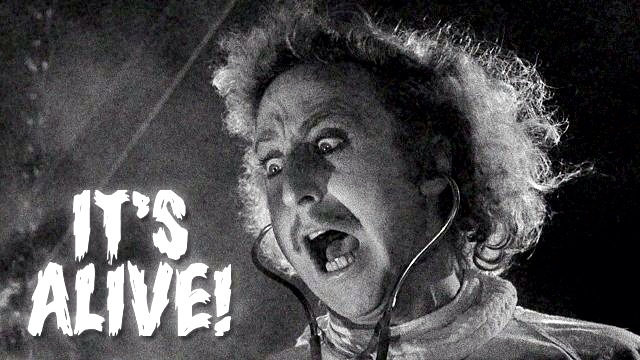
It's Alive

AKA - The Selfish Meme grows legs


Network Address has been slacking on the Fake News front, simply because we tend to avoid anything on the front lines (since you're probably already getting that news from somewhere else) but this stuff is just too good...

As information bursts forth from the noosphere into the anthroposphere, from the inorganic to the organic, from the dematerialized idea to the materialized corpuscule, we see...

Cambridge scientists consider fake news 'vaccine'
Jan 2017, BBC

Researchers suggest "pre-emptively exposing" readers to a small "dose" of the misinformation can help organisations cancel out bogus claims. ...like a virus...contagion...


POST SCRIPT

But let us not forget - Charles Darwin used the taxonomy of Language to explain his theory of evolution.

Natural Selection X Artificial Intelligence
Network Address, 2012

Also check out The Extended PhenotypeVirus of the Mind, Thought Contagion, and memes, meta-, and memetics in general


Tuesday, August 7, 2012

Bacteria Want Food


Disambiguate the misunderstanding: when we say ‘want’, what we really mean is ‘tends towards’.

If bacteria don't want food, then they at least drift towards nutrients with no awareness of their needs.

What does it mean, after all, to want?


What Technology Wants
Kevin Kelly
2010


Tuesday, July 10, 2012

Cultural Evolution of Basic Color Terms

Time for some explanation.

This is perhaps the most important diagram I have ever seen regarding "Color Theory",
Durham’s example of genetic mediation in the cultural fitness of a set of memes (pp213-218).


The genotypes considered are those responsible for the pigment-based system of light absorption in the eye, and the neurophysiological processing of sensory input to the brain.

EXPERIMENT:
1969: anthropologists Brent Berlin and Paul Kay undertook an experiment to prove the semantic relativity of language across different cultures. They wanted to prove that each culture divides the spectral continuum arbitrarily. (But their data, re-examined, proves something much more impactful.)

Native speakers of 20 different languages were asked to
1. List the color terms in their language
2. Pick a ‘focal point’ (the most typical example acceptable) for each of those color terms out of a 329-color palette.
3. Outline the outer boundary (on the color palette) of acceptable colors for that term.

RESULTS:
The data shows a tight clustering around what we can now call the eleven universal colors.

“There appears to be a fixed sequence of evolutionary stages through which a language must pass as its basic color vocabulary increases.”  (Berlin and Kay, p14)

“Black, white, red, green, yellow, blue are the six primaries, once they are encoded, the other colors can be combined from the basics.” (Kay and McDaniel)

If a language encodes fewer than 11 basic colors, there are strict limitations, as follows. All languages have names for black and white (which are more like opposites; either dark/light or warm/cool), so we begin with every language having at least 2 color names. If the language has 3 color names, then red is always the third color...

2-black and white
3-red
4-green or yellow
5-green and yellow
6-blue
7-brown
8+purple, pink, orange, grey

DURHAM’S CONCLUSIONS:
-Basic color terms are a specific kind of meme with considerable cross-cultural regularity.
-Compared to other descriptions of color, known or imaginable, these appear to have especially high cultural fitness [we don’t change the names of colors].
-When new memes are added to the set, they enter into a specific and highly constrained fashion? system?

It is proposed then, that regularities in the linguistic decoding of color result from regularities in the neural coding of color in the brain, with the implication that this is a case of genetic mediation.

PARALLELS:
On the notion of inevitability and the sequence of cultural/technological evolution, Kevin Kelly states:
Each technological progression around the world follows a remarkably similar approximate order.
The direction of technological development is the same every time it happens.
Rock art always precedes sewing, and metalwork always follows claywork.

NEURO-PHYSIOLOGICAL EXPLANATIONS:
The Neural Coding of Color

The nervous system codes spectral radiation according to its wavelength in a way that creates a kind of biological categorization of the spectrum. (Durham, p218-219)

The absence of color-terms in any known culture for reddish-green or bluish yellow (as illustrated by Kay, 1978) is in parallel to the function of the lateral geniculate nucleus (LGN) of the brain, which uses a “spectrally opponent response process” via four nerve cells – two tuned to red/green, and 2 tuned to blue/yellow (DeValois and DeValois, 1966,1973).

The cross-cancelling of these cells leads to absence of fuzzy middle areas between the color pairs of red/green and blue/yellow. It also matches the sequence of the evolution of color terms (Berlin and Kay), which sees red-green-blue-yellow as primary colors from which others are differentiated.

(Note that although orange can be made of red-yellow, it is not present in the opposing sets of nerve cells; green is.

Regarding semantic correlation to neural coding, it appears that the favored variants which lead to the basic color terms of a culture (and thus have the most ‘fitness’) closely match the neural pattern. This is a case of Primary Value Selection, as defined by Durham as being opposite the Secondary Value Selection. Primary- is based on genetic programming, whereas Secondary- is built on top of the primary program, but differs in that it uses conscious decision-making.

NOTES:
William H. Durham, Coevolution: Genes, Culture and Human Diversity
Brent Berlin and Paul Kay, Basic Color Terms: Their Universality and Evolution. 1969, Berkeley
Paul Kay and Chad K. McDaniel, The Linguistic Significance and the Meanings of Basic Color Terms, Language 54, 1978
Kevin Kelly, What Technology Wants, 2010

IN THE NEWS:
Jan 2017, CBS News

In a study published in the academic journal eLife, researchers examined DNA methylation — fingerprints of DNA that can be inherited or altered by life experience and shape how our genes are expressed —among 573 Mexican and Puerto Rican children. DNA methylation reflects individual circumstances — for instance, PTSD stemming from traumatic experiences, air pollution from environmental conditions, after effects from maternal smoking, etc.

…a large fraction, one quarter, of the DNA fingerprints likely reflect biological signatures of environmental, social or cultural differences between the ethnic groups.

Different racial and ethnic groups tend to follow different diets, live in neighborhoods with varying levels of poverty and pollution, and are more or less likely to smoke. DNA methylation can reflect these subtle cultural and environmental differences.

Dr. Esteban Burchard, a physican-scientist and professor at UC San Francisco, supervised the study, which was 20 years in the making.


“It tells me there’s something biological to race. It tells me that we have a lot more work to do. Twenty-five percent of what we see is not due to biological differences, but things associated with the idea of race and ethnicity.”

POST SCRIPT
As with the evolution of Color, notes in music began with a separation of octaves (perhaps male, female voices, etc.) and proceeded to divisions of 4ths and 5ths (etc.)
  -Curt Sachs, The Rise of Music in the Ancient World, East and West, 1943

The Lipps–Meyer Law predicts an 'effect of finality' for a melodic interval that ends on a tone which, in terms of an idealized frequency ratio, can be represented as a power of two.

The Lipps–Meyer law, named for Theodor Lipps (1851–1914) and Max F. Meyer (1873–1967), hypothesizes that the closure of melodic intervals is determined by "whether or not the end tone of the interval can be represented by the number two or a power of two", in the frequency ratio between notes.
  -Meyer, M.F. (1929). "The Musician's Arithmetic", The University of Missouri Studies, January.


RadioLab - Colors
Season 10 Episode 13
Listen to this podcast discussing how the Ancient Greeks, Homer included, were 'colorblind', and how the sky isn't really blue.


BONUS


Friday, April 13, 2012

Natural Selection X Artificial Intelligence

Charles Darwin used the taxonomy of Language to explain his theory of evolution.

That means we assigned what we now know as the process of biological evolution to language before we understood it regarding living organisms.

That is crazy. How is this not the most mind-shattering part of “Charles Darwin” and his theory and the whole science of Evolutionary Biology?

Darwin:

“It may be worthwhile to illustrate this view of classification, by taking the case of languages. If we possessed a perfect pedigree of mankind, a genealogical arrangement of the races of man would afford the best classification of the various languages now spoken throughout the world... The various degrees of difference in the languages from the same stock, would have to be expressed by groups subordinate to groups; but the proper or even only possible arrangement would still be genealogical…”

-Darwin, C. R. 1859. On the origin of species by means of natural selection, or the preservation of favoured races in the struggle for life. London: John Murray. [1st edition]

[page] 422 CLASSIFICATION. CHAP. XIII.

http://darwin-online.org.uk/content/frameset?viewtype=side&itemID=F373&pageseq=440

Steven Pinker - The Genius of Charles Darwin: The Uncut Interviews

~BBC, 2008

http://www.youtube.com/watch?v=yIMReUsxTt4

"The English"

http://networkaddress.blogspot.com/2012/03/english.html


Thursday, March 29, 2012

Meme-Meta-Mime-


The Wrestling Ampersand

The 'meme-' root/word is not synonymous with 'mime-'. The words are related, in that memetics works via mimicry - a meme propagates upon human mimetic iteration. The human is the information carrier/copier.

The distinction between the two words, 'meme-' and 'mime-', is where memes also move via artifacts. You don't really do anything with a book, or a painting. So when you use one of these artifacts, and another person watches, and goes to mimic you, they may not truly 'see the picture'.

Mimicry is not the exclusive means of memetic propagation, and that is where the two words differ.

Also, mimesis is a word, but memesis is not. Unless one is referring to the genesis of a meme, which could easily be called its memesis, but memesis isn't being talked about these days anyway. Or at least when its is, it's equated and conflated with 'mimicry', like man wrestling with the ampersand.

Monday, February 20, 2012

Evolution: Intelligence as Prerequisite for Existence

Genetic evolution ends with consciousness. Genes function within a greater sphere, that which can be called cosmological evolution. Life, living matter, is but a sub-sphere in this system, and extends its existence via the transmission of genetic information. This particular type of information and its reading-and-writing apparatus is intelligent in regards to the physical world. Living matter is exposed to the physical world. It reacts to this stimulus, records the transaction, and transmits the information inter-generationally (via the gene). With communication, language, and writing, intelligence begins to interact with a non-physical world. The record of this interaction is transmitted inter-generationally, and after consciousness, intra-generationally, no loner using the gene, but the meme.

The gene works in the physical realm of the fundamental forces of nature, those being the gravitational, the electro-magnetic, and the nuclear forces. The gene can thus only evolve a physical body. With the advent of the mindspace, it becomes apparent that since evolution continues, despite fundamentally genetic change, as evidenced by the ‘growing’ of civilization, for example, a new information-transmitter must be at work.

This, the meme, interfaces the virtual world, the world of ideas, not of physical things, but ways-of-organizing physical things. The artificial arena of the anthropocene is responded to by the mind, not the body – as even living matter can not interact directly with the non-matter of ideas – and so its intelligence works in an even further sphere, one beyond that of biological evolution.

It is important, then, to distinguish between different kinds of intelligences. Intelligence is only the evidence of evolution. We, as humans, are quite mistaken in assuming that we are intelligent. It is not us, but the thing that is in us, running through us. Life, that proceeding humans, is still intelligent in that it ‘seems to’ predict an outcome and react accordingly, for the benefit of its continued existence. Non-living matter does the same thing, it must; after all, it still exists.

Wednesday, January 25, 2012

The Extended Phenotype: The Long Reach of the Gene

Richard Dawkins, 1982

1999 edition w afterword by Daniel Dennett


Extended Phenotypes are extracorporeal genetic adaptations

Phylogenetic development is the evolution of the species, on an evolutionary timescale

Ontologenetic development is the evolution of the individual, on an individual timescale

“Replicators are not of course, selected directly, but by proxy; they are judged by their phenotypic effects. Although for some purpose it is convenient to think of these phenotypic effects as being packaged together in discrete ‘vehicles’ such as individual organisms, this is not fundamentally necessary. Rather, the replicator should be thought of as having extended phenotypic effects, consisting of all its effects on the world at large, not just its effects on the individual body in which it happens to be sitting (p4).”

[In the same way that gravity and electromagnetic forces shaped the paleontological earth, the life-force of evolution has shaped the earth of our current era. Something, for example, has removed all the oil from the ground and burned it into the air, redistributing the molecules of the planet in the same way that a volcano redistributes molten iron from underneath the crust to on top of it.]

-The meme is a non-genetic replicator flourishing only in the environment of complex, communicating brains. –Dawkins, The Selfish Gene, 1976

-When the meme is “graven into” the receiving brain, it is in a position to broadcast its phenotypic effects using inter-individual communication and imitation apparatus, i.e. humans (~p109).

-The copying process of memes is much less precise than in genes…there is a mutational element in every [meme-] copying event (p112).

The Hierarchy (according to Dawkins)

-Sub-Atomic Particles – fundamental particles below the atomic level

-Atoms – there are about 100 different kinds; they follow their own rules; they are ignored by chemistry

-Molecules

-Crystals

-Living Matter – macromolecules, intracellular membranes, organelles, cells, tissues, organs, organisms, populations, communities, ecosystems…

-Software – integrated circuits, computers

[and how does this compare to Teilhard deChardin?]

Monday, January 23, 2012

Virus of the Mind

Richard Brodie, 1996

Introduction: Crisis of the Mind

-Viruses of the mind, and the whole science of memetics, represent a major paradigm shift in the science of the mind (p15).

-Once created, a virus of the mind gains a life independent of its creator and evolves quickly to infect as many people as possible (p17).

-Even mindless stubbornness is immunity against only some kinds of mind viruses.

“Birth of a New Paradigm”

1.Complacency/Marginalization [Indifference]

2.Ridicule

3.Criticism

4.Acceptance


GENE – basic building block of LIFE – biological programming/bio-replicator – body/physical/natural

MEME – basic building block of CULTURE – mental programming/psycho-replicator – mind/non-physical/artificial


Chapter 1: Memes

[The science of memetics is the mind-universe’s analogue to Genetics, which studies the same thing about genes in the Biological Universe.]

Dawkins’ BIOLOGICAL Definition:

The meme is the basic unit of cultural transmission, or imitation

Plotkins’ PSYCHOLOGICAL Definition:

The meme is the basic unit of cultural heredity analogous to the gene. It is the internal [artificial, mindspace] representation of knowledge

Dennet’s COGNITIVE Definition:

The meme is an idea, the kind of complex idea that forms itself into a distinct memorable [memory…] unit. It is spread by vehicles that are physical manifestations of the meme.

Brodie’s WORKING Definition:

The meme is a unit of information in a mind whose existence influences events such that more copies of itself get created in other minds.

MEME:

An attitude, idea or belief (p48)


On Plotkin:

Under this definition, memes are to a human’s behavior what our genes are to your bodies: internal representations of knowledge that result in outward effects on the world [Dawkins Extended Phenotype].

Genes are hidden, internal pieces of information stored in an embryo that result, with the influence of its environment, in the flesh and blood of the developed organism. Memes are hidden, internal representations of knowledge that result, again along with environmental influence, in external behavior and the production of cultural artifacts such as skirts and bridges. If I look around and see short skirts, that might cause the predication of a meme in my mind that short skirts are in fashion. But the meme is in my mind, not on [Megan Fox’s] body [that would be instead the extended phenotype of the meme] (p29).

[Controlling the mind is the best way to control behavior (not just controlling the body, as genes do) and since the ability to emulate and imitate (and with the advent of consciousness, to empathize) is unique to humans (at least in the capacity that we hold). Controlling the behavior, via the mind, is the best way to manipulate other humans]. (captain obvious?)


Chapter 2: Mind and Behavior

“Peer Pressure”

When people get immersed in a culture (like any company or job or high school) with strong memes it tends to be a sink or swim proposition. Either you change your mind, succumbing to peer pressure and adopting the new memes as your own, or you struggle with the extremely uncomfortable feeling of being surrounded by people who think you’re crazy or inadequate (p48). [I like how crazy is the inverse of inadequate.]

-“distinction memes” form a perceptual filter

-Mind viruses thrive on your belief that its memes are true (p53).

[How does this relate to 'realism' in art or via Kahler’s Narrative, the tendency of the author to try and make their work as ‘believable’ as possible? And see below on Ch.4Evolution…]


Chapter 3: Viruses

-One reason to take viruses seriously is that making copies of yourself is the most powerful force in the universe (p58).

-Anywhere there is copying machinery; there can be viruses (p59).

-For billions of years it was DNA that was being copied (p60-61).


Viral Workflow (p63):

1. Viruses penetrate our minds because we are so good at learning new ideas and information.

2. They are copied by us communicating with each other, something we are getting better and better at [though I would ask what parameters measure this progress].

3. Viruses issue instructions by programming us with new memes that affect our behavior.

4. They spread when the chain of events stemming from the new behavior reaches an uninfected mind.

5. Repeat.


Cultural Viruses

Natural

Unintentional

Spontaneous

Random

Unconscious

Designer Viruses

Artificial

Human-generated intent

Conscious


Development of Culture

--sequence of ideas and discoveries that build upon one another

--a meme pool where the ideas in our heads are shaped and transported by various forces including mind viruses.


Chapter 4: Evolution

Evolution – complexity

Entropy – simplicity

[These two forces operate in both universes.]


-Is the replicator being copied (passive) or is it making copies of itself (active) (p67)?

-In copying/replicating for evolution, error is essential, but in the right amounts: too high, nothing changes; too low, the quality that made it good for replicating changes, is lost (like an office document photocopied over and over) (p67).

-Evolution requires a certain amount of both fidelity and infidelity [and this can also be related to the ‘believability’ of artists?] (p68).

Fitness in Evolution: the likelihood of being copied (p68)

-Darwin didn’t know what DNA was (p69).

An individual of a species doesn’t replicate itself, but its genes. From the selfish gene point-of-view, a human is just another way of making genes, and evolution revolves around their well being, not ours.

-We are in the end of the DNA era (almost) (p79).

-Almost all the information stored on earth was stored in DNA until ~3000 years ago (p79).

[What is information?]


Chapter 5: The Evolution of Memes

“An invasion of armies can be resisted, but not an idea whose time has come.” – Victor Hugo

“mental-pretzeling” – Richard Brodie

The Telephone Game is a meme-evolution in a microcosm.

Advanced cultures have smaller population growth, but the most effective cultural imperialism, spreading memes, not genes (p99).


Chapter 6: Sex: The Root of All Evolution

You are the result of an unbroken chain spanning thousands of generations of males and females who were all successful at finding a mate (p104).


Chapter 8: How We Get Programmed

The “Trojan horse” of memetic programming is characterized by the memes’ decreasing order of believability:

-We all want freedom! (credible, agreeable)

--We all want democracy to work for everyone! (less so)

---We all want every American to have the opportunity to pursue the American Dream! (even less…)

----And we all want a health care system that makes that possible!

The more questionable memes ride right in on the initial, acceptable ones (p144).


Chapter 9: Cultural Viruses

All cultural institutions, regardless of their initial design or intention (if any), evolve to have but one goal: to perpetuate themselves (p158).


On Art and Such:

When the Wizard of Oz is colored [from black and white], it changes the thing, not for the sake of its artistic expression (which ‘is’ what it is, so it’s not for the sake of the thing) but for the sake of its spreadability, or for the sake of its viewership. (The viewers prefer color…) [loosely referencing p167]


Making sense is a strong selector for memes; truth is not (p168).

[The Heliocentric Theory made no sense at all initially, but alas, over time, all the conflicting memes fell away, so far way, that we have completely forgotten our once firmly-held belief that angels and demons pushed and pulled the celestial bodies.]

News is biased, but only towards strong meme-selectors. There is no morality, no politics, no truth … no conspiracies either, just super-complex, klugey evolution (~p170).


Power Shifts in Politics

The shift of power always seems to be for a good reason at first [or else it wouldn’t be selected]. While the short-term results appeal to the majority of voters, the long-term increases in government control over yet another aspect of life is not so appealing (p182).


Chapter 10: Religion

The Religiosity Spectrum:

Vehement disbelief à useful allegory à word-of-God fundamentalism


We have an enormous hunger to understand the world around us, which was extremely useful when the world was simple and mostly consisted of physical rewards and dangers. In the society of memes, however, we are constantly trying to make sense of things that simply have no sense. …We think they make sense, because our brains haven’t had much of a chance to evolve from the time when these cultural, psychological landscapes simply didn’t exist. Se we devote huge amounts of time, money and energy trying to understand and solve meaningless problems (p191). [This is the ‘self-helper’ Brodie.]


Religious Memes and Making Sense:

Religions that have clear, handy explanations for those tough questions are much more popular than those that challenge people to think for themselves, such as Zen. The answers don’t have to be true, just easy to understand (p193)


Delusion and Self Deceit: You Are Not Immune

We all live with a certain amount of delusion and self-deceit. Maybe it’s just a matter of consciously picking the right set of delusions to point us in the direction we want to go (p107-198).