Showing posts with label fleck. Show all posts

Monday, June 15, 2026

Network Science 2nd Dimension


Continuing the network science installment, this time with Hyper Fleck Information Space. 

Mate choice: How social trends influence mate diversity
Feb 2026, phys.org

If everyone performed "mate copying" behavior, then diversity would decline. This is what happens instead:

Conformity: Here, the majority follows the trend. The model shows that this can paradoxically lead to the fixation of traits that have a lower biological quality. A rarer, actually fitter type then has little chance of asserting itself against the established social trend.

Anti-conformity: If individuals deliberately copy the minority, diversity in the population remains stable.

This new model makes it possible to identify the "critical copying probability." This threshold value marks the point at which social information overrides natural selection. If around 40% of the population follows the example of other individuals when choosing a mate, a biologically inferior type can suddenly dominate the group.

The study emphasizes that evolution is not determined by genes alone. It is also shaped by the way information flows and is processed within a community. 

via University of Würzburg: Srishti Patil et al, Phenotypic polymorphism via mate copying, Proceedings of the National Academy of Sciences (2026). DOI: 10.1073/pnas.2510849123

Image credit: Slime mold Arcyria denudata by Frederic Labaune - Nikon Small World Photomicrography Competition - 2025


Personal change thresholds may explain why popular policies fail to spread
Mar 2026, phys.org

Some people will try a new idea the moment they hear about it. Others wait until everyone else is doing it. In survey experiments, participants repeatedly chose between options such as energy policies or messaging apps while seeing different levels of social support for each one. Based on these choices, the team estimated each participant's personal threshold for change. "This approach lets us infer individual tipping points."

Using extensive simulations on real social networks, they compared different strategies for "seeding" change. They found that strategies combining two types of information — social network structure and individual thresholds for change — consistently outperformed approaches based on only one of these factors.

In scenarios where individuals with high thresholds were less responsive to targeting, the most effective strategy was to target those individuals connected to many others who were already close to adopting the change.

In settings where targeting is costly, as in online influencer marketing, the best results came from more sophisticated algorithms that took both network structure and individual thresholds into account.

"By identifying who needs just a little nudge and how influence spreads through social networks, interventions can be designed to have a much larger impact."

via University of Zurich: Radu Tănase et al, Integrating behavioural experimental findings into dynamical models to inform social change interventions, Nature Human Behaviour (2026). DOI: 10.1038/s41562-026-02417-4


Bell-bottoms today, miniskirts tomorrow: Math reveals fashion's 20-year cycle
Mar 2026, phys.org

The 20-year-rule in fashion; it's true and it's here: 
Analyzing roughly 37,000 images of women's clothing spanning from 1869 to 2025, taken from the historical sewing patterns of the Commercial Pattern Archive at the University of Rhode Island, and identifying datapoints (literal points on the pictures) of eyes, neckline, waistline, hemline, feet to measure the fashion trends. 

It's one of the most comprehensive quantitative datasets of fashion ever assembled.

Also - "The system intrinsically wants to oscillate" ... and in this case, that oscillation is between the tension between wanting to stand out while still fitting in; once a style becomes too common, designers move away from it—but not so far that the clothes become unwearable.

But not anymore, apparently - One of the clearest patterns involves hemline length; skirt lengths have repeatedly shortened and lengthened; but starting in the 1980s, the data show a wider range of skirt lengths appearing at the same time, suggesting that fashion trends are becoming more fragmented, and rather than one dominant trend, niches emerge, reflecting more diversity in fashion.

via Northwestern: Emma Zajdela, "Back in Fashion: Modeling the Cyclical Dynamics of Trends," of the session "Statistical Physics of Networks and Complex Society Systems" at the American Physical Society Global Physics Summit in Denver, March 17 2026


A new way to detect breakthroughs in science: Large-scale analysis reveals 'disruptive' innovations in research history
Mar 2026, phys.org

Hyper Fleck Infospace - Using a machine-learning technique known as neural embedding, the researchers built a map of approximately 55 million scientific papers and patents. Each paper is represented by two points—one reflecting the research it built upon, another reflecting the research it inspired. When a paper is truly disruptive, these two points are far apart, meaning it redirected future research away from what came before it. Unlike other disruption indexes, it is sensitive to broader contexts and can better identify "simultaneous discoveries."

(This below is from the paper proper)

"Bibliometric Data Artifacts"

Here, we introduce an embedding-based measure that captures the extent to which a scientific work redirects the research trajectory. 

Our approach embeds each paper in a high-dimensional space reflecting its direct and indirect connections to prior and subsequent work. Just like neural language models that represent tokens and sentences as vectors, we imagine each paper as a vector that captures its intellectual “position.” We then train two distinct vectors for each paper in the same embedding space: one representing its past, or “antecedents,” context—the configuration of prior work it draws upon—and another representing its future, or “descendants,” context—the body of work it gives rise to. When a contribution substantially reshapes the trajectory connecting past to future, or initiates a new stream of research, these two contexts diverge; the distance between them therefore captures the extent to which subsequent work departs from the prior knowledge.

...As a reference point, we use the disruption index (“CD index”) (15, 16), a widely used indicator that uses the topology of local citation network. The disruption index captures how subsequent work diverges from earlier foundations, focusing on whether later papers cite the predecessors of a focal contribution through direct citation links.

...Using a dataset of more than 55 million scientific papers from the Web of Science (WoS) and the American Physical Society (APS), we show that our measure—“Embedding Disruptiveness Measure” (EDM)—provides a continuous, high-resolution view of how scientific contributions reconfigure the relationship between inherited knowledge and emerging directions. 

...If the embedding model is trained such that the proximity between the vectors indicates higher connections between their papers, and if disruptive papers tend to eclipse the future knowledge from the past, making future knowledge less rely on the past, we expect that a paper’s past and future vectors diverge as the paper’s disruptiveness increases. Thus, by quantifying the distance between these two vectors—representing the past and future context of each paper—we can estimate their disruptiveness. 

Simultaneous disruption - To understand why some of the landmark papers have such low D scores, resulting in a bimodal distribution of D, we examine the top 10 papers with the largest difference between the disruption index score D and the EDM score (delta). We found that all 10 papers are related to the notable examples of simultaneous disruption.

via State University of New York Binghamton University and Center for Complex Networks and Systems Research, Luddy School of Informatics, Indiana University: Uncovering simultaneous breakthroughs with a robust measure of disruptiveness, Science Advances (2026). DOI: 10.1126/sciadv.adx3420


Wednesday, December 17, 2025

Self Assortment and Superconductive Sociality


The second to last post is what I call Peak Fleck because it sounds a lot like a quantified version of what he described in his book Genesis and Development of a Scientific Fact (1930s), the book which went on to influence Kuhn's Scientific Revolution (1962), which itself introduced the word "paradigm" as we now use it. The rest of these articles are along the same lines. 


How the loss of experienced individual elephants stops knowledge transfer between generations
May 2025, phys.org

Elephants rely heavily on elder members to navigate their environments, find resources, and avoid predators. The research highlighted that the presence of older, knowledgeable individuals—especially matriarchs—improves calf survival rates and enhances group decision-making. Without these elders, populations often face long-term setbacks.

"Elders are the keepers of knowledge in elephant societies. Their loss disrupts the transmission of essential survival skills, much like losing a library in human terms. Conserving these social ties is as important as protecting their physical habitats."

via University of Portsmouth's Center for Comparative and Evolutionary Psychology: Lucy Bates et al, Knowledge transmission, culture and the consequences of social disruption in wild elephants, Philosophical Transactions of the Royal Society B: Biological Sciences (2025). DOI: 10.1098/rstb.2024.0132


Collective memory loss in herring results in 800 km shift in spawning grounds
May 2025, phys.org

Previous research has indicated that age-selective fishing targeting older fish can disrupt cultural transmission, fragmenting established migration routes.

Analysis of fisheries records, acoustic-trawl surveys, and tagging data indicated a substantial northward migration, with the center of spawning activity shifting approximately 800 km from Møre to Lofoten.

Now that a new migratory pattern has emerged, reinforced by collective migration memory, restoring historical patterns may be impossible.

via Institute of Marine Research in Norway: Aril Slotte et al, Herring spawned poleward following fishery-induced collective memory loss, Nature (2025). DOI: 10.1038/s41586-025-08983-3


The hidden mechanics of abrupt transitions: Superconducting networks show how tiny changes trigger system collapse
Jul 2025, phys.org

They're looking at interdependent superconducting networks and found a hidden spontaneous sequence of micro-scale events that gradually destabilize a system until it snaps.

When this system approaches a "critical" points, it doesn't transition smoothly from a superconducting state to a resistive one. Instead, the system lingers, for hundreds of seconds, in a long-lived intermediate phase. Then, without further prompting, it abruptly transitions into the new state. 

At the heart of this behavior is a concept known as the branching factor—a term that gained prominence during the COVID-19 pandemic. It represents the average number of new changes triggered by each event. When the branching factor is less than one, the cascade quickly dies out. If it exceeds one, the process accelerates uncontrollably.

via Bar-Ilan University, Northeastern, and CEU Vienna: Bnaya Gross et al, The random cascading origin of abrupt transitions in interdependent systems, Nature Communications (2025). DOI: 10.1038/s41467-025-61127-z


Why your friends may be more susceptible to social influence than you are
Jul 2025, phys.org

Good nuance being added here, and it's so counter-intuitive, or just plain confusing, that it should probably knock off right away most people who try to understand it. 

The Susceptibility Paradox - users' friends are more influenceable than the users themselves

"It's not just about who you are - it's about where you are in a network, and who you're connected to"

Researchers looked at two kinds of behavior on X/Twitter: influence-driven sharing, when people post something after seeing it from others in their network; and spontaneous sharing, when they post without that exposure. In influence-driven cases, people who were less likely to be influenced were often surrounded by others who were more likely to share what they saw. This mirrors the Friendship Paradox, a finding from network science that says your friends are likely to have more friends than you do.

Homophily was especially strong in influence-driven sharing. People who post because they saw others do it were often part of tight-knit circles with similar behavior.

In many cases, knowing how a user's friends behave was enough to estimate how the user would behave. Spontaneous sharing was different. When people shared content without apparent peer exposure, their decisions were harder to predict from the network alone. 

via University of Southern California Information Sciences Institute: Luca Luceri et al, The Susceptibility Paradox in Online Social Influence, arXiv (2024). DOI: 10.48550/arxiv.2406.11553

Offline interactions predict voting patterns better than online networks, finds study
Oct 2025, phys.org

Co-location explained 97% of the variance in county-level voting patterns, compared to 85%–87% for online connections and 75%–80% for residential proximity.
  • They used Meta's Data for Good program, which collates anonymized data collected from people who enabled location services on the Facebook smartphone app.
  • Colocation is defined as two people being within the same map tile less than 600×600 meters for at least five minutes.
  • The political affiliation of each person was inferred from their county of residence.
  • Data was compared with Facebook friendships and residential proximity for all U.S. counties, along with individual survey responses from 2,420 Americans regarding their offline and online social networks during the 2020 presidential election.
  • For the residential proximity measurement, the voter registrations of the closest 1,000 neighbors were used.

via University of Trento Italy: Marco Tonin et al, Physical partisan proximity outweighs online ties in predicting US voting outcomes, PNAS Nexus (2025). DOI: 10.1093/pnasnexus/pgaf308


More friends, more division: Study finds growing social circles may fuel polarization
Oct 2025, phys.org

AKA Peak Fleck

  • To measure political polarization, they used 27,000 surveys from the Pew Research Center, and 30 different surveys totaling over 57,000 respondents from Europe and the US, including the General Social Survey (US) and the European Social Survey.
  • Increasing polarization is not merely perceived - it is measurable and objectively occurring; and this increase happened suddenly between 2008 and 2010.
  • -For decades, sociological studies showed that people maintained an average of about two close friends - people who could influence their opinions on important issues."
  • "Around 2008, there was a sharp increase from an average of two close friends to four or five."
  • "When network density increases with more connections, polarization within the collective inevitably rises sharply." 
  • "This finding impressed us greatly because it could provide a fundamental explanation."
  • They refer to it as a phase change (because it's so abrupt).
  • Their explanation: "If I have two friends, I do everything I can to keep them—I am very tolerant towards them. But if I have five and things become difficult with one of them, it's easier to end that friendship because I still have 'backups.' I no longer need to be as tolerant."
"More and more people are clearly aligning themselves with one political camp rather than holding a mixture."

This sounds like Fleck's description, of how the two sides get bigger and stronger and more concentrated until one wins. (He uses the developemnt of the scientific understanding of Syphilis among scientists and among the public.)

via Complexity Science Hub Vienna: Thurner, Stefan, Why more social interactions lead to more polarization in societies, Proceedings of the National Academy of Sciences (2025). DOI: 10.1073/pnas.2517530122.


Quantifying social avoidance: Game-based choices reflect real-world relationship patterns and network size
Apr 2025, phys.org

Instead of relying on self-reported behavior, they observed participants taking part in a "choose your own adventure" style game.

"We wanted to test the hypothesis that social avoidance can be understood as a form of navigation within an abstract social space defined by two social dimensions: 'affiliation' (e.g., warmth, friendliness) and 'power' (e.g., dominance, control). We put nearly 800 online participants into the position of having just moved to a new town, with no job, no friends and no place to live, where they had to interact with people and navigate the social situations to accomplish these goals ... Declining to share personal information with a character would reduce the affiliation in the relationship, while complying with an overbearing and direct request from a character would reduce the participant's power." They used a geometry-based approach where participants were placed on a grid defined by affiliation and power, and they measured where and how they moved on the grid.

Results - people higher in self-reported social avoidance consistently made low affiliation and low power choices in our game, as we expected, and the "social distance" participants created between characters in the game they played mirrored their real social lives as described in self-report questionnaires. Specifically, the real-world social networks of participants who created more social distance between characters were found to be smaller and less diverse.

via Icahn School of Medicine at Mount Sinai: Matthew Schafer et al, Social avoidance can be quantified as navigation in abstract social space, Communications Psychology (2025). DOI: 10.1038/s44271-025-00215-8.

Monday, May 22, 2023

How the Sausage is Made


Predicting human group sizes with physics
Jan 2023, phys.org

People behaving like particles with spin: Only by knowing the average number of friends each person has, scientists were able to predict the group sizes of people in a computer game, modeled on the self-organization of particles with spin, and with social stress as comparable to energy in physics.

This model was able to predict the distribution of group size in the multiplayer online game Pardus. "Normally you would need to know the structure of the network and how it is designed," Korbel explains the results. "Here we only need to know how many friends a player has on average." With this relatively small amount of information, the researchers were able to predict how many groups of a certain size would appear.

via Complexity Science Hub Vienna: Jan Korbel et al, Homophily-Based Social Group Formation in a Spin Glass Self-Assembly Framework, Physical Review Letters (2023). DOI: 10.1103/PhysRevLett.130.057401


Exploring the neural mechanisms behind how social networks shape our decisions
Mar 2023, phys.org

"Essentially, our brain tends to assign higher weight to the observations by better connected neighbors and down-weight or even ignore the observations by less connected neighbors, even when these neighbors have valuable information," Zhu explained. "We found that activity in a part of our brain called dorsal anterior cingulate cortex, which typically implicated in adjusting our behavior to adapt to the external environment, tracks how well connected a neighbor is at the time when the brain is processing a decision observed from the neighbor."

Which is interesting because we know that novel information comes from the outside fringe people who are less connected to any one group, yet hold more connections to more otherwise un-connected groups...

via Peking University: Yaomin Jiang et al, Neurocomputational mechanism of real-time distributed learning on social networks, Nature Neuroscience (2023). DOI: 10.1038/s41593-023-01258-y.


How miscommunication can be constructive during problem-solving in diverse groups
Mar 2023, phys.org

"Higher-ability groups tend to think about a problem in the same way when making predictions or finding solutions," explains Muldoon. "They end up exploring the same spots. Diverse groups collectively are able to explore more options, increasing the chance of bigger successes."

"Some miscommunication can make errors worse, while other examples of miscommunication can diminish the harm that might come from those errors," 

"What we found is that how we organize groups matters a great deal when we're evaluating the benefits of diversity—especially when we can miscommunicate," 

via University of Buffalo: Keith Hankins et al, Does (mis)communication mitigate the upshot of diversity?, PLOS ONE (2023). DOI: 10.1371/journal.pone.0283248

Unrelated image credit: Stanford Torus by Alexander Preuss

Monday, March 13, 2023

How Science Works Not


If you ever think science is the almighty answer to all things ever, just remember that we still don’t know why ice is slippery. That’s just not how science works:

New approaches to the mystery of why ice is slippery
Dec 2022, phys.org


How Science Also Doesn't Work

Shark Week sucks and media consumption beats education every time. But don't blame the drop in funding for public broadcasting, the market will provide everything we need:

202 Shark Week episodes found to be filled with junk science, misinformation and white male 'experts' named Mike
Dec 2022, phys.org

202 episodes coded on more than 15 variables, including locations, which experts were interviewed, which shark species were mentioned, what scientific research tools were used, whether the episodes mentioned shark conservation and how sharks were portrayed.
  • Out of 202 episodes that we examined, just six contained any actionable tips-Half of those simply advised against eating shark fin soup, but finning is not the biggest threat to sharks, and most U.S.-based Shark Week viewers don't eat shark fin soup.
  • "No scientific research at all" 
  • Some episodes focused on alleged risk to the scuba divers shown on camera, especially when the devices inevitably failed, but failed to address any research questions.
  • Real science may not be as exciting on camera as divers surrounded by schooling sharks, but it generates much more useful data
  • "Experts" are interviewed on many Shark Week shows. The most-featured source was an award-winning underwater photographer.
  • More white male non-scientists named Mike than women of any profession or name.
via Departments of Biology & Geology at Allegheny College, University of New Hampshire, Florida Atlantic University, University of Miami, and Arizone State: Lisa B. Whitenack et al, A content analysis of 32 years of Shark Week documentaries, PLOS ONE (2022). DOI: 10.1371/journal.pone.0256842


I hear artificial intelligence to the rescue:

Rate of scientific breakthroughs slowing over time
Jan 2023, phys.org

They gave a disruptiveness score to 45 million scientific papers dating from 1945 to 2010, and to 3.9 million US-based patents from 1976 to 2010, and called disruptive discoveries those that "break away from existing ideas" and "push the whole scientific field into new territory."

The biggest decrease in disruptive research came in physical sciences such as physics and chemistry.

Here's a couple theories why:
The Burden of Research - scientists must learn to master a particular field they have little time left to push boundaries causing them (and inventors) to "focus on a narrow slice of the existing knowledge, leading them to just come up with something more consolidating rather than disruptive"
Publishing Pressure - it's the metric that academics are assessed on, but makes academics "slice up their papers" to increase their number of publications (which leads to a dulling of research)

The researchers called on universities and funding agencies to focus more on quality, rather than quantity, and consider full subsidies for year-long sabbaticals to allow academics to read and think more deeply.

via University of Minnesota's Carlson School of Management: Michael Park et al, Papers and patents are becoming less disruptive over time, Nature (2023). DOI: 10.1038/s41586-022-05543-x

Thursday, March 2, 2023

The Behavior Machine


New research on identity cues in social media shows it's not just what is said but who says it that matters
Nov 2022, phys.org

Carl Sagan was right. Know your source:

Identity effects in social media: 89-weeks, Reddit-like website, 6,400 viewer responses to 350,000 comments generated by 3,725 commenters. Each piece of content was randomly assigned to either an "anonymous" condition or "identified"

Findings:
  • Identity effects accounted for up to 61 percent of the variation in voting, meaning that over half of the variance in users' decisions to up-vote or down-vote content was explained by the presence or absence of identity cues.
  • The presence of identity cues also caused viewers to evaluate content faster, implying greater reliance on initial "knee-jerk" reactions and System I thinking rather than longer, deliberative, System II thinking.

Not Mentioned At All: Don't forget this is how large corporations brainwash us into thinking they have even a sliver of moral obligation; they flood the media with positive news, and spin negative news to be as favorable as possible, and are so persistent and pervasive in these efforts, that we assume they are "one of us" and "on our side", and therefore we can influence their behavior to be more aligned with our interests. 

via MIT Sloan School of Management: Sinan Aral, Identity effects in social media, Nature Human Behaviour (2022). DOI: 10.1038/s41562-022-01459-8


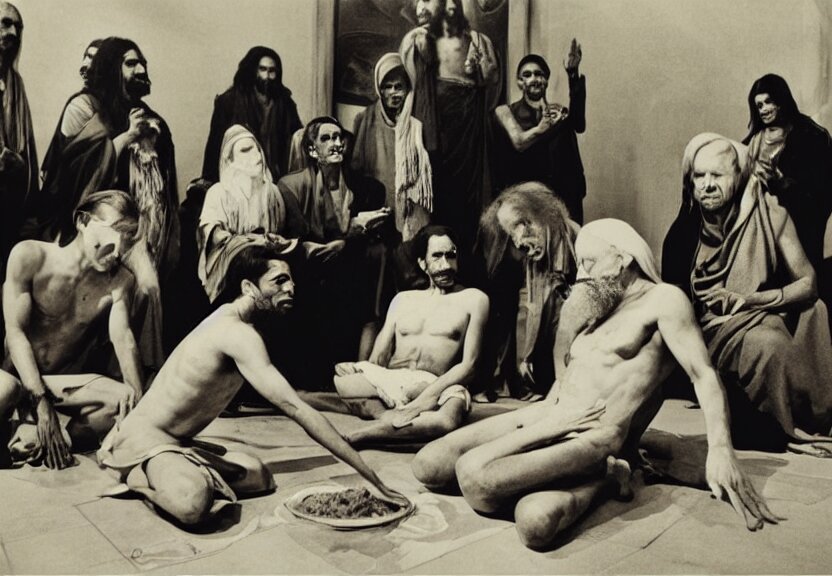
AI Art - Dark Conference Hall Half Occupied - 2022

And in other conspiratorial news:
Pre-pandemic conspiratorial mindset predicted hesitance to accept COVID-19 vaccine
Nov 2022, phys.org

People who evinced a conspiracy mentality in 2019, prior to the pandemic, were subsequently more likely to believe COVID-19 conspiracy theories, except for Republicans and those who relied on conservative media such as Fox News were more likely to accept conspiracy theories in 2021 than they had been in 2019. 

via Annenberg Public Policy Center at University of Pennsylvania: Daniel Romer et al, Conspiratorial thinking as a precursor to opposition to COVID-19 vaccination in the US: a multi-year study from 2018 to 2021, Scientific Reports (2022). DOI: 10.1038/s41598-022-22014-5


Witchcraft beliefs are widespread, highly variable around the world
Nov 2022, phys.org

Witchcraft beliefs are linked to weak institutions, low levels of social trust, and low innovation, as well as conformist culture and higher levels of in-group bias — the tendency for people to favor others who are similar to them.

Funny how social media engagement algorithms exploit and increase these very features, leading to more conspiracy theories which are like witchcraft.

via Public Library of Science, Department of Economics, American University: Boris Gershman et al, Witchcraft beliefs around the world: An exploratory analysis, PLoS ONE (2022). DOI: 10.1371/journal.pone.0276872


New international study concludes digital media can fuel polarization and populism
Nov 2022, phys.org

Meta study on digital media:
  • Digital media is Good for - increasing political knowledge and diversity of news exposure
  • Digital media is Bad for - fostering polarization and populism

Findings:
  • Beneficial in emerging democracies but destabilizing in established democracies.
  • No evidence of echo chambers in studies looking at news exposure, for example, but they do seem to emerge within social media networks.
  • In mature democracies such as the US and Europe, social media use causes increased polarization and decreased trust in institutions.

via University of Bristol, Max Planck Institute for Human Development and the Hertie School in Germany: Philipp Lorenz-Spreen, A systematic review of worldwide causal and correlational evidence on digital media and democracy, Nature Human Behaviour (2022). DOI: 10.1038/s41562-022-01460-1


Wednesday, January 11, 2023

The Synergistic Network Effect


The conspiracy theorist 'worldview' and the language of their argument
Oct 2022, phys.org

Conspiracies rely on other conspiracies as "evidence," jumping around different topics, less coherently than mainstream texts, but relying on a web of interconnected ideas to connect the dots.

The team analyzed thousands of conspiracist and mainstream webpages using natural language processing, a type of computer analysis of human language. They compared mainstream and conspiracist writing on the same topics.

Image credit: Network interconnectedness - conspiracy vs non-conspiracy - Alessandro Miani et al Science Advances 2022. https://dx.doi.org/10.1126/sciadv.abq3668

The synergistic network effect:
  • Believing that the AIDS virus was deliberately engineered in a government laboratory is associated with believing that the Federal Bureau of Investigation was involved in Martin Luther King’s assassination [16].
  • Conspiracy believers tend to identify meaningful relationships among randomly co-occurring events [17, 18]
  • “...the specifics of a conspiracy theory do not matter as much as the fact that it is a conspiracy theory at all” (p. 5, ft. 15, 21). 
Thus, belief in multiple conspiracies may be self-supporting: The interconnectivity among conspiracy beliefs is supported by a meta-belief that resolves the apparent contradictions at the lower level. Hence, conspiracy theories may thus constitute a mutually reinforcing network of beliefs, creating self-sustaining evidence for a world dominated by deceptive agents (15). 
(The meta-belief they're talking about is this -- authorities are intentionally deceptive, e.g., they're lying to us.)

  • Hypothesis 1: If a conspiracy worldview coerces unconnected observations to support for an overarching belief in the deceptive nature of authorities, then a network of potential conspiracy-related topics will be more tightly interconnected in conspiracy documents than in nonconspiracy documents.
  • Hypothesis 2a: If conspiracy narratives focus less on individual topics than nonconspiracy narratives, then topic specificity will be lower for conspiracy than nonconspiracy documents.
  • Hypothesis 2b: Text cohesion between paragraphs should be less internally cohesive for conspiracy documents than nonconspiracy documents.
  • Hypothesis 3: If conspiracy narratives reference similar worldviews, then similarity between documents should be higher for conspiracy documents (as a group) than nonconspiracy documents (H3).

15. M. J. Wood, K. M. Douglas, R. M. Sutton, Dead and alive. Soc. Psychol. Personal. Sci. 3, 767–773 (2012).
16. T. Goertzel, Belief in conspiracy theories. Polit. Psychol. 15, 731 (1994).
17.R. C. van der Wal, R. M. Sutton, J. Lange, J. P. N. Braga, Suspicious binds: Conspiracy thinking and tenuous perceptions of causal connections between co-occurring and spuriously correlated events. Eur. J. Soc. Psychol. 48, 970–989 (2018).; J.-W. van Prooijen, K. M. Douglas, C. De Inocencio, Connecting the dots: Illusory pattern perception predicts belief in conspiracies and the supernatural. Eur. J. Soc. Psychol. 48, 320–335 (2018).
18. J.-W. van Prooijen, K. M. Douglas, C. De Inocencio, Connecting the dots: Illusory pattern perception predicts belief in conspiracies and the supernatural. Eur. J. Soc. Psychol. 48, 320–335 (2018).
21. S. Lewandowsky, J. Cook, E. Lloyd, The ‘Alice in Wonderland’ mechanics of the rejection of (climate) science: Simulating coherence by conspiracism. Synthese 195, 175–196 (2018).

via University of Warwick and University of Neuchatel, Switzerland: Alessandro Miani et al, Interconnectedness and (in)coherence as a signature of conspiracy worldviews, Science Advances (2022). DOI: 10.1126/sciadv.abq3668

Post Script:
Language of Conspiracy (LOCO) - 88 million–word corpus composed of topic-matched conspiracy (N = 23,937) and nonconspiracy (N = 72,806) text documents (i.e., webpages) harvested from 150 websites.

Thursday, November 17, 2022

Step Away From the Machine


First, the image seen above is from a series of protest photos by a man named Chauncey Hare. That's him in his own photo, sitting in his cubicle at the EPA. He thinks big business and their big owners are taking over the world, and he's probably right. 

One thing that's pretty certain -- we are not in control, not of the world at large, and not even of ourselves. 

Image credit: Chauncey Hare - Self Portrait at EPA - 1980 [Protest Photos]
Chauncey Hare, "Self Portrait at EPA" (1980), from Quitting Your Day Job: Chauncey Hare’s Photographic Work by Robert Slifkin (MACK, 2022), Chauncey Hare Photograph Archive, BANC PIC 2000.012.14:023- 024—ffALB. This photograph was made by Chauncey Hare to protest and warn against the growing domination of working people by multi-national corporations and their elite owners and managers. (© The Regents of the University of California, The Bancroft Library, University of California, Berkeley) https://hyperallergic.com/741181/chauncey-hare-quitting-your-day-job/

Researcher offers new explanation for consciousness
Oct 2022, phys.org

Deepak Chopra's pissed:
"In a nutshell, our theory is that consciousness developed as a memory system that is used by our unconscious brain to help us flexibly and creatively imagine the future and plan accordingly," explained corresponding author Andrew Budson, MD, professor of neurology. "What is completely new about this theory is that it suggests we don't perceive the world, make decisions, or perform actions directly. Instead, we do all these things unconsciously and then—about half a second later—consciously remember doing them."

"Even our thoughts are not generally under our conscious control. This lack of control is why we may have difficulty stopping a stream of thoughts running through our head as we're trying to go to sleep, and also why mindfulness is hard," adds Budson.

via Boston University School of Medicine: Andrew E. Budson et al, Consciousness as a Memory System, Cognitive and Behavioral Neurology (2022). DOI: 10.1097/WNN.0000000000000319


Scientists identify pathway that triggers mice to scratch when they see others do the same
Oct 2022, phys.org

"Contagious itching" is controlled through a visual pathway, that surprisingly, operates independently of the visual cortex.

You can see without a visual cortex. What else do we not-see?

via Washington University School of Medicine in St Louis: Fang Gao et al, A non-canonical retina-ipRGCs-SCN-PVT visual pathway for mediating contagious itch behavior, Cell Reports (2022). DOI: 10.1016/j.celrep.2022.111444.


A handful of universities seem to control flow of ideas, people in academia
Oct 2022, phys.org

Just network science telling us what to do, as usual:

The structure of the American professoriate -- five U.S. universities have trained 1-in-8 tenure-track faculty members serving at the nation's institutions of higher learning.

(University of California, Berkeley; Harvard University; University of Michigan; Stanford University; and University of Wisconsin-Madison)

via University of Colorado at Boulder: Daniel Larremore, Quantifying hierarchy and dynamics in US faculty members hiring and retention, Nature (2022). DOI: 10.1038/s41586-022-05222-x


Post Script:
Scientists obtain effects through virtual reality comparable to those of psychedelic drugs
Sep 2022, phys.org

They design virtual reality intersubjective group spaces where participants experience together the collective emergence, fluctuation and dissipation of their own bodies, and which produce responses similar to those triggered by psychoactive drugs.

Something about this says Robert Heinlein to me. A social science fiction perhaps. 

via Intangible Realities Laboratory at the Citius Intelligent Technologies Research Centre, Santiago de Compostela, Spain; and ArtSci International Foundation in Bristol: David R. Glowacki et al, Group VR experiences can produce ego attenuation and connectedness comparable to psychedelics, Scientific Reports (2022). DOI: 10.1038/s41598-022-12637-z

Tuesday, November 1, 2022

Memetics in a Name


What's in a name? Glimmers of evolution in naming babies, choosing a dog, study finds
Jun 2022, phys.org

Newberry, an assistant professor of complex systems, says examining trends in the popularity of baby names and dog breeds can be a proxy for understanding ecological and evolutionary change. The names and dog breed preferences themselves are like genes or organisms competing for scarce resources. In this case, the scarce resources are the minds of parents and dog owners. His results are published in the journal Nature Human Behavior.

Results:
  • The more popular a name becomes, the less likely future parents are to follow suit. Same goes for popular dog breeds.
  • When a name is most rare — 1 in 10,000 births — it tends to grow, on average, at a rate of 1.4% a year. But when a name is most common — more than 1 in 100 births — its popularity declines, on average, at 1.6%.

And this is why Darwin got his idea for natural selection from language-trees:
"Natural selection is incredibly hard to measure. You're asking, for an entire population, who lived, who died and why. And that's just a crazy thing to try to ask. By contrast, in names, we literally know every single name for the entire country for a hundred years."

via University of Michigan: Mitchell Newberry, Measuring frequency-dependent selection in culture, Nature Human Behaviour (2022). DOI: 10.1038/s41562-022-01342-6


Monday, September 26, 2022

Virus Users Infect Mindless Masses for the Greater Good


Experiment on YouTube reveals potential to 'inoculate' millions of users against misinformation
Aug 2022, phys.org

Inoculation Science Project - by giving people a "micro-dose" of misinformation in advance helps prevent falling for it in future; social psychologist's call it "inoculation theory."

The videos introduce concepts from the "misinformation playbook". "The inoculation effect was consistent across liberals and conservatives. It worked for people with different levels of education, and different personality types. This is the basis of a general inoculation against misinformation."

"We've shown that video ads as a delivery method of prebunking messages can be used to reach millions of people, potentially before harmful narratives take hold," Goldberg said.

These were the misinformation techniques innoculated against:

Emotional language - Evaluate this sentence: "Baby formula linked to outbreak of new terrifying disease among helpless infants — parents despair." Users were asked to choose whether the sentence contained: a command; emotional language; false dichotomy; none of these.

False dichotomies - Evaluate this sentence: "We either need to improve our education system or deal with crime on the streets." Users were asked to choose whether the sentence contained: a command; fearmongering; false dichotomy; none of these.

Incoherence - Archimedian photon decouplers are encrypting air molecules in low earth orbit to hide voter registration logs of artificial citizens. (Just kidding, this might actually be true, just made that up.)

Image credit: Midwave Infrared image of powered circuit board taken with a FLIR X8501 camera and colored with a custom color palette called Triple Rainbow by Austin Richards, 2020 [link]

Post Script:
Oh boy imagine the Zuckerberg Foundation paying for that:
Added Roozenbeek: "If anyone wants to pay for a YouTube campaign that measurably reduces susceptibility to misinformation across millions of users, they can do so, and at a miniscule cost per view."

via University of Cambridge Social Decision-Making Lab and Google's open societry threats team Jigsaw: Jon Roozenbeek, Psychological inoculation improves resilience against misinformation on social media, Science Advances (2022). DOI: 10.1126/sciadv.abo6254.

All inoculation videos: https://inoculation.science/


Monday, September 19, 2022

Cyborg Team Convergence


Destiny of science modeled and explained in new study
Jul 2022, phys.org

Researchers modeled the evolution of convergence by analyzing millions of scientific works using machine learning etc. to identify several stages in the evolution of science, each characterized by a different form of convergence:
  1. Polymathic Convergence - early science to the Renaissance period, polymaths Aristotle and da Vinci, knowledge integration within the minds of singular scholars
  2. Disciplinary Divergence - theories developed within specific disciplines turned into generalized templates with broader applications, "convergence through divergence", Darwin's theory of evolution in biology
  3. Multi-Disciplinary Team Convergence - mid-20th century, experts from different disciplines work  together, knowledge integration takes place across teams of scientists with diverse expertise, the Manhattan Project.
  4. Polymathic Team Convergence - knowledge integration both within and across scholars, a mix of individual polymathic and multi-disciplinary team convergence, recent brain science research.
  5. Cyborg Team Convergence - polymathic scientists collaborate with artificial intelligence in mixed human-machine teams.
Note to Self: We are already at stage 5, because machine learning networks, although designed by scientists, are discovering things that we never knew, and sometimes things that we didn't even ask about, such as the Foodome project at Barabási Labs that discovered an unknown formula in the nutrient profiles of food, or the UC Berkeley crew that discovered a formula related to exoplanets hidden in the math of general relativity, or the DeepMind project that revealed a new theorem about knots (yes knots, trust me).

via University of Houston: From Polymaths to Cyborgs - Convergence Is Relentless. Ioannis Pavlidis, Ergun Akleman, Alexander M Petersen. American Scientist, July 2022. 

Image credit: Black Hole Merger Gravitational Waves - NASA C Henze - 2022

When I see the picture above, which somes to us via NASA, I think to myself "Arthur Dove meets Charles Burchfield", and now that we've figured out how to make robots metabolize and regurgitate our cultural artifacts back to us in visual form, we can see what that looks like:


Post Script: Good News
Government-funded scientific research reflects public interest, study finds
Jul 2022, phys.org

Jones and Wang also noted that the study emphasizes the value of using the large datasets available today to study other high-level questions about science as a public good in ways that were not previously possible.

via Northwestern University: Yian Yin et al, Public use and public funding of science, Nature Human Behaviour (2022). DOI: 10.1038/s41562-022-01397-5

Wednesday, July 20, 2022

Oops I Accidentally Kuhned the Universe


AKA Moiré Gravity

Graphene - after many years, I still find it hard to believe that two-dimensional materials aren't talked about more in the news. Isn't the news one big hype machine? If I told you that the discovery of one single material has already been so revolutionary that it requires its own branch of science, a new branch of science, just to understand it, wouldn't you want to know more about that?

Maybe it's because companies can't make money off it yet. No, it's definitely because companies can't make money off it yet (because most news is advertising, which is paid for by the companies who make "newsworthy" things, and we're not talking about the ads, but the content itself, which is a subtle and pervasive form of advertising that some folks might call psychological operations, or just cultural indoctrination).

So I thought graphene was a big deal; I still do. But then this comes out, and now I just give up. 


Bilayer graphene inspires two-universe cosmological model
May 2022, phys.org

This is where true excitement comes from: "The pair of scientists stumbled upon this new perspective..." (i.e., accidental discovery)

They realized that experiments on the electrical properties of stacked sheets of graphene produced results that looked like little universes and that the underlying phenomenon might generalize to other areas of physics.

Stacked graphene's exceptional electrical properties and possible connection to our reality having a twin comes from the special physics produced by patterns called moiré patterns. Moiré patterns form when two repeating patterns—anything from the hexagons of atoms in graphene sheets to the grids of window screens—overlap and one of the layers is twisted, offset, or stretched.

Galitski and Parhizkar realized that the physics in two sheets of graphene could be reinterpreted as the physics of two two-dimensional universes where electrons occasionally hop between universes. 

But wait (cosmological shenanigans) - Whenever researchers attempt to use observations to approximate the cosmological constant, the value they calculate is much smaller than they would expect based on other parts of the theory. More importantly, the value jumps around dramatically depending on how much detail they include in the approximation instead of homing in on a consistent value. This lingering challenge is known as the cosmological constant problem, or sometimes the "vacuum catastrophe."

Galitski and Parhizkar created a mathematical model (which they call moiré gravity) by taking two copies of Einstein's theory of how the universe changes over time and introducing extra terms in the math that let the two copies interact. 

Playing with their model, they showed that two interacting worlds with large cosmological constants could override the expected behavior from the individual cosmological constants. The interactions produce behaviors governed by a shared effective cosmological constant that is much smaller than the individual constants. The calculation for the effective cosmological constant circumvents the problem researchers have with the value of their approximations jumping around because over time the influences from the two universes in the model cancel each other out.

This idea arose spontaneously when they were working on a seemingly unrelated project...

via Joint Quantum Institute: Alireza Parhizkar et al, Strained bilayer graphene, emergent energy scales, and moiré gravity, Physical Review Research (2022). DOI: 10.1103/PhysRevResearch.4.L022027

Also: Alireza Parhizkar, Victor Galitski, Moiré Gravity and Cosmology. arXiv:2204.06574v1 [hep-th], arxiv.org/abs/2204.06574


And then this, completely different group of scientists, reported in the same month:

Ghostly 'mirror world' might be cause of cosmic controversy
May 2022, phys.org

New research suggests an unseen "mirror world" of particles that interacts with our world only via gravity that might be the key to solving a major puzzle in cosmology today—the Hubble constant problem.

Just a reminder: The Hubble constant is the rate of expansion of the universe today. Predictions for this rate—from cosmology's standard model—are significantly slower than the rate found by our most precise local measurements. This discrepancy is one that many cosmologists have been trying to solve by changing our current cosmological model.

"Basically, we point out that a lot of the observations we do in cosmology have an inherent symmetry under rescaling the universe as a whole. This might provide a way to understand why there appears to be a discrepancy between different measurements of the Universe's expansion rate."

"In practice, this scaling symmetry could only be realized by including a mirror world in the model—a parallel universe with new particles that are all copies of known particles," said Cyr-Racine. "The mirror world idea first arose in the 1990s but has not previously been recognized as a potential solution to the Hubble constant problem.

via University of New Mexico and University of California Davis: Francis-Yan Cyr-Racine et al, Symmetry of Cosmological Observables, a Mirror World Dark Sector, and the Hubble Constant, Physical Review Letters (2022). DOI: 10.1103/PhysRevLett.128.201301

Hide Your Hypotheses, Machine Learning is Coming


Big data, machine learning, artificial intelligence - whatever you want to call it - is moving so fast, and making predictions so unexpected, that it's almost making us look stupid. But we're not. That's how science is supposed to work. 

Image credit: Copy of Ernst Haeckel's 1886 Tree of Life by Paul D Stewart


New research shows gene exchange between viruses and hosts drives evolution
Jan 2022, phys.org

First a reminder of how complicated this all is:

"The first comprehensive analysis of viral horizontal gene transfer..."

HGT allows genes to jump between species including viruses and their hosts. If the gene does something useful, it can sweep through the population and become a feature of that species. This can lead to a rapid emergence of new abilities, as opposed to the more incremental changes that result from smaller mutations.

via  University of British Columbia: Nicholas A. T. Irwin et al, Systematic evaluation of horizontal gene transfer between eukaryotes and viruses, Nature Microbiology (2021). DOI: 10.1038/s41564-021-01026-3


Study finds new patterns of antibiotic resistance spread in hospitals
Apr 2022, phys.org

What's really happening is so much more complicated that we thought. You think you know, but you have no idea:

The findings suggest that specific genes, rather than entire organisms, were circulating in hospitals—in some cases, for many years. Notably, the team discovered antibiotic resistance gene transfer between bacteria, connecting patient infections in new ways and also helping to explain the large diversity of CRE species and strains in these hospitals. Typically, hospitals would not connect outbreaks of different CRE species such as E. coli and Klebsiella, but the research team says that information from Salamzade's tool could make hospitals more aware of potential hospital reservoirs for gene exchange and inform epidemiological investigations into antibiotic resistant infections.

"Hospital epidemiology would never find this with more traditional methods," said Earl. "I would argue that this is the kind of thing even our standard genomics approaches wouldn't find. It really took having a hypothesis, building up an approach to allow us to test that hypothesis in a really rigorous way, and then stepping back to look at the data."

via Broad Institute of MIT and Harvard: Rauf Salamzade et al, Inter-species geographic signatures for tracing horizontal gene transfer and long-term persistence of carbapenem resistance, Genome Medicine (2022). DOI: 10.1186/s13073-022-01040-y


Researchers adapt social network analysis to model virus evolution
May 2022, phys.org

Even basic assumptions are wrong:

New research from Western University suggests some viruses evolve more like a dynamic social network—rather than a rigid tree, as was previously believed—recombining with one another to create a web of intersecting subtypes. 

via University of Western Ontario: Abayomi S. Olabode et al, Revisiting the recombinant history of HIV-1 group M with dynamic network community detection, Proceedings of the National Academy of Sciences (2022). DOI: 10.1073/pnas.2108815119


New research shows gene exchange between viruses and hosts drives evolution
Jan 2022, phys.org

Just a reminder of how complicated this all is:

"The first comprehensive analysis of viral horizontal gene transfer..."

HGT allows genes to jump between species including viruses and their hosts. If the gene does something useful, it can sweep through the population and become a feature of that species. This can lead to a rapid emergence of new abilities, as opposed to the more incremental changes that result from smaller mutations.

via  University of British Columbia: Nicholas A. T. Irwin et al, Systematic evaluation of horizontal gene transfer between eukaryotes and viruses, Nature Microbiology (2021). DOI: 10.1038/s41564-021-01026-3


Mostly unrelated posts, just highlighting the scientific method hard at work:
Counting bug splats on vehicle license plates shows numbers of flying insects has dropped significantly
May 2022, phys.org

Participants were asked to clean their license plates before heading out on a journey in their vehicle and then to photograph and count the number of bugs they found splattered on the plates when they returned.

The researchers found the number of splats recorded dropped dramatically over the course of the study—total numbers were 58.5% lower at the end of the study than at the beginning (2004 - 2021).

via Kent Wildlife Trust: The Bugs Matter Citizen Science Survey


Self-eliminating genes tested on mosquitoes
May 2022, phys.org

Temporary, self-deleting genetic changes that don't permanently alter wild populations' genetic makeup

via Texas A&M University: Keun Chae et al, Engineering a self-eliminating transgene in the yellow fever mosquito, Aedes aegypti, PNAS Nexus (2022). DOI: 10.1093/pnasnexus/pgac037


Post Script:
I'm not sure what to call it, but I'm seeing a pattern emerge, maybe a new category of headlines, something about the unforeseen implications of the climate apocalypse?

Lake Mead: Shrinking reservoir reveals more human remains
May 2022, BBC News

Mount Everest: Melting glaciers expose dead bodies
Mar 2019, BBC News

Tuesday, April 19, 2022

Characterization of Memetic Propagation via Digital Media and Algorithmic Amplification


AKA The Semibotic Socialization Machine

Ludwig Fleck already detailed much of this behavior in his 1935 book Genesis and Development of a Scientific Fact, a staggeringly prescient work when read in the zeitgeist of today. 

Controversy elicits engagement, and engagement facilitates polarization, since humans polarize themselves naturally. Or maybe it's the information polarizing itself, through us. Nonetheless, digital media enables algorithms to accelerate this natural dynamic. Now let's spread those two sentences over the next two pages:


Disagreement may be a way to make online content spread faster, further
Jul 2021, phys.org

Computational Simulation of Online Social Behavior (SocialSim) program of the U.S. Defense Advanced Research Projects Agency: exists

23,000 "controversial" posts about cybersecurity were seen by nearly twice the number of people and traveled nearly twice as fast when compared to 24,000 posts not labeled controversial (the Reddit definition of controversial is to have increasing numbers of both likes and dislikes). The controversial posts had 60,000 total comments, vs 25,000 for the non-controversial posts.

via University of Central Florida's Department of Computer Science: Jasser Jasser et al, Controversial information spreads faster and further than non-controversial information in Reddit, Journal of Computational Social Science (2021). DOI: 10.1007/s42001-021-00121-z

Here's a good example of what happens when we automate socialization with revenue prioritized over the public good:

"In a recent video, @jameslxke asks his followers why TikTok’s algorithm puts trans users in harm’s way by promoting their content on conservative For You pages. If the algorithm is smart enough to know each user’s identity and is intent on keeping users on its platform, @jameslxke reasons, then why does it put vulnerable users at risk for what he calls a “digital lynching”? In the comment section of @jameslxke’s video, users speculate that creating conflict serves the platform’s bottom line: “tiktok does it on purpose bc arguing/dialogue keeps people on the app & the shock value of sending videos to ppl who wont enjoy it boost their app.” By sharing experiences, asking questions, and crowdsourcing answers, teens are developing an algorithmic folklore while discerning the potential motivations behind TikTok’s software engineering.
-Strategic Knowledge: Teens use “algorithmic folklore” to crack TikTok’s black box, by Iretiolu Akinrinade for the Data & Society Institute on Jul, 2021 [link]


Viral true tweets spread just as far as viral untrue tweets
Nov 2021, phys.org

Correction -- in self-similar and metalogical form, the viral meme that fake viral memes spread farther and faster than the truth is actually not true. (If you're ever trying to make shit up that's crazier than what's really happening in the world, then you will fail.)

The problem is that we all know "a lie has spread halfway around the world before the truth has put its pants on". So when we hear that fake news is more fit, as in survival-of-the-fit, it makes perfect sense, and it sticks. Kind of like accidentally eating spiders in your sleep?

In this study, they looked at a part of network dynamics called "cascades", which follow the path a tweet takes as it spreads through the network. In this case, the cascade takes the form of retweets. It turns out that the cascade of true and fake tweets are indistinguishable. Now let's see how long it takes to correct this one. 

via Cornell University: Jonas L. Juul et al, Comparing information diffusion mechanisms by matching on cascade size, Proceedings of the National Academy of Sciences (2021). DOI: 10.1073/pnas.2100786118


People unknowingly group themselves together online, fueling political polarization across the US
Dec 2021, phys.org

They found that when people are less reactive to news, their online environment remains politically mixed. However, when users constantly react to and share articles of their preferred news sources, they are more likely to foster a politically isolated network, or what the researchers call "epistemic bubbles."

Once users are in these bubbles, they actually miss out on more news articles, including those from their preferred media outlets. Users seem to avoid what they deem as "unimportant" news at the expense of missing out on subjectively important news, the model shows.

Polarization of online social networks emerges naturally as people curate their feeds.

People who consume and share fake news might be inadvertently isolating themselves from everyone else who follows mainstream sources.
via Princeton: Polarized information ecosystems can reorganize social networks via information cascades, Proceedings of the National Academy of Sciences (2021). DOI: 10.1073/pnas.2102147118.


Why false news snowballs on social media
Dec 2021, phys.org

When a network is highly connected or the views of its members are sharply polarized, news that is likely to be false will spread more widely and travel deeper into the network than news with higher credibility. Even if people are rational in how they decide to share the news, this could still lead to the amplification of information with low credibility.

Important to understand the idea of "cost" in sharing information (and thus in the greater idea of memetic propagation) - "Nominal cost, for instance, taking some action, if you are scrolling on social media, you have to stop to do that. Think of that as a cost. Reputation cost might come if I share something that is embarrassing. Everyone has this cost, so the more extreme and the more interesting the news is, the more you want to share it." If the news affirms the agent's perspective and has persuasive power that outweighs the nominal cost, the agent will always share the news. But if an agent thinks the news item is something others may have already seen, the agent is disincentivized to share it.

Talking about information cascades, or news cascades, they say the credibility threshold is lower the more connected the network is and the more surprising the news is. But also, in a polarized network, where many of the nodes are likely to spread extreme views, the credibility threshold is also very low. 

"For any piece of news, there is a natural network speed limit, a range of connectivity, that facilitates good transmission of information where the size of the cascade is maximized by true news. But if you exceed that speed limit, you will get into situations where inaccurate news or news with low credibility has a larger cascade size," Jadbabaie says.

If the views of users in the network become more diverse, it is less likely that a poorly credible piece of news will spread more widely than the truth.

via Massachusetts Institute of Technology: Chin-Chia Hsu et al, Persuasion, News Sharing, and Cascades on Social Networks, SSRN Electronic Journal (2021). DOI: 10.2139/ssrn.3934010

Post Script:
Adaptive Metamemetics, Infectious Disease Networks, and Ludwig Fleck's Thought Collectives, 2020

Genesis and Development of a Scientific Fact. Ludwig Fleck, 1935 (Switzerland). Edited by Thaddeus J. Trenn and Robert K. Merton. Translated by Fred Bradley and Thaddeus J. Trenn. Foreword by Thomas S. Kuhn. Published by University of Chicago, 1979.

What Even Is 'Coordinated Inauthentic Behavior' on Platforms?
Wired Opinion. Sep 17, 2020. [soft paywall]

What Is ‘Coordinated Inauthentic Behavior’?
Snopes, Sep 4, 2021. [link]