Showing posts with label science. Show all posts

Thursday, June 25, 2026

Misdirected Gaze Sees Through the Centuries


How pointing fingers shape what we see in old master paintings
Dec 2025, phys.org

They used eye‐tracking methods to analyze whether and how viewers' eyes follow pointing gestures, by selecting a series of 16th‐ and 17th‐century paintings containing multiple pointing hands and creating altered versions of these works in which the pointing fingers were digitally removed. She then presented the original and edited images to two different groups of viewers and compared their eye movements.

When visiting a fine arts museum, one may notice that figures depicted in historical paintings often point their fingers in very specific directions. Pointing gestures are among the most common and subtle visual devices in narrative art. 

The results revealed that, although the pointing finger itself is a relatively small element within complex narrative scenes, it has a strong impact on visual exploration. Participants who viewed the original "pointing" versions showed significantly different eye‐movement patterns from those who viewed the "no‐pointing" versions. Interestingly, viewers did not spend much time looking directly at the fingers. Instead, they consistently examined the faces of the pointing figures. 

Finally, pointing gestures indirectly shaped the overall viewing process by creating unexpected visual connections between different characters and objects. The narrative relationships within the paintings were processed differently depending on whether the pointing fingers were present or absent.

via University of Vienna: Temenuzhka Dimova et al, Brief glance, lasting effect: How pointing gestures influence the perception of paintings., Psychology of Aesthetics, Creativity, and the Arts (2025). DOI: 10.1037/aca0000835

Image credit: That's Bruce Lee in Enter the Dragon 1973

Post Script on The New Aesthetics, As It Were AKA Stop Making Sense:
ChatGPT's taste for literary nonsense sparks alarm
Mar 2026, phys.org

He started with a very simple text: "The man walked down the street. It was raining. He saw a surveillance camera."

He repeated the tests many times, altering the phrases to include words drawn from categories such as bodily references, film noir-style atmosphere and technical jargon.

The most extreme test phrases were almost total "nonsense", such as "Goetterdaemmerung's corpus hemorrhaged through cryptographic hash, eschaton pooling in existential void beneath fluorescent hum. Photons whispering prayers"—which it rated highly.

"What my experiment definitely shows is that the more we move towards independently acting (AI) agents... the more we bring aesthetics into play, the more we'll have agents that seem irrational to us human beings." 

... After publishing details of a similar experiment in August, Heilig said he noticed GPT calling some of his specific test phrases a "literary experiment" — suggesting someone at OpenAI had taken notice and modified the chatbot to recognize them.

via Ludwig Maximilian University: yet to be peer-reviewed

Thursday, January 2, 2025

Fingers of Science to Start 2025


Another year, another round of close-up photos of scientists holding small things in their rubber-gloved fingers. Nothing says science like a tiny piece of magic held by disembodied, rubber-gloved fingers, shoved right in front of the camera. Behold the fruits of human exploration:

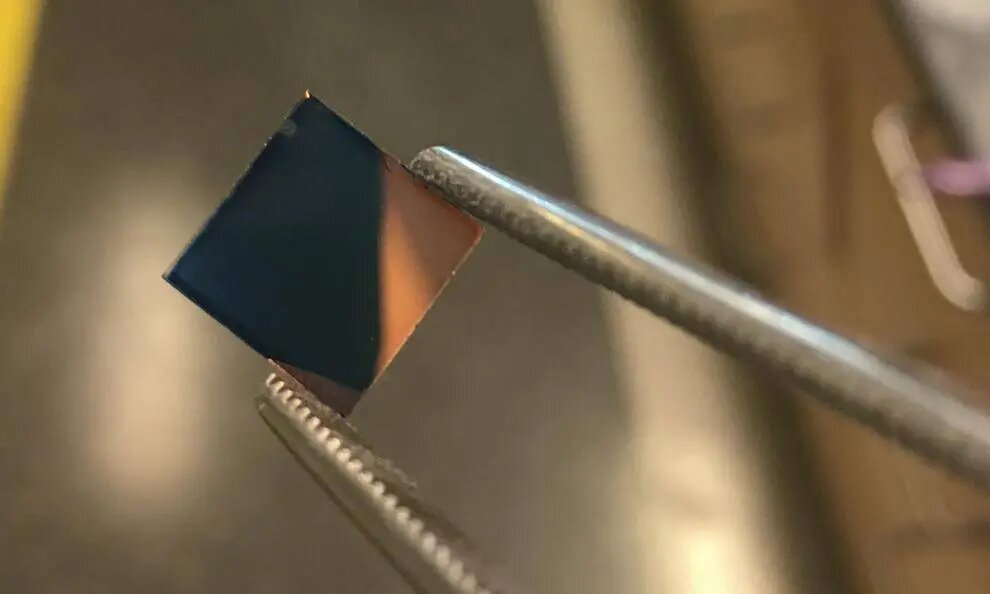
Above image: Photostimulable polymer meta-surface - Jens Meyer University of Jena - Feb 2024

Airy cellulose from a 3D printer - Swiss Federal Laboratories for Materials Science and Technology - Apr 2024

Healable cathode material - David Baillot at UC San Diego Jacobs School of Engineering - Mar 2024

Precious metals extracted from discarded electronics - Fred Zwicky at University of Illinois Urbana-Champaign - Mar 2024

Synthetic mucus - Jessica Kramer for University of Utah - Mar 2024

2D semiconductor material by Xiangfeng Duan - UCLA Dehui Zhang - Apr 2024

A bag of extracted contaminants from an old pizza box - Idaho National Laboratory - Apr 2024

Prototype finger with rigid bones and flexible flesh - Adrian Alberola - Apr 2024

Zinc-lignin battery - Thor Balkhed Linköping University - May 2024

A bead of space glass, glass made in space - Phoenix Pleasant ORNL, USDOE - 2024

Smart bioelectronic bandage - Wei Gao California Institute of Technology - Jun 2024


Wednesday, July 31, 2024

Scientists Wax Superlative on Climate Disaster in Action


After reading many thousands of articles about science, and listening to the way scientists talk, some things become really obvious - like the fact that scientists don't use informal language often, and especially informal superlatives, like "nah this is just crazy" or "yeah you guys are completely screwed". So when you see it, you take note:

Ocean heat and La Nina combo likely mean more Atlantic hurricanes this summer
May 2024, phys.org

This May, ocean heat in the main area where hurricanes develop has been as high as it usually is in mid-August. "That's crazy,"

He says "that's crazy", and scientists don't say that, in fact it's like a thing that scientists are very unlikely to say; they just don't talk that way, so when you hear it, you know it's oh shit time.

via National Oceanic and Atmospheric Administration


New study finds Earth warming at record rate, but no evidence of climate change accelerating
Jun 2024, phys.org

Once again, the climate is so screwed up that scientists, known for using the most boring language possible, what I will jokingly call their aggressively anti-superlative approach to communicating, are using words like "gobsmacking", and that's all you really need to know:

Scientists had theorized a few explanations for the massive jump in September 2023, which Hausfather called "gobsmacking."

Wednesday's report didn't find enough warming from other potential causes. The report said the reduction of sulfur pollution from shipping - which had been providing some cooling to the atmosphere - was overwhelmed last year by carbon particles put in the air from Canadian wildfires. (still debate about this apparently)

Note what they're saying is that this is exactly what we expected: "The year was within the range of what was predicted, albeit it was at the upper edge of the range. Acceleration if it were to happen would be even worse, like hitting a global tipping point, it would be probably the worst scenario. But what is happening is already extremely bad and it is having major impacts already now. We are in the middle of a crisis."

via 57 scientists from around the world using United Nations-approved methods: Piers M. Forster et al, Indicators of Global Climate Change 2023: annual update of key indicators of the state of the climate system and human influence, Earth System Science Data (2024). DOI: 10.5194/essd-16-2625-2024

Wednesday, July 24, 2024

Art Things


Banksy's 'Valentine's day mascara' mural freezer removed
Feb 2023, CNN Style

The mural shows a 1950s housewife with a swollen eye apparently pushing a man into an abandoned chest freezer, but the chest freezer was real, while the rest was painted on the wall. Then the freezer was stolen. So now the refrigerator is a work of art, in part, and art history is being re-written by the day. This was done for Valentine's Day, 2023.

Banksy: Artist confirms new London tree mural is his own work
Mar 2024, BBC News

Islington Council said its graffiti removal team is aware of the artwork and won't remove it.

I'm not even sure how to say this without it coming out wrong, but like you know your society is fucked up when the people are so wholeheartedly supporting illegal activity:

Crowds have gathered to see the mural, with one local saying they were "proud" their street had been chosen.

"It feels like a personal message to us residents, we just feel so proud," said Wanja Sellers, who lives along the street from the mural.

I am left wondering if there is no such thing as public art anymore? Public anything? What happens when there's no more public assets (public art, public music, public space, public parks, public restrooms, public water fountains, public benches, public transit, public public)? People start making their own, illegally, and the rest of the people start supporting it. Please rewind to the movie Death Wish, when hoodlums used a spraycan to terrorize, vandalize, rape and murder a middle class architect and his family living on the Upper West Side of New York City in 1974. Graffiti, and the spraycan specifically, was the ultimate symbol of societal dysfunction, collapse even. It was the mark of the beast, the trumpet of the apocalypse. Today, well things are much different. (Then again, Angela Davis's afro was scary as hell to a lot of Americans and now it's a Halloween costume.)

Post Script: 
The council believes the cherry tree in the foreground of the artwork is around 40-50 years old and is in declining health, with decay and fungi damage. It says it has been maintaining and pruning the tree for some time - both for safety, and to help prolong its lifespan - and will continue working to keep the tree alive. A resident says "It's spring now, and this tree should be bursting forth with leaves, but Banksy must have cycled past and thought how miserable it looks."


Examining why egg yolk was used in Old Masters' oil paints
Mar 2023, phys.org

The work involved creating two types of oil-based paints, both with yolk added. One mixture consisted of nothing but yolk and oil. The other had yolk, oil and pigments to add coloring. The team also created similar paints without using egg yolk. The group then used the paints to create paintings that could be used for testing purposes. Such tests included taking measurements of moisture amounts and movement, oxidation, time to dry and heat capacity.
  • stronger bonding between pigment particles for stiffer paint
  • reduced wrinkling of the paint to protect the paint against high humidity
  • antioxidants in the yolk prevent yellowing
  • more pigment to the oil to create more vivid images

via Institute for Mechanical Process Engineering and Mechanics at Karlsruhe Institute of Technology, Department of Chemistry and Industrial Chemistry and at University of Pisa, Institute of Chemistry of Organo Metallic Compoundsin Pisa, and Doerner Institut in Munich: Ophélie Ranquet et al, A holistic view on the role of egg yolk in Old Masters' oil paints, Nature Communications (2023). DOI: 10.1038/s41467-023-36859-5

Louise dancing on her 60th birthday - art by Jillian Edelstein  for Breast Cancer Now in Gallery of Hope at London's Saatchi Gallery - Apr 2024

AI photos show people with secondary breast cancer their lost future
Apr 2024, BBC News

I'm sure there's a history for this, but I'm not familiar with it. People have been aware of their own impending death for a long time, not just because of advances in cancer diagnoses (the guy with the "black spot" in Treasure Island anyone?). And artists have been making shit up forever, it's kind of what they do. All that being said, wow this is bonkers -

Using AI and photos taken by renowned photographer Jillian Edelstein, the images make up the Gallery of Hope at London's Saatchi Gallery.

Louise Hudson, from Caldicot, Monmouthshire, is one of those who took part.

Now 58, she was first diagnosed with breast cancer in July 2022 which then spread to her liver. In February an MRI scan showed lesions on her brain and she was told she had a life expectancy of about six months.

Louise's image at the exhibition shows her celebrating her 60th birthday by performing with her amateur dance company Chelsea Ballet, while her husband of 30 years Barry looks on with pride.
Michel-Marie Carquillat - Joseph-Marie Jacquard woven in silk on a Jacquard loom, 55 x 34 cm - 1839 

The Most Famous Image in the Early History of Computing : History of Information

Just in case this gets lost in the oncominig artificial info wars and subsequent death of the internet, I copy here:

In 1839 weaver Michel-Marie Carquillat, working for the firm of Didier, Petit et Cie, in Lyon, France wove in fine silk a Portrait of Joseph-Marie Jacquard. The image, including caption and Carquillat’s name, taking credit for the weaving, measures 55 x 34 cm.; the full piece of silk including blank margins measures 85 x 66 cm.

This image, of which perhaps only about 20 examples survived, was woven on a Jacquard loom using 24,000 Jacquard cards, each of which had over 1000 hole positions. The process of mis en carte, or converting the image details to punched cards for the Jacquard mechanism, for this exceptionally large and detailed image, would have taken several workers many months, as the woven image convincingly portrays superfine elements such as a translucent curtain over glass window panes.

The Jacquard loom did no computation, and for that reason it was not a digital device in the way we think of digital today. However the method by which Jacquard stored information in punched cards by either punching a hole in s standardized space in a card or not punching a whole in that space is analogous to a zero or one or an on and off switch.
  • The Jacquard method was used by Charles Babbage
  • It confirmed the potential of using punched cards for the input, programming, output and storage of information in the design and conception of the first general-purpose programmable computer the Analytical Engine.
  • It also challenged existing notions that machines were incapable of subtlety, and blurred the clear lines between industrial production and the arts. 
  • See Swade, The Cogwheel Brain. Charles Babbage and the Quest to Build the First Computer. 2000. 107-8.
  • More than once this woven image was mistaken for an engraved image.
  • In 2012 the only publically recorded examples were those in the Metropolitan Museum of Art, the Science Museum in London, The Art Institute of Chicago, and the Computer History Museum, Mountain View, California.
  • The image was the subject of the book by James Essinger entitled, Jacquard's Web. How a Hand Loom led to the Birth of the Information Age (2004).


Wednesday, January 10, 2024

Gravity Is Dead


AKA Kuhning the Universe

Smoking-gun evidence for modified gravity at low acceleration from Gaia observations of wide binary stars
Aug 2023, phys.org

Conclusive evidence for the breakdown of standard gravity in the low acceleration limit from a verifiable analysis of the orbital motions of long-period, widely separated, binary stars.

Them fightin words.

(Although this was suggested 40 years ago by theoretical physicist Mordehai Milgrom at the Weizmann Institute in Israel in a new theoretical framework called modified Newtonian dynamics (MOND) or Milgromian dynamics in current usage.)

The significance is very high meeting the conventional criteria of 5 sigma for a scientific discovery.

via Sejong University in Seoul: Kyu-Hyun Chae, Breakdown of the Newton–Einstein Standard Gravity at Low Acceleration in Internal Dynamics of Wide Binary Stars, The Astrophysical Journal (2023). DOI: 10.3847/1538-4357/ace101

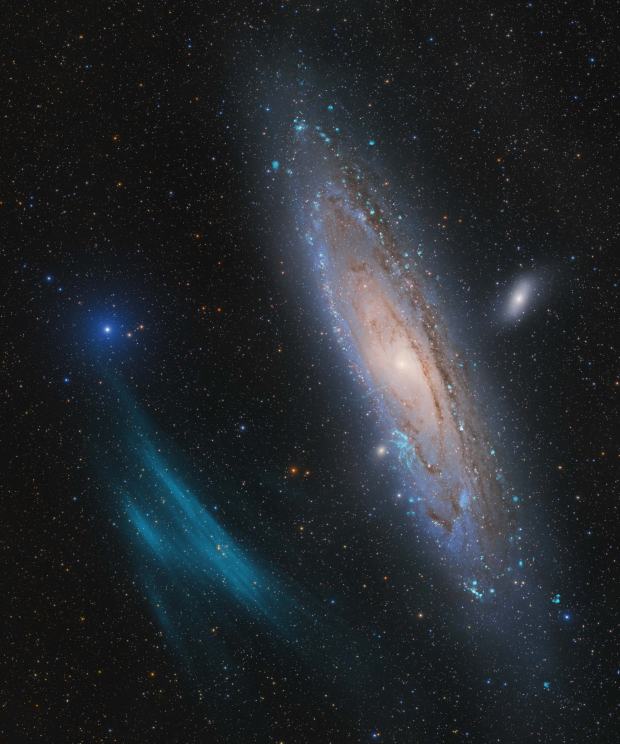
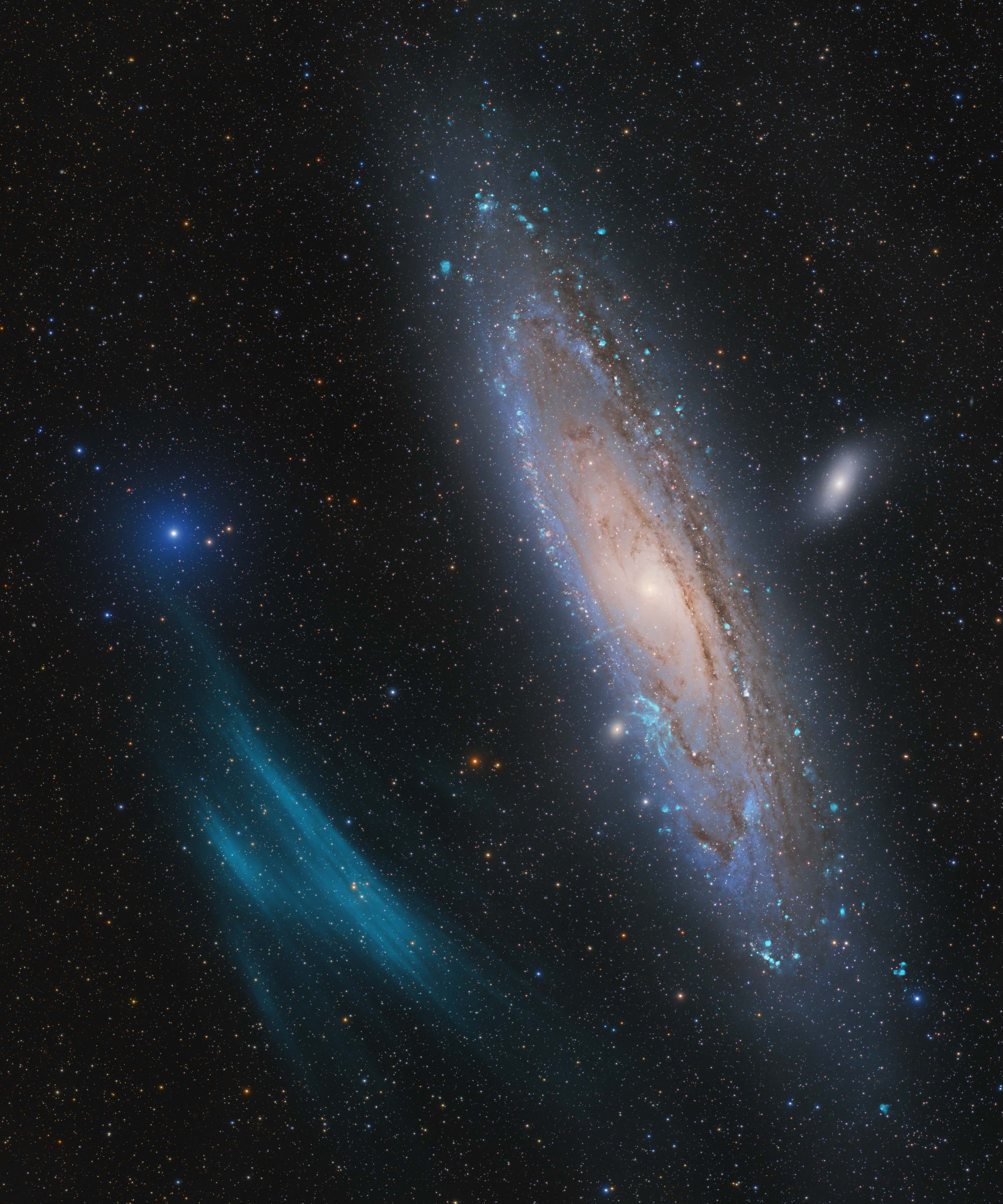
Image credit: Andromeda, Unexpected - Plasma Arc and Winner of the Astronomy Photographer of the Year by Marcel Drechsler, Xavier Strottner, Yanin Sainty - 2023 [link]

Mostly Unrelated Post Script: 
Evidence found of electromagnetic fields from electrical towers disrupting pollinating honeybees
May 2023, phys.org

Man come on.

So Many Metas


A somewhat systematic review of previous systematic reviews and meta-analyses about nutrition and Alzheimer's
May 2023, phys.org

The team conducted a review of systematic reviews aka meta-analysis studies around the topic of nutrition in disease. (So their's is a meta-meta-analysis.)

This is why kids need to go to school:

There is a risk that a systematic review of multiple meta-data studies could artificially weight specific study findings if they are included multiple times across the different meta-analyses.

What may be important to know is that both of these meta-analyses included the same study from 2015, titled "Intakes of fish and polyunsaturated fatty acids and mild-to-severe cognitive impairment risks: A dose-response meta-analysis of 21 cohort studies," which is itself a meta-analysis that could contain studies included in other meta-analyses covered by the current study.

Note: This is 100% related to the AI-feeding-AI problem we're not even beginning to talk about yet -- because when you use meta-analysis of past meta-analyses, you risk multiplying the dirty data. 

via International Education College of Zhejiang Chinese Medical University, Hangzhou: Inmaculada Xu Lou et al, Effect of nutrition in Alzheimer's disease: A systematic review, Frontiers in Neuroscience (2023). DOI: 10.3389/fnins.2023.1147177


Do measurements produce the reality they show us?
Aug 2023, phys.org

The observable values of a physical system depend on the dynamics of the measurement interaction by which they are observed. "This is a major step towards explaining the meaning of 'superposition' in quantum mechanics".

"Our results show that the physical reality of an object cannot be separated from the context of all its interactions with the environment, past, present and future, providing strong evidence against the widespread belief that our world can be reduced to a mere configuration of material building blocks," said Hofmann.

I've never heard it this way - 

Fully resolved measurements require a complete randomization of the system dynamics; this corresponds to a superposition of all possible system dynamics. 

"Context-dependent realities can explain a wide range of seemingly paradoxical quantum effects. We are now working on better explanations of these phenomena. Ultimately, the goal is to develop a more intuitive understanding of the fundamental concepts of quantum mechanics that avoids the misunderstandings caused by a naïve belief in the reality of microscopic objects," said Hofmann.

Hiroshima University: Tomonori Matsushita et al, Dependence of measurement outcomes on the dynamics of quantum coherent interactions between the system and the meter, Physical Review Research (2023). DOI: 10.1103/PhysRevResearch.5.033064


From stock markets to brain scans, new research harmonizes hundreds of scientific methods to understand complex systems
Sep 2023, phys.org

They looked at hundreds of different methods for measuring interaction patterns in complex system, and worked out which ones are most useful for understanding a given system. They call it the scientific orchestra, and each method is an instrument, and they thought maybe some instruments are better for certain kinds of data, so they tried to find out.

We're talking about methods like Brownian motion, coupled maps, coupled oscillators, simulated fMRI, simulated climate, wave equations, or uncorrelated noise to understand data like stock markets, river flow, brain waves, earthquakes.

In total, we applied our 237 methods to more than 1,000 datasets. By analyzing how these methods behave when applied to such diverse scientific systems, we found a way for them to "play in harmony" for the first time.

They found that the methods were grouped differently than what we traditionally think, and that when properly orchestrated, the full ensemble of scientific methods demonstrated improved performance over any single method on its own.

via Centre for Complex Systems, The University of Sydney: Oliver M. Cliff et al, Unifying pairwise interactions in complex dynamics, Nature Computational Science (2023). DOI: 10.1038/s43588-023-00519-x

AI Art - Mechanical Goddess - 2024

Five factors that assess well-being of science predict support for increasing US science funding
Sep 2023, phys.org

Drawing on 13 questions in APPC's 2022 nationally representative Annenberg Science Knowledge survey (ASK) survey of 1,154 U.S. adults, researchers identified five factors that form a Factors Assessing Science's Self-Preservation (FASS) model. The model can be used to assess the extent to which public perceptions align with the self-presentation of science and scientists live up to the ways in which they define themselves and their work to the public.
  • credible
  • prudent
  • unbiased
  • self-correcting
  • beneficial
via Annenberg Public Policy Center of the University of Pennsylvania: Yotam Ophir et al, Factors Assessing Science's Self-Presentation model and their effect on conservatives' and liberals' support for funding science, Proceedings of the National Academy of Sciences (2023). DOI: 10.1073/pnas.2213838120


Artificial intelligence predicts the future of artificial intelligence research
Oct 2023, phys.org

(Asimov's Foundation no?)

An algorithm that not only assists researchers in orienting themselves systematically but also predictively guides them in the direction in which their own research field is likely to evolve.

Science4Cast is a graph-based representation of knowledge which becomes more complex over time as more scientific articles are published. Each node in the graph represents a concept in AI, and the connections between nodes indicate whether and when two concepts were studied together.

For example, the question "What will happen" can be described as a mathematical question about the further development of the graph. Science4Cast is fed with real data from over 100,000 scientific publications spanning a 30-year period, resulting in a total of 64,000 nodes. 

via Max-Planck Institute for the Science of Light in Erlangen: Mario Krenn et al, Forecasting the future of artificial intelligence with machine learning-based link prediction in an exponentially growing knowledge network, Nature Machine Intelligence (2023). DOI: 10.1038/s42256-023-00735-0

Thursday, May 4, 2023

Fingers For All


Gallery of close-up photos of scientists holding small things in their rubber-gloved fingers. I wish I could articulate my fascination with these pictures, something about the essence of discovery, the seed of wonder? It's close up so it's under enhanced scrutiny by the viewer. Maybe it's the difference between this little thing being a big deal, and yet being so tiny. What's the difference between a photograph of the Large Hadron Collider and a photograph of this "artificial fairy" above? You can hold it in your hands, and not just your hands, in between your fingers. And also it's being held, controlled, protected, by the very hands that made it. Maybe just because it's the scientists fingers, not their face or their lab coat or their million dollar petaflopping supercomputers,  but their fingers. The physical products of scientific endeavor, the pinnacle of human technology, being held by the most simple piece of "technology" on this Earth -- the human hand.  

Above image: Artificial fairy - Hao Zeng, Jianfeng Yang, Jianfeng Yang at Tampere University - 2023

Gnat Robot includes a 2 mg gyroscope, 3 mg microprocessor, and 1 mg visual optic flow sensor - Fuller, Yu & Talwekar U of Wash - 2022 [link]

Graphene device grown on a silicon carbide substrate chip - Jess Hunt-Ralston at Georgia Institute of Technology - 2022 [link]

Printable transparent plastic - James Ponder Georgia Tech - 2022 [link]

Recycling batteries - Chen Feng and Marilyn Sargent at Lawrence Berkeley National Laboratory - 2023 [link]

Electricity-generating laminate for ambient energy harvesting - University of Melbourne - 2023 [link]

Enzymatic recycling platform efficiently deconstructs raw PET plastic - Dennis Schroeder NREL - 2022 [link]

Emma Rothkopf 20 microliter sample at Brown University - 2023 [link]

Thermally resistant copper sandwich - Carnegie Mellon University College of Engineering - 2023 [link]

Smart bandage by Caltech - 2023 [link]

Prototype fuel cell wrapped in fleece - Fussenegger Lab at ETH Zurich - 2023 [link]

Covalent organic framework material - Gustavo Raskosky at Rice University - 2023 [link]


Friday, December 16, 2022

Scientist Fingers

Implantable Sensor - Shangbin Liu Penn State Tsinghua University - 2022
Researchers developed a flexible, implantable sensor that can continuously monitor nitric oxide in the knee of a rabbit. The gas may indicate the onset of damage-induced osteoarthritis. Shangbin Liu Penn State Tsinghua University, 2022 [link]

Rhizosphere-on-a-chip - Carlos Jones, ORNL, US Dept of Energy - 2022 [link]

Single-Crystal Organometallic Perovskite Optical Fiber - Dr Lei Su at Queen Mary University of London - 2022 [link]

Recycled Plastic - Patrick Campbell University of Colorado Boulder - 2022 [link]

Ionic Circuit - Woo-Bin Jung Harvard SEAS - 2022 [link]

800,000 Lab-grown Brain Cells Play Pong - Cortical Labs - 2022 [link]

Single-cell electrorotation microfluidic device - Texas A and M Engineering - 2022 [link]

Spectrometer on a chip - Oregon State and Aalto University - 2022 [link]

Programmable bacteria electronics - Brandon Martin at Rice University - 2022 [link]

Hydrophobic film - Sahar Babaeipour at Aalto University - 2022 [link]

Fragment of Winchcombe meteorite - The Trustees of the Natural History Museum of London - 2022 [link]

All-perovskite tandem solar cell with power conversion efficiency of 27.4% - Aaron Demeter at University of Toronto Engineering - 2022 [link]

Anterior teeth with a huge dental calculus deposit from Copper Age Italy 3.000 BC - Andrea Quagliariello - 2022 [link]

Hydrogen-substituted graphdiyne coupled with a single-crystal copper catalyst - Vincent Tung, King Abdullah University of Science and Technology - 2022 [link]


Monday, September 26, 2022

Psyflops


Delaying gratification: How do children react to waiting in different cultures?
Jul 2022, phys.org

The Marshmallow Test Test:
In the context of eating food, Japanese people are accustomed to waiting. When having meals, Japanese people typically wait until all individuals are served. Such customs of waiting to eat food are not as prevalent in the daily experiences of children in the United States.

In the context of opening gifts, U.S. children may experience waiting more consistently than Japanese children. Giving gifts is a more special event occurring on specific occasions in the United States, such as birthdays and other holidays, that can involve traditions of waiting. In contrast, gift giving is a regular year-round event for Japanese people that is not consistently associated with traditions of waiting.

via UC Davis: Kaichi Yanaoka et al, Cultures Crossing: The Power of Habit in Delaying Gratification, Psychological Science (2022). DOI: 10.1177/09567976221074650

Tuesday, September 13, 2022

Attoclock My Blogspot


All these things have to do with time. We're getting better at seeing smaller time intervals. Back when femtosecond spectroscopy came out, someone used it to suggest a quantum nature of photosynthesis, as if the photons take all the routes possible through the leaf until they find the optimal route, and then all collapse onto that one (although this has since been revisited in 2020). 

Now we can see in attoseconds. 

We're getting better at coordinating on smaller time scales. Back before there were cross-continental railroads, we didn't need time zones. Now we need to periodically "smear" the clock at the micro-second scale just to keep all the world's computers in perfect synchrony. And big platforms are developing their own Time Cards to keep in sync with itself via radio wave oscillations from satellites. 

But then there's the far out stuff, the kind of phenomena that the average person, including myself, cannot understand. We're talking about time crystals and extra time dimensions. No idea what these really are, but they seem to be hanging around with the quantum computer news a lot.

Oh let's not forget that crazy but intuitive theory of Quantum Exoticism -- that we need to just get over it and accept that things move faster than the speed of light; the subluminal and the superluminal can co-exist [links and links].


A new window into the world of attosecond phenomena
May 2022, phys.org

X-Ray Free-Electron Lasers (XFEL) and chronoscopy.

via The Henryk Niewodniczanski Institute of Nuclear Physics Polish Academy of Sciences: Wojciech Błachucki et al, Approaching the Attosecond Frontier of Dynamics in Matter with the Concept of X-ray Chronoscopy, Applied Sciences (2022). DOI: 10.3390/app12031721


Time crystals 'impossible' but obey quantum physics
Jun 2022, phys.org

Sounds like a challenge.

Scientists have created the first "time-crystal" two-body system in an experiment that seems to bend the laws of physics.

First theorized in 2012 by Nobel Laureate Frank Wilczek and identified in 2016, time crystals exhibit the bizarre property of being in constant, repeating motion in time despite no external input. Their atoms are constantly oscillating, spinning, or moving first in one direction, and then the other.

They cooled superfluid helium-3 to about one ten thousandth of a degree from absolute zero (0.0001 K or -273.15 C). The researchers created two time crystals inside the superfluid, and brought them to touch. The scientists then watched the two time crystals interacting as described by quantum physics.

Time crystals could be used to build quantum devices that work at room temperature.

via Lancaster University, Landau Institute, and Aalto University in Helsinki:  Nonlinear two-level dynamics of quantum time crystals, Nature Communications (2022). DOI: 10.1038/s41467-022-30783-w


Researchers observe continuous time crystal
Jun 2022, phys.org

In their experiment, the scientists used a Bose-Einstein condensate inside an optical high-finesse cavity. Using a time-independent pump, they observed a limit cycle phase which is characterized by emergent periodic oscillations of the intracavity photon number accompanied by the atomic density cycling through recurring patterns.

I'm just reading it for the words, and I see "time pump" in there. 

via University of Hamburg Institute of Laser Physics: Phatthamon Kongkhambut et al, Observation of a continuous time crystal, Science (2022). DOI: 10.1126/science.abo3382


As Earth spins faster, Meta joins fight against leap seconds
Jul 2022, Ars Technica

"Leap Smearing"

Facebook, like many large-scale tech companies, is tired of trying to time a global network of servers against leap seconds, which add between 0.1 and 0.9 seconds to Coordinated Universal Time (UTC) every so many years. There have been 27 leap seconds added since 1972. In a post on Meta’s engineering blog, Oleg Obleukhov and Ahmad Byagowi say 27 is quite enough for non-solar-scientist types—"enough for the next millennium."

International timekeeping bodies add leap seconds at unpredictable intervals because the things that cause them—the braking action of tides on rotation, moon position, the distribution of ice caps on mountaintops, mantle flow, earthquakes—are unpredictable. When the Earth’s speed varies too much from atomic time-keeping, a leap second is called for by the International Earth Rotation and Reference Systems Service (IERS).

At midnight on the designated day, clocks are set to tick from 23:59:59 to 23:59:60 to 00:00:00. That uncommon middle timestamp drives coordinated systems bonkers. A leap second in 2012 took down Reddit, Gawker, and Australian airline Qantas. Cloudflare took the hit on New Year’s 2017 (and detailed why). Since then, many technologies have prepped themselves for the next leap second with “leap smearing,” or using micro-second slowdowns over a long, global-server-friendly span leading up to midnight.

-"We encourage anyone smearing leap seconds to use a 24-hour linear smear from noon to noon UTC."
Google Developers, Public NTP, Aug 2022 

Image credit: Cold Atoms in an Optical Resonator Forming a Time Crystal, University of Hamburg, 2022


Wednesday, July 20, 2022

Hide Your Hypotheses, Machine Learning is Coming


Big data, machine learning, artificial intelligence - whatever you want to call it - is moving so fast, and making predictions so unexpected, that it's almost making us look stupid. But we're not. That's how science is supposed to work. 

Image credit: Copy of Ernst Haeckel's 1886 Tree of Life by Paul D Stewart


New research shows gene exchange between viruses and hosts drives evolution
Jan 2022, phys.org

First a reminder of how complicated this all is:

"The first comprehensive analysis of viral horizontal gene transfer..."

HGT allows genes to jump between species including viruses and their hosts. If the gene does something useful, it can sweep through the population and become a feature of that species. This can lead to a rapid emergence of new abilities, as opposed to the more incremental changes that result from smaller mutations.

via  University of British Columbia: Nicholas A. T. Irwin et al, Systematic evaluation of horizontal gene transfer between eukaryotes and viruses, Nature Microbiology (2021). DOI: 10.1038/s41564-021-01026-3


Study finds new patterns of antibiotic resistance spread in hospitals
Apr 2022, phys.org

What's really happening is so much more complicated that we thought. You think you know, but you have no idea:

The findings suggest that specific genes, rather than entire organisms, were circulating in hospitals—in some cases, for many years. Notably, the team discovered antibiotic resistance gene transfer between bacteria, connecting patient infections in new ways and also helping to explain the large diversity of CRE species and strains in these hospitals. Typically, hospitals would not connect outbreaks of different CRE species such as E. coli and Klebsiella, but the research team says that information from Salamzade's tool could make hospitals more aware of potential hospital reservoirs for gene exchange and inform epidemiological investigations into antibiotic resistant infections.

"Hospital epidemiology would never find this with more traditional methods," said Earl. "I would argue that this is the kind of thing even our standard genomics approaches wouldn't find. It really took having a hypothesis, building up an approach to allow us to test that hypothesis in a really rigorous way, and then stepping back to look at the data."

via Broad Institute of MIT and Harvard: Rauf Salamzade et al, Inter-species geographic signatures for tracing horizontal gene transfer and long-term persistence of carbapenem resistance, Genome Medicine (2022). DOI: 10.1186/s13073-022-01040-y


Researchers adapt social network analysis to model virus evolution
May 2022, phys.org

Even basic assumptions are wrong:

New research from Western University suggests some viruses evolve more like a dynamic social network—rather than a rigid tree, as was previously believed—recombining with one another to create a web of intersecting subtypes. 

via University of Western Ontario: Abayomi S. Olabode et al, Revisiting the recombinant history of HIV-1 group M with dynamic network community detection, Proceedings of the National Academy of Sciences (2022). DOI: 10.1073/pnas.2108815119


New research shows gene exchange between viruses and hosts drives evolution
Jan 2022, phys.org

Just a reminder of how complicated this all is:

"The first comprehensive analysis of viral horizontal gene transfer..."

HGT allows genes to jump between species including viruses and their hosts. If the gene does something useful, it can sweep through the population and become a feature of that species. This can lead to a rapid emergence of new abilities, as opposed to the more incremental changes that result from smaller mutations.

via  University of British Columbia: Nicholas A. T. Irwin et al, Systematic evaluation of horizontal gene transfer between eukaryotes and viruses, Nature Microbiology (2021). DOI: 10.1038/s41564-021-01026-3


Mostly unrelated posts, just highlighting the scientific method hard at work:
Counting bug splats on vehicle license plates shows numbers of flying insects has dropped significantly
May 2022, phys.org

Participants were asked to clean their license plates before heading out on a journey in their vehicle and then to photograph and count the number of bugs they found splattered on the plates when they returned.

The researchers found the number of splats recorded dropped dramatically over the course of the study—total numbers were 58.5% lower at the end of the study than at the beginning (2004 - 2021).

via Kent Wildlife Trust: The Bugs Matter Citizen Science Survey


Self-eliminating genes tested on mosquitoes
May 2022, phys.org

Temporary, self-deleting genetic changes that don't permanently alter wild populations' genetic makeup

via Texas A&M University: Keun Chae et al, Engineering a self-eliminating transgene in the yellow fever mosquito, Aedes aegypti, PNAS Nexus (2022). DOI: 10.1093/pnasnexus/pgac037


Post Script:
I'm not sure what to call it, but I'm seeing a pattern emerge, maybe a new category of headlines, something about the unforeseen implications of the climate apocalypse?

Lake Mead: Shrinking reservoir reveals more human remains
May 2022, BBC News

Mount Everest: Melting glaciers expose dead bodies
Mar 2019, BBC News