Showing posts with label metamaterials. Show all posts

Monday, March 31, 2025

Does It Compute


AKA All Computers All the Time

Right now a computer is a box that sits on your desk. It's plugged in. Maybe it's a little box, one you keep in your pocket. That one's not plugged in, but it does need power. Soon, the computer will not be a thing. Instead, all things will be a computer. Maybe it's better to say that all things will compute. And like instead of saying 'there's an app for that' we might hear instead 'does it compute'? Like, "Can you pass me the paper towel?" "Does it compute?" Or, "Hey I just got a new haircut." "But does it compute?" 

First - The Fiber Computer:

Fiber computer allows apparel to run apps and 'understand' the wearer
Feb 2025, phys.org

It's an autonomous programmable computer in the form of an elastic fiber.

The fiber computer contains a series of microdevices, including sensors, a microcontroller, digital memory, Bluetooth modules, optical communications, and a battery, making up all the necessary components of a computer in a single elastic fiber.

"Our bodies broadcast gigabytes of data through the skin every second in the form of heat, sound, biochemicals, electrical potentials, and light, all of which carry information about our activities, emotions, and health. Unfortunately, most, if not all, of it gets absorbed and then lost in the clothes we wear."

via MIT, RISD, Brown, Stanford, Soldier Nanotechnologies: Yoel Fink, A single-fibre computer enables textile networks and distributed inference, Nature (2025). DOI: 10.1038/s41586-024-08568-6. 


Materials can remember a sequence of events in an unexpected way
Jan 202,5 phys.org

Material memory is like wrinkles on a crumpled piece of paper. These memories are stored in disordered solids in which the arrangement of particles seems random but actually contains details about past deformations. Materials should not be able to form return-point memory when the force only occurs in one direction. For example, a bridge might sag slightly as cars drive over it, but it doesn't curve upwards once the cars are gone.

The researchers boiled down the components of the system—such as the particles in a solid or the microscopic domains in a magnet—into abstract elements called hysterons. "Hysterons are elements of a system that may not immediately respond to external conditions, and can stay in a past state."

The hysterons in the model interact either in a cooperative way, where a change in one encourages a change in the other, or in a non-cooperative "frustrated" way, where a change in one discourages a change in the other. Frustrated hysterons are the key to forming and recovering a sequence in a system with asymmetric driving.

"We think this is a way to design artificial systems with this special kind of memory, starting with the simplest mechanical systems not much more complicated than a bendy straw, and hopefully working up to something like an asymmetrical combination lock."

via Penn State: Chloe Lindeman et al, Generalizing multiple memories from a single drive: The hysteron latch, Science Advances (2025). DOI: 10.1126/sciadv.adr5933


Soap's maze-solving skills could unlock secrets of the human body
Jan 2025, phys.org

"Surfactants—the molecules found in soap—can naturally find its way through a maze"

We're talking about things acting like people. Imagine discovering that chairs can figure out how to best position themselves in a theater. Or the straps on your backpack can figure out the best length for positioning the pack on your back depending on the weight and the way you walk etc. Your pencil can figure out how to write a better sentence for convincing your roommate to do the dishes. I'm just trying to imagine what this all means.  

"When we put soap into a liquid filled maze, the natural surfactants already present in the liquid interact, creating an omniscient view of the maze, so the soap can intuitively find the correct path, ignoring all other irrelevant paths. This behavior occurs due to very subtle but powerful physics where the two types of surfactants generate tension forces that guide the soap to the exit."

Yes, they called soap bubbles omniscient. 

via Department of Mathematics at the University of Manchester: Richard Mcnair et al, Exogenous–Endogenous Surfactant Interaction Yields Heterogeneous Spreading in Complex Branching Networks, Physical Review Letters (2025). DOI: 10.1103/PhysRevLett.134.034001

Friday, January 10, 2025

Everything is Everywhere All of the Sudden


I usually don't post artist renderings like this, but this is what I see when imagining everything made of computers, using ambient energy like light to control different particles each designed to take it and do different things with it but all in one jumble of matter, like an intelligent matter: Above image: An artistic depiction of a wavelength-multiplexed diffractive optical processor for 3D quantitative phase imaging. Credit: UCLA Engineering Institute for Technology Advancement [link]

On what could be called "ubiquitous computing", a legend of artificial intelligence (Hinton) describes it really well:
(What's next in computing?) My last years at Google I was thinking about analog computing ... run these big language models in analog hardware ... if you're gonna use that low power analog computation, every piece of hardware is gonna be a bit different. And the idea is that the learning is gonna make use of the specific properties of that hardware.
--Geoffrey Hinton interview, "On Working w Ilya, Choosing Problems, and the Power of Intuition", July 2024 30min?

Researchers use 'smart' rubber structures to carry out computational tasks
May 2024, phys.org

"We now know how to design simple materials so they can process information."

The research team created a rubber computer that can act as a two-bit binary counter using slender rubber elements as mechanical bits, and assembling multiple bits together in a metamaterial.

Note: The title of their demonstration video is "Can Rubber Compute?" and I now see it all as a series of experiments like the Will It Blend series, where they just do it to everything - can crystals compute? (Yes, we already know that) Can light compute? (Yes we already know that too) Can slime mold compute? But can salt compute? (Actually yes, like in a gradient of fresh water and salt water, but I was talking about a pile of table salt.) Can my sneakers compute? (I mean obviously) Can my front door compute? (Also obvious, its whole thing is to open and close like 1/0) I'm not talking about a computer screwed on top of my doorknob, I mean the door itself, the whole thing, is a computer, just by the way its materials are put together.  The garbage can? Definitely garbage cans will compute. 

via Leiden University and AMOLF: Jingran Liu et al, Controlled pathways and sequential information processing in serially coupled mechanical hysterons, Proceedings of the National Academy of Sciences (2024). DOI: 10.1073/pnas.2308414121


Using DNA origami, researchers create diamond lattice for future semiconductors of visible light
May 2024, phys.org

With headlines like that, there is no further explanation. 

via Ludwig Maximilian University of Munich: Gregor Posnjak et al, Diamond-lattice photonic crystals assembled from DNA origami, Science (2024). DOI: 10.1126/science.adl2733

Also: Hao Liu et al, Inverse design of a pyrochlore lattice of DNA origami through model-driven experiments, Science (2024). DOI: 10.1126/science.adl5549


Mechanical computer relies on kirigami cubes, not electronics
Jun 2024, phys.org

It's a mechanical computer, one that doesn't use electronics. Is that all we need to call it? A mechanical computer?

Historically, these mechanical components have been things like levers or gears. But cubes can have five or more different states. Theoretically, that means a given cube can convey not only a 1 or a 0, but also a 2, 3 or 4.

When any of the cubes are pushed up or down, this changes the geometry—or architecture—of all of the connected cubes. This can be done by pushing up or down on one of the cubes with a magnetic field. These 64-cube functional units can be grouped together into increasingly complex metastructures that allow for storing more data or for conducting more complex computations.

The cubes are connected by thin strips of elastic tape. To edit data, you have to change the configuration of functional units. That requires users to pull on the edges of the metastructure, which stretches the elastic tape and allows you to push cubes up or down. When you release the metastructure, the tape contracts, locking the cubes—and the data—in place.

"One potential application for this is that it allows for users to create three-dimensional, mechanical encryption or decryption"

via North Carolina State University: Yanbin Li et al, Reprogrammable and reconfigurable mechanical computing metastructures with stable and high-density memory, Science Advances (2024). DOI: 10.1126/sciadv.ado6476 , www.science.org/doi/10.1126/sciadv.ado6476


New material paves the way to on-chip energy harvesting
Jul 2024, phys.org

They utilize the waste heat generated during operation and convert it back into electrical energy, called "on-chip energy harvesting", and it works because they put tin in the germanium (Ge+Sn). 

via Forschungszentrum Jülich and IHP—Leibniz Institute for High Performance Microelectronics in Germany, University of Pisa, University of Bologna, University of Leeds: Omar Concepción et al, Room Temperature Lattice Thermal Conductivity of GeSn Alloys, ACS Applied Energy Materials (2024). DOI: 10.1021/acsaem.4c00275


A first physical system to learn nonlinear tasks without a traditional computer processor
Jul 2024, phys.org

They made a contrastive local learning network where components evolve on their own based on local rules without knowledge of the larger structure, similar to how neurons in the human brain don't know what other neurons are doing and yet learning emerges.

"It can learn, in a machine learning sense, to perform useful tasks, similar to a computational neural network, but it is a physical object."

(Physical object, that's the key)

"Because the way that it both calculates and learns is based on physics, it's way more interpretable. You can actually figure out what it's trying to do because you have a good handle on the underlying mechanism. That's kind of unique because a lot of other learning systems are black boxes where it's much harder to know why the network did what it did.

via University of Pennsylvania: Sam Dillavou et al, Machine learning without a processor: Emergent learning in a nonlinear analog network, Proceedings of the National Academy of Sciences (2024). DOI: 10.1073/pnas.2319718121

The optical era of science reporting where every picture has rainbows in it: Artistic depiction of diffractive information processing - Ozcan Lab at UCLA - Jul 2024

Scientists demonstrate chemical reservoir computation using the formose reaction
Jul 2024, phys.org

Good explanation by the writeup author here, Tejasri Gururaj: The field of molecular computing interests researchers who wish to harness the computational power of chemical and biological systems. In these systems, the chemical reactions or molecular processes act as the reservoir computer, transforming inputs into high-dimensional outputs. ...

The formose reaction is the only example of a self-organizing reaction network with a highly non-linear topology, containing numerous positive and negative feedback loops.

The researchers used a continuous stirred tank reactor (CSTR) to implement the formose reaction. The input concentrations of four reactants—formaldehyde, dihydroxyacetone, sodium hydroxide, and calcium chloride—are controlled to modulate the reaction network's behavior.

The output molecule is identified using a mass spectrometer, which allows them to track up to 106 molecules. 

This setup can be used to do calculations, with the reactant concentrations being the input value to any function that needs to be computed.

The team showed that it could predict the behavior of a complex metabolic network model of E. coli, accurately capturing both linear and nonlinear responses to fluctuating inputs across various concentration ranges.

Furthermore, the system demonstrated the ability to forecast future states of a chaotic system (the Lorenz attractor), accurately predicting two out of three input dimensions several hours into the future.

via Institute for Molecules and Materials at Radboud University: Mathieu G. Baltussen et al, Chemical reservoir computation in a self-organizing reaction network, Nature (2024). DOI: 10.1038/s41586-024-07567-x

Wednesday, January 8, 2025

On the Misunderstandings of Thermodynamics


Thermodynamics is hard. 

The very concept of the green roof is an abomination, because it's antithetical to the purpose of a roof to begin with - a green roof is literally storing water on top of the building, on purpose. Roofs are sloped and bound by drainage systems to get the water out as thoroughly and quickly as possible. Water is the enemy, and yet with a  green roof, we're inviting it into the building on purpose. Sounds cool, looks cool, dumbest thing ever.

But then again, cool roofs are also a problem. One of the ways a building gets rid of unintended and uncontrolled water intrusion is through the silent, invisible power of the stack effect (heat rises). A hot roof facilitates and amplifies this stack effect, cooking-out excess moisture that gets into the interstitial spaces in a building. You can make a building as perfect as possible, but water will get in there, because that's what it does, and because nothing is perfect. 

What can sometimes appear like a deficit (roofs get too hot) can actually be an integral part of the overall design (ridding excess moisture). 

This is similar to highly efficient (almost magically efficient) ambient heat pumps - they only use the exact amount of energy needed. Traditional air conditioners are over-designed in that they cool the air way more than they need to. But for hot and humid climates, this has the benefit of removing moisture from the air. A modern, magical heat pump that removes the heat but not the moisture, does not make a comfortable indoor environment, and could actually lead to unintended side effects like mold growth. 


Cool roofs outperform green roofs in urban climate modeling study
July 2024, phys.org

A three-dimensional urban climate model of Greater London tested the thermal effects of different passive and active urban heat management systems, including painted "cool roofs," rooftop solar panels, green roofs, ground level tree vegetation and air conditioning during the two hottest days of the summer of 2018, and found that if adopted widely throughout London, cool roofs could reduce outdoor temperatures across the city about 1.2 C up to 2 C.

Other systems, such as extensive street-level vegetation or solar panels would provide a smaller net cooling effect, only about 0.3 degrees C on average across London, though they offer other environmental benefits. Similarly, while green roofs offer benefits like water drainage and wildlife habitats, their net cooling effect on the city was found to be negligible on average.

Though on average the effect of green roofs was negligible, the researchers found that their effect on temperature varied significantly throughout the day. During the warmest times of day, the wide adoption of green roofs could lower urban temperatures by an average of 0.5 degrees C. However, this would be offset overnight as the thermal mass from the roofs would retain daytime heat, releasing when the sun was down and increasing night-time temperatures by about the same amount.

via University College London: Cool roofs could be most effective at reducing outdoor urban temperatures in London compared with other roof top and vegetation interventions: a mesoscale urban climate modelling study, Geophysical Research Letters (2024). DOI: 10.1029/2024GL109634

Research shows how common plastics could passively cool and heat buildings with the seasons
Jun 2024, phys.org

Roofs and walls are not the same. Roofs have a clear view of the sky, where they can radiate their heat upwards. Walls can't radiate upwards, they're blocked by other things, and they absorb a lot of heat from surrounding buildings and pavement. They're also affected by different "kinds" of heat:

Radiant heat moves from buildings to the sky in a narrow portion of the infrared spectrum known as the atmospheric transmission window, so the researchers call this narrowband. At ground level, radiant heat moves across the entire infrared spectrum, and the researchers call that broadband.

"By coating walls and windows with materials that only radiate or absorb heat in the atmospheric window (like propylene), we can reduce broadband heat gain from the ground in the summer, and loss in the winter, while maintaining the cooling effect of the sky.

via Oak Ridge National Lab, Arizona State University, Princeton and UCLA: Radiative Cooling and Thermoregulation in the Earth's Glow, Cell Reports Physical Science (2024). DOI: 10.1016/j.xcrp.2024.102065.

New fabric makes urban heat islands more bearable
Jun 2024, phys.org

Only hats, shoulder coverings and the tops of shoes - about 3% of clothing - face direct sunlight. The other 97% of are being heated by thermal radiation from the sides and below.

"Solar is visible light, thermal radiation is infrared, so they have different wavelengths. That means you need to have a material that has two optical properties at the same time."

In tests under the Arizona sun, the material kept 2.3 C (4.1 F) cooler than the broadband emitter fabric used for outdoor endurance sports and 8.9 C (16 F) cooler than the commercialized silk commonly used for shirts, dresses and other summer clothing.

via University of Chicago: Ronghui Wu et al, Spectrally engineered textile for radiative cooling against urban heat islands, Science (2024). DOI: 10.1126/science.adl0653

Wednesday, September 18, 2024

Buildings, Bodies and Biocompatibility


How are ancient Roman and Mayan buildings still standing? Scientists are unlocking their secrets
Oct 2023, phys.org

There's 2,000-year-old concrete still looking like the day it was poured. And there's also the front steps of my friend's apartment that's been crumbling since the day it got repaired. 

What's the difference? 

Some of these ancient builders might have just gotten lucky, said Cecilia Pesce, a materials scientist at the University of Sheffield in England. They'd toss just about anything into their mixes, as long as it was cheap and available—and the ones that didn't work out have long since collapsed.

"They would put all sorts of things in construction," Pesce said. "And now, we only have the buildings that survived. So it's like a natural selection process."

But alas, there does seem to be a pattern:
In a study published earlier this year, Admir Masic, a civil and environmental engineer at the Massachusetts Institute of Technology, proposed that this power comes from chunks of lime that are studded throughout the Roman material instead of being mixed in evenly. Researchers used to think these chunks were a sign that the Romans weren't mixing up their materials well enough.

Instead, after analyzing concrete samples from Privernum -- an ancient city outside of Rome -- the scientists found that the chunks could fuel the material's "self-healing" abilities. When cracks form, water is able to seep into the concrete, Masic explained. That water activates the leftover pockets of lime, sparking up new chemical reactions that can fill in the damaged sections.
via MIT


Catalysis breakthrough yields self-cleaning wall paint that breaks down air pollutants when exposed to sunlight
Mar 2024, phys.org

The UV radiation creates free charge carriers in the particles, which induce decomposition of the trapped pollutants from air into small parts and their release. In this way, the pollutants are rendered harmless, but do not remain permanently attached to the wall paint. The wall color remains stable in the long term. The new particles work with ordinary sunlight by adding certain additional atoms to the titanium oxide nanoparticles, such as phosphorus, nitrogen, and carbon.

via Vienna University of Technology and Università Politecnica delle Marche: Qaisar Maqbool et al, Highly Stable Self-Cleaning Paints Based on Waste-Valorized PNC-Doped TiO2 Nanoparticles, ACS Catalysis (2024). DOI: 10.1021/acscatal.3c06203


Veins of bacteria could form a self-healing system for concrete infrastructure
Dec 2023, phys.org

Fiber reinforcement has been around since the first masons mixed horsehair into their mud. 

BioFiber - polymer fiber encased in a bacteria-laden hydrogel and a protective, damage-responsive shell. The team reports that a grid of BioFibers embedded within a concrete structure can improve its durability, prevent cracks from growing, and enable self-healing.

It uses biomineralizing bacteria, aka microbial-induced calcium carbonate precipitation.

via Drexel University: Mohammad Houshmand Khaneghahi et al, Development of a nature-inspired polymeric fiber (BioFiber) for advanced delivery of self-healing agents into concrete, Construction and Building Materials (2023). DOI: 10.1016/j.conbuildmat.2023.133765


New AI tool discovers realistic 'metamaterials' with unusual properties
Feb 2024, phys.org

They call it "inverse design"

"Tell us what you want to have as properties and we engineer an appropriate material with those properties. What you will then get is not really a material but something in-between a structure and a material, a metamaterial" 

via Delft University of Technology Department of Biomechanical Engineering: Helda Pahlavani et al, Deep Learning for Size‐Agnostic Inverse Design of Random‐Network 3D Printed Mechanical Metamaterials, Advanced Materials (2023). DOI: 10.1002/adma.202303481

AI Art - Regenerative Plant Researcher 2 - 2024

New all-liquid iron flow battery for grid energy storage
Mar 2024, phys.org

A commonplace chemical used in water treatment facilities has been repurposed for large-scale energy storage in a new battery design for an iron-based flow battery.

It stores energy in a unique liquid chemical formula that combines charged iron with a neutral-pH phosphate-based liquid electrolyte, or energy carrier. 

The chemical, nitrogenous triphosphonate, nitrilotri-methylphosphonic acid or NTMPA, is commercially available in industrial quantities because it is typically used to inhibit corrosion in water treatment plants.

via Pacific Northwest National Laboratory: Phosphonate-based Iron Complex for a Cost-Effective and Long Cycling Aqueous Iron Redox Flow Battery, Nature Communications (2024). DOI: 10.1038/s41467-024-45862-3


Biodegradable aerogel: Airy cellulose from a 3D printer
Apr 2024, phys.org

Using the most common biopolymer on Earth (cellulose), they created a cellulose-based, 3D-printable aerogel, made of nanofibers for viscosity and nanocrystals so that it flows more easily during extrusion. To turn the ink into an aerogel after printing, the researchers replace the pore solvent water first with ethanol and then with air, all while maintaining shape fidelity.

It's an extremely effective heat insulator, and it's biocompatible with living tissues and cells.

It also can be rehydrated and re-dried several times after the initial drying process without losing its shape or porous structure, so it can be stored and transported in dry form and only be soaked in water shortly before use.

via Swiss Federal Laboratories for Materials Science and Technology: Deeptanshu Sivaraman et al, Additive Manufacturing of Nanocellulose Aerogels with Structure‐Oriented Thermal, Mechanical, and Biological Properties, Advanced Science (2024). DOI: 10.1002/advs.202307921


Sunrise to sunset, a new window coating blocks heat, not view
Apr 2024, phys.org

Some window coatings work for a 90-degree angle. Yet at the hottest time of day, the sun's rays enter at oblique angles.

They fabricated a transparent window coating by stacking ultra-thin layers of silica, alumina and titanium oxide on a glass base, with a micrometer-thick silicon polymer added to enhance cooling power. To shuffle the layers into an optimal configuration the team used quantum computing, or more specifically, quantum annealing, and validated their results experimentally.

(Note: We're now using quantum computers to validate experiments, and this is kind of the real story here.)

via University of Notre Dame: Seongmin Kim et al, Wide-angle spectral filter for energy-saving windows designed by quantum annealing-enhanced active learning, Cell Reports Physical Science (2024). DOI: 10.1016/j.xcrp.2024.101847

AI Art - Regenerative Plant Researcher 3 - 2024

How buildings influence the microbiome and human health
Apr 2024, phys.org

Modern buildings have a significant influence on human microbial colonization, depending on their nature and degree of shielding from the environment, and that this aspect should be taken into account in future architecture in terms of healthy and microbiome-friendly building conditions.

Buildings interrupt contact with microorganisms from the environment.

Future architecture should restore permeability for microorganisms.

Buildings themselves must be viewed as complex organic systems in the sense of countless interdependent microbial communities, which also have an impact on the human metaorganism.

Taken together, this has negative consequences, for example by creating new niches for disease hosts and vectors in buildings, concentrating waste and toxic substances or reducing ventilation and the entry of sunlight.

According to the researchers, one aim could therefore be to plan and construct the built environment in future in such a way that the focus is not on complete isolation from the natural, microbial environment. On the contrary: buildings can be opened up to nature again and made more nature-friendly.

This can be achieved, for example, by using less toxic building materials and creating an overall greater structural permeability to external, particularly microbial, influences.

via Kiel University Collaborative Research Center 1182 Origin and Function of Metaorganisms and the Canadian Institute for Advanced Research in Toronto, Columbia University, University of Oregon, California Institute of Technology: Thomas C. G. Bosch et al, The potential importance of the built-environment microbiome and its impact on human health, Proceedings of the National Academy of Sciences (2024). DOI: 10.1073/pnas.2313971121


Intelligent liquid: Researchers develop metafluid with programmable response
Apr 2024, phys.org

This came out in April 2024 - How the hell was this not in any other headlines? This is literally the T-1000 

They developed a programmable metafluid with tunable springiness, optical properties, viscosity and can transition between a Newtonian and non-Newtonian fluid.

It's a suspension of small, elastomer spheres between 50 to 500 microns that buckle under pressure,  changing the characteristics of the fluid.

A new class of fluid.

With this metafluid, no sensing is needed. The liquid itself responds to different pressures, changing its compliance to adjust the force of the gripper to be able to pick up a heavy bottle, a delicate egg and a small blueberry, with no additional programming.

Also this line:

"We show that we can use this fluid to endow intelligence into a simple robot"
(Because that is exactly what we all want right now.)

via Harvard John A. Paulson School of Engineering and Applied Sciences:  Katia Bertoldi, Shell buckling for programmable metafluids, Nature (2024). DOI: 10.1038/s41586-024-07163-z.

Thursday, March 2, 2023

In the Future Matter Is Intelligent


Floppy or not: AI predicts properties of complex metamaterials
Nov 2022, phys.org

With infinite options, infinite intelligence?

Also words:
Artificial materials - These are engineered materials whose properties are determined by their geometrical structure rather than their chemical composition [like origami].

I must have missed the part when we started calling them artificial materials, I thought they were all metamaterials.

Designing these materials is a combinatorial problem, which means it's hard. You can't really predict what will happen, you just have to do it. But artificial intelligence can do it virtually, all day, and find the ones that work. 

via University of Amsterdam: Ryan van Mastrigt et al, Machine Learning of Implicit Combinatorial Rules in Mechanical Metamaterials, Physical Review Letters (2022). DOI: 10.1103/PhysRevLett.129.198003


Clear window coating could cool buildings without using energy
Nov 2022, phys.org

A "transparent radiative cooler" could lower the temperature inside buildings, without expending a single watt of energy. 

The team constructed computer models of TRCs consisting of alternating thin layers of common materials like silicon dioxide, silicon nitride, aluminum oxide or titanium dioxide on a glass base, topped with a film of polydimethylsiloxane. They optimized the type, order and combination of layers using an iterative approach guided by machine learning and quantum computing, which stores data using subatomic particles. 

Cooling accounts for about 15% of global energy consumption; this thing can potentially reduce cooling energy consumption by 31% compared with conventional windows.

via Notre Dame: High-Performance Transparent Radiative Cooler Designed by Quantum Computing, ACS Energy Letters (2022). DOI: 10.1021/acsenergylett.2c01969


Photovoltaic windows unlock goal of increased energy efficiency for skyscrapers
Nov 2022, phys.org

Energy use climbs when a building has more windows than wall space, yet larger floor-to-floor height coupled with PV glazing reduces building energy use. 

via National Renewable Energy Laboratory: Vincent M. Wheeler et al, Photovoltaic windows cut energy use and CO2 emissions by 40% in highly glazed buildings, One Earth (2022). DOI: 10.1016/j.oneear.2022.10.014


New study suggests mobile data collected while traveling over bridges could help evaluate their integrity
Nov 2022, phys.org

I can see a future where we intercept wifi signals from building occupants, and measure their interactions to determine not only the building materials getting hit by the wifi waves, but their changes over time:

"Information about structural health of bridges can be extracted from smartphone-collected accelerometer data"

via MIT: Thomas Matarazzo, Crowdsourcing bridge dynamic monitoring with smartphone vehicle trips, Communications Engineering (2022). DOI: 10.1038/s44172-022-00025-4.

AI Art - Fibonacci Alien Library 1 - 2022

Centimeter-scale multicolor printing with a pixelated optical cavity
Nov 2022, phys.org

"pixelated optical cavity"

The colorful image with multiple color components is first converted to a predefined grayscale pattern and then engraved on the photoresist layer by controlling the exposure dose during the grayscale laser writing process.

Pixelated photoresist spacer layers are sandwiched by two semitransparent sliver thin films to form the Fabry–Perot cavities (pixelated optical cavities). The transmission color can be continuously tuned in the visible spectral regime by finely controlling the thickness of the photoresist layer. 

via Southern University of Science and Technology in Shenzhen: Yu Chen et al, Centimeter scale color printing with grayscale lithography, Advanced Photonics Nexus (2022). DOI: 10.1117/1.APN.1.2.026002


Team creates crystals that generate electricity from heat
Nov 2022, phys.org

This novel synthetic material is composed of copper, manganese, germanium, and sulfur, and it is produced by simple ball-milling and then heating to 600 degrees Celsius. 

It's called a "thermoelectric material" because it converts heat to electricity. 

via Normandie University: V. Pavan Kumar et al, Engineering Transport Properties in Interconnected Enargite‐Stannite Type Cu 2+ x Mn 1− x GeS 4 Nanocomposites, Angewandte Chemie International Edition (2022). DOI: 10.1002/anie.202210600


Mimicking life: A breakthrough in non-living materials
Nov 2022, phys.org

Artificial Life - Ok they're calling them all kinds of things, now including "non-living materials", also related to soft robotics:

New process that uses fuel to control non-living materials at a specified rate, similar to what living cells do

"Ultimately you'd want a robot to be able to control itself. You can program our cycle into a particle in advance, then leave it alone, and it performs its function independently as soon as it encounters a signal to do so."

Particles man.

via Delft University of Technology: Benjamin Klemm et al, Temporally programmed polymer—solvent interactions using a chemical reaction network, Nature Communications (2022). DOI: 10.1038/s41467-022-33810-y


Discovery reveals 'brain-like computing' at molecular level is possible
Nov 2022, phys.org

Brains all the way down:

"Intelligent molecular materials"

Disruptive new alternative to conventional silicon-based digital switches that can only ever be either on or off. It displays all the mathematical logic functions necessary for deep learning.

"The community has long known that silicon technology works completely differently to how our brains work and so we used new types of electronic materials based on soft molecules to emulate brain-like computing networks."

via  University of Limerick's Bernal Institute: Enrique del Barco, Dynamic molecular switches with hysteretic negative differential conductance emulating synaptic behaviour, Nature Materials (2022). DOI: 10.1038/s41563-022-01402-2

AI Art - Mobius in an Escher Room with Penrose Triangles - 2022

Self-assembled nanoscale architectures could feature improved electronic, optical, and mechanical properties
Nov 2022, phys.org

Internet of Everything 

"Self-assembly is a really beautiful way to make structures," Yager said. "You design the molecules, and the molecules spontaneously organize into the desired structure."

via Department of Energy's Brookhaven National Laboratory's Center for Functional Nanomaterials: Sebastian T. Russell et al, Priming self-assembly pathways by stacking block copolymers, Nature Communications (2022). DOI: 10.1038/s41467-022-34729-0


Breakthrough algorithm expands the exploration space for materials by orders of magnitude
Nov 2022, phys.org

Algorithm that predicts the structure and dynamic properties of any material—whether existing or new—almost instantaneously.

It's called M3GNet and it was used to develop matterverse.ai, a database of more than 31 million yet-to-be-synthesized materials with properties predicted by machine learning algorithms. 

via University of California San Diego: Chi Chen, A universal graph deep learning interatomic potential for the periodic table, Nature Computational Science (2022). DOI: 10.1038/s43588-022-00349-3


Kirigami technique hints at promising outcomes for breast reconstruction
Dec 2022, phys.org

Kirigami boobs

via University of Pennsylvania: Young‐Joo Lee et al, Natural Shaping of Acellular Dermal Matrices for Implant‐Based Breast Reconstruction via Expansile Kirigami, Advanced Materials (2022). DOI: 10.1002/adma.202208088

Tuesday, November 1, 2022

Pandemic Surprise


Serendipitous backyard experiment shines light on producing polymers
Sep 2022, phys.org

With the COVID shutdown, the scientists at QUT's Soft Matter Materials Group, like the rest of the world, switched to working from home which meant limited time in the university research labs.

Where safe and practicable, the scientists looked for ways to take their work home with them.

This situation inspired the researchers to continue their experiment using sunlight and Dr. Delafresnaye installed the experiment on her outdoor barbecue table and left it in what the research paper calls "Australian sunshine" for four hours.

It's an unprecedented methodology for the production of microspheres, which are used in a wide range of applications including drug delivery, pharmaceuticals, cosmetics and paints. Normally they use a laser or LED to start and stop a reaction; this uses sunshine.

via Queensland University of Technology: Laura Delafresnaye et al, Microspheres from light—a sustainable materials platform, Nature Communications (2022). DOI: 10.1038/s41467-022-32429-3


And since so many of us became armchair epidemiologists during the pandemic, automatically rejecting any study that was not peer-reviewed...

Most preprint studies of COVID-19 hold up through peer-review: study
Oct 2022, phys.org

Comparing preprint manuscripts to the eventual published versions of the individual studies, about 90 percent of those 1,606 data points were still in the text after peer review. 

(fyi the National Institutes of Health has promoted preprint manuscripts as a way to accelerate the pace of scientific discovery.)

via University of Wisconsin-Madison:  Lindsay Nelson et al, Robustness of evidence reported in preprints during peer review, The Lancet Global Health (2022). DOI: 10.1016/S2214-109X(22)00368-0

Friday, September 30, 2022

Graphene Matters


Long-hypothesized 'next generation wonder material' created for first time
May 2022, phys.org

Just when you thought you had enough graphene, now there's graphyne, next in line.

via University of Colorado at Boulder: Yiming Hu et al, Synthesis of γ-graphyne using dynamic covalent chemistry, Nature Synthesis (2022). DOI: 10.1038/s44160-022-00068-7


Electric shock to petroleum coke generates sustainable graphene
Jun 2022, phys.org

Using a chemical process called electrochemical exfoliation, they have converted petroleum coke into graphene.

via Texas A&M University: Sanjit Saha et al, Sustainable production of graphene from petroleum coke using electrochemical exfoliation, npj 2D Materials and Applications (2021). DOI: 10.1038/s41699-021-00255-8


New method helps exfoliate hexagonal boron nitride nanosheets
Jun 2022, phys.org

It sounds like they're growing it like they did to ice back in the day before refrigeration compressors:

"Water-icing triggered exfoliation process" of hexagonal boron nitride nanosheets (h-BNNSs), similar to graphene.

Based on molecular dynamics simulations, researchers suggested that -OH groups can cause local structural distortion in the defects or edges of h-BN flakes to form an "entrance" for water molecules coming into the h-BNNS interlayer, which can generate nuclei for ice nucleation that can slowly change in shape and size until they reach a stage that allows rapid expansion as the temperature drops sharply, resulting in efficient exfoliation of h-BNNSs.

via Chinese Academy of Sciences: Lulu An et al, Water-icing-triggered scalable and controllable exfoliation of hexagonal boron nitride nanosheets, Cell Reports Physical Science (2022). DOI: 10.1016/j.xcrp.2022.100941


New member added to carbon material family, a two-dimensional monolayer polymeric fullerene
Jun 2022, phys.org

Graphene by extension...

"The work is the first to synthesize a monolayer polymeric fullerene. It is of great significance, as it adds a new member to the carbon material family," Zheng said.

Well, what's it called? "Monolayer Polymeric C60" isn't cutting it.

via Chinese Academy of Sciences: Jian Zheng, Synthesis of a monolayer fullerene network, Nature (2022). DOI: 10.1038/s41586-022-04771-5.


Post Script:
Graphene synapses advance brain-like computers
Aug 2022, phys.org

Synaptic transistors for biocompatible, brain-like computers using graphene and nafion, a polymer membrane material.

via University of Texas at Austin: Dmitry Kireev et al, Metaplastic and energy-efficient biocompatible graphene artificial synaptic transistors for enhanced accuracy neuromorphic computing, Nature Communications (2022). DOI: 10.1038/s41467-022-32078-6

Thursday, September 22, 2022

The Weird Computer Revolution


Materials science is moving beyond the "perimeter of ignorance" faster than we can keep up with it. And definitely faster than architects, civil engineers, industrial designers, etc. can keep up with it. Materials scientists, and even computer scientists in overlapping fields, are finding lots of "completely unexpected" things that defy our understanding of how matter behaves. 

Combine that with the "weird computer" revolution that happens when the matter itself becomes programmable, and the future gets hard to imagine. (Maybe less hard to imagine is the resulting human health and ecological disasters that will happen, kind of like how the industrial revolution created climate change).

A world where every molecule is itself a computer - The farthest I can get when thinking about this is Stanislav Lem's Solaris (1961) where the planet itself was not only alive but conscious, and trying to communicate with humans.


Shape-shifting worm blob model could inspire future robot swarms
Oct 2021, phys.org

'Entangled active matter collectives' are a hot topic in robotics and materials science...

via Georgia Tech: Chantal Nguyen et al, Emergent Collective Locomotion in an Active Polymer Model of Entangled Worm Blobs, Frontiers in Physics (2021). DOI: 10.3389/fphy.2021.734499


Physicists make square droplets and liquid lattices
Sep 2021, phys.org

Completely unexpected:

In their work, the team used combinations of oils with different dielectric constants and conductivities, then subjected the liquids to an electric field.

As well as being disrupted by the electric field, the liquids were confined into a thin, nearly two-dimensional sheet. This combination led to the oils reshaping into various completely unexpected droplets and patterns.

The droplets in the experiment could be made into squares and hexagons with straight sides, which is almost impossible in nature, where small bubbles and droplets tend to form spheres. The two liquids could be also made to form into interconnected lattices: grid patterns that occur regularly in solid materials but are unheard of in liquid mixtures. 

via Aalto University Department of Applied Physics in the Active Matter: Diversity of non-equilibrium patterns and emergence of activity in confined electrohydrodynamically driven liquids, Science Advances (2021). DOI: 10.1126/sciadv.abh1642


The next generation of robots will be shape-shifters
Mar 2022, phys.org

It is hoped that active matter will lead to a new generation of machines whose function will come from the bottom up. So, instead of being governed by a central controller (the way today's robotic arms are controlled in factories), these new machines would be made from many individual active units that cooperate to determine the machine's movement and function. This is akin to the workings of our own biological tissues, such as the fibers in heart muscle.

via University of Bath: Jack Binysh et al, Active elastocapillarity in soft solids with negative surface tension, Science Advances (2022). DOI: 10.1126/sciadv.abk3079


Self-sensing artificial muscle based on liquid crystal elastomer and low-melting point alloys
May 2022, phys.org

Inspired by the coupled behavior of muscles, bones, and nerve systems of mammals and other living organisms to create a multifunctional artificial muscle in the lab.

via Frontier Institute of Science and Technology, Jiaotong University, China: Haoran Liu et al, Shape-programmable, deformation-locking, and self-sensing artificial muscle based on liquid crystal elastomer and low–melting point alloy, Science Advances (2022). DOI: 10.1126/sciadv.abn5722


Ancient art of kirigami meets AI for better materials design
Apr 2022. phys.org

via Argonne National Laboratory: Pankaj Rajak et al, Autonomous reinforcement learning agent for stretchable kirigami design of 2D materials, npj Computational Materials (2021). DOI: 10.1038/s41524-021-00572-y

And: Pankaj Rajak et al, Autonomous reinforcement learning agent for chemical vapor deposition synthesis of quantum materials, npj Computational Materials (2021). DOI: 10.1038/s41524-021-00535-3


A new approach to tackle optimization problems using Boltzmann machines
Apr 2022, phys.org

"Optimization problem" is codeword for 1. slime mold computers, 2. quantum computers, and 3. weird computers in general, like crystals, dust, liquid photons, BECs, you name it, and because the optimization problem, also known as the traveling salesman problem, and which is related to random walks, or the drunkard's walk, is a type of problem that classical computers are really bad at, but quantum computers, slime mold, etc are really good at. 

Restricted Boltzmann machines (RBMs) are generative neural networks. They speak the language of big data and show you the patterns in it. 

RBMs rely on binary activations, circumventing the direct matrix-vector multiplications that are typically the most computationally demanding for deep learning networks. 

"Our algorithm functions by using the basic principles of digital logic in a new way," Patel explained. "Usually, digital gates only function in the forward direction, but by using probabilistic graphical models and machine learning, we have shown ways of operating them in reverse
Using this principle, we design our probabilistic digital circuits in a way that can solve the forward problem ("Is this set of inputs a valid solution?" or "What is 191 x 223?"), but because the system is reversible, it can also answer the much harder reverse problem ("What are all the sets of inputs that produce a valid solution?" and "What are A and B such that A x B = 42593?" )."

via University of California Berkeley: Saavan Patel et al, Logically synthesized and hardware-accelerated restricted Boltzmann machines for combinatorial optimization and integer factorization, Nature Electronics (2022). DOI: 10.1038/s41928-022-00714-0


A new age of 2.5D materials
May 2022, phys.org

Scientists are exploring new ways to artificially stack two-dimensional (2D) materials, introducing so-called 2.5D materials with unique physical properties. 

They're made using chemical vapor deposition, and they're made out of graphene, hexagonal boron nitride, and transition metal dichalcogenides.

via Kyushu University: Hiroki Ago et al, Science of 2.5 dimensional materials: paradigm shift of materials science toward future social innovation, Science and Technology of Advanced Materials (2022). DOI: 10.1080/14686996.2022.2062576


Mathematicians suggest liquid crystals could be used to create building blocks for a new kind of computer
Aug 2022, phys.org

The orientations of LCD molecules could be manipulated using an electric field and perform calculations similar to the way they are done with standard logic gates. The researchers note that, in their approach, calculations would appear as ripples moving through the crystal.

via MIT: Žiga Kos et al, Nematic bits and universal logic gates, Science Advances (2022). DOI: 10.1126/sciadv.abp8371


New programmable materials can sense their own movements
Aug 2022, phys.org

"Sensorizing structures"

Method for 3D printing materials with tunable mechanical properties from incorporated networks of air-filled channels, and which can sense how they are moving and interacting with the environment. 

Also "architected materials" have customizable mechanical properties based solely on its geometry.

via MIT: Fluidic innervation sensorizes structures from a single build material, Science Advances (2022). science.org/doi/10.1126/sciadv.abq4385


Researchers engineer novel material capable of 'thinking'
Aug 2022, phys.org

"We discovered how to use mathematics and kinematics in mechanical-electrical networks." 

The researchers were stuck, until they rediscovered a 1938 paper published by Claude E. Shannon, who described a way to create an integrated circuit by constructing mechanical-electrical switching networks that follow the laws of Boolean mathematics.

The material is made from conductive and non-conductive rubber materials that sense and react to how forces are applied to them.

via Pennsylvania State University: Ryan Harne, Mechanical integrated circuit materials, Nature (2022). DOI: 10.1038/s41586-022-05004-5.

Wednesday, July 27, 2022

Just Let Someone Else Do It


What if one day someone thought it would be a good idea to "protect" nature's ideas, and make it against the law to use biomimetic designs as being in violation of intellectual property? Kind of how one global superpower thinks that (highly protected) innovative technological advances grow on trees, so they're fair game to copy from another global superpower, when in fact they are the result of tons of investment in research and development, as well as the maintenance of an open market that encourages competition and novel solutions. 

So what if someone thought that if we can't respect the investment that Nature has made in creating all these really effective design solutions, then we're not allowed to use them in technologies that destroy nature's R&D factory (i.e. Earth)? Stranger things happen. 

Image credit: Powered a microprocessor continuously for a year using nothing but ambient light and water, Paolo Bombelli, 2022 [link]


The surprising structural reason your kitchen sponge is disgusting
Feb 2022, phys.org

Pattern Language already knows this.

Some bacteria thrive in a diverse community while others prefer a solitary existence. And a physical environment that allows both kinds to live their best lives leads to the strongest levels of biodiversity.

via Duke University: Feilun Wu et al, Modulation of microbial community dynamics by spatial partitioning, Nature Chemical Biology (2022). DOI: 10.1038/s41589-021-00961-w

Notes:
  • A Pattern Language - Towns, Buildings, Construction. Christopher Alexander, Sara Ishikawa, Murray Silverstein. Oxford University Press. New York. 1977.
  • Pattern 240 - Half Inch Trim


Water as a 'glue' for elasticity enhanced, wet attachment of biomimetic structures
Apr 2022, phys.org

Octopus, clingfish and larva use soft biological cups to attach to surfaces under water. Elasticity-enhanced hydrodynamics improved self-healing and high suction at the cup substrate interface to convert water into "glue." The concept of water glue can therefore be used for...

Did he just say "water glue?"

via Leibniz Institute for New Materials in Germany and Mechanical Science and Engineering at U. of Illinois at Urbana-Champaign: Yue Wang et al, Water as a "glue": Elasticity-enhanced wet attachment of biomimetic microcup structures, Science Advances (2022). DOI: 10.1126/sciadv.abm9341

Also, via Weizmann Institute and Oxford: Uri Raviv et al, Fluidity of water confined to subnanometre films, Nature (2002). DOI: 10.1038/35092523


Plant-inspired TransfOrigami microfluidics
May 2022, phys.org

Origami isn't biomimetic (is it?), but it does show up often in this arena...

Bioinspired transformable microfluidics with stimuli-responsive materials embedded to respond to temperature, humidity, and light irradiance.

via Mechanical Engineering at the University of Hong Kong: Yi Pan et al, Plant-inspired TransfOrigami microfluidics, Science Advances (2022). DOI: 10.1126/sciadv.abo1719

Also: Xiaoshi Qian et al, Artificial phototropism for omnidirectional tracking and harvesting of light, Nature Nanotechnology (2019). DOI: 10.1038/s41565-019-0562-3


A water-repellent nanomaterial inspired by nature
Sep 2021, phys.org

"Novel superhydrophobic films" can stay dry even when submerged underwater.

If you've been paying attention to biomimicry at all, you would already know this is based on the lotus leaf, which is really good at repelling water.

In this case, they're using fullerenes (a special Epcot-center-like arrangement of carbon molecules) to create finger-shaped fullerites. Instead of etching the surface of the material, which is what we would normally have to do, they add these fullerites to a gel and apply it.

via University of Central Florida NanoScience Technology Center: Rinku Saran et al, Organic Non‐Wettable Superhydrophobic Fullerite Films, Advanced Materials (2021). DOI: 10.1002/adma.202102108


Nature-inspired self-sensing materials could lead to new developments in engineering
May 2022, phys.org

Mixing a common form of industrial plastic with carbon nanotubes allows the otherwise nonconductive plastic to carry an electric charge throughout its structure.

When the structure is subjected to mechanical loads, its electrical resistance changes. This phenomenon, known as piezoresitivity, gives the material the ability to "sense" its structural health.

The high-resolution 3D printing method allows "mesoscale porous architecture, which helps to reduce each design's overall weight and maximize mechanical performance", but when I hear "porous", all I think is bacterials growth and chemical reservoirs. If this becomes a norm in the fabrication of building materials, it would make the microbiology of buildings into a whole new animal. We might even have to start seeing the building as being alive. 

via University of Glasgow: Jabir Ubaid et al, Multifunctionality of Nanoengineered Self‐Sensing Lattices Enabled by Additive Manufacturing, Advanced Engineering Materials (2022). DOI: 10.1002/adem.202200194


The future of data storage is double-helical, research indicates
Mar 2022, phys.org

I am the storage now.

"DNA is one of the best options, if not the best option, to store archival data especially," said Chao Pan, a graduate student at the University of Illinois Urbana-Champaign and a co-author on this study.

Its longevity rivaled only by durability, DNA is designed to weather Earth's harshest conditions—sometimes for tens of thousands of years—and remain a viable data source. Scientists can sequence fossilized strands to uncover genetic histories and breathe life into long-lost landscapes.

via Beckman Institute for Advanced Science and Technology: S. Kasra Tabatabaei et al, Expanding the Molecular Alphabet of DNA-Based Data Storage Systems with Neural Network Nanopore Readout Processing, Nano Letters (2022). DOI: 10.1021/acs.nanolett.1c04203


Immune to hacks: Inoculating deep neural networks to thwart attacks
Mar 2022, phys.org

An immune-inspired defense system for neural networks 

Immune systems are about to blast off into phase one of the hype cycle. 

via University of Michigan: Ren Wang et al, RAILS: A Robust Adversarial Immune-Inspired Learning System, IEEE Access (2022). DOI: 10.1109/ACCESS.2022.3153036

Sun-loving bacteria skyscrapers harvested for waste electrons, Gabriella Bocchetti, 2022. Researchers from the University of Cambridge used 3D printing to create grids of high-rise ‘skyscrapers’ where sun-loving bacteria can grow quickly. The researchers were then able to extract the bacteria’s waste electrons, left over from photosynthesis, which could be used to power small electronics. [link]

Tiny 'skyscrapers' help bacteria convert sunlight into electricity
Mar 2022, phys.org

Bacteria batteries that run on wasted electrons.

The approach is competitive against traditional methods of renewable bioenergy generation and has already reached solar conversion efficiencies that can outcompete many current methods of biofuel generation.

"The electrodes have excellent light-handling properties, like a high-rise apartment with lots of windows," said Zhang. 

via University of Cambridge: Jenny Zhang, 3D-printed hierarchical pillar array electrodes for high-performance semi-artificial photosynthesis, Nature Materials (2022). DOI: 10.1038/s41563-022-01205-5.


Algae-powered computing: Scientists create reliable and renewable biological photovoltaic cell
May 2022, phys.org

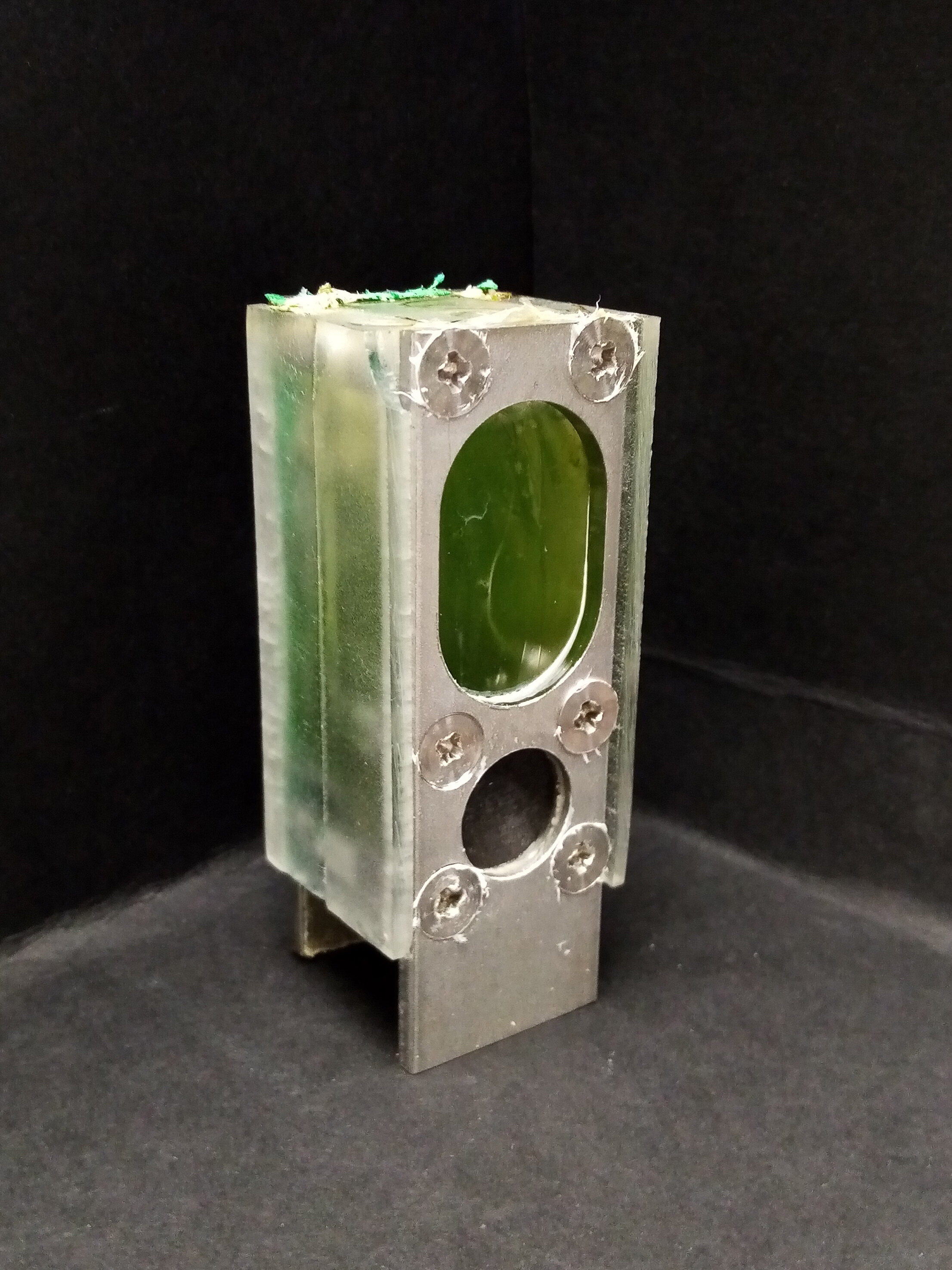
Comparable in size to an AA battery, contains a type of non-toxic algae called Synechocystis that naturally harvests energy from the sun through photosynthesis. The tiny electrical current this generates then interacts with an aluminum electrode and is used to power a microprocessor.

"We were impressed by how consistently the system worked over a long period of time—we thought it might stop after a few weeks but it just kept going"

via University of Cambridge and Arm:  P. Bombelli et al, Powering a microprocessor by photosynthesis, Energy & Environmental Science (2022). DOI: 10.1039/D2EE00233G


Self-propelled, endlessly programmable artificial cilia
May 2022, phys.org

Single-material, single-stimuli programmable microstructure that can outmaneuver even living cilia. 

Unlike previous research, which relied mostly on complex multi-component materials to achieve programmable movement of reconfigurable structural elements, Aizenberg and her team designed a microstructure pillar made of a single material—a photoresponsive liquid crystal elastomer that realign and change shape when light hits it.

"We showed that we can program the choreography of this dynamic dance by tailoring a range of parameters, including illumination angle, light intensity, molecular alignment, microstructure geometry, temperature, and irradiation intervals and duration," said Michael M. Lerch, a postdoctoral fellow in the Aizenberg Lab and co-first author of the paper.

"When these pillars are grouped together, they interact in very complex ways because each deforming pillar casts a shadow on its neighbor, which changes throughout the deformation process," said Li. "Programming how these shadow-mediated self-exposures change and interact dynamically with each other could be useful for such applications as dynamic information encryption."

via Harvard John A. Paulson School of Engineering and Applied Sciences: Shucong Li et al, Self-regulated non-reciprocal motions in single-material microstructures, Nature (2022). DOI: 10.1038/s41586-022-04561-z