Showing posts with label evolution. Show all posts

Wednesday, April 16, 2025

Control Fatigue


Humans tend to do this thing where they think they're in control of their own thoughts.

Red attire's competitive edge has faded in combat sports, new study finds
Dec 2024, phys.org

The team looked at results from seven Summer Olympic Games (1996–2020) and nine World Boxing Championships (2005–2021). With over 6,500 individual competition outcomes assessed, the team then focused on close contests, with a narrow points difference. These were where red was expected to tip the balance between winning and losing.

Up to 2005, when the original study was published, there was some advantage to red clothing, with 56% of victories between closely matched competitors going to the athlete in red.

However, more recent data up to 2020 show that the advantage disappeared, even in close contests.

Before 2005, combat sport referees played a larger role in assigning points, whereas today, scoring is increasingly supported by technology. Also, clarification of rules in recent times means that there is less room for interpretation when awarding points.

via Durham University Department of Anthropology: Leonard S. Peperkoorn et al, Meta-analysis of the red advantage in combat sports, Scientific Reports (2024). DOI: 10.1038/s41598-024-81373-3

Image credit: AI Art - A Crowd From View - 2025 - you have to zoom in on these images to see the real value they hold


Simple mathematical model predicts development of cultural structures observed in human societies
Jan 2025, phys.org

RIKEN killing it as usual:  

Two parameters of population size and cultural mutation rate (difference between parents' and children's traits) affect the development of social structures.

via RIKEN Center for Brain Science: Kenji Itao et al, Formation of human kinship structures depending on population size and cultural mutation rate, Proceedings of the National Academy of Sciences (2024). DOI: 10.1073/pnas.2405653121


Spanish 'running of the bulls' festival reveals crowd movements can be predictable, above a certain density
Feb 2025, phys.org

Crowd dynamics - They used cameras and a mathematical model where people are so packed that crowds can be treated as a continuum like a fluid, and found the density of the crowds changed from two people per square meter in the hour before the festival began to six people per square meter during the event, and that crowds could reach a maximum density of 9 people per square meter, above which pockets of several hundred people spontaneously behaved like one fluid that oscillated in a predictable time interval of 18 seconds with no external stimuli (such as pushing).

They compared the San Fermín festival in Spain to that from the 2010 Duisburg Love Parade in Germany, and found the same oscillations were observed. 

via ENS de Lyon, CNRS: François Gu et al, Emergence of collective oscillations in massive human crowds, Nature (2025). DOI: 10.1038/s41586-024-08514-6

Thursday, April 3, 2025

Captain Tying Knots


With all the topological mention these days, we have to ask - whatever happened to knots?

String figures shed light on cultural connections and the roots of mathematical reasoning
Dec 2024, phys.org

String figure games (like cat's cradle or jacob's ladder?) involve the manipulation of a loop of string with the fingers to create complex patterns. The researchers analyzed 826 string figures from 92 cultures around the world. They found 83 recurring designs. The results show that certain figures are globally prevalent. In certain cases, this suggests ancient cultural origins potentially extending back millennia

The researchers applied mathematical knot theory to develop a computational method to create a DNA-like symbolic representation of each string figure. This enables the cross-cultural comparison of string figures and the construction of their "family tree."

via University of Helsinki, Aarhus University, National Museum of Denmark and Seattle University: Roope O. Kaaronen et al, A global cross-cultural analysis of string figures reveals evidence of deep transmission and innovation, Journal of The Royal Society Interface (2024). DOI: 10.1098/rsif.2024.0673

Image credit: Fingers, not bad, not good enough. AI Art - Let Go - 2025

Friday, February 7, 2025

Post Consumer Product Phishing


A reversal of sorts, where the market used to have people who made things and people who bought things, but now it's just people taking things from other people, who get nothing in return.

The consumer became the product. Because let's face it, all DNA-testing sites are really just Ancestry dot com, which was based on early 20th century surveillance, similar to the very expensive advertising lists compiled from reams of public and non-public personal data. Think churches, governments and community organizations holding marriage certificates, military records, or payment accounting books. The DNA part was just like hanging a Store Closing All Items Half Price sign in the window. 

Granted, there are a few easy genes to tell you otherwise really obvious things about yourself. Are you Asian? That's ABCC11, called the 'no body odor' gene. I had no idea I was Asian until now actually, thank you DNA company. There'a another one for people of African origin, something related to sickle cell anemia and diabetes, called the HBB mutation.

Here's a better explanation:
"To understand the ancestry tests, you have to begin by looking at the fine print. This [type of test] says 'for recreational purposes only' or something very similar. It obviously is written by lawyers, not scientists, and it's a way of saying that the results have no scientific or legal standing. This is privatized, corporate science, not ordinary science. "How do they come up with numbers? They take DNA from people from disparate regions and compare yours to theirs. The numbers reflect a measure of your DNA similarity to those of the divergent gene pools. How do they calculate it? Don't know; the algorithms are protected intellectual property. Are they accurate? About as accurate as looking in the mirror."
--NPR, Why You Should Think Twice About Those DNA-By-Mail Results, 2017 [link]

It's not that the DNA-ancestry companies don't work at all, just that they work far, far less than they would have us believe (kind of like smart shoelaces or AI handlebars).  

In other words, when you give your DNA to a company for the purposes of discovering your ancestry, they're getting more usable information about you than you are about yourself. And then things like this happen:
 
DNA-testing site 23andMe fights for survival
Nov 2024, BBC News

"Until we ban the trade in personal data, we are not well protected enough."
-Carissa Velez, author of Privacy is Power


Something to consider - the Chan Zuckerberg Foundation has the Tabula Sapiens atlas of human tissue. (2022) [link]


I gave my DNA to tracking company - then it vanished
Nov 2024, BBC News

A DNA-testing firm appears to have ceased trading - without telling its customers what has happened to the highly sensitive data they shared with it.

Atlas Biomed, which has offices in London, offered to provide insights into people's genetic make up as well as their predisposition to certain illnesses.

However, users are no longer able to access their personalised reports online and the company has not responded to the BBC's requests for comment.

Customers of the firm describe the situation as "very alarming" and say they want answers about what has happened to their "most personal information".

This next article seems different, but it's actually the same:

Smart gadgets’ failure to commit to software support could be illegal, FTC warns
Nov 2024, Ars Technica

Makers of smart devices that fail to disclose how long they will support their products with software updates may be breaking the Magnuson Moss Warranty Act, the Federal Trade Commission (FTC) warned this week.

The FTC released its statement after examining 184 smart products across 64 product categories, including soundbars, video doorbells, breast pumps, smartphones, home appliances, and garage door opener controllers. Among devices researched, the majority—or 163 to be precise—"did not disclose the connected device support duration or end date" on their product webpage, per the FTC's report [PDF]. Contrastingly, 11.4 percent of devices examined shared a software support duration or end date on their product page.

Post Script on quality in the post-consumer era:
Majority of clothes being donated are exported or discarded: Study calls for city fashion waste shakeup
Nov 2024, phys.org

Charities and collectors have been reporting the plummeting quality of garments over the past 15 to 20 years, decreasing resale potential

Further Reading: Privacy is Power: Why and How You Should Take Back Control of Your Data, 2022

Wednesday, January 15, 2025

Culture as Metaphysical Superorganism


This is about human things, but mediated by culture, which is more powerful than engines, or fuel, or multiplexed photonic quantum computers:

Aboriginal ritual passed down over 12,000 years, cave find shows
July 2024 phys.org

My god, a 12,000 years old tradition:

They discovered some 12,000 year old sticks in a cave. The discovery was made inside Cloggs Cave in the foothills of the Victorian Alps in Australia's southeast, in a region long inhabited by the Gunaikurnai people. An anthropologist from the 1880s recorded the rituals of Gunaikurnai medicine men and women. One ritual involved tying something that belonged to a sick person to the end of a throwing stick smeared in human or kangaroo fat. The stick was thrust into the ground before a small fire was lit underneath. The medicine men would then chant the name of the sick person, and once the stick fell, the charm was complete. The sticks used in the ritual were made of casuarina wood. And the sticks found appear to be the same sticks, so they're evidence that this tradition has been happening since then, and was passed down by oral tradition, but since the advent of the written word, we've lost a connection to this. 

via Monash University and Gunaikurnai Land and Waters Aboriginal Corporation: Bruno David et al, Archaeological evidence of an ethnographically documented Australian Aboriginal ritual dated to the last ice age, Nature Human Behaviour (2024). DOI: 10.1038/s41562-024-01912-w


Culture, and fashion in particular, reduces social conflict, enabling a more complex society:

Colorful traits in primates ease tensions between groups, data suggest
Aug 2024, phys.org

"Species that shared more space with their neighbors had significantly greater differences in ornamentation between the sexes. In species where groups frequently interact, males are more likely to sport flashy traits that set them apart from females."

Vivid physical traits might help to reduce conflict between groups, possibly by allowing them to quickly assess potential rivals from a distance.

via Department of Evolutionary Biology and Environmental Studies at University of Zurich and University of Western Australia: Cyril C Grueter et al, The role of between-group signaling in the evolution of primate ornamentation, Evolution Letters (2024). DOI: 10.1093/evlett/qrae045


We should be reminded, via Kevin Kelly's What Technology Wants (2011) that technological evolution follows relatively strict trajectory, independent on the civilization, so that bone needles always come before bellows (how else do you sew the skins to make the bellows), and ceramics before metal (metal kilns are much hotter than ceramic kilns, and require the advent of bellows). 

The beginnings of fashion: Paleolithic eyed needles and the evolution of dress
Jun 2024, phys.org

"Eyed needle tools are an important development in prehistory because they document a transition in the function of clothing from utilitarian to social purposes,"

"What intrigues me is the transition of clothing from being a physical necessity in certain environments, to a social necessity in all environments."

The earliest known eyed needles appeared approximately 40,000 years ago in Siberia. Eyed needles are more difficult to make when compared to bone awls, which sufficed for creating fitted clothing. Bone awls are tools made of animal bones that are sharpened to a point. Eyed needles are modified bone awls, with a perforated hole (eye) to facilitate the sewing of sinew or thread.

The innovation of eyed needles may reflect the production of more complex, layered clothing, as well as the adornment of clothes by attaching beads and other small decorative items onto garments, and which may have allowed larger and more complex societies to form, as people could relocate to colder climates while also cooperating with their tribe or community based on shared clothing styles and symbols.

Dr. Gilligan and his co-authors argue that clothing became an item of decoration because traditional body decoration methods, like body painting with ocher or deliberate scarification, weren't possible during the latter part of the last ice age in colder parts of Eurasia, as people were needing to wear clothes all the time to survive.

via University of Sydney: Ian Gilligan, Palaeolithic eyed needles and the evolution of dress, Science Advances (2024). DOI: 10.1126/sciadv.adp2887

Post Script: Read Bernard Rudofsky's Are Clothes Modern? (1944)

Monday, September 30, 2024

Superhuman


Is this why some people see the cheap LED lights flicker and some don't?
Scientists discover speed of visual perception ranges widely in humans
Apr 2024, phys.org

There is considerable variation among people in their temporal resolution, meaning some people effectively see more "images per second" than others.

To quantify this, the scientists used the "critical flicker fusion threshold," a measure for the maximum frequency at which an individual can perceive a flickering light source.

Some participants in the experiment indicated they saw the light as completely still when it was in fact flashing about 35 times per second, while others were still able to perceive the flashing at rates of over 60 times per second.

via Department of Zoology in the School of Natural Sciences and the Trinity College Institute of Neuroscience: Clinton Haarlem, PLoS ONE (2024). DOI: 10.1371/journal.pone.0298007


Brain–computer interface experiments first to decode words 'spoken' entirely in the brain in real time
May 2024, phys.org

The electrodes were implanted in the supramarginal gyrus, a part of the brain that recent research suggests is involved in subvocal speech.

via California Institute of Technology: Sarah K. Wandelt et al, Representation of internal speech by single neurons in human supramarginal gyrus, Nature Human Behaviour (2024). DOI: 10.1038/s41562-024-01867-y

Also: Brain–machine-interface device translates internal speech into text, Nature Human Behaviour (2024). DOI: 10.1038/s41562-024-01869-w


This Ecuadorian forest thrived amid deforestation after being granted legal rights
Jun 2024, BBC News

Rights of Nature Movement - In 2008, Ecuador became the first country to change its constitution to state that nature has the same rights as people. The change was led by Ecuador's Indigenous movement, and marked one of the first major steps in what has become known as the 'rights of nature' movement – a movement centred on a legal framework that recognises the inherent right of the natural world to the same protections as people and corporations.

The rights of nature movement "is a move to transform natural entities from objects to subjects, in courts and in front of the law", says Jacqueline Gallant from New York University's School of Law's Earth Rights Advocacy Clinic. "But in a much broader sense, it's been a movement to reanimate and recentre nature as a subject of intrinsic worth," Gallant explains. This is in contrast, she says, to the Western view of nature as "an inanimate backdrop against which the drama of human activity unfolds".

Wednesday, February 21, 2024

Who's the Alien Now


Way back when this weblog first started, and I had just begun to read religiously the scientific research press releases, I came across this paper; but then I lost it, and I've been looking for it ever since:

Researchers use Moore's Law to calculate that life began before Earth existed
Apr 2013, phys.org

By reverse engineering the rate of acceleration of genetic complexification, the zero-point of origin comes out at 9 billion years, five more than Earth’s existence. 

via the Gulf Specimen Marine Laboratory in Florida and the National Institute on Aging in Baltimore:  Life Before Earth, arXiv:1304.3381 [physics.gen-ph] arxiv.org/abs/1304.3381


Since it has been many years since I first came across this article, perhaps some re-recognition is in order.

I now understand that extreme claims require extreme evidence. Sure, I knew the Carl Sagan quote back then too, but only now, after many years of being burned over and over again do I think I understand it. The idea of using Moore's Law to compute the age of all living organisms sounds pretty extreme, and pretty amazing, so let's get critical.  

First of all, Florida (Gulf Specimen Marine Laboratory in Florida, to be specific). I'm sorry for everyone who lives and works there, but simply incuding the word Florida in any (any) piece of information I see automatically lowers the credibility quotient.

Next, I look at a couple other papers by the authors:

Embodied cognitive morphogenesis as a route to intelligent systems. Bradly Alicea, Richard Gordon, Jesse Parent. Interface Focus Royal Society 06 June 2023, V13 I3. DOI:10.1098/rsfs.2022.0067

Along with the word "Florida", there are other identifiers of low-credibility content I like to use. One of them is "morphic resonance" and "morphogeneis", terms refering to the evolutionary biological theories of Rupert Sheldrake, which are generally considered to be...low on the credibility scale. 

Comprehending the Semiosis of Evolution, Alexei Sharov, Timo Maran, Morten Tønnessen. Biosemiotics. 2016 Apr; 9(1): 1–6. doi: 10.1007/s12304-016-9262-7

And, not that I have anything personally against "semiotics" (big fan actually), it's when you combine semiotics with evolutionary biology that your mouth gets a warning label in my brain. Not that you're wrong, just that it's going to take a lot more to convince me. 

So let's not get too excited. The idea itself though, it's pretty nuts.

Background: The size of non-redundant functional genome can be an indicator of biological complexity of living organisms. Several positive feedback mechanisms including gene cooperation and duplication with subsequent specialization may result in the exponential growth of biological complexity in macro-evolution.

Results: I propose a hypothesis that biological complexity increased exponentially during evolution. Regression of the logarithm of functional non-redundant genome size versus time of origin in major groups of organisms showed a 7.8-fold increase per 1 billion years, and hence the increase of complexity can be viewed as a clock of macro-evolution. A strong version of the exponential hypothesis is that the rate of complexity increase in early (pre-prokaryotic) evolution of life was at most the same (or even slower) than observed in the evolution of prokaryotes and eukaryotes.

Conclusion: The increase of functional non-redundant genome size in macro-evolution was consistent with the exponential hypothesis. If the strong exponential hypothesis is true, then the origin of life should be dated 10 billion years ago. Thus, the possibility of panspermia as a source of life on earth should be discussed on equal basis with alternative hypotheses of de-novo life origin. Panspermia may be proven if bacteria similar to terrestrial ones are found on other planets or satellites in the solar system.

Note: Genome increase as a clock for the origin and evolution of life. Alexei A Sharov. Biol Direct. 2006 Jun 12;1:17. doi: 10.1186/1745-6150-1-17.


Wednesday, January 10, 2024

Gravity Is Dead


AKA Kuhning the Universe

Smoking-gun evidence for modified gravity at low acceleration from Gaia observations of wide binary stars
Aug 2023, phys.org

Conclusive evidence for the breakdown of standard gravity in the low acceleration limit from a verifiable analysis of the orbital motions of long-period, widely separated, binary stars.

Them fightin words.

(Although this was suggested 40 years ago by theoretical physicist Mordehai Milgrom at the Weizmann Institute in Israel in a new theoretical framework called modified Newtonian dynamics (MOND) or Milgromian dynamics in current usage.)

The significance is very high meeting the conventional criteria of 5 sigma for a scientific discovery.

via Sejong University in Seoul: Kyu-Hyun Chae, Breakdown of the Newton–Einstein Standard Gravity at Low Acceleration in Internal Dynamics of Wide Binary Stars, The Astrophysical Journal (2023). DOI: 10.3847/1538-4357/ace101

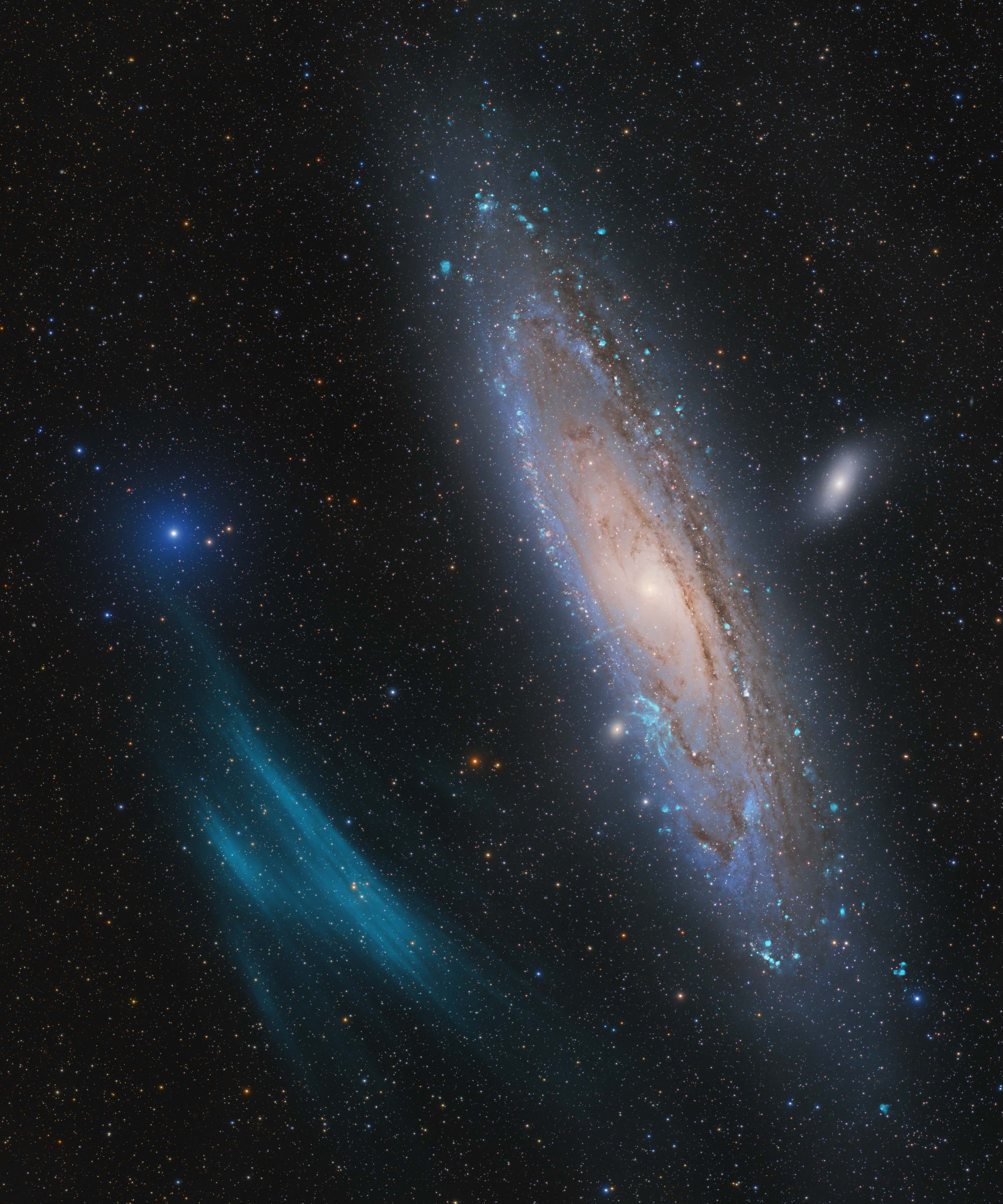
Image credit: Andromeda, Unexpected - Plasma Arc and Winner of the Astronomy Photographer of the Year by Marcel Drechsler, Xavier Strottner, Yanin Sainty - 2023 [link]

Mostly Unrelated Post Script: 
Evidence found of electromagnetic fields from electrical towers disrupting pollinating honeybees
May 2023, phys.org

Man come on.

Tuesday, November 1, 2022

Memetics in a Name


What's in a name? Glimmers of evolution in naming babies, choosing a dog, study finds
Jun 2022, phys.org

Newberry, an assistant professor of complex systems, says examining trends in the popularity of baby names and dog breeds can be a proxy for understanding ecological and evolutionary change. The names and dog breed preferences themselves are like genes or organisms competing for scarce resources. In this case, the scarce resources are the minds of parents and dog owners. His results are published in the journal Nature Human Behavior.

Results:
  • The more popular a name becomes, the less likely future parents are to follow suit. Same goes for popular dog breeds.
  • When a name is most rare — 1 in 10,000 births — it tends to grow, on average, at a rate of 1.4% a year. But when a name is most common — more than 1 in 100 births — its popularity declines, on average, at 1.6%.

And this is why Darwin got his idea for natural selection from language-trees:
"Natural selection is incredibly hard to measure. You're asking, for an entire population, who lived, who died and why. And that's just a crazy thing to try to ask. By contrast, in names, we literally know every single name for the entire country for a hundred years."

via University of Michigan: Mitchell Newberry, Measuring frequency-dependent selection in culture, Nature Human Behaviour (2022). DOI: 10.1038/s41562-022-01342-6


Wednesday, July 20, 2022

Hide Your Hypotheses, Machine Learning is Coming


Big data, machine learning, artificial intelligence - whatever you want to call it - is moving so fast, and making predictions so unexpected, that it's almost making us look stupid. But we're not. That's how science is supposed to work. 

Image credit: Copy of Ernst Haeckel's 1886 Tree of Life by Paul D Stewart


New research shows gene exchange between viruses and hosts drives evolution
Jan 2022, phys.org

First a reminder of how complicated this all is:

"The first comprehensive analysis of viral horizontal gene transfer..."

HGT allows genes to jump between species including viruses and their hosts. If the gene does something useful, it can sweep through the population and become a feature of that species. This can lead to a rapid emergence of new abilities, as opposed to the more incremental changes that result from smaller mutations.

via  University of British Columbia: Nicholas A. T. Irwin et al, Systematic evaluation of horizontal gene transfer between eukaryotes and viruses, Nature Microbiology (2021). DOI: 10.1038/s41564-021-01026-3


Study finds new patterns of antibiotic resistance spread in hospitals
Apr 2022, phys.org

What's really happening is so much more complicated that we thought. You think you know, but you have no idea:

The findings suggest that specific genes, rather than entire organisms, were circulating in hospitals—in some cases, for many years. Notably, the team discovered antibiotic resistance gene transfer between bacteria, connecting patient infections in new ways and also helping to explain the large diversity of CRE species and strains in these hospitals. Typically, hospitals would not connect outbreaks of different CRE species such as E. coli and Klebsiella, but the research team says that information from Salamzade's tool could make hospitals more aware of potential hospital reservoirs for gene exchange and inform epidemiological investigations into antibiotic resistant infections.

"Hospital epidemiology would never find this with more traditional methods," said Earl. "I would argue that this is the kind of thing even our standard genomics approaches wouldn't find. It really took having a hypothesis, building up an approach to allow us to test that hypothesis in a really rigorous way, and then stepping back to look at the data."

via Broad Institute of MIT and Harvard: Rauf Salamzade et al, Inter-species geographic signatures for tracing horizontal gene transfer and long-term persistence of carbapenem resistance, Genome Medicine (2022). DOI: 10.1186/s13073-022-01040-y


Researchers adapt social network analysis to model virus evolution
May 2022, phys.org

Even basic assumptions are wrong:

New research from Western University suggests some viruses evolve more like a dynamic social network—rather than a rigid tree, as was previously believed—recombining with one another to create a web of intersecting subtypes. 

via University of Western Ontario: Abayomi S. Olabode et al, Revisiting the recombinant history of HIV-1 group M with dynamic network community detection, Proceedings of the National Academy of Sciences (2022). DOI: 10.1073/pnas.2108815119


New research shows gene exchange between viruses and hosts drives evolution
Jan 2022, phys.org

Just a reminder of how complicated this all is:

"The first comprehensive analysis of viral horizontal gene transfer..."

HGT allows genes to jump between species including viruses and their hosts. If the gene does something useful, it can sweep through the population and become a feature of that species. This can lead to a rapid emergence of new abilities, as opposed to the more incremental changes that result from smaller mutations.

via  University of British Columbia: Nicholas A. T. Irwin et al, Systematic evaluation of horizontal gene transfer between eukaryotes and viruses, Nature Microbiology (2021). DOI: 10.1038/s41564-021-01026-3


Mostly unrelated posts, just highlighting the scientific method hard at work:
Counting bug splats on vehicle license plates shows numbers of flying insects has dropped significantly
May 2022, phys.org

Participants were asked to clean their license plates before heading out on a journey in their vehicle and then to photograph and count the number of bugs they found splattered on the plates when they returned.

The researchers found the number of splats recorded dropped dramatically over the course of the study—total numbers were 58.5% lower at the end of the study than at the beginning (2004 - 2021).

via Kent Wildlife Trust: The Bugs Matter Citizen Science Survey


Self-eliminating genes tested on mosquitoes
May 2022, phys.org

Temporary, self-deleting genetic changes that don't permanently alter wild populations' genetic makeup

via Texas A&M University: Keun Chae et al, Engineering a self-eliminating transgene in the yellow fever mosquito, Aedes aegypti, PNAS Nexus (2022). DOI: 10.1093/pnasnexus/pgac037


Post Script:
I'm not sure what to call it, but I'm seeing a pattern emerge, maybe a new category of headlines, something about the unforeseen implications of the climate apocalypse?

Lake Mead: Shrinking reservoir reveals more human remains
May 2022, BBC News

Mount Everest: Melting glaciers expose dead bodies
Mar 2019, BBC News

Friday, April 29, 2022

Collective Computing and Manipulating Possibility Space


I'm watching a presentation by David Krakauer at the Santa Fe Institute. They do complexity theory, and he gives a good lecture

These pictures are screenshots of his presentation. I'm keeping them here for my own notes, because I thought there was some pretty deep stuff in here. 


First -- noise is essential to the system, because, as written here, it allows for the exploration of all possible states. How else are you going to optimize?? Noise delineates the operation-space.


Next, he gives us a picture of what I would refer to as a Lévy flight, but which simply be called "foraging behavior"; it's where you take a semi-random approach to exploring your environment, whether it's a field of blackberries or the information-space of artistic production. Artists do this throughout their career, where they spend a lot of time exploring -places, ideas, themes and then an abrupt and explosive execution of work that seems to crystallize out of all their recent experience. So the exploratory Lévy flight graph is paired with a more tightly integrated graph, the execution graph.  


Then he tells us that neurons are doing the same thing when we think, and especially when we make decisions. 


But this is where shit got crazy for me. Not only do our brains do this, but we as organisms in the larger superorganism of society are doing it also. 


He's saying that society is a circuitboard, where each of our relationships with each other creates a network of information flows, complete with bottlenecks and critical junctures, and evolving in real-time as it tries to optimize the flow of information. He is visualizing, and schematizing, the noosphere in action. 


And then the needle drops, and you remember why you like watching people like David Krakauer and places like the Sante Fe Institute: He calls these relationships "social circuits" and says we can predict the individual behaviors in the group: duration of a fight, who will fight who, who needs to be removed from the group for the fight to stop...

As we develop more sophisticated sensor networks, we will accumulate more and more data on bigger and bigger groups, and learn how to integrate that data into more complex network graphs like these.

And then we'll be able to predict adoption or rejection of social movements, of occupying military forces, of environmental regulations...

The private sector will have a half-assed understanding, yet sell it to all of us via third party business consultants who eat hype-flakes for breakfast, and we'll buy it all and use it and let it take over our lives, disrupt our hormones and dissolve our social fabric, even though it doesn't work (think AI today), while  governments will be years ahead, using it to gently manipulate its population into maintaining a society that disproportionately redistributes its resources to the already rich and powerful. The only way to respond is to get familiar in advance, and so thanks to people like this, we are. That is, if we're paying attention at all.    

If you're looking for more insights into the future, you can listen to David Krakauer, and a whole bunch of other thought-provoking, future-proofing professionals, on the behind the scenes marketing material called Science Fact vs Science Fiction, for the science fiction series Raised By Wolves on HBO (Season 2). They cover the topics of Robots, Space Travel, Human Engineering, Synthetic Biology, Metamaterials, AI, and Cosmology. 

Notes:
Collective Computing and Learning from Nature
David Krakauer of the Santa Fe Institute at the Foresight Intelligent Cooperation Group, Sep 2021

What was really the secret behind Van Gogh's success?
(Exploration and exploitation lead to "hot streaks")
Sep 2021, phys.org

Chaotic Lévy walks are a good strategy for animals
Sep 2020, phys.org

Pedestrians at crosswalks found to follow the Lévy walk process
Apr 2019, phys.org

Musical melodies obey same laws as foraging animals
Jan 2016, phys.org


Monday, July 20, 2020

On the Invisibility of Ideology

It's precisely its 'spontaneous' quality, its transparency, its 'naturalness', its refusal to be made to examine the premises on which it is founded, its resistance to change or to correction, its effect of instant recognition, and the closed circle in which it moves which makes common sense, at one and the same time, 'spontaneous', ideological and unconscious. You cannot learn, through common sense, how things are: you can only discover where they fit into the existing scheme of things. In this way, its very taken-for-grantedness is what establishess it as a medium in which its own premises and presuppositions are being rendered invisible by its apparent transparency.
-Dick Hebdige quoting Stuart Hall in Subculture: The Meaning of Style, 1979 (p11) 

Ideology has very little to do with 'consciousness'. It is profoundly unconscious...Ideology is indeed a system of representation, but in the majority of cases these representations have nothing to do with 'consciousness': they are usually images and occasionally concepts, but it is above all as structures-that they impose on the vast majority of men, not via their 'consciousness'. They are perceived-accepted-suffered cultural objects and they act functionally on men via a process that escapes them.
-Abridged, from Dick Hebdige quoting Louis Althusser in Subculture: The Meaning of Style, 1979 (p12)
Post Script:
Hindsight and Blindness, a post on the inability to see our own culture.

Thoughts on memetics and the power of physical cultural artifacts, from buildings to door handles, to program our evolution:

In memetics, the meme may be stored in the brain, in synaptic weights of networked neurons, or they may not. They are most certainly stored in the physical artifacts that make our world, the Anthroposphere.

Buildings, by their design, make us interact in a certain way, at a basic level, and one which depends on the laws of physics before anything else. We live on a two-dimensional grid, via bipedal locomotion, with an average height, weight and range of movement.

These are the base limitations from which the more complex requirements of chemistry, biology, and later psychology, sociology, anthropology are formed. The shape of a handle has encoded within its form the instructions for use, at a base level, and because we all have the same hands.

When these artifacts are combined in their totality -- buildings, tools, circuitboards and spaceships -- they set the substrate for memetic propagation.

So much of what we consider Culture, and the arena for memetic propagation, is already encoded in our anthroposphere -- that is, the physical things around us that we make and use. Trees are not part of the anthroposphere, until they become timber for building. Copper is not a part of the anthroposphere until it becomes a piece of plumbing. A language is not part of the anthroposphere until it is written down, and becomes fixed in the physical world, as in a book or engraving or the digital archive of a memory stick.

I am making an argument here, and in response to a recent binge on memetic scholarship:
Darwinizing Culture - The Status of Memetics as a Science, R Aunger ed., 2000

There is no need to look for how ideas combine and transmit and where they are stored. The ideas are manifest in the anthroposphere, and it is by using our anthroposphere, all of it and all of us all at once, that the emergent phenomena of memetic evolution occurs.

Save the studies on internet memes for the anthropologists. A rigorous study of memetics must begin with the physical. Until you can get a model based on this, Beethoven's Fifth will have to wait. But don't tell me, for example, that the evolution from the harpsichord to the piano didn't have something to do with it.

Ideology may be invisible, but it is not intangible.

Saturday, September 14, 2019

On the Brains of Machines


This picture is kind of like an infrared camera but for algorithms.

It's a heat map for the eyeballs of a computer; what is it looking at, what are its clues?

In this case, it's looking at the water, not at the ship, in order to identify the image as a ship. (We're also assigning agency to this thing, in case anyone's keeping track.)

Neural nets are a big deal these days, but they come with a new problem. We don't know what they're doing, because the thing that makes them so special is that they figure out their own algorithm. (Agency again.) Computer programmers are not writing the programs; the networks write the programs using trial and error. Machine Learning is another name for this idea of iterative development.

There's a lot of people who would like to know what's going on in there, mostly to see how these things are getting their answers, and to make sure that the algorithms don't cheat to get their answers. Some learn bad habits, like detecting "ships" in pictures with water (which means they're good at detecting water, not ships), or by skimming metadata, which means they're good at classifying metadata, not pictures of stuff. These heat maps, and more importantly the forensics-like algorithms that inform them, are very helpful. They let us see inside the brains of the machine.

***
Speaking of disembodied brains, here's the artificial synapse. It uses a new type of hardware memory system that works more like a brain does, in an array, where they can do their computing business simultaneously. Neuromorphic computing.

And if you want to grow those artificial synapses in a 3-D tissue culture (brains in a dish), call these guys.

Cerebral organoids -- they're more for studying how the brain works than they are about making artificial brains. At least they're not using human brains, right?

Wrong; there are ethical concerns that these organoids might develop consciousness, or have already developed consciousness. 

Notes:

What is it like being a brain in a computer?
Clarifying how artificial intelligence systems make choices
Mar 2019, phys.org

Sebastian Lapuschkin et al, Unmasking Clever Hans predictors and assessing what machines really learn, Nature Communications (2019). DOI: 10.1038/s41467-019-08987-4

Fast, efficient and durable artificial synapse developed
Apr 2019, phys.org

Elliot J. Fuller et al. Parallel programming of an ionic floating-gate memory array for scalable neuromorphic computing, Science (2019). DOI: 10.1126/science.aaw5581

Researchers grow active mini-brain-networks
Jun 2019, phys.org

Stem Cell Reports, Sakaguchi et al.: "Self-organized synchronous calcium transients in a cultured human neural network derived from cerebral organoids"
https://www.cell.com/stem-cell-reports/fulltext/S2213-6711(19)30197-3
DOI: 10.1016/j.stemcr.2019.05.029

Tuesday, July 23, 2019

Measles is the Winner by TKO


Measles is so powerful that after we defeated it with vaccines, it came back even stronger to infect our minds!

We might think of vaccines as a meta-defense, a meta-immune system, which could also be called Public Health or even just modern medicine. Measles has found a way to penetrate this defense.

The anti-vax meme is, perhaps, the first example of a disease making the transition from the biosphere to the noosphere, so that we now, in order to fight measles, we need to inoculate our minds in addition to our bodies. (A mental vaccine, that is.)

Via Dawkins' Selfish Gene, we don't get measles, measles gets us. And in 2018-2019, it's doing a damn good job.


Here's a few newsbits on the subject:

Antivaxxers turn to homeschooling to avoid protecting their kids’ health
July 2019, Ars Technica

Analyzing a Facebook-fueled anti-vaccination attack - 'It's not all about autism'
Mar 2019, phys.org

An analysis of Facebook profiles for people who posted anti-vaccination sentiments reveals four key subgroups that are interconnected by various themes. Credit: Elsevier
...anti-vaccination arguments are not "all about autism" and center on four distinct themes that can appeal to diverse audiences in four distinct subgroups:
  • "trust," which emphasized suspicion of the scientific community and concerns about personal liberty;
  • "alternatives," which focused on chemicals in vaccines and the use of homeopathic remedies instead of vaccination;
  • "safety," which focused on perceived risks and concerns about vaccination being immoral; and
  • "conspiracy," which suggested that the government and other entities hide information that this subgroup believes to be facts, including that the polio virus does not exist.
Beth L. Hoffman et al, It's not all about autism: The emerging landscape of anti-vaccination sentiment on Facebook, Vaccine (2019). DOI: 10.1016/j.vaccine.2019.03.003


Facebook Takes Steps to Curb Sensational Health Claims
Molly Schuetz, Bloomberg, July 2, 2019

Deprioritizing sensationalist health posts that make misleading claims or tout “miracle cures,” and posts that use health-related claims to promote products or services, such as weight-loss pills.

On Deceptive Language:
April Fools hoax stories could offer clues to help identify 'fake news'
Mar 2019, phys.org

"April Fools hoaxes are very useful because they provide us with a verifiable body of deceptive texts that give us an opportunity to find out about the linguistic techniques used when an author writes something fictitious disguised as a factual account," said Edward Dearden from Lancaster University, and lead-author of the research. "By looking at the language used in April Fools and comparing them with fake news stories we can get a better picture of the kinds of language used by authors of disinformation."

The researchers found that April fools hoax stories, when compared to genuine news:
  • Are generally shorter in length
  • Use more unique words
  • Use longer sentences
  • Are easier to read
  • Refer to vague events in the future
  • Contain more references to the present
  • Are less interested in past events
  • Contain fewer proper nouns
  • Use more first person pronouns

Fake news stories, when compared to genuine news:
  • Are shorter in length
  • Are easier to read
  • Use simplistic language
  • Contain fewer punctuation marks
  • Contain more proper nouns
  • Are generally less formal—use more first names such as 'Hillary' and contain more profanity and spelling mistakes
  • Contain very few dates
  • Use more first person pronouns

Post Script
Study busts myths about gossip
May 2019, phys.org

"There is a surprising dearth of information about who gossips and how, given public interest and opinion on the subject," said Megan Robbins, an assistant psychology professor who led the study along with Alexander Karan, a graduate student in her lab.

If you're going to look at gossip like an academic, remove the value judgment we assign to the word. Gossip, in the academic's view, is not bad. It's simply talking about someone who isn't present. That talk could be positive, neutral, or negative.

"With that definition, it would be hard to think of a person who never gossips because that would mean the only time they mention someone is in their presence," Robbins said. "They could never talk about a celebrity unless the celebrity was present for the conversation; they would only mention any detail about anyone else if they are present."
  • Younger people engage in more negative gossip than older adults. There was no correlation with overall frequency of gossip when all three categories were combined.
  • About 14 percent of participants' conversations were gossip, or just under an hour in 16 waking hours
  • Almost three-fourths of gossip was neutral. Negative gossip (604 instances) was twice as prevalent as positive (376)
  • Gossip overwhelmingly was about an acquaintance and not a celebrity, with a comparison of 3,292 samples vs. 369
  • Extraverts gossip far more frequently than introverts, across all three types of gossip
  • Women gossip more than men, but only in neutral, information-sharing, gossip
  • Poorer, less education people don't gossip more than wealthier, better-educated people.

Tuesday, May 28, 2019

Music Sciences

This guy plays an electric fan like an electric guitar

The evolution of music is a swinging pendulum - new things develop in response and in resistance to the old things. The evolution of music is a swinging pendulum - new things develop in response and in resistance to the old things. Nirvana's grunge rock is anti- the likes of flashy arena rock like Queen and Guns N' Roses.

This is a common theme in the arts in general, but now there's some interesting data to articulate this pattern in the music world. (eight million musical albums 1956 - 2015, via Discogs)

And in other music-oriented news - 765 million online music plays, streamed from Spotify in 2016, by 1 million people from 51 countries:
  • people of every culture listen to more relaxing music late at night and more energetic music during daytime business hours
  • people were more likely to listen to less intense music as they got older
  • people in the West tend to play more arousing music, while those in Asia play more relaxing music
  • in the Southern Hemisphere, women chose music with higher intensity than men
  • in the Northern Hemisphere, women listen to music with lower intensity, particularly in the evening
-phys.org

Notes:
Peter Klimek et al, Fashion and art cycles are driven by counter-dominance signals of elite competition: quantitative evidence from music styles, Journal of The Royal Society Interface (2019). DOI: 10.1098/rsif.2018.0731


Minsu Park et al. Global music streaming data reveal diurnal and seasonal patterns of affective preference, Nature Human Behaviour (2019). DOI: 10.1038/s41562-018-0508-z


Sunday, February 18, 2018

Biomimetic Helmets


Woodpeckers show signs of possible brain damage, but that might not be a bad thing
Feb 2018, phys.org

Evolution is strange. Woodpeckers have to smash their heads into trees in order to eat. So nature gave them special skull designs to limit their repercussions. And now we humans are using that design to make our skulls safer. For those times when we inadvertently smash our heads into concrete etc.

The go to examples for biomimicry have been the genius environmental control system that is a termite mound, and the aerodynamic boxfish used to design drag resistant cars. Woodpecker helmets make a nice edition, and an even easier way to explain biomimicry.


Sunday, December 10, 2017

Making Monsters


The fascinating part about this is how alligator embryos are being modified to grow like a dinosaur. If I understand correctly, this kind of manipulation can only be done to an embryo living up to 28 days or so? After that it's considered alive, or at least it's considered wrong to keep an experiment alive past that time. Because it's immoral? Because it can reproduce and make uncontrollable monsters? Because that's just what the law says?

How dinosaur scales became bird feathers 
Nov 2017, BBC

The genes that caused scales to become feathers in the early ancestors of birds have been found by US scientists.

By expressing these genes in embryo alligator skin, the researchers caused the reptiles' scales to change in a way that may be similar to how the earliest feathers evolved.

Prof Chuong from the University of Southern California, in Los Angeles.

"You can see we can indeed induce them to form appendages, although it is not beautiful feathers, they really try to elongate" he explained of the outcome. They are likely similar to the structures on those feather-pioneering dinosaurs 150 million years ago.

[genes are complicated]

Modern feathers involve a range of different genes working together and being expressed at the right time and in the right space during the embryo's development. This new work helps to establish how feathers initially evolved, around 120 to 150 million years ago, but hints at five separate genetic processes active in birds that needed to work together to create modern feathers.

Thursday, August 31, 2017

Milk Does a Body


Evolution of Adult Lactose Absorption

Farming, cheese, chewing changed human skull shape
Aug 2017, phys.org

The agricultural revolution put the human genome in the spin cycle of a washing machine. Plants, though fibrous, are easier to chew than animals. So during the thousands of years while we were discovering the magic of seed-sowing, and eating the results of our pre-science experimentation, our bodies (our jaws especially) were changing in response.

At this time in our development, the rate of change for a genome was equal to the rate of change of our culture, and our diet, and so the two were able to influence each other. Nowadays, those rates have changed so that our culture moves faster than the genome - i.e., just this week we saw the first 'living drug' that changes the patient's genome so that it attacks cancer.

Anyway, this is our history:

The largest changes in skull morphology were observed in groups consuming dairy products, suggesting that the effect of agriculture on skull morphology was greatest in populations consuming the softest food (cheese!).
-phys.org

I just have to rant for a moment about arguments for an extreme vegetarian diet. I'm all for being healthy and eating more vegetables and less animals, but to say that it is not natural for us to eat meat or dairy products is preposterous, and this is one of those reasons why. Furthermore, to conjure support for the rational adoption of a 'paleo' diet that mimcs the caveman's diet, because 'that is the diet that we evolved to eat', is also preposterous. A lot has happened since caveman days. Sure, the homo sapien is (?) years old (let's just say on the order of 100,000 years). But since that time, our genome has continued to change. Dairying practices are not 100,000 years old, but more like 10,000. And the impact this had on the homo sapien genome was tremendous.

We are the only mammal that maintains lactase into adulthood - that is a genetic modification that we did to ourselves. Nature did not do that to us; we did it. According to this article above, we also changed the shape of our skulls because of eating cheese.

So, in short, we are  complex creatures. We are more complex than any new diet can encapsulate. I'm not trying to tell anyone what to eat up in here. But I am saying that instead of asserting that there is something wrong with the way we are, and that we should try to be more like the way we were, the "natural way", is to ignore the unfathomably complex and epic journey we have made as a species, and that we should continue to make, as long as we don't all kill each other, and as long as the planet that gave us life doesn't go and kill us all.

Post Script
Here's a paper on lactase persistence, perhaps the greatest story in human culture ever, because it was the inflection point beyond which our culture moves faster than our genes can keep up with.
Evolution of lactase persistence: an example of human niche construction, 2011

Wednesday, July 19, 2017

Musical Memetics


Genetic Data Tools Reveal How Pop Music Evolved In The US
The Physics arXiv Blog, 2015. link
Source document:
The Evolution of Popular Music: USA 1960–2010
arxiv.org, 2015. link

I was into this article anyway, because it puts art and science together. Perhaps predictable for some - rap eventually takes over, dance music peaked in the 90's, country is NOT making a comeback (depends how they classify this, is there such a thing as 'new' country?).

But at the end, memetics rears its multi-headed head. Because the authors of this study used genetics-data analysis tools to do all this. Listen to all this memetalk:

"Musicians copy, repeat and modify song styles they like, this leads to a clear pattern of evolution over time. So it should come as no surprise that techniques developed for the analysis of genetic data should work on music data as well. “The selective forces acting upon new songs are at least partly captured by their rise and fall through the ranks of the charts,” they say."

Saturday, May 20, 2017

Semibotic Semibiotic


It's not often you get to see an article about consciousness on the BBC, but you do, it's Dan Dennett getting mega-memetical. (just kidding, that doesn't even make sense, in this context.)

Is consciousness just an illusion?
Apr 2017, BBC

We're not just are robots", he says. "We're robots, made of robots, made of robots".
-Dan Dennett

Wednesday, January 4, 2017

Beyond Human


Meet Graham, a 'human' designed to survive a car crash
July 2016, CNN

The TAC (Transport Authority in Victoria Australia...sort of like the DMV in the USA) in collaboration with Melbourne artist Patricia Piccinini have launched Graham, a human made of silicon designed to survive a car crash...

This is a great example of how our own technology has outpaced the rate of biological change. If technology changed at the same rate as our biology, we would look like this right now. But we don't. We also (some of us) can digest milk. That was another point at which we outpaced ourselves, putting culture ahead of genes. Ah, the human condition.