Showing posts with label pattern rec. Show all posts

Friday, July 16, 2021

Artificial Influence

AI can now learn to manipulate human behavior
Feb 2021, phys.org

Three different experiments -- one where the AI learned the human "choice patterns" and then used that info to influence future choices (70% effective), another where they arranged a particular sequence to get the participants to make mistakes (25% increase in mistakes), and another where the player is manipulated on how to invest money, and it could either maximize the amount invested, or fairly distribute it ("highly successful" at both). Did someone mention high frequency trading?

via CSIRO's Data61 in Australia: Amir Dezfouli et al. Adversarial vulnerabilities of human decision-making, Proceedings of the National Academy of Sciences (2020). DOI: 10.1073/pnas.2016921117

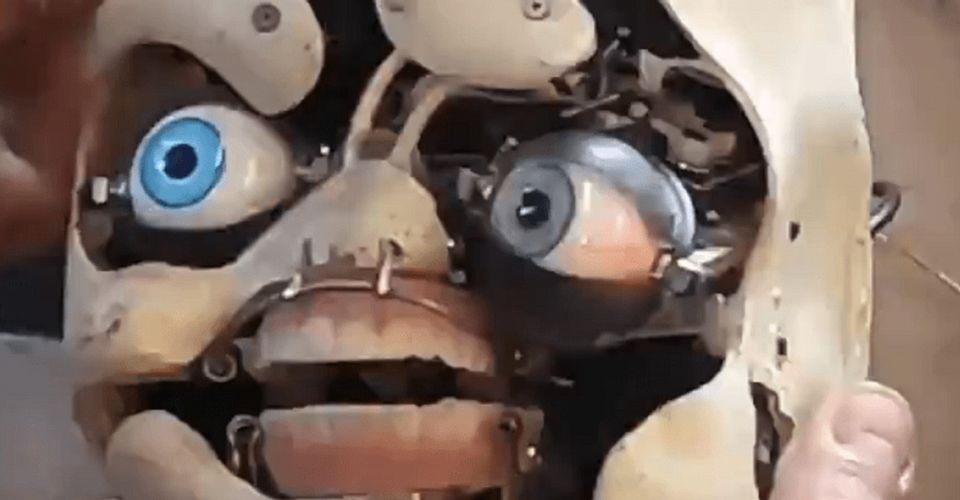
Robots can use eye contact to draw out reluctant participants in group interactions
Mar 2021, phys.org

You should be a little creeped out by this: "By redirecting its gaze to less proficient players, a robot can elicit involvement from even the most reluctant participants." Also sounds like an inevitable Zoom update for online learning.

via KTH Royal Institute of Technology: Robot Gaze Can Mediate Participation Imbalance in Groups with Different Skill Levels, ACM Digital Library, DOI: 10.1145/3434073.3444670

Using AI to gauge the emotional state of cows and pigs
May 2021, phys.org

And it works on humans too, unless you don't consider Uyghurs human:

AI emotion-detection software tested on Uyghurs
May 2021, BBC News

MeowTalk: Alexa developer’s app to translate cat’s miaow
Nov 2020, BBC News

You won't call it animal telepathy when it comes out, but if you were able to explain it to somebody from the 19th century, that's what they would call it.

Natural language processing helps identify patients with chronic cough
Feb 2021, phys.org

Chronic cough is hard to identify from electronic health records because it doesn't have a diagnostic code. 

This is a great example of how we're at the tipping point in the computer paradigm. Diagnostic codes are a way for us to leverage traditional computer technology. We have to make our data machine-readable for the computers to use it. Like a form of pre-digestion, we chew the food before we give it to them.

But now, the computer is the one who digests the data, and then gives it to us. It's the paradigm in reverse. "Unstructured data?" No problem. Our baby Babbages are all grown up now. 

via Regenstrief Institute, Indiana University School of Medicine and Merck & Co: Michael Weiner et al. Identifying and characterizing a chronic cough cohort through electronic health records, Chest (2020). DOI: 10.1016/j.chest.2020.12.011

Monday, July 5, 2021

On Engineering Artificial Eyeballs

Enhanced vision -- seeing the invisible, zooming-in past the limits of microscopy, making artificial eyeballs from scratch to give sight to the blind -- nothing says welcome to the future like advances in vision technology. 

Image credit: Sorry I can't find the source for this, but you can call it face-rec camo-tech. It makes you invisible. 

New method could democratize deep learning-enhanced microscopy
Mar 2021, phys.org
Deep learning is a potential tool for scientists to glean more detail from low-resolution images in microscopy, but it's often difficult to gather enough baseline data to train computers in the process. Now, a new method developed by scientists at the Salk Institute could make the technology more accessible—by taking high-resolution images, and artificially degrading them.

The new tool, which the researchers call a "crappifier," could make it significantly easier for scientists to get detailed images of cells or cellular structures that have previously been difficult to observe because they require low-light conditions, such as mitochondria, which can divide when stressed by the lasers used to illuminate them. 
Yes, the crappifier. If you have any idea how neural network machine learning works, you will immediately get why this is some sneaky shit.

They take good microphotographs (example: Nikon Small World Gallery) and intentionally make them crappy and hard to see. They degrade the photo artificially, but then train the network backwards to learn how to make a good photo out of a bad one. Once it's trained, they start giving it "naturally" bad photos of things we can't get good pictures of with current microscopic technology, and let it apply what it learned about bad photos. 

via Salk Institute: Deep learning-based point-scanning super-resolution imaging, Nature Methods (2021). DOI: 10.1038/s41592-021-01080-z

Smartphone camera used to diagnose viral infections
Dec 2020, phys.org

Full circle, we will soon be tossing coffee grinds on the table to predict the future. Here's an exapmle of how we can now see things we didn't even know we were looking for, like how the bubbles in your body-fluid broth have written in them your viral exposome. 
Body fluid samples are placed into a channel on the catalytic microchip device, which is then doused with a small amount of hydrogen peroxide. The resulting reaction leads to the formation of bubbles. The bubbles develop in unique patterns based in part on viruses in the fluid sample. The user points their smartphone camera at the bubbling sample and launches the deep-learning algorithm that has already been trained to identify the patterns and thereby recognize the presence of viruses.

Mohamed S. Draz et al. Virus detection using nanoparticles and deep neural network–enabled smartphone system, Science Advances (2020). DOI: 10.1126/sciadv.abd5354
Zoom hack reveals text contents by viewing shoulder movement
Nov 2020, phys.org

Jesus make it stop:
"They focused on the movement of their shoulders and arms to extrapolate the actions of their fingers as they typed."

"In a controlled setting, with specific chairs, keyboards and webcam, Jadiwala said he achieved an accuracy rate of 75 percent. However, in uncontrolled environments, accuracy dropped to only one out of every five words being correctly identified."

via the University of Texas: Zoom on the Keystrokes: Exploiting Video Calls for Keystroke Inference Attacks, Murtuza Jadiwala et al. arXiv:2010.12078 [cs.CR] arxiv.org/abs/2010.12078

Discovery makes the invisible visible
Jan 2021, phys.org

The nano-revolution comes to phase contrast microscopy. Sub-surface Nanoaperture Arrays.

via La Trobe Institute for Molecular Science: Eugeniu Balaur et al. Plasmon-induced enhancement of ptychographic phase microscopy via sub-surface nanoaperture arrays, Nature Photonics (2021). DOI: 10.1038/s41566-020-00752-0

Mantis shrimp inspires new breed of light sensors
Mar 2021, phys.org

The mantis shrimp strikes again, patron saint of all superhuman vision technology. Hyperspectral. 

via North Carolina State University: "Mantis shrimp-inspired organic photodetector for simultaneous hyperspectral and polarimetric imaging" Science Advances (2021).


For those artificial retinas you've been waiting for:
Color-sensitive inkjet-printed pixelated artificial retina based on semiconducting polymers
Jan 2021, phys.org

Manuela Ciocca et al. Colour-sensitive conjugated polymer inkjet-printed pixelated artificial retina model studied via a bio-hybrid photovoltaic device, Scientific Reports (2020). DOI: 10.1038/s41598-020-77819-z

Retinal implants can give artificial vision to the blind
Mar 2021, phys.org

via Ecole Polytechnique Federale de Lausanne: Naïg Aurelia Ludmilla Chenais et al. Photovoltaic retinal prosthesis restores high-resolution responses to single-pixel stimulation in blind retinas, Communications Materials (2021). DOI: 10.1038/s43246-021-00133-2

Color blindness-correcting contact lenses
Mar 2021, phys.org

via American Chemical Society: Ahmed E. Salih et al. Gold Nanocomposite Contact Lenses for Color Blindness Management, ACS Nano (2021). DOI: 10.1021/acsnano.0c09657