Showing posts with label design. Show all posts

Thursday, May 4, 2023

Double Digital


DfAI: The missing piece of artificial intelligence engineering
Jan 2023, phys.org
https://techxplore.com/news/2023-01-dfai-piece-artificial-intelligence.html

They don't mention digital twins but they should:

DfAI - Design for Artificial Intelligence 

It's a data-rich process that captures intelligence throughout the lifecycle of the design, whether it's an airplane or an umbrella. But not enough companies are using it. This group says we need to raise AI literacy in industry, redesign engineering systems to better integrate with AI; and enhance the engineering AI development process.

And as robots take our jobs, they do tend to create new jobs in the process. Enter the "design repository curator".

via Carnegie Mellon University Mechanical Engineering and Re:Build Manufacturing: Glen Williams et al, Design for Artificial Intelligence: Proposing a Conceptual Framework Grounded in Data Wrangling, Journal of Computing and Information Science in Engineering (2022). DOI: 10.1115/1.4055854


How digital twins could protect manufacturers from cyberattacks
Feb 2023, phys.org

In addition to spotting routine indicators of wear and tear, digital twins could help find something more within manufacturing data, the authors of the study say.

"Because manufacturing processes produce such rich data sets -- temperature, voltage, current -- and they are so repetitive, there are opportunities to detect anomalies that stick out, including cyberattacks," 

via National Institute of Standards and Technology: E. C. Balta et al, Cyber-Attack Detection Digital Twins for Cyber-Physical Manufacturing Systems. IEEE Transactions on Automation Science and Engineering (2023). DOI: 10.1109/TASE.2023.3243147


Digital twin opens way to effective treatment of inflammatory diseases
Feb 2023, phys.org

In an inflammatory disease like rheumatoid arthritis, Crohn's disease or ulcerative colitis, thousands of genes alter the way they interact in different organs and cell types. Moreover, the pathological process varies from one patient to another with the same diagnosis, and even within the same patient at different times.

Every physiological process can be described with mathematical equations [earlier they call them "molecular programs"]. This advanced digital modeling technique can be adjusted to a patient's unique circumstances by analyzing the activity of each and every gene in thousands of individual cells from blood and tissue. Such a digital twin can be used to calculate the physiological outcome if a condition changes, such as the dosage of a drug.

In the current study, the researchers combined analyses of a mouse model of rheumatoid arthritis and digital twins of human patients with various inflammatory diseases.
"Even though only the joints were inflamed in mice, we found that thousands of genes changed their activity in different cell types in ten organs, including the skin, spleen, liver and lungs," says Dr. Benson. "As far as I'm aware, this is the first time science has obtained such a broad picture of how many organs are affected in rheumatoid arthritis. This is partly due to the difficulty of physically sampling so many different organs."

via Karolinska Institute Department of Clinical Science, Intervention and Technology: Mikael Benson, Multi-organ single cell analysis reveals an on/off switch system with potential for personalized treatment of immunological diseases, Cell Reports Medicine (2023). DOI: 10.1016/j.xcrm.2023.100956


Advances in brain modeling open a path to digital twin approaches for brain medicine
Mar 2023, phys.org

To create personalized brain models, the researchers use a simulation technology called The Virtual Brain (TVB), which HBP scientist Viktor Jirsa has developed together with collaborators. For each patient, the computational models are created from data of the individually measured anatomy, structural connectivity and brain dynamics.

via Human Brain Project and AMU Marseille: Viktor Jirsa et al, Personalised virtual brain models in epilepsy, The Lancet Neurology (2023). DOI: 10.1016/S1474-4422(23)00008-X

Wednesday, July 27, 2022

Just Let Someone Else Do It


What if one day someone thought it would be a good idea to "protect" nature's ideas, and make it against the law to use biomimetic designs as being in violation of intellectual property? Kind of how one global superpower thinks that (highly protected) innovative technological advances grow on trees, so they're fair game to copy from another global superpower, when in fact they are the result of tons of investment in research and development, as well as the maintenance of an open market that encourages competition and novel solutions. 

So what if someone thought that if we can't respect the investment that Nature has made in creating all these really effective design solutions, then we're not allowed to use them in technologies that destroy nature's R&D factory (i.e. Earth)? Stranger things happen. 

Image credit: Powered a microprocessor continuously for a year using nothing but ambient light and water, Paolo Bombelli, 2022 [link]


The surprising structural reason your kitchen sponge is disgusting
Feb 2022, phys.org

Pattern Language already knows this.

Some bacteria thrive in a diverse community while others prefer a solitary existence. And a physical environment that allows both kinds to live their best lives leads to the strongest levels of biodiversity.

via Duke University: Feilun Wu et al, Modulation of microbial community dynamics by spatial partitioning, Nature Chemical Biology (2022). DOI: 10.1038/s41589-021-00961-w

Notes:
  • A Pattern Language - Towns, Buildings, Construction. Christopher Alexander, Sara Ishikawa, Murray Silverstein. Oxford University Press. New York. 1977.
  • Pattern 240 - Half Inch Trim


Water as a 'glue' for elasticity enhanced, wet attachment of biomimetic structures
Apr 2022, phys.org

Octopus, clingfish and larva use soft biological cups to attach to surfaces under water. Elasticity-enhanced hydrodynamics improved self-healing and high suction at the cup substrate interface to convert water into "glue." The concept of water glue can therefore be used for...

Did he just say "water glue?"

via Leibniz Institute for New Materials in Germany and Mechanical Science and Engineering at U. of Illinois at Urbana-Champaign: Yue Wang et al, Water as a "glue": Elasticity-enhanced wet attachment of biomimetic microcup structures, Science Advances (2022). DOI: 10.1126/sciadv.abm9341

Also, via Weizmann Institute and Oxford: Uri Raviv et al, Fluidity of water confined to subnanometre films, Nature (2002). DOI: 10.1038/35092523


Plant-inspired TransfOrigami microfluidics
May 2022, phys.org

Origami isn't biomimetic (is it?), but it does show up often in this arena...

Bioinspired transformable microfluidics with stimuli-responsive materials embedded to respond to temperature, humidity, and light irradiance.

via Mechanical Engineering at the University of Hong Kong: Yi Pan et al, Plant-inspired TransfOrigami microfluidics, Science Advances (2022). DOI: 10.1126/sciadv.abo1719

Also: Xiaoshi Qian et al, Artificial phototropism for omnidirectional tracking and harvesting of light, Nature Nanotechnology (2019). DOI: 10.1038/s41565-019-0562-3


A water-repellent nanomaterial inspired by nature
Sep 2021, phys.org

"Novel superhydrophobic films" can stay dry even when submerged underwater.

If you've been paying attention to biomimicry at all, you would already know this is based on the lotus leaf, which is really good at repelling water.

In this case, they're using fullerenes (a special Epcot-center-like arrangement of carbon molecules) to create finger-shaped fullerites. Instead of etching the surface of the material, which is what we would normally have to do, they add these fullerites to a gel and apply it.

via University of Central Florida NanoScience Technology Center: Rinku Saran et al, Organic Non‐Wettable Superhydrophobic Fullerite Films, Advanced Materials (2021). DOI: 10.1002/adma.202102108


Nature-inspired self-sensing materials could lead to new developments in engineering
May 2022, phys.org

Mixing a common form of industrial plastic with carbon nanotubes allows the otherwise nonconductive plastic to carry an electric charge throughout its structure.

When the structure is subjected to mechanical loads, its electrical resistance changes. This phenomenon, known as piezoresitivity, gives the material the ability to "sense" its structural health.

The high-resolution 3D printing method allows "mesoscale porous architecture, which helps to reduce each design's overall weight and maximize mechanical performance", but when I hear "porous", all I think is bacterials growth and chemical reservoirs. If this becomes a norm in the fabrication of building materials, it would make the microbiology of buildings into a whole new animal. We might even have to start seeing the building as being alive. 

via University of Glasgow: Jabir Ubaid et al, Multifunctionality of Nanoengineered Self‐Sensing Lattices Enabled by Additive Manufacturing, Advanced Engineering Materials (2022). DOI: 10.1002/adem.202200194


The future of data storage is double-helical, research indicates
Mar 2022, phys.org

I am the storage now.

"DNA is one of the best options, if not the best option, to store archival data especially," said Chao Pan, a graduate student at the University of Illinois Urbana-Champaign and a co-author on this study.

Its longevity rivaled only by durability, DNA is designed to weather Earth's harshest conditions—sometimes for tens of thousands of years—and remain a viable data source. Scientists can sequence fossilized strands to uncover genetic histories and breathe life into long-lost landscapes.

via Beckman Institute for Advanced Science and Technology: S. Kasra Tabatabaei et al, Expanding the Molecular Alphabet of DNA-Based Data Storage Systems with Neural Network Nanopore Readout Processing, Nano Letters (2022). DOI: 10.1021/acs.nanolett.1c04203


Immune to hacks: Inoculating deep neural networks to thwart attacks
Mar 2022, phys.org

An immune-inspired defense system for neural networks 

Immune systems are about to blast off into phase one of the hype cycle. 

via University of Michigan: Ren Wang et al, RAILS: A Robust Adversarial Immune-Inspired Learning System, IEEE Access (2022). DOI: 10.1109/ACCESS.2022.3153036

Sun-loving bacteria skyscrapers harvested for waste electrons, Gabriella Bocchetti, 2022. Researchers from the University of Cambridge used 3D printing to create grids of high-rise ‘skyscrapers’ where sun-loving bacteria can grow quickly. The researchers were then able to extract the bacteria’s waste electrons, left over from photosynthesis, which could be used to power small electronics. [link]

Tiny 'skyscrapers' help bacteria convert sunlight into electricity
Mar 2022, phys.org

Bacteria batteries that run on wasted electrons.

The approach is competitive against traditional methods of renewable bioenergy generation and has already reached solar conversion efficiencies that can outcompete many current methods of biofuel generation.

"The electrodes have excellent light-handling properties, like a high-rise apartment with lots of windows," said Zhang. 

via University of Cambridge: Jenny Zhang, 3D-printed hierarchical pillar array electrodes for high-performance semi-artificial photosynthesis, Nature Materials (2022). DOI: 10.1038/s41563-022-01205-5.


Algae-powered computing: Scientists create reliable and renewable biological photovoltaic cell
May 2022, phys.org

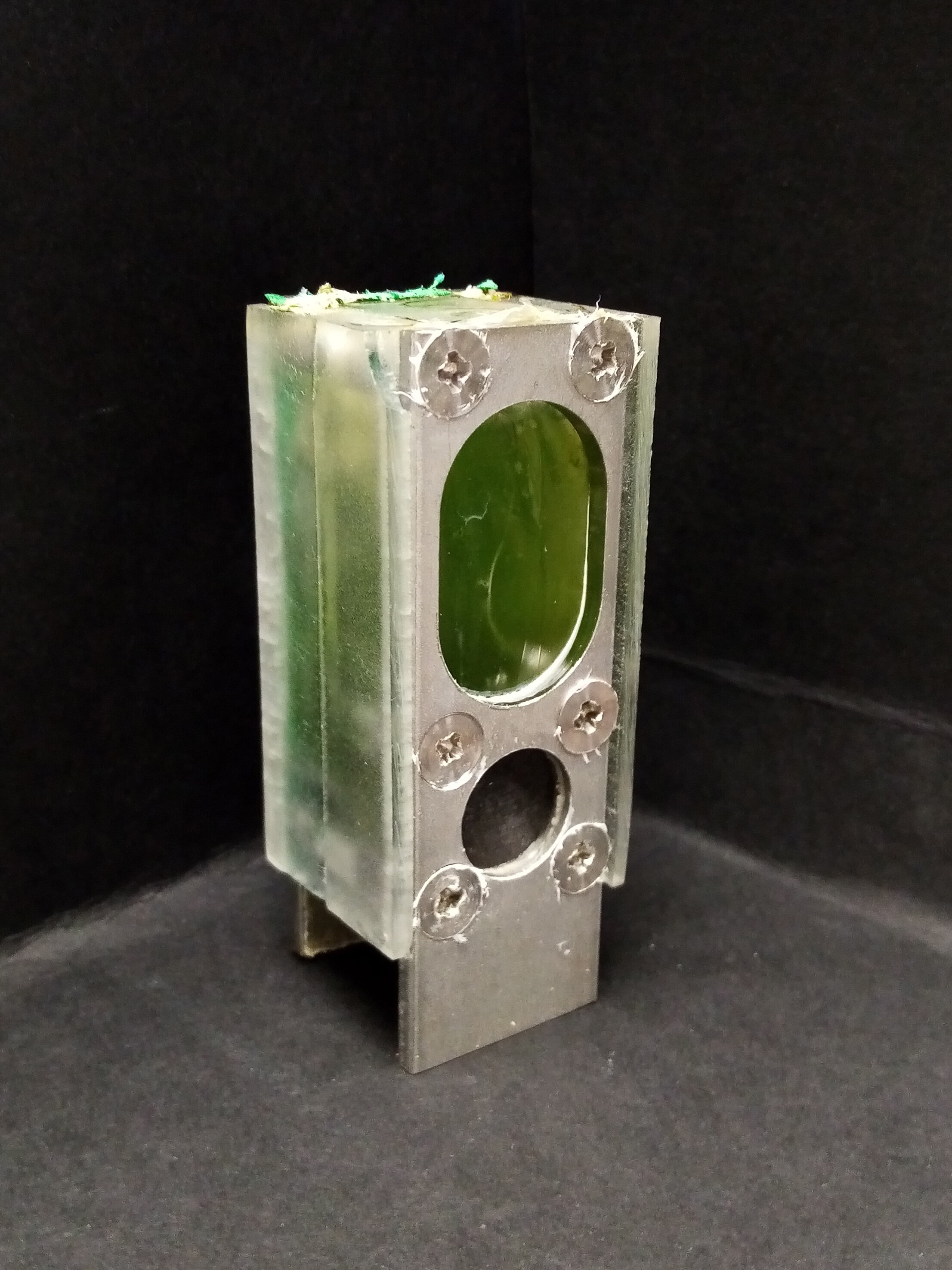
Comparable in size to an AA battery, contains a type of non-toxic algae called Synechocystis that naturally harvests energy from the sun through photosynthesis. The tiny electrical current this generates then interacts with an aluminum electrode and is used to power a microprocessor.

"We were impressed by how consistently the system worked over a long period of time—we thought it might stop after a few weeks but it just kept going"

via University of Cambridge and Arm:  P. Bombelli et al, Powering a microprocessor by photosynthesis, Energy & Environmental Science (2022). DOI: 10.1039/D2EE00233G


Self-propelled, endlessly programmable artificial cilia
May 2022, phys.org

Single-material, single-stimuli programmable microstructure that can outmaneuver even living cilia. 

Unlike previous research, which relied mostly on complex multi-component materials to achieve programmable movement of reconfigurable structural elements, Aizenberg and her team designed a microstructure pillar made of a single material—a photoresponsive liquid crystal elastomer that realign and change shape when light hits it.

"We showed that we can program the choreography of this dynamic dance by tailoring a range of parameters, including illumination angle, light intensity, molecular alignment, microstructure geometry, temperature, and irradiation intervals and duration," said Michael M. Lerch, a postdoctoral fellow in the Aizenberg Lab and co-first author of the paper.

"When these pillars are grouped together, they interact in very complex ways because each deforming pillar casts a shadow on its neighbor, which changes throughout the deformation process," said Li. "Programming how these shadow-mediated self-exposures change and interact dynamically with each other could be useful for such applications as dynamic information encryption."

via Harvard John A. Paulson School of Engineering and Applied Sciences: Shucong Li et al, Self-regulated non-reciprocal motions in single-material microstructures, Nature (2022). DOI: 10.1038/s41586-022-04561-z


Monday, February 11, 2019

Perpetuity, Posterity, and Pretense


Europe has had enough - the Right to Repair law would require  manufacturers to make things that last longer and are easier to repair, instead of making things that are designed to stop working after a specifically designed time horizon and which can not be repaired, no matter how simple the design failure.

I will now spend the next 6 paragraphs transforming into a crotchety old man complaining about how things are not like they used to be.

Let's begin with how software updates are built obsolescence on steroids.

Now that we've covered that, let's talk about how things in fact have to be designed with their eventual failure in mind. And let's start with duct tape.

I have a problem with duct tape, and I understand I am in the minority because of it, but hear me out. Let's say you have a wall outlet, a duplicate receptacle if you will, and you're plugging a bunch of things in there, so you have one of those adapters that turns two outlets into six. But the adapter keeps falling out of the wall because of all the plugs hanging from it. How do we solve this problem?

Duct tape. And that would be a great solution, except that duct tape, for most of its purposes besides taping ductwork together, will fail. And when it does, you'll have to take all that tape off, only that it doesn't come off. It leaves a very sticky residue behind, marking its territory everywhere its been. (Then again, you might not be using enough duct tape.)

And this is my problem with duct tape. The almighty MacGyver child is not a permanent solution; it will fail, and when it does, the thing you taped it to is now ruined, which means the thing you taped it to has also failed.

Extrapolating this back to European manufacturing policy and built obsolescence, we must remember that nothing lasts forever, and that designers know this. To pretend that your washing machine was not designed with its own eventual failure in mind is to ignore one of the most basic laws of nature - nothing is safe from entropy.

The other side of this fundamental law is that nothing is free. You want a washing machine that will last 100 years? It can be done, but you have to pay for it. It's that simple. When a washing machine is designed, one of the problems measured is the cost of resisting entropy. "How much money do we have to spend to get this thing to last long enough that people would still buy it for more than it costs us to make it?"

We can make a washing machine that lasts 100 years, but it would cost $4,000. We could also make one that costs only $50, but it would last about as long as it takes to get delivered to your house. The two variables have to meet somewhere in the middle. I'll pay $500 for a machine that lasts 10 years. That's $50 a year for a washing machine, which is way cheaper than the cost of a laundromat. (Actually, if I were ever in a position to own a washing machine, I would probably buy it used for $150, and plan on repairing it myself a few times over the next 10 years.)

Finding this sweet spot is a part of the design process. It doesn't make a manufacturer sneaky or immoral to build a product that is 'designed to fail'; failure is a part of the design process.
This is a shot of a jail cell at Eastern State Penitentiary, built in th early 1800's. The original intent of a penitentiary was to repair the damaged inmate by allowing them to reflect on their mistakes. The word is related to repentance.


This is why the Right-to-Repair movement is such a great idea. It reminds me of a design strategy called Design for Disassembly, where you consider how hard it would be to unbuild your building before you build it, and then you design it so that it would be easier to unbuild. In other words, you imagine what happens when you eventually need to remove the duct tape from your wall outlet, and you modify your design accordingly. Or take the Japanese temples that are meant to be rebuilt every so often, the sacred cedar wood replaced, thus rejuvenating the spirit of the building.

Dialing back one more step, this idea can be derived from a Japanese aesthetic called Wabi Sabi. The Wabi aesthetic is to Japan what perfection and beauty are to the West. Under this paradigm, imperfection is beautiful. You can see it in their tea bowls, which are asymmetrical and austere. They have cracks in them, and its ok. In fact, depending on the crack, a tea bowl can been seen as even more beautiful because of it.

Japanese Teabowl

But that's not the best part. Over time, the crack will fill with the leaves of a thousand cups of tea, and they will seal-up. And then the cup becomes even more beautiful. Transience and endurance are held in high regard. The Wabi aesthetic reveres age, aging, and the aged, and sees things as having value because of their age, which is in direct contrast to Western values of perfection.

This distinction also informs the obsolescence-vs-utility consumer calculus of Westerners who will pay for a product that they know will fail in a few years. Under a Western consumerist paradigm, the older a thing gets, the less valuable it becomes, no matter what. Under that formula, why would a manufacturer make something that lasts forever?

When I look at a thing with my Wabi goggles, I don't see what it is, but what it will become. Colors fade, metal rusts, and stone gets dirty. That building may look perfect today, but perfect doesn't last forever. And so its future gets superimposed on its now, thus changing its value.

The reason Right-to-Repair is a thing in the first place is because the force in the market is not strong enough for manufacturers to do it themselves. But asking consumers to change their behavior is way harder than forcing businesses to do the same thing. 

Image source link

Post Script:
The most popular understanding of the concept for Built Obsolescence relates to the making of a product with a deliberately short lifespan. Granted, there are products that are 'made to last' and those that are not. The problem is when the consumer is misled into thinking they are buying something of a higher quality than it is. This version of the concept is itself potentially misleading of the realities of design and economics.

Let's face it, if enough people wanted a mobile phone that lasted 10 years, there would be one on the market. And if more people wanted their cars to last forever, why would so many be leasing? (And then again, there's always inkjet printers to prove me dead wrong; I'm looking at you Espon.)

Moore's Law now has a lot to do with all this. Although it refers to limited aspects of a product's performance, it says that in 18 months, there will be another product twice as good as yours, but for the same price. This affects long term research and development more than short term product design, but in a world where the software has become the product more than the hardware, it should be a part of any discussion about product design.

Notes:
Climate change - Right to repair gathers force
Jan 2019, BBC News

Here's the Truth About the Planned Obsolescence of Tech
2016, BBC Future

Fact Sheets on Designing for the Disassembly and Deconstruction of Buildings
EPA, 2019

4th International Symposium on Environmentally Conscious Design and Inverse Manufacturing, 12-14 Dec. 2005, IEEE, Tokyo, Japan
ISBN: 1-4244-0081-3

DOI: 10.1109/ECODIM.2005.1619391

The practice of sustainable design requires an analysis of the environmental, social, political and economic impact of a product throughout its entire lifecycle. There is much research into the manufacturing and waste management phases; however, little attention has been paid to the 'use' phase of the life cycle. Joseph Fiskel acknowledged in 1996 that, "the longer the life of a product, the more eco-efficient it is, since the same amount of material delivers a larger amount of economic value". This paper will evaluate how the premature obsolescence of technology, the obsolescence of quality and the obsolescence of desire can be managed by using Design for Disassembly (DFD), and applying it to the 'use' phase of the lifecycle to increase product durability.

Deconstruction and Design for Disassembly
Here's a paper I wrote circa 2010

Cradle to Cradle, William McDonough, 2002
This book outlines and encourages the design of a product in light of its entire "life-cycle".

Cradle to Cradle Products Innovation Institute

Monday, October 8, 2018

Livability


Downtown Cranford, New Jersey, circa 2018

A recent article in New Jersey's local news drew my attention to the subject of charming towns. In the town-planning world, the criteria by which we measure "charming" is called livability, and there's been plenty of towns seeking this status as of late.

Livability is related to walkability, like when you can get all your errands done with only parking your car once. And when you can walk from one store to another without crossing an 8-lane superhighway pedestrian deathtrap. It's also one of the reasons that lots of younger people are preferring to live in the density of downtown instead of on its spacious suburban fringes (which may be related to the reason for towns paying more attention to this stuff).

But livability goes further, as it is even more qualitative. It's not only "can I easily walk around town," but "is it a nice walk?" Livability measures how nice the greenery is, what the awnings look like on storefronts, and the feeling of open-ness vs closed-ness that one feels while walking around town or sipping coffee on a sidewalk bench after lunch.

There's ways to approach such qualitative measures quantitatively. For example, we can simply measure the amount of greenspace in square feet, or we can measure the ratio of the width of the streets to the height of the buildings (which is a good determinant of close-ness/open-ness). Or you can do what Haddonfield did, because they got notoriety.

Haddonfield adopted a business improvement district in 2004. This is a special distinction that allows certain properties in certain parts of town to get tax breaks, with the hope that it will "promote the economic and general welfare of the District and Borough." And words like 'general welfare' mean quality-of-life.

Forming these districts happens by way of a public/private partnership between property owners and a municipality. They are run via a board composed of professionals working in the town, retail business owners, property owners, and residents who are none of the above, that way their interests are diverse and vested.

The charge of this new entity is vast, but critical to a flourishing hyperlocal economy in today's world. They encourage self-help and self-financing, provide leadership, offer grant programs to attract new business, enhance the look of the downtown, sponsor networking events, organize special events, and market the downtown, all of which can help to raise the quality of living in these towns.

Improvements don't happen overnight. It took a good 15 years for Haddonfield to get this credit. Then again, what do I know, maybe it started being awesome a long time ago.

There's another town that established its own improvement district, and they've also been doing really well in the Livability Department. Cranford started an improvement district in 1992, and were the first to do so in New Jersey. If you drive through their downtown, right past the train station, you'll notice, or not notice, any Big Dog businesses. No fast food giants, no consumer goods warehouses, just mom-and-pop businesses.

This helps because the business owners are way more invested in what goes on locally than would be a multinational corporation. They care whether their sidewalks look nice. They care about quality of life issues.

Their District was created, among other things, to preserve historic aesthetics, establish a design criteria,  and ultimately to deal with funding and decision-making for the district so they could compete with the flow of commerce that went rushing through the recently-opened doors of the nearby Short Hills Mall.

Cranford recently took things a step further by hiring a town planner, because paying someone to think about all these little things makes a difference. There's a piano sitting in the middle of their downtown, all day all night. Sometimes they plan for an event there and invite a musician or a school music group, and sometimes, like on Friday nights, this random guy just shows up and plays old school Nintendo songs all night. They put up barricades and do yoga in the street. They get residents to loan their porch to local musicians who then travel around to all the different volunteer porches in town, followed by a crowd of drinking town residents (a crowd of residents, mind you, that is ok with paying somewhat higher property taxes to live somewhere that makes being an adult a little less soul-sucking).

Anyway, you can't just string up some Edison bulbs and call it a day. Livability requires planning. And it requires patience. And if you want your town to make it into the local news, or the national news, or you just want it to be a nice place to walk around, then you may want to take a stroll through these neighborhoods, take notes, and take action.

Post Script:
I neglect to mention that it doesn't hurt if you have a train station nearby.

Notes:
This town was named the 'most charming' one in all of N.J. We offer these pics as proof
Aug 2018, NJ.com

Crowdsourcing Reform: Community Participation and Land Use Regulation in New Jersey
Research paper for studies in urban planning, 2010

Haddonfield Business Improvement District

Partnership for Haddonfield 

Cranford Business Improvement District
adopted 1992

Cranford was recently named by The New Jersey Chapter of the American Planning Association as one of the 2018 Great Places in New Jersey.
Oct 2018, nj.com

Streets for People: A Primer for Americans
Bernard Rudofsky, 1969
(Read this book to learn the hows and whys of the enjoyable dowtown experience from renowned thinker, designer, and creator of the Bernardo sandal, yes it's true.)

The Death and Life of Great American Cities
Jane Jacobs, 1961
(The number one book about what makes a nice place to live by the number one person to write about such things.)


Post Script:
Here's a peek through the looking glass. An article just come from the BBC, about poor town planning. It describes the lives of many young adults stuck in this new autocentric anticulture nightmare. In America it's called "suburbia" and it's been a problem for decades.
[poor town planning]

Apparently developers did not consult planners when they plopped hundreds of residential units so far out of the city that you can't get to the market - or anywhere else - without a car.

Some developers buck this trend, and their successful recipe is detailed in the article as such:

“The secret is the layout of connected streets with interesting squares and courtyards, coupled with the way that offices, small shops, cafés, pubs and even a garden centre were integrated with the homes as in an authentic small town.”

Young couples 'trapped in car dependency'
Oct 2018, BBC

Sunday, February 18, 2018

Biomimetic Helmets


Woodpeckers show signs of possible brain damage, but that might not be a bad thing
Feb 2018, phys.org

Evolution is strange. Woodpeckers have to smash their heads into trees in order to eat. So nature gave them special skull designs to limit their repercussions. And now we humans are using that design to make our skulls safer. For those times when we inadvertently smash our heads into concrete etc.

The go to examples for biomimicry have been the genius environmental control system that is a termite mound, and the aerodynamic boxfish used to design drag resistant cars. Woodpecker helmets make a nice edition, and an even easier way to explain biomimicry.


Friday, June 9, 2017

Color Conspirators

Anybody remember when triangles brainwashed the entire world for like three years? And galaxy print, i.e. indigo-purple-pink.

The people who know what colour you'll like in 2019
Apr 2017, BBC

For those of your who like conspiracy theory, maybe you should know that there are people, in fact entire incorporated business ventures, who's sole purpose is to "offer information on current and future trends in fashion, interior design and lifestyle."

"Know what's next" is the tagline of WGSN, a London-based company. And one aspect of their prescience regards color. And in this linked article above, the woman spotlighted is working on 2019. So yes, there is a global conspiracy to predict and affect the colors you will like years from now.


A couple snips from the article:
Popular colours often reflect what's happening culturally and socially.

The growth of the sharing economy, in which people rent beds, cars and other assets directly from one another, means lighter colours such as pale blues could come into fashion.

"Sharing means lightness, you don't want to be bogged down so you're not looking at a heavy palette." -Laurie Pressman, vice president of the Pantone Color Institute

Colours such as brown, which a couple of decades ago was linked to the earth and dirt but is now associated with coffee and chocolate, reflects the growth of those industries, she says.

---No idea 'sharing was light-colored' but I do remember the world getting browner for a minute, like the whole back-to-the-earth movement, actually, the one that followed the green movement, when people were feeling all guilty that they couldn't live up to their sustainability expectations, and they decided to make all white things brown, to make it look like they were using shitty detergent. jk. But really, even Starbucks changed their paper cups from white to very, very, off-white.

A "vast movement of grey" began to emerge after the 2008 financial crisis.
-Mark Woodman, a product consultant and a former president of US-based colour forecasting trade body Color Marketing Group

The color purple became more popular circa the 2012 US presidential election, when undecided and neutral states began to be identified as purple by the media.


Further, about the practicality of choosing a color-of-the-year:
"Making sure the colours are easily achievable is critically important" -Laurie Pressman, vice president of the Pantone Color Institute

---What does she mean by this, "easily achievable?" I reviewed a book on the birth of color in the modern world, called the Color Revolution, which explains how we take for granted that products are colored consistently. For example, when you buy a telephone (haha) you don't think twice that the hard plastic handset and the flexible rubberized cord are the exact same color, but that was really, really hard to do, because all these things are made with different base materials, so the coloring agents interact differently with each of them.


Finally, favorite:
The names are important too. They (Pantone) almost chose "pea soup" as the color for 2017. Settled on "greenery" instead.


And some research for good measure:
ice hockey teams wearing darker-coloured tops were more likely to be penalised for aggressive fouls
-study link

wearing the colour red could increase the probability of winning sporting contests
-study link

Note that ultimately any link between color and behavior is bound to be culture-specific, because colors mean different things in different parts of the world. (And across time as well; don't forget that the pink/blue dichotomy was originally reversed.)


POST SCRIPT

Book Review of The Color Revolution
ReginaLee Blaszczyk, MIT Press 2012

Culture as Learned Probability System
2012, Network Address

Seeing Red
2013, Network Address

Cultural Evolution of Basic Color Terms
2013, Network Address

Tuesday, April 25, 2017

Architrays

Architecture inspired concrete desk accessories - The Islam. 

The artist/teacher/architect/art historian in me is really excited about this project that recently debuted - Architrays are an art history lesson in the form of indulgent decoration. These concrete trays are designed and fabricated by 7thFl, an industrial design duo (from the New Jersey Institute of Technology, same place I spent a good 5 years of my life learning about sustainable design). Each tray they make represents a historical period of architecture, from Gothic to Roman to the Islam tray pictured above. When it comes to geometric design, Islam knows what's up.


Here you see an example of how this kind of design is developed from a very simple algorithm, genius in its simplicity. You start with a circle, then you draw another circle so that its center lies anywhere on the first circle. Then you draw a third circle, again so that its center lies on the first circle, BUT so that the center of all three circles now make an equilateral triangle with 60 degree angles.

If you repeat this pattern all around the first circle, you get a hexagon. Look at the points of the image in the upper left, and see that they can make equilateral triangles and a hexagon. This is the starting point for the most complex, most beautiful of patterns.  And this is the theme cast into concrete by 7thFl for their Islamic Architray. In other words, these 'architrays' are a beautiful reminder of a rich history of art, design, and architecture. Check it out


Wednesday, January 4, 2017

Beyond Biomimicry


The Pompidou in Paris, built in 1970's by  Richard Rogers, Renzo Piano and Gianfranco Franchini. It's not under construction, it's an inside-out building. It's probably easier to fix this way, but do we like the way that looks? (It's actually a nightmare to clean the place.)

Color-changing materials could be used to detect structural failure in energy-related equipment
phys.org, July 2016

"Researchers at MIT are making fluorescent polymer gels that change color when they're shaken, heated, exposed to acid, or otherwise disrupted. Given such a response, these novel materials could be effective sensors for detecting changes in structures, fluids, or the environment."

Buildings are not alive, so they don't heal themselves. It's hard for us to find out what's wrong with them, because most of their critical parts have been made invisible according to our cultural-architectural preferences.

But now, if there's structural damage in a place that's been doped with pressure-sensitive colorgel, we can see it.

Beyond Human


Meet Graham, a 'human' designed to survive a car crash
July 2016, CNN

The TAC (Transport Authority in Victoria Australia...sort of like the DMV in the USA) in collaboration with Melbourne artist Patricia Piccinini have launched Graham, a human made of silicon designed to survive a car crash...

This is a great example of how our own technology has outpaced the rate of biological change. If technology changed at the same rate as our biology, we would look like this right now. But we don't. We also (some of us) can digest milk. That was another point at which we outpaced ourselves, putting culture ahead of genes. Ah, the human condition.

Wednesday, December 12, 2012

Aunt Colony


"I am beginning to see things from two different vantage points. From an ant's-eye point of view, a signal has no purpose. The typical ant in a signal is just meandering around the colony, in search of nothing in particular, until it finds that it feels like stopping. Its teammates usually agree and that moment the team unloads itself, by crumbling apart, leaving just its numbers but none of its coherency. No planning is required, no looking ahead, nor is any search required to determine the proper direction. But from the colony's point of view, the team has just responded to a message which was written in the language of the caste distribution. Now from this perspective, it looks very much like purposeful activity."

"Prelude...Ant Fugue", Douglas Hofstadter
in The Mind's I, Hofstadter and Dennett, eds., 1981


Saturday, October 13, 2012

The Ampersand, &


AKA The 27th Letter
(basically just reposting Wikipedia)

This is a false-reveal of the ampersand conflation. The E and T are visible, but the implied origin, sans-stylization, is misleading in regards to the actual evolution of the ampersand character.
The Thing, SEEN
Ampersand - '&'. It means ‘and’, a -conjunction- of things. It means ‘to combine’, or more like a command to the reader to combine.

Visually, this symbol ‘&’ is a conflation of the letters ‘e’ and ‘t’, for the Latin et, or ‘and’. Firstly, it was joined to form a simple ligature, or combination of letters typically-found-together. But it further underwent a strange evolution under the influence of, primarily, scribes, typographers and typesetting technology. These people/things would abbreviate, combining letters together (like the ‘ae’ in aesthetics) to save time, space, and money. And it was under these conditions that the hyper-stylization of the letter/s-form gave it a life of its own, the combination having reached a point where the constituent letters could no longer be distinguished from each other. This is what makes a conflation.

&, The 27th Letter
source: My Own Primer, or First Lessons in Spelling and Reading. Carter, Rev. John  P. // Philadelphia: Presbyterian Board of Publication, 1857
The Word, SPOKEN
As a word, ampersand is also a conflation. It was originally spoken/written as and per se and (which in itself is a combination of English-Latin-English, the Latin part of which, per se, means ‘in itself’…you can’t make this stuff up). The other word-letters of the alphabet were spoken I per se and A per se, and they were said that way to distinguish them as letters and not words (though their very distinguishing in this way made them words more than letters, in fact).

This time, it was through the copying mechanism of human speech that the ampersand was carried over multiple iterations, themselves being reinforced in children reciting the alphabet, and ending with ‘and’, the 27th letter, spoken ‘and per se and’, to distinguish it as a letter of the alphabet and not a word – andperseand became slurred and stuttered by its countless iterations until a stable ‘ampersand’ was reached. It doesn’t make any kind of sense how it got there; it is a conflation in this as well as its visual expression.


The Wrestling Ampersand
The Idea, UNDERSTOOD
Slightly sideways now; the ampersand, both the word, and its symbol, stand for a combination of things – they are a combination and they stand for a combination. It’s put together like an abstract life form. It’s just uncanny how the ampersand’s meaning is inherent in its form. It’s completely artificial, and completely beautiful, and who designed it?

And so finally, the most triumphant expression of this thing is in our understanding of it. A mental-pretzeling, we wrestle with its recursions and meta-logic diversions. It is the expression of a mind trying to understand itself.


Post Script, AMPERSAND OVERDOSE

notice the ampersand variations
image: Nobiltà di dame […] Fabritio Caroso. Venetia. 1600.
via History:
"...different kinds were used to keep the page from blurring under the reader's eyes"; too many &'s on the page is hypnotic.
Artemy Lebedev, Ampersand, § 112. March 22, 2005

via Russia:
"Finding any mention of the sign in the pre-computer era literature is nearly impossible, because the use of ampersand in Cyrillic typesetting was very scant."

"There’s no need to use ampersand in Russian.
Because the Russian conjunction u (and) sounds and looks short enough (with “y”, the Spanish [and 'e' in Spanish and Portuguese] are the luckiest of the bunch). The author can’t recall an example when one intelligible and condensed symbol is replaced with a few symbols or even just a ligature."
Artemy Lebedev, Ampersand, § 112. March 22, 2005

via France:
Esperluette means 'ampersand' in French,
but they really call it 'le sign et', like how English calls '@' 'the at symbol'.

(I am only reading the French-wiki via 'translate', and what a nightmare it is to translate this particular topic.)
try translating to english and reading the discussion page

Esperluette underwent not identical but very similar development in France. Perhaps this can be a focus for studying the relative speed of idea-transmission at particular points in cultural evolution. Had printed writing been so prevalent in an older England/France as it is now, then the word for the thing-ampersand would not have been able to morph so easily.

Now it is fixed. If, for some reason, we were to incorporate 'theisthe' into our language today in the 21st century, it would not mutate the same (especially since the 'letter of the alphabet' for 'th' is no longer used)  However, it isn't used  in many other languages, examples given below. 

via Legend:
one appears in Pompeian graffiti, establishing the symbol at least as far back as A.D. 79 (we can just take this as legend).

via the Internet:
"Our Middle Name", 28 April, 2008
News, Notes, & Observations, Hoefler & Frere-Jones

The Ampersand, an ampersand blog

J. Tschichold and F. Plaat, The Ampersand: Its origin and development, London: Woudhuysen, 1957. <http://www.worldcat.org/oclc/721129570> Bibtex

The [Visual] Evolution of the Ampersand


FINAL NOTE, not for the faint of heart:
try writing an article such as this, and switching back and forth between 'HTML' and 'Compose' and watch what happens to all the &'s.

___


^You've never seen the ABCs look this bizarre and wonderful
Vincze Miklós io9
Feb 14, 2014

Sunday, December 4, 2011

Memetics in Building Systems User-Interface

The User
The topic of user-interface doesn’t come up much between architects and designers. And it’s no wonder why. To quote from another text:
Blueprints and regulations are complex, but people are all the more. The planner draws straight lines and geometric shapes. The architect uses energy-efficient systems and strategies. Then people come in. They cut corners; they walk on the grass and right through the bushes. They turn off the automatic light sensors. “If only there were no people to complicate things and reveal the flaws in my design…”
-Crowdsourcing Reform, 2010
Yet, the implementation of energy efficiency in buildings comes down to the user. Design all you want, the user will tear that up. Automate? Override.
The building is, both phylo- and ontogenetically, a Dawkins’ Extended Phenotype, in direct contact with the user.
Buildings vs. Building and Users vs. User
Building systems need to be easy-to-understand for the user, and that need is not overshadowed here. However, the kind of user-interface that can be affected by such ‘educational’ characteristics of building systems is for the individual user. What is now deemed a manipulable component of this interface, by the rising attention to memetics, is the attitudes and beliefs of the user-at-large in regards to what a building is and what it does, and especially what their place is in the relationship between them and the built systems.
The Communicability of Building Systems
A “self-propagating” meme is one with high visibility; photovoltaics and fashion trends are examples. “Cast iron cookware is awesome” is not a self-propagating meme; it is much less visible. Surely this has been proposed before, and the Pompidou pays the price, but it must be recontextualized in our current social and physical infrastructure: Building systems must make themselves more visible, while clearly communicating what it is they do and what should be done with them.

It must be noted, it is not being said, for example, that the 'wiring' needs to be visible, just the 'light switch'. And perhaps not even that, but some-thing that communicates what particular part of the electrical system it is and what is to be done with it (depending on environmental and user conditions alike).

See also Architectural Semiotics