Showing posts with label network science. Show all posts

Wednesday, June 17, 2026

Network Science 4th Dimension


Last installment of the network science series. Forget the AI takeover, we're already mindless automatons (but don't tell the free will enthusiasts).

A physics explanation shows why US elections keep ending 50:50—and why more spending won't change that
Apr 2026, phys.org

A spending threshold in US House races of roughly 1.8 million USD per campaign limits outcomes. Below it, social dynamics shape outcomes. Above it — on both sides — elections systematically trend toward a draw, no matter how much either party ultimately spends, while driving polarization higher. ... When both parties spend over 1.8 million USD, social influence becomes negligible and the election very often ends in a close race.

Further, on incumbents: The researchers put a number on this structural advantage. Even if the incumbent spends nothing, a challenger must invest roughly 140,000 USD just to neutralize the baseline incumbency effect. When the incumbent spends around 900,000 USD, the challenger still faces a disadvantage equivalent to about 20% of total campaign cost, purely as a consequence of the system's phase structure, not the incumbent's individual qualities.

via Complexity Science Hub Vienna: Jan Korbel et al, Empirical Validation of the Polarization Transition in a Double-Random Field Model of Elections, Physical Review Letters (2026). DOI: 10.1103/9gjj-1df6. 

On arXiv: DOI: 10.48550/arxiv.2510.00612

Image credit: A fungus Talaromyces purpureogenus known for its red, diffused pigment
Wim van Egmond - Nikon Small World Photomicrography Competition - 2025


From public kissing to talking during movies, a simple formula predicts moral norms across cultures
Apr 2026, phys.org

"An implication of our simple formula is that norms for one behavior can inform us about norms for a very different behavior. For example, the more okay it is to kiss in the street (a behavior that elicits concerns about purity), expect it to be less okay to beat children (which instead elicits concerns about harm)."

Moral Flavors Model = TC(B) + MF(B) x MT(S) 
  • TC - total concern that behavior B is seen to elicit
  • MF - moral flavor either individualizing type (harm, fairness) or binding type (purity, authority, loyalty)
  • MT - moral taste measures emphasis of individualizing concerns over binding concerns

via Institute for Future Studies in Sweden: Kimmo Eriksson et al, Same flavours, different taste buds: a theory for predicting social norms for specific behaviours across cultures, Journal of the Royal Society Interface (2026). DOI: 10.1098/rsif.2025.1122.

Post Script - List of Morally Contentious Behaviors
  • claiming government benefits to which you are not entitled
  • avoiding a fare on public transport
  • stealing property
  • cheating on taxes
  • accepting a bribe 
  • homosexuality
  • prostitution
  • abortion
  • divorce
  • sex before marriage
  • suicide
  • euthanasia
  • for a man to beat his wife
  • parents beating children
  • violence against other people
  • terrorism as a political, ideological or religious mean
  • having casual sex
  • political violence
  • the death penalty
--World Values Survey Wave 7 data (2017–2021) for 42 societies; Minkov M, Kaasa A. 2022 Do dimensions of culture exist objectively? A validation of the revised Minkov-Hofstede model of culture with World Values Survey items and scores for 102 countries. J. Int. Manag. 28, 100971. doi:10.1016/j.intman.2022.100971


How deceptive content reached millions of voters during the 2020 US elections
Apr 2026, phys.org

(Note that Facebook was directly involved in this research, so assume you are being intentionally deceived by this data, at least to some extent, and in an attempt to make Facebook look better than they are)

They focused on 49 deceptive networks that targeted adult Facebook and Instagram users in the US during the 2020 election, both disincentivized networks of users who engaged in inaccurate political discourse and financially motivated networks disseminating content that is largely dismissed as spam or clickbait. 13 out of the 49 identified were "coordinated inauthentic behavior networks", and the remaining 36 networks were found to be financially motivated (by advertising). They were organized by characteristics like where they originated, how many accounts they ran, and what they posted about, as well as by activity and reach.

The networks were measured to have reached about 40 million users, or 15% of the overall network, and were highly concentrated - only 3 of the 49 networks accounted for over 70% of all the users reached. One of which was an account called "Rally Forge' created in the US. (It's really fucking frustrating, in this case for example, to try and get the list of the ** other 2 ** networks, but we can't because it's behind a paywall; a paywall that we already paid for with our tax dollars. And yet we then turn around and give it all away for free to the same companies so they can gobble it up into their too fat, too slow, and too stupid artificial intelligence engines.)

So anyway, here's the important part:
Networks reached most of their audience not directly, but because ordinary users — people unaffiliated with the networks — reshared their content. The network with the highest reach, for example, reached about 1.3 million users directly, but 13 million indirectly through reshares by ordinary users. (That's 10 times more people, for the mathematically challenged among us) ... They suggest that interventions that only target deceptive networks might be insufficient, as regular users are also contributing to the dissemination of misleading content.

So, if you are one of these impact layer people who get hit first, and none of us could really know if that's us because the inauthentic group networks are hidden by design, then by simply using the platform, ie sharing articles with your friends, you are doing up to ten times the work of the company, the group, trying to advertise or influence - we are literally working for them, for free, by taking the attention of our friends and giving it to them, so we are exploiting our own social network for their benefit, likely lessening our own social capital for their increasing financial capital 

One last thing:
Interestingly, the researchers observed that financially motivated networks, which some previous studies dismissed or considered less impactful in the context of elections, produced a substantial amount of political content. Moreover, the content they disseminated often reached far more users than the posts shared across politically motivated networks. (In other words, election financing things like Citizens United, where anyone, anywhere, using otherwise hidden money, also called dark money, can purchase otherwise democratic election campaigns and the candidates they support.)

via Stanford University, Meta, University of Pennsylvania: Ruth E. Appel et al, How deceptive online networks reached millions in the US 2020 elections, Nature Human Behaviour (2026). DOI: 10.1038/s41562-026-02435-2.


Tuesday, June 16, 2026

Network Science 3rd Dimension


Continuing the network science installment, this group of articles reveals some of the more nefarious considerations, and even applications, of the scientific method in the employ of manipulating human activity at a large scale. 

Sharper brains switch to a 'not what you know, but who you know' mindset online and on social media, study shows
May 2026, phys.org

It's pretty fascinating - The irony of how social media platforms literally need you to be less social in order to engage with more content, almost like it's content vs people - almost like it's financial capital vs social capital, and we are being influenced to give up the social capital for sure. The more of your social capital I can take from you, the less you will be able to avoid my taking your financial capital. It's how I drink your milkshake, as they say. 

It seems the problem is that in the end, we the users of social media applications somehow end up with less of both. 

"When you follow someone on LinkedIn, join a Facebook group, or become a member of an online community, you might assume you will learn more about the content they share. Paradoxically, our study suggests the opposite happens, as individuals channel their mental energy away from knowledge gathering to mapping the social landscape, noting people's individual connections and the wider network.

"Interestingly, this shift was exhibited more among people with greater working memory capacity, so the sharper you are cognitively the more likely you are to tune that content out."

The research involved around 1,000 adults aged between 18 and 77 across five experiments. In each study, participants engaged with simulated social media environments, such as joining groups, following pages, or becoming friends with others. Their exposure to content, as well as their memory for both content ("who knows what") and social connections ("who knows who"), was then assessed.

"This pattern reflects a cognitive trade-off. Rather than encoding information itself, individuals increasingly track who possesses the information. It indicates that people engage with and use the social network like an external hard drive for the brain." 

"The strength of this switch also appears to be determined by working memory capacity. Individuals with higher working memory capacity showed a more than 50% reduction in content recall, but a dramatic increase (over 150%) in accuracy in tracking social connections after forming connections to others. 

University of Bristol, University at Buffalo, State University of New York: Esther Kang et al, Tracking connections, not content: How working memory shapes content and social learning in online networks, Journal of Experimental Social Psychology (2026). DOI: 10.1016/j.jesp.2026.104925

Image credit: Slime mold Arcyria major releasing spores by Henri Koskinen - Nikon Small World Photomicrography Competition - 2025


The 'private solution trap': Why richer countries may favor adaptation over public solutions, and who pays
Mar 2026, phys.org

The Private Solution Trap - Participants given higher budgets (representing wealthier nations) consistently contributed more to private solutions (like flood mitigation) than those given lower budgets, while they also contributed proportionally less to public solutions (reducing greenhouse gases). Inequality within groups therefore dramatically increased over the course of the game.

"The data clearly shows this is a problem that exists above culture."
 
via University of Nottingham: Eugene Malthouse et al, The private solution trap in collective action problems across 34 nations, Proceedings of the National Academy of Sciences (2026). DOI: 10.1073/pnas.2504632123


Scientists call out health-harming corporations driving rise in chronic disease
Mar 2026, phys.org

This is straight memetics, and how ideas spread, or don't spread, and how to modulate that spread:

Globally, five commercial products are key factors in 31% of all deaths each year:
8m - Fossil fuels
7m - Tobacco 
2m - Ultra-processed foods
2m - Chemicals used in commerce and pesticides
2m - Alcohol

"Clinicians, the public, the media and policymakers need to understand that these health-harming industries all apply the same set of tactics used by 'Big Tobacco' to create uncertainty about the harms of their products, delay regulation and therefore continue to profit from their sale"

via University of Sydney and the Center to End Corporate Harm at UC San Francisco: Corporations as Vectors of Noncommunicable Disease—Using Internal Industry Documents to Identify Preventive Strategies, New England Journal of Medicine (2026). DOI: 10.1056/NEJMms2507028


Can you trust a finding? A new project maps which studies replicate
Mar 2026, phys.org

News about the news: Findings from the Systematizing Confidence in Open Research and Evidence (SCORE) program - a collaborative effort involving 865 researchers - have been published in Nature as a collection of three papers alongside a release of five additional preprints. The SCORE program offers new empirical evidence on the reproducibility, robustness, and replicability of research across the social and behavioral sciences, and the predictability of replicability.

The SCORE team sampled claims from 3,900 papers published from 2009 to 2018 in 62 journals spanning criminology, economics, education, finance, health, management, marketing, organizational behavior, psychology, political science, public administration, and sociology. These claims were subjected to a variety of methods of credibility assessment.

[This writeup also reports findings from 5 more articles that are still pre-prints]

Transparency - Data was available for only 24% of a sample of 600 assessed papers. For the 143 papers that were subjected to reproduction tests, 74% successfully reproduced at least approximately and 54% precisely. Reproducibility was highest for papers where both original data and code were shared, and lowest when reanalysis required reconstructing the original dataset from public sources.

Uncertainty - For each of 100 papers, at least five independent analysts tested the same question with the same data, applying their own decisions about how to best analyze the data. ... 74% of analyses were reported to arrive at the same conclusion as in the original investigation; 24% to no effects/inconclusive result, and 2% to the opposite effect as in the original investigation.

More - Human assessments are reasonably accurate at predicting replication outcomes, but of the automated methods of eliciting predictions from machines about the replicability of findings (Synthetic Markets, MACROSCORE, and A+), none were consistently effective. 

General Findings - For reproducibility specifically, there were substantial differences in data availability that were associated with higher reproducibility rates in Economics and Political Science compared with other fields.

led by Pennsylvania State University, TwoSix Technologies, and the University of Southern California: Visit the website for an overview of the SCORE program, via Nature. https://www.cos.io/score

Monday, June 15, 2026

Network Science 2nd Dimension


Continuing the network science installment, this time with Hyper Fleck Information Space. 

Mate choice: How social trends influence mate diversity
Feb 2026, phys.org

If everyone performed "mate copying" behavior, then diversity would decline. This is what happens instead:

Conformity: Here, the majority follows the trend. The model shows that this can paradoxically lead to the fixation of traits that have a lower biological quality. A rarer, actually fitter type then has little chance of asserting itself against the established social trend.

Anti-conformity: If individuals deliberately copy the minority, diversity in the population remains stable.

This new model makes it possible to identify the "critical copying probability." This threshold value marks the point at which social information overrides natural selection. If around 40% of the population follows the example of other individuals when choosing a mate, a biologically inferior type can suddenly dominate the group.

The study emphasizes that evolution is not determined by genes alone. It is also shaped by the way information flows and is processed within a community. 

via University of Würzburg: Srishti Patil et al, Phenotypic polymorphism via mate copying, Proceedings of the National Academy of Sciences (2026). DOI: 10.1073/pnas.2510849123

Image credit: Slime mold Arcyria denudata by Frederic Labaune - Nikon Small World Photomicrography Competition - 2025


Personal change thresholds may explain why popular policies fail to spread
Mar 2026, phys.org

Some people will try a new idea the moment they hear about it. Others wait until everyone else is doing it. In survey experiments, participants repeatedly chose between options such as energy policies or messaging apps while seeing different levels of social support for each one. Based on these choices, the team estimated each participant's personal threshold for change. "This approach lets us infer individual tipping points."

Using extensive simulations on real social networks, they compared different strategies for "seeding" change. They found that strategies combining two types of information — social network structure and individual thresholds for change — consistently outperformed approaches based on only one of these factors.

In scenarios where individuals with high thresholds were less responsive to targeting, the most effective strategy was to target those individuals connected to many others who were already close to adopting the change.

In settings where targeting is costly, as in online influencer marketing, the best results came from more sophisticated algorithms that took both network structure and individual thresholds into account.

"By identifying who needs just a little nudge and how influence spreads through social networks, interventions can be designed to have a much larger impact."

via University of Zurich: Radu Tănase et al, Integrating behavioural experimental findings into dynamical models to inform social change interventions, Nature Human Behaviour (2026). DOI: 10.1038/s41562-026-02417-4


Bell-bottoms today, miniskirts tomorrow: Math reveals fashion's 20-year cycle
Mar 2026, phys.org

The 20-year-rule in fashion; it's true and it's here: 
Analyzing roughly 37,000 images of women's clothing spanning from 1869 to 2025, taken from the historical sewing patterns of the Commercial Pattern Archive at the University of Rhode Island, and identifying datapoints (literal points on the pictures) of eyes, neckline, waistline, hemline, feet to measure the fashion trends. 

It's one of the most comprehensive quantitative datasets of fashion ever assembled.

Also - "The system intrinsically wants to oscillate" ... and in this case, that oscillation is between the tension between wanting to stand out while still fitting in; once a style becomes too common, designers move away from it—but not so far that the clothes become unwearable.

But not anymore, apparently - One of the clearest patterns involves hemline length; skirt lengths have repeatedly shortened and lengthened; but starting in the 1980s, the data show a wider range of skirt lengths appearing at the same time, suggesting that fashion trends are becoming more fragmented, and rather than one dominant trend, niches emerge, reflecting more diversity in fashion.

via Northwestern: Emma Zajdela, "Back in Fashion: Modeling the Cyclical Dynamics of Trends," of the session "Statistical Physics of Networks and Complex Society Systems" at the American Physical Society Global Physics Summit in Denver, March 17 2026


A new way to detect breakthroughs in science: Large-scale analysis reveals 'disruptive' innovations in research history
Mar 2026, phys.org

Hyper Fleck Infospace - Using a machine-learning technique known as neural embedding, the researchers built a map of approximately 55 million scientific papers and patents. Each paper is represented by two points—one reflecting the research it built upon, another reflecting the research it inspired. When a paper is truly disruptive, these two points are far apart, meaning it redirected future research away from what came before it. Unlike other disruption indexes, it is sensitive to broader contexts and can better identify "simultaneous discoveries."

(This below is from the paper proper)

"Bibliometric Data Artifacts"

Here, we introduce an embedding-based measure that captures the extent to which a scientific work redirects the research trajectory. 

Our approach embeds each paper in a high-dimensional space reflecting its direct and indirect connections to prior and subsequent work. Just like neural language models that represent tokens and sentences as vectors, we imagine each paper as a vector that captures its intellectual “position.” We then train two distinct vectors for each paper in the same embedding space: one representing its past, or “antecedents,” context—the configuration of prior work it draws upon—and another representing its future, or “descendants,” context—the body of work it gives rise to. When a contribution substantially reshapes the trajectory connecting past to future, or initiates a new stream of research, these two contexts diverge; the distance between them therefore captures the extent to which subsequent work departs from the prior knowledge.

...As a reference point, we use the disruption index (“CD index”) (15, 16), a widely used indicator that uses the topology of local citation network. The disruption index captures how subsequent work diverges from earlier foundations, focusing on whether later papers cite the predecessors of a focal contribution through direct citation links.

...Using a dataset of more than 55 million scientific papers from the Web of Science (WoS) and the American Physical Society (APS), we show that our measure—“Embedding Disruptiveness Measure” (EDM)—provides a continuous, high-resolution view of how scientific contributions reconfigure the relationship between inherited knowledge and emerging directions. 

...If the embedding model is trained such that the proximity between the vectors indicates higher connections between their papers, and if disruptive papers tend to eclipse the future knowledge from the past, making future knowledge less rely on the past, we expect that a paper’s past and future vectors diverge as the paper’s disruptiveness increases. Thus, by quantifying the distance between these two vectors—representing the past and future context of each paper—we can estimate their disruptiveness. 

Simultaneous disruption - To understand why some of the landmark papers have such low D scores, resulting in a bimodal distribution of D, we examine the top 10 papers with the largest difference between the disruption index score D and the EDM score (delta). We found that all 10 papers are related to the notable examples of simultaneous disruption.

via State University of New York Binghamton University and Center for Complex Networks and Systems Research, Luddy School of Informatics, Indiana University: Uncovering simultaneous breakthroughs with a robust measure of disruptiveness, Science Advances (2026). DOI: 10.1126/sciadv.adx3420


Sunday, June 14, 2026

Network Science 1st Dimension


We're starting a series of articles about network science. There's been a lot in the news this past several months, and so there's a handful more of these posts to come. As expected, some of this comes from Northeastern, home of the Barabasi Labs that brought us network science proper, at the same time actual social networks were forming, not yet Facebook, but more like Napster, etc., circa 2001. Then there's the Santa Fe Institute and the Vienna Complexity Hub, both institutions focusing on complexity theory, which often includes network science.

If you want to know how ideas spread, or how to control an entire population in six easy steps, this is where you start. Just remember, we don't really have fake people yet, but we're almost there. And when we do, all this science will be used, by them, against us. 


Mapping out the hidden mechanics behind why some fads spread like wildfire
Nov 2025, phys.org

It's group pair interactions all the way down: As pairs of people meet up, the contagious illness or behavior can spread between them. As these two people then interact in groups, either together or separately, this helps to spread it further. The more groups they are in, the further the infection is likely to travel. They found that the higher the overlap of these groups, the easier it is to start an epidemic.

Just read that paper title.

via Northeastern University Network Science Institute in London: Disentangling the Role of Heterogeneity and Hyperedge Overlap in Explosive Contagion on Higher-Order Networks, Physical Review Letters (2025). DOI: 10.1103/z3d5-94zb

Image credit: Slime mold Cribraria purpurea by Igor Rudkovsky - Nikon Small World Photomicrography Competition - 2025


Cuisines can be broken down into simple 'culinary fingerprints,' research finds
Nov 2025, phys.org

This is NOT from the people who brought you the original Food Network, the scientists at Northeastern's Barabasi Labs, but a different group entirely:

The Fingerprints:
  • Indian food had the central component of spices in its recipes, 
  • "New World" countries such as the United States, Canada and Australia are "more homogenized", maybe because of the strong immigration cultural blending
  • Scandinavian cuisine shows significantly lower usage of vegetables, herbs, and plants  

The Recipe Data:
  • 23 cuisines from Thai to Eastern European
  • 45,661 recipes made up of 604 ingredients, simplified to 20 network groupings

via Network Science Institute, University of Catania in Italy, Savitribai Phule Pune University in India, Central European University in Austria, CENTAI Institute in Turin and Complexity Science Hub in Austria: Claudio Caprioli et al, The networks of ingredient combinations as culinary fingerprints of world cuisines, arXiv (2024). DOI: 10.48550/arxiv.2408.15162


Climate policies can backfire by eroding 'green' values, study finds
Dec 2025, phys.org

Santa Fe Institute does memetics: They surveyed more than 3,000 Germans representative of the country's demographics, asking about climate policies and for comparison COVID-19 policies. Restrictions that promote carbon-neutral behavior, like urban car bans, may trigger strong negative reactions — even among people who would voluntarily choose sustainable lifestyles. They found a 52% greater negative response to climate mandates than to COVID-19 mandates.

^Which is hard to believe considering how unrelentingly pissed off people got about covid restrictions.

"The science and technology to provide a low-carbon way of life is nearly solved. What's lagging behind is a social–behavioral science of effective and politically viable climate policies." Mandate resistance was less for people who felt that policies were effective, didn't restrict their freedom of choice, and were not intrusive on their privacy or their body.

via Santa Fe Institute: Katrin Schmelz et al, An empirically based dynamic approach to sustainable climate policy design, Nature Sustainability (2025). DOI: 10.1038/s41893-025-01715-5

*Katrin Schmelz is SFI Complexity Postdoctoral Fellow, behavioral economist and psychologist who also holds an Associate Professorship at the Technical University of Denmark.


People swear on social media more with acquaintances than with friends — analysis can help detect fake profiles
Dec 2025, phys.org

Americans use the f-word more frequently on social media than Australians or Britons, but Australians are more creative in its use. To account for the heterogeneity of social media communication, the study first identified more than 2,300 spelling variants of the f-word in the dataset. 

The research team analyzed social media updates and Twitter networks from 2006–2023, covering nearly half a million individuals in thousands of social networks, from Australia, the U.K. and the U.S. and including metadata such as location and other contextual information. Then they assessed how closely or loosely connected people were. 

Results:
  • Tendency to use the f-word clearly increases with acquaintances when compared with close friends
  • Swearing was rare in very small social networks of less than 15 people, regardless of how close-knit they were, suggesting that network size is a key determinant of swearing
  • But the distinction between friends and acquaintances became irrelevant when the network size reached around 100–120 people; earlier research shows trust is stronger in small networks than in larger ones, with the distinction at roughly one hundred members.

And why is this important you ask?

AI can easily produce text. Instead, researchers should also examine the networks within which language is being used. "These networks are extremely difficult to fake because they create a digital fingerprint for each user. They reflect a user's previous social media behavior, making profiles identifiable." Combining these data with, e.g., swear word usage frequency within a particular network, can help determine whether an account is real or not.

via University of Eastern Finland: Mikko Laitinen et al, Do we swear more with friends or with acquaintances? F#ck in social networks, Lingua (2025). DOI: 10.1016/j.lingua.2025.103931


Scientists use string theory to crack the code of natural networks
Jan 2026, phys.org

Get the heck outta here.

"There seems to be a universal rule governing the formation of biological networks. This optimization rule is purely geometric. It does not care about types of materials or tasks, and it turns out to be quite universal and applicable to many different datasets."

"We were treating these structures like wire diagrams. But they're not thin wires, they're three-dimensional physical objects with surfaces that must connect smoothly." It turns out they follow rules borrowed from an unlikely source: string theory.

The work represents the first time string theory — a framework developed to unify quantum mechanics and gravity — has successfully described real biological structures. 

via Rensselaer Polytechnic Institute and Albert-László Barabási: Surface optimization governs the local design of physical networks, Nature (2026). DOI: 10.1038/s41586-025-09784-4. www.nature.com/articles/s41586-025-09784-4
https://dx.doi.org/10.1038/s41586-025-09784-4


Saturday, June 6, 2026

Clash of the Titans Never Ends


YouTube TV Blackout Costing Disney $4.3M per Day in Lost Revenue
Nov 2025, Variety Magazine
(Disney is losing an estimated $4.3 million per day from the ongoing YouTube TV blackout of ESPN, ABC, and other networks amid a contract dispute over carriage fees.)

Billionaire US investor Ken Griffin accuses Trump White House of ‘enriching’ itself
Feb 2026, The Guardian

OpenAI lawsuit updates: Elon Musk v. Sam Altman trial
Apr 2026, CNBC News

Mostly unrelated image above: Jane Rosenberg is a courtroom sketch artist. She seems to work exclusively at a federal courthouse in New York. She's been doing this for a very long time, and her work is (to me at least) immediately recognizable, and beyond what one should expect of a courtroom sketch artist, and it's often used as the thumbnail in media coverage for high profile cases such as the those from the articles mentioned above, or from, for example, the P Diddy case, from whence we get the new word "diddling", circa 2025. 

Wednesday, December 17, 2025

Self Assortment and Superconductive Sociality


The second to last post is what I call Peak Fleck because it sounds a lot like a quantified version of what he described in his book Genesis and Development of a Scientific Fact (1930s), the book which went on to influence Kuhn's Scientific Revolution (1962), which itself introduced the word "paradigm" as we now use it. The rest of these articles are along the same lines. 


How the loss of experienced individual elephants stops knowledge transfer between generations
May 2025, phys.org

Elephants rely heavily on elder members to navigate their environments, find resources, and avoid predators. The research highlighted that the presence of older, knowledgeable individuals—especially matriarchs—improves calf survival rates and enhances group decision-making. Without these elders, populations often face long-term setbacks.

"Elders are the keepers of knowledge in elephant societies. Their loss disrupts the transmission of essential survival skills, much like losing a library in human terms. Conserving these social ties is as important as protecting their physical habitats."

via University of Portsmouth's Center for Comparative and Evolutionary Psychology: Lucy Bates et al, Knowledge transmission, culture and the consequences of social disruption in wild elephants, Philosophical Transactions of the Royal Society B: Biological Sciences (2025). DOI: 10.1098/rstb.2024.0132


Collective memory loss in herring results in 800 km shift in spawning grounds
May 2025, phys.org

Previous research has indicated that age-selective fishing targeting older fish can disrupt cultural transmission, fragmenting established migration routes.

Analysis of fisheries records, acoustic-trawl surveys, and tagging data indicated a substantial northward migration, with the center of spawning activity shifting approximately 800 km from Møre to Lofoten.

Now that a new migratory pattern has emerged, reinforced by collective migration memory, restoring historical patterns may be impossible.

via Institute of Marine Research in Norway: Aril Slotte et al, Herring spawned poleward following fishery-induced collective memory loss, Nature (2025). DOI: 10.1038/s41586-025-08983-3


The hidden mechanics of abrupt transitions: Superconducting networks show how tiny changes trigger system collapse
Jul 2025, phys.org

They're looking at interdependent superconducting networks and found a hidden spontaneous sequence of micro-scale events that gradually destabilize a system until it snaps.

When this system approaches a "critical" points, it doesn't transition smoothly from a superconducting state to a resistive one. Instead, the system lingers, for hundreds of seconds, in a long-lived intermediate phase. Then, without further prompting, it abruptly transitions into the new state. 

At the heart of this behavior is a concept known as the branching factor—a term that gained prominence during the COVID-19 pandemic. It represents the average number of new changes triggered by each event. When the branching factor is less than one, the cascade quickly dies out. If it exceeds one, the process accelerates uncontrollably.

via Bar-Ilan University, Northeastern, and CEU Vienna: Bnaya Gross et al, The random cascading origin of abrupt transitions in interdependent systems, Nature Communications (2025). DOI: 10.1038/s41467-025-61127-z


Why your friends may be more susceptible to social influence than you are
Jul 2025, phys.org

Good nuance being added here, and it's so counter-intuitive, or just plain confusing, that it should probably knock off right away most people who try to understand it. 

The Susceptibility Paradox - users' friends are more influenceable than the users themselves

"It's not just about who you are - it's about where you are in a network, and who you're connected to"

Researchers looked at two kinds of behavior on X/Twitter: influence-driven sharing, when people post something after seeing it from others in their network; and spontaneous sharing, when they post without that exposure. In influence-driven cases, people who were less likely to be influenced were often surrounded by others who were more likely to share what they saw. This mirrors the Friendship Paradox, a finding from network science that says your friends are likely to have more friends than you do.

Homophily was especially strong in influence-driven sharing. People who post because they saw others do it were often part of tight-knit circles with similar behavior.

In many cases, knowing how a user's friends behave was enough to estimate how the user would behave. Spontaneous sharing was different. When people shared content without apparent peer exposure, their decisions were harder to predict from the network alone. 

via University of Southern California Information Sciences Institute: Luca Luceri et al, The Susceptibility Paradox in Online Social Influence, arXiv (2024). DOI: 10.48550/arxiv.2406.11553

Offline interactions predict voting patterns better than online networks, finds study
Oct 2025, phys.org

Co-location explained 97% of the variance in county-level voting patterns, compared to 85%–87% for online connections and 75%–80% for residential proximity.
  • They used Meta's Data for Good program, which collates anonymized data collected from people who enabled location services on the Facebook smartphone app.
  • Colocation is defined as two people being within the same map tile less than 600×600 meters for at least five minutes.
  • The political affiliation of each person was inferred from their county of residence.
  • Data was compared with Facebook friendships and residential proximity for all U.S. counties, along with individual survey responses from 2,420 Americans regarding their offline and online social networks during the 2020 presidential election.
  • For the residential proximity measurement, the voter registrations of the closest 1,000 neighbors were used.

via University of Trento Italy: Marco Tonin et al, Physical partisan proximity outweighs online ties in predicting US voting outcomes, PNAS Nexus (2025). DOI: 10.1093/pnasnexus/pgaf308


More friends, more division: Study finds growing social circles may fuel polarization
Oct 2025, phys.org

AKA Peak Fleck

  • To measure political polarization, they used 27,000 surveys from the Pew Research Center, and 30 different surveys totaling over 57,000 respondents from Europe and the US, including the General Social Survey (US) and the European Social Survey.
  • Increasing polarization is not merely perceived - it is measurable and objectively occurring; and this increase happened suddenly between 2008 and 2010.
  • -For decades, sociological studies showed that people maintained an average of about two close friends - people who could influence their opinions on important issues."
  • "Around 2008, there was a sharp increase from an average of two close friends to four or five."
  • "When network density increases with more connections, polarization within the collective inevitably rises sharply." 
  • "This finding impressed us greatly because it could provide a fundamental explanation."
  • They refer to it as a phase change (because it's so abrupt).
  • Their explanation: "If I have two friends, I do everything I can to keep them—I am very tolerant towards them. But if I have five and things become difficult with one of them, it's easier to end that friendship because I still have 'backups.' I no longer need to be as tolerant."
"More and more people are clearly aligning themselves with one political camp rather than holding a mixture."

This sounds like Fleck's description, of how the two sides get bigger and stronger and more concentrated until one wins. (He uses the developemnt of the scientific understanding of Syphilis among scientists and among the public.)

via Complexity Science Hub Vienna: Thurner, Stefan, Why more social interactions lead to more polarization in societies, Proceedings of the National Academy of Sciences (2025). DOI: 10.1073/pnas.2517530122.


Quantifying social avoidance: Game-based choices reflect real-world relationship patterns and network size
Apr 2025, phys.org

Instead of relying on self-reported behavior, they observed participants taking part in a "choose your own adventure" style game.

"We wanted to test the hypothesis that social avoidance can be understood as a form of navigation within an abstract social space defined by two social dimensions: 'affiliation' (e.g., warmth, friendliness) and 'power' (e.g., dominance, control). We put nearly 800 online participants into the position of having just moved to a new town, with no job, no friends and no place to live, where they had to interact with people and navigate the social situations to accomplish these goals ... Declining to share personal information with a character would reduce the affiliation in the relationship, while complying with an overbearing and direct request from a character would reduce the participant's power." They used a geometry-based approach where participants were placed on a grid defined by affiliation and power, and they measured where and how they moved on the grid.

Results - people higher in self-reported social avoidance consistently made low affiliation and low power choices in our game, as we expected, and the "social distance" participants created between characters in the game they played mirrored their real social lives as described in self-report questionnaires. Specifically, the real-world social networks of participants who created more social distance between characters were found to be smaller and less diverse.

via Icahn School of Medicine at Mount Sinai: Matthew Schafer et al, Social avoidance can be quantified as navigation in abstract social space, Communications Psychology (2025). DOI: 10.1038/s44271-025-00215-8.

Thursday, February 13, 2025

Diffusion Flux Propagation


Anything related to chaos theory, network science, complex systems, emergent phenomena, or whatever you want to call this large class of things and ideas, it's going to be heavy, like population level mind control psychometrics heavy. 

From branches to loops: The physics of transport networks in nature
Sep 2024, phys.org

I have noticed that when papers from Poland make it to the main feed you know you're in for some shit:

An important advantage of looping networks is their reduced vulnerability to damage; in networks without loops, the destruction of one branch can cut off all connected branches, whereas in networks with loops, there is always another connection to the rest of the system.

Many transport networks grow in response to a diffusive field, such as the concentration of a substance, the pressure in the system, or the electric potential. The fluxes of such a field are much more easily transported through the branches of the network than through the surrounding medium.

"We showed that a small difference in resistance between the network and the medium can lead to attraction between growing branches and the formation of loops."

"Analyzing the development of these [jellyfish gastrovascular] canals over time, I noticed that when one of them connects to the jellyfish's stomach (the boundary of the system) then the shorter canals are immediately attracted to it and form loops."

"Our model predicts that the attraction between neighboring branches after a breakthrough occurs regardless of the geometry of the network or the difference in resistance between the network and the surrounding medium." -Prof. Piotr Szymczak from the Faculty of Physics at the University of Warsaw

via University of Warsaw: Stanisław Żukowski et al, Breakthrough-induced loop formation in evolving transport networks, Proceedings of the National Academy of Sciences (2024). DOI: 10.1073/pnas.2401200121


Computational method pinpoints how cause-and-effect relationships ebb and flow over time
Nov 2024, phys.org

"Currently available methods for studying complex systems tend to assume that the system is approximately stationary—that is, the system's dynamical properties stay the same over time. Other commonly introduced simplifications such as linearity and time invariance can produce incorrect expectations that fail to quantify changes in the strength or direction of these relationships."

To address this gap, the research team developed a novel machine-learning model called Temporal Autoencoders for Causal Inference (TACI) to identify and measure the direction and strength of causal interactions that vary over time. 

They used an established model of a dynamic system but generated a dataset where interactions (couplings) changed over time, and found that TACI was able to detect how the strength of the causal relationship changed. 

Next they looked at real data, starting with weather data, and found that causal interactions peak during times when the temperature drops—demonstrating that TACI can accurately predict true variations over time from messy real-world data. Then with brain data on anesthetized monkeys, and found almost all interactions disappear during the anesthetized period, and then begin to re-emerge during recovery.

via Department of Physics Emory University: Josuan Calderon et al, Inferring the time-varying coupling of dynamical systems with temporal convolutional autoencoders, eLife (2024). DOI: 10.7554/eLife.100692.1

Thursday, January 9, 2025

Body Problems


Many Body is the New Three-Body:

Fluctuating hydrodynamics theory could describe chaotic many-body systems, study suggests
Sep 2024, phys.org

"The entire behavior of a system may be determined by a single quantity: the diffusion constant - even though the physics are very complex and chaotic at the microscopic level." This is similar to how we measure the randomness of fluctuating hydrodynamics. 

The team prepared a quantum system of ultracold cesium atoms in optical lattices in a non-equilibrium initial state and then let it evolve freely, so they could measure it. They found that despite their microscopic complexity, these systems can be described simply as a macroscopic diffusion process - similar to Brownian motion.

via Ludwig Maximilian University of Munich: Julian F. Wienand et al, Emergence of fluctuating hydrodynamics in chaotic quantum systems, Nature Physics (2024). DOI: 10.1038/s41567-024-02611-z

Totally unrelated image credit: SARS-CoV-2 blocking expression of interferons - NIAD NIH - Aug 2024


Researcher discusses a new type of collective interference effect
Sep 2024, phys.org

In our interference scenario, the particles' entanglement bridges the spatial gap between separate interferometers, introducing an interference pattern that depends on the overall quantum state of all the particles involved, and is inaccessible when one or more particles are excluded from the dynamics.

So interference patterns are influenced not only by the quantum states of the individual particles but also by the entanglement shared among some of them (like the total state).

via Department of Experimental Physics at University of Innsbruck, University of Freiburg, and Heriot-Watt University UK: Tommaso Faleo et al, Entanglement-induced collective many-body interference, Science Advances (2024). DOI: 10.1126/sciadv.adp9030


Wednesday, August 21, 2024

Social Control as Social Service and the Art of Meme Hygiene


Study shows babies learn to imitate others because they themselves are imitated by caregivers
Sep 2023, phys.org

(The whole article is basically a good description of recursion.)

  • Social learning avoids laborious trial and error; the wheel does not have to be reinvented each time.
  • "Children acquire their ability to imitate because they themselves are imitated by their caregivers" 
  • Parents respond to the signals given by the child and reflect and amplify them. A mutual imitation of actions and gestures develops. 
  • "These experiences create connections between what the child feels and does on the one hand and what it sees on the other"
  • "Imitation is the start of the cultural process toward becoming human" 
  • Over the course of generations and millennia, this interplay has led to the cultural evolution of humans"

via Ludwig Maximilian University of Munich:  Samuel Essler et al, The cultural basis of cultural evolution: Longitudinal evidence that infant imitation develops by being imitated, Current Biology (2023). DOI: 10.1016/j.cub.2023.08.084. 

Image credit: Speaking of memetics, imitation, and learning, the image above is an example of a computer trying to be a human - a graphic designer specifically. We can see how, in very subtle ways, computers can't be people, not just yet: AI Art - Ad Poop - 2024


Social bonding gets people on the same wavelength, neural synchronization study suggests
Mar 2024, phys.org

176 three-person groups of human participants wore caps with fNIRS (functional near-infrared spectroscopy) electrodes while they communicated with strangers in a face-to-face triangle. (But it sounds like they communicated via text message, although they were sitting across from each other.)

This writeup is so concise I have to copy the whole thing:

Each group democratically selected a leader, so each group of three ultimately included one leader and two followers. After strategizing together, groups played two economic games designed to test their willingness to make sacrifices to benefit their group (or harm other groups).

Experimenters assigned some triads to go through a bonding session, where they were grouped according to color preferences, given uniforms, and led through an introductory chat session to build familiarity.

Bonded groups spoke more freely and bounced between speakers more frequently and rapidly, relative to groups that didn't experience this bonding session. This bonding effect was stronger between leaders and followers than between two followers.

Neural activity in two brain regions linked to social interaction, the right dorsolateral prefrontal cortex (rDLPFC) and the right temporoparietal junction (rTPJ), aligned between leaders and followers if they had bonded.

The authors state that this neural synchronization suggests that leaders may be anticipating followers' mental states during group decision-making, though they acknowledge that their findings are restricted to East Asian Chinese individuals communicating via text (without non-verbal cues), whose culture emphasizes group cohesion and commitment towards group leaders.

via Beijing Normal University: Ni J, Yang J, Ma Y (2024) Social bonding in groups of humans selectively increases inter-status information exchange and prefrontal neural synchronization. PLoS Biology (2024). DOI: 10.1371/journal.pbio.3002545

Charting brain synchronization patterns during social interactions - Yuto Kurihara from Waseda University - Apr 2024

Charting brain synchronization patterns during social interactions
Apr 2024, phys.org

See the infographic above, really well done.

"Our findings challenge the conventional understanding"

Cooperative interactive tasks between individuals with weak social ties result in more synchronized brain activity compared to individuals with strong ties. 

The participants were given a joint tapping task where they had to tap a mouse button in opposite rhythms. They wore earphones and had to anticipate their partner's movements.

Researchers suggest that the lack of familiarity between strangers requires a more involved process for predicting each other's actions or behaviors in a cooperative task. Consequently, this heightened engagement leads to a more efficient transfer of information between closely connected nodes within the neural network.

via Waseda University: Yuto Kurihara et al, The topology of interpersonal neural network in weak social ties, Scientific Reports (2024). DOI: 10.1038/s41598-024-55495-7


Understanding the spread of behavior: How long-tie connections accelerate the speed of social contagion
Apr 2024, phys.org

This is all getting pretty scary; I used to think this was something far off, but it sure seems we have both the knowledge and the means to do these things, and I wonder how it's being done already, and highly doubt it's not being done already. Too irresistible. 

Initially, researchers thought highly clustered ties that are close together in networks created the perfect environment for the spread of complex behaviors that require significant social reinforcement. However, long ties, which are created through randomly rewired edges that make them "longer," accelerate the spread of social contagions. 

(So this is not about weak vs strong ties, but short vs long.)

Having a small probability of adoption below the contagion threshold is enough to ensure that random rewiring accelerates the spread of these contagions.

"Further work could study such strategies for seeding complex behaviors"

This research suggests those wanting to achieve fast, total spread would benefit from implementing intervention points across network neighborhoods with long-tie connections to other network regions

via University of Pittsburgh Swanson School of Engineering, Sloan School of Management at MIT: Dean Eckles et al, Long ties accelerate noisy threshold-based contagions, Nature Human Behaviour (2024). DOI: 10.1038/s41562-024-01865-0

Headlines and the Semantic Trance


Researchers discover that worms use electricity to jump
Jun 2023, phys.org

Travel by electric field -- "Caenorhabditis elegans worms can use electric fields to "jump" across Petri plates or onto insects, allowing them to glide through the air and attach themselves, for example, onto naturally charged bumblebee chauffeurs. Pollinators, such as insects and hummingbirds, are known to be electrically charged, and it is believed that pollen is attracted by the electric field formed by the pollinator and the plant."

via Hiroshima University: Takuma Sugi, Caenorhabditis elegans transfers across a gap under an electric field as dispersal behavior, Current Biology (2023). DOI: 10.1016/j.cub.2023.05.042


Single-particle photoacoustic vibrational spectroscopy using optical microresonators
Aug 2023, phys.org

^Who told you that was an ok title

(In defense, this is the title of the original article, which is usually changed by the writer of the press release, this one ostensibly from Peking University; assuming their AI title-generator had the day off.)

via Peking University: Shui-Jing Tang et al, Single-particle photoacoustic vibrational spectroscopy using optical microresonators, Nature Photonics (2023). DOI: 10.1038/s41566-023-01264-3


The solution space of the spherical negative perceptron model is star-shaped, researchers find
Jan 2024, phys.org

One of the main reasons I subject myself to reading the headlines of 300 science articles every week, is that I'm trying to lapse into a semantic trance where I'm reading English and yet at the same time, I'm reading a completely alien language. The two different parts of the brain, the one that knows words and the one that tries to figure out "what the f**k is going on" when novel situations appear, they vacillate, flickering for domination; it's kind of like a very low-level form of epilepsy, and some people like that kind of thing.  

via Bocconi University, Politecnico di Torino and Bocconi Institute for Data Science and Analytics: Brandon Livio Annesi et al, Star-Shaped Space of Solutions of the Spherical Negative Perceptron, Physical Review Letters (2023). DOI: 10.1103/PhysRevLett.131.227301.

Friday, August 16, 2024

Mortal Meat Packages Demand Dimensional Liberation


These are old as hell, but hey this isn't a news site.

The way things are organized is a science in itself, and it's called network science. Granted, the way biological organisms are organized is called biology, and the way human minds are organized is called psychology, and etc. But the way anything is organized, regardless of what it is, that's network science, and it's kind of like the ur-science. It's still not recognized as such, but we're getting there. Unfortunately, I think the robots are going to figure it out before us, because our brains are too simple to handle this. Can your brain navigate n-dimensional space? Not yet you say, but that's the robot, already putting words in your mouth.

AI system self-organizes to develop features of brains of complex organisms
Nov 2023, phys.org

Yes it does.

They created an artificial system to model a simplified version of the brain and applied physical constraints where each node was given a specific location in a virtual space, so the further away two nodes were, the more difficult it was for them to communicate; they found their system went on to develop characteristics and tactics similar to those found in human brains.

via Medical Research Council Cognition and Brain Sciences Unit at the University of Cambridge: Spatially-embedded recurrent neural networks reveal widespread links between structural and functional neuroscience findings, Nature Machine Intelligence (2023). DOI: 10.1038/s42256-023-00748-9

Image credit: The Alexander Horned Sphere


A new mathematical language for biological networks
Dec 2023, phys.org

This is about mathematical modeling of genetic interactions in biological systems, way over my head, but higher order dimensions and network science in general are making progress.

via ETH Zurich, Carnegy Science and Max-Planck-Institut für Mathematik in den Naturwissenschaften: Holger Eble et al, Master regulators of biological systems in higher dimensions, Proceedings of the National Academy of Sciences (2023). DOI: 10.1073/pnas.2300634120

Wednesday, August 7, 2024

Every Move You Make


Network science is one of the most rapidly advancing fields of science, and looks more every day to be critical to plugging major holes in the most fundamental of physics, of sociology, of cognition, you name it.

Image credit: I use the same thumbnail every time, can't get more illustrative than that.

One phenomenon of network science that stands out as, well, common sense, is this thing that has a few different names. Most things, as they are only just beginning to be understood or to be useful, they have lots of different names for mostly the same thing. So for this reason, my shorthand for this is "Lévy things". A Lévy flight refers to the way our eyes jump around when we look at things, or the way animals forage. The pattern is one where you make small jumps in a limited area, then a long jump to another area, and small jumps in that new area, then a long jump to another, and so on.

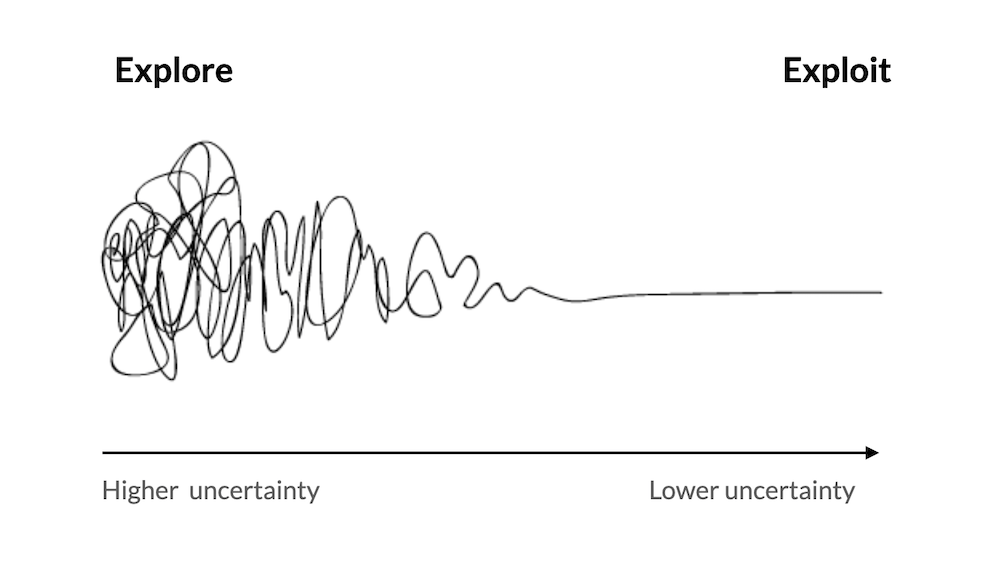
"Lévy things" shows up in relation to many other word-forms - foraging behavior, foraging patterns, explore-exploit mode switching, random walks, Drunkard's walk, Brownian motion, chaos theory - and I'll use these sometimes interchangeably.

The thing that's most intriguing about this phenomenon is that it's making simple something we thought was really complicated. A "random walk" for example, sounds like it's mostly impossible to predict; that's the point of the word random, truly random. But lots of things that look random, especially in the biological world, they're really goverened by Lévy patterns, and if you plug a Lévy pattern into the behavior, it becomes way less random than you thought. And that means you can predict way more than you thought, like many aspects of seemingly unexplainable human behavior. This is also related to fractals, but because we know even less about fractals than we do Lévy flights, it's hard to say exactly how the two are related (for a non-expert). 

Startng with a simple example, from a long time ago - 


Tiny eye movements are under a surprising degree of cognitive control
Apr 2023, phys.org

A very subtle and seemingly random type of eye movement called ocular drift can be influenced by prior knowledge of the expected visual target, suggesting a surprising level of cognitive control over the eyes.

(I guess ocular drift is like a saccade but not)

Most studies of cognitive control over eye movement have covered more obvious movements, such as the "saccade" movements in which the eyes dart across large parts of the visual field. Ocular drift is tiny jitters of the eye that occur even when gaze seems fixed, and thought to improve detection of small, stationary details in a visual scene by scanning across them, effectively converting spatial details into trains of visual signals in time.

via Weill Cornell Medical College: Yen-Chu Lin et al, Cognitive influences on fixational eye movements, Current Biology (2023). DOI: 10.1016/j.cub.2023.03.026


Study shows same movement patterns used by wide range of organisms, with implications for cognition and robotics
Oct 2023, phys.org

While watching electric knifefish in an observation tank, the researchers noticed how when it was dark, the fish shimmied back and forth significantly more frequently. When lights were on, the fish swayed gently with only occasional bursts of rapid movement. Wiggling rapidly allows them to actively sense their surroundings, especially in dark water. In the light, they still make such rapid movements, just far less frequently. 

"We found that the best strategy is to briefly switch into explore mode when uncertainty is too high, and then switch back to exploit mode when uncertainty is back down." 

"If you go to a grocery store, you'll notice people standing in line will change between being stationary and moving around while waiting," Cowan said. "We think that's the same thing going on, that to maintain a stable balance you actually have to occasionally move around and excite your sensors like the knifefish. We found the statistical characteristics of those movements are ubiquitous across a wide range of animals, including humans." 

"Not a single study that we found in the literature violated the rules we discovered in the electric fish, not even single-celled organisms like amoeba sensing an electric field."

via Johns Hopkins University: Mode switching in organisms for solving explore-versus-exploit problems, Nature Machine Intelligence (2023). DOI: 10.1038/s42256-023-00745-y


Exploration—not work—could be key to a vibrant local economy
Mar 2024, phys.org

Suprise!

Infrequent trips to places like restaurants and sports facilities - not the everyday office visit or school drop-off - accounted for the majority of differences in economic outcomes between neighborhoods.

The activities with the strongest predictive power included French and New American restaurants, golf courses, hockey rinks, soccer games, and bagel shops. These kinds of activities accounted for just 2% of trips but explained more than 50% of the variation in economic outcomes between neighborhoods.

"Those irregular and infrequent activities are correlated with explorative behavior, the tendency of some groups to seek out opportunities, connect with different people, and create new businesses."

Again, trips to the office - where we earn our money - were not strongly associated with income or property values. Rather, it's how we spend our free time that drives the economic vibrancy of cities.

(Please don't tell the return-to-office people this or the people who run nyc).  

via University of Florida, MIT, and Northeastern: Shenhao Wang et al, Infrequent activities predict economic outcomes in major American cities, Nature Cities (2024). DOI: 10.1038/s44284-024-00051-7


Study uncovers neural mechanisms underlying foraging behavior in freely moving animals
Apr 2024, phys.org

They use an integrated wireless system for recording brain activity in the frontal areas of macaque brains to examine foraging tasks in real time.

Results indicate that foraging strategies are based on a cortical model of reward dynamics as animals freely explore their environment.

This research can potentially move in the direction of prosthetic devices to influence or bias choice, even noninvasively.

via Rice University Center for Neural Systems Restoration: Neda Shahidi et al, Population coding of strategic variables during foraging in freely moving macaques, Nature Neuroscience (2024). DOI: 10.1038/s41593-024-01575-w