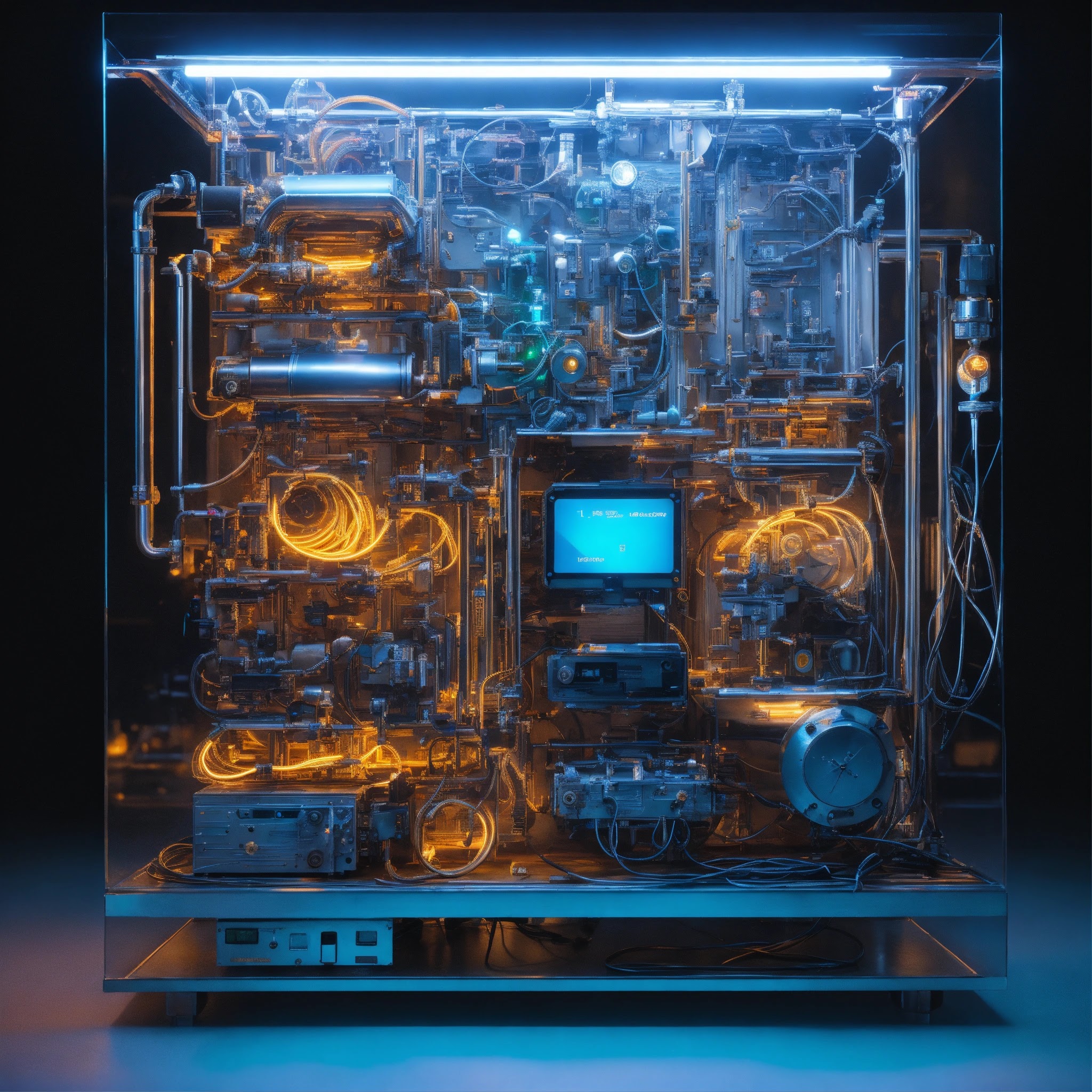
Skepticism about Microsoft results regarding robust quantum bits
May 2023, phys.org
Correction -- "Researchers at the University of Basel have now dampened expectations of using Majorana particles for computation in the near future ... results published by Microsoft in 2022, according to which Majorana particles had been detected in the labs of the company, may not hold water"
Just a general reminder that not everything is true just because science says so, sometimes the true things get retracted too -- "both the current anomaly and the superconducting properties can be reproduced by a small amount of disorder from impurities inside the nanowire."
Also a reminder that Majorana fermions are an irresistible paradox of nature in that they contain both their own particle and anti-particle. They're expected to exist, but they've never been found.
via University of Basel: Richard Hess et al, Trivial Andreev Band Mimicking Topological Bulk Gap Reopening in the Nonlocal Conductance of Long Rashba Nanowires, Physical Review Letters (2023). DOI: 10.1103/PhysRevLett.130.207001
Quantum matter breakthrough - Tuning density waves
May 2023, phys.org
Cold atomic gas can be programmed, so the atoms themselves are a computer because of the way they interact. In this case, the atoms are lithium, which were cooled, trapped in an optical cavity, and turned into a crystal, although how can a crystal be a wave, right? Quantum something.
via EPFL Ecole Polytechnique Federale de Lausanne: Jean-Phillipe Brantut, Density-wave ordering in a unitary Fermi gas with photon-mediated interactions, Nature (2023). DOI: 10.1038/s41586-023-06018-3.
Unveiling quantum gravity - New results from IceCube and Fermi data
Jun 2023, phys.org
Researchers examined a quantum-gravity model of particle propagation in which the speed of ultrarelativistic particles decreases with rising energy -- they used gamma-ray bursts observed by the Fermi telescope and ultra-high-energy neutrinos detected by the IceCube Neutrino Observatory, testing the hypothesis that some neutrinos and some gamma-ray bursts might have a common origin but are observed at different times as a result of the energy-dependent reduction in speed.
(Findings are preliminary, but) "By combining data from IceCube and Fermi, we found preliminary evidence supporting quantum gravity models that predict this effect. This marks a significant milestone in the field of quantum gravity research since it is the first time that such a level of quantum gravity-supportive statistical evidence is found," says corresponding author, Professor Giovanni Amelino-Camelia of the University of Naples on behalf of the team.
"Supportive statistical evidence" never sounded so science fiction.
via University of Naples Federico II, University of Wroclaw, and University of Bergen: Giovanni Amelino-Camelia et al, Could quantum gravity slow down neutrinos?, Nature Astronomy (2023). DOI: 10.1038/s41550-023-01993-z
New device opens door to storing quantum information as sound waves
Jun 2023, phys.org
"Phonon" -- the sound equivalent of a light particle called a photon
To understand how a sound wave can store information, imagine an extremely echoey room. Now, let's say you need to remember your grocery list for the afternoon, so you open the door to that room and shout, "Eggs, bacon, and milk!" and shut the door. An hour later, when it's time to go to the grocery store, you open the door, poke your head inside, and hear your own voice still echoing, "Eggs, bacon, and milk!" You've just used sound waves to store information.
I mean if you can store light, you can store sound right?
via California Institute of Technology: Alkim Bozkurt et al, A quantum electromechanical interface for long-lived phonons, Nature Physics (2023). DOI: 10.1038/s41567-023-02080-w
Could quantum gravity models arising from holography explain cosmological acceleration?
Jun 2023, phys.org
"We now have fully consistent models of quantum gravity via an approach called holography, where the gravitational physics is encoded in a simpler, lower dimensional non-gravitational quantum system."
"We observed that quantum gravity models arising from holography can naturally explain cosmological acceleration in a novel way, with a changing dark energy that eventually becomes negative," Van Raamsdonk said. "We don't know for sure if our universe works this way, but it's something that we can look for in cosmological observations."
via University of Maryland and University of British Columbia: Stefano Antonini et al, Accelerating Cosmology from a Holographic Wormhole, Physical Review Letters (2023). DOI: 10.1103/PhysRevLett.130.221601
Scientists edge toward scalable quantum simulations on a photonic chip
Jun 2023, phys.org
Oh no you didn't! "quantum-correlated synthetic crystal"
What he really means: "Scientists have made an important step toward developing computers advanced enough to simulate complex natural phenomena at the quantum level. While these types of simulations are too cumbersome or outright impossible for classical computers to handle, photonics-based quantum computing systems could provide a solution."
via University of Rochester: Usman A. Javid et al, Chip-scale simulations in a quantum-correlated synthetic space, Nature Photonics (2023). DOI: 10.1038/s41566-023-01236-7
Scientists observe first evidence of 'quantum superchemistry' in the laboratory
Aug 2023, phys.org
In the experiments, the scientists cooled down cesium atoms and coaxed them into the same quantum state. Next, they watched as the atoms reacted to form molecules.
In ordinary chemistry, the individual atoms would collide, and there's a probability for each collision to form a molecule. However, quantum mechanics predicts that atoms in a quantum state perform actions collectively instead.
"You are no longer treating a chemical reaction as a collision between independent particles, but as a collective process," explained Chin. "All of them are reacting together, as a whole."
One consequence is that the reaction happens faster than it would under ordinary conditions. In fact, the more atoms in the system, the faster the reaction happens.
And also, the reaction was taking place as a three-body interaction more often than as a two-body interaction (three atoms would collide; two would form a molecule, and the third remained single).
via James Franck Institute, Enrico Fermi Institute and U of Chicago: Zhendong Zhang et al, Many-body chemical reactions in a quantum degenerate gas, Nature Physics (2023). DOI: 10.1038/s41567-023-02139-8
Research team simulates super diffusion on a quantum computer
Aug 2023, phys.org
We are actually using quantum computers now, that's it --
Quantum physicists have successfully simulated super diffusion in a system of interacting quantum particles on a quantum computer consisting of 27 superconducting qubits and is physically located in IBM's lab in Yorktown Heights in New York and programmed remotely from Dublin.
"We were interested in a particular regime where something called super-diffusion occurs due to the underlying physics being governed by something called the Kardar-Parisi-Zhang equation. This is an equation which typically describes the stochastic growth of a surface or interface like how the height of snow grows during a snowstorm, how the stain of a coffee cup on cloth grows with time, or how a fluff fire grows. The propagation is known to give super diffusive transport." (follow the link above for a cool video of a poplar or cottonwood fluff fire)
"Consider the 27 qubits on this particular device. In quantum mechanics the state of such a system is described mathematically by an object called a wave function. In order to use a standard computer to describe this object you require a huge number of coefficients to be stored in memory and the demands scale exponentially with the number of qubits; roughly 134 million coefficients, in the case of this simulation."
"As you grow the system to say 300 qubits you would need more coefficients than there are atoms in the observable universe to describe such a system and no classical computer will be able to exactly capture the system's state. In other words we hit a wall when simulating quantum systems," Goold said.
via Trinity College of Dublin and IBM Dublin: Nathan Keenan et al, Evidence of Kardar-Parisi-Zhang scaling on a digital quantum simulator, npj Quantum Information (2023). DOI: 10.1038/s41534-023-00742-4
Researchers advance effort to turn diamonds into a quantum simulator
Oct 2023, phys.org
They bombarding diamonds with nitrogen atoms meant to dislodge the carbon atoms, creating flaws in an otherwise perfect crystal, that are then filled with electrons that have their own spin and magnetism, which are quantum properties that can be measured and manipulated for a wide range of applications.
via Washington University in St. Louis: Guanghui He et al, Quasi-Floquet Prethermalization in a Disordered Dipolar Spin Ensemble in Diamond, Physical Review Letters (2023). DOI: 10.1103/PhysRevLett.131.130401