Showing posts with label climate science. Show all posts

Tuesday, May 2, 2023

Engineering Everything


Engineered nanoparticles could help store excess carbon dioxide in the ocean
Nov 2022, phys.org

Hochella and his colleagues examined the scientific evidence for seeding the oceans with iron-rich engineered fertilizer particles near ocean plankton, encouraging phytoplankton to act as a carbon sink.

Researchers' analysis of 123 published studies showed that numerous non-toxic metal-oxygen materials could safely enhance plankton growth.

via Department of Energy's Pacific Northwest National Laboratory: Peyman Babakhani et al, Potential use of engineered nanoparticles in ocean fertilization for large-scale atmospheric carbon dioxide removal, Nature Nanotechnology (2022). DOI: 10.1038/s41565-022-01226-w


Cocaine synthesized in a tobacco plant
Nov 2022, phys.org

Cocaine that winds up in its leaves is not produced by elements in the plant converting 4-(1-methyl-2-pyrrolidinyl)-3-oxobutanoic acid to hyoscyamine, as has been thought. They found that it is instead produced by the two enzymes, EnMT4 and EnCYP81AN15.

To prove their discovery, the group genetically engineered a tobacco plant to produce the two enzymes in its leaves, which resulted in the production of small amounts of cocaine 

The team also notes that the amount of cocaine produced by the tobacco plant was far too low for use on an industrial scale; thus, their work will continue. Not mentioned in the paper is the possibility of synthesizing the two enzymes produced by both the coca and engineered tobacco plant as a more direct way to synthesize cocaine.

via Chinese Academy of Sciences: Yong-Jiang Wang et al, Discovery and Engineering of the Cocaine Biosynthetic Pathway, Journal of the American Chemical Society (2022). DOI: 10.1021/jacs.2c09091


Tuesday, February 28, 2023

The New Digital Earth


We are on our way to creating a second Earth in the digital realm, where we can do experiments and run simulations to better understand the real Earth. It's called a digital twin, and it happens in other sectors like medicine (where we can test new drugs in a simulation of your body) or industry (where we can monitor all the variables in the manufacture of a product to find the most efficient method).

Developments in persistent satellite surveillance, vision and other sensing technologies, and climate modeling and forecasting keep getting better, and with each advance in these areas, the digital Earth twin gets closer and closer to the real Earth. 

Image credit: This Size 49 ecumonopolis was built on the video game Stellaris, around Amogus Prime.


Real-time space observations can now keep watch over 'super emitter' power plants
Oct 2022, phys.org

They use NASA's "Orbiting Carbon Observatory 2" (OCO-2; launched in 2014) and the OCO-3, attached since 2019 to the International Space Station (ISS).

"This future capacity will lead to improved CO2 emission information at the scale of countries, cities or individual facilities, enhancing transparency under the Paris Agreement and supporting efforts to reduce emissions causing climate change."

via Environment and Climate Change Canada: Tracking CO2 emission reductions from space: A case study at Europe's largest fossil fuel power plant, Frontiers in Remote Sensing (2022). DOI: 10.3389/frsen.2022.1028240


Climate simulation more realistic with artificial intelligence
Oct 2022, phys.org

A generative adversarial network made a simple climate model way better, so it can handle more complex data. 

via Technical University Munich: Philipp Hess, Physically constrained generative adversarial networks for improving precipitation fields from Earth system models, Nature Machine Intelligence (2022). DOI: 10.1038/s42256-022-00540-1


Google Earth on steroids' gives a boost to urban development
Dec 2022, phys.org

Uzufly's system uses drones to take aerial photographs, producing thousands of images that are transformed into 3D models through the creation of digital twins, or digital replicas of real-world objects. These objects could be buildings, for example, which are georeferenced down to the centimeter. The company's 3D models incorporate a wide range of urban-planning data and can accommodate any type of architectural design at full scale.

via Ecole Polytechnique Federale de Lausanne spin-off Uzufly

Image credit: AI Art - Sacred Geometry - 2023

A silicon image sensor that computes
Aug 2022, phys.org

The computer is in the eyeballs of the camera, they are one and the same:

CMOS-integrated "in-sensor processing" and programmable pixels

via Harvard John A. Paulson School of Engineering and Applied Sciences: Houk Jang et al, In-sensor optoelectronic computing using electrostatically doped silicon, Nature Electronics (2022). DOI: 10.1038/s41928-022-00819-6


Atomic-level 3D models show us how gadgets work
Oct 2022, phys.org

This can create a digital twin at the atomic level:

"Atom probe tomography" can provide a three-dimensional representation of what a material looks like, right down to the atomic level.

via Norwegian University of Science and Technology: K. A. Hunnestad et al, Atomic-scale 3D imaging of individual dopant atoms in an oxide semiconductor, Nature Communications (2022). DOI: 10.1038/s41467-022-32189-0


Wearable wristband captures entire body in 3D
Nov 2022, phys.org

The camera is on the wrist, facing the body, and with that limited information, it can infer what the entire body is doing. 

"Our research shows that we don't need our body frames to be fully within camera view for body sensing," Lim said. "If we are able to capture just a part of our bodies, that is a lot of information to infer to reconstruct the full body."

via Cornell's SciFiLab: Hyunchul Lim et al, BodyTrak, Proceedings of the ACM on Interactive, Mobile, Wearable and Ubiquitous Technologies (2022). DOI: 10.1145/3552312


Worldwide dataset captures Earth in finest ever detail
Nov 2022, phys.org

Metabolism of the Anthroposphere is here:
WorldStrat - 10,000km² of free satellite images with resolutions as high as 1.5m per pixel (each pixel is a 1.5m by 1.5m area on the ground), using the SPOT 6 and SPOT 7 satellites from ESA, as well as using the lower resolution Copernicus Sentinel-2 satellite.

via University College London and European Space Agency: Julien Cornebise et al, Open High-Resolution Satellite Imagery: The WorldStrat Dataset—With Application to Super-Resolution, arXiv (2022). DOI: 10.48550/arxiv.2207.06418


The Real Climate Change is Us Doing This:
Startup claims to offer stratospheric geoengineering as a service
Dec 2022, Ars Technica via MIT Tech Review

(The company is called Make Sunsets)

Friday, July 10, 2020

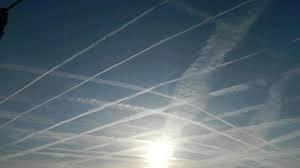
Stratospheric Aerosol Geoengineering


The right dose of geoengineering could reduce climate change risks, study says
Mar 2020, phys.org

Don't act like you didn't know.
Stratospheric aerosol geoengineering is the idea that adding a layer of aerosol particles to the upper atmosphere can reduce climate changes caused by greenhouse gases such as carbon dioxide. 
Previous research shows that solar geoengineering could be achieved using commercially available aircraft technologies to deliver the particles at a cost of a few billion dollars per year and would reduce global average temperatures. However, the question remains whether this approach could reduce important climate hazards at a regional level. 
Results from a new study by UCL and Harvard researchers suggest that even a crude method like injecting sulphur dioxide in the stratosphere could reduce many important climate hazards without making any region obviously worse off. 
"However, if instead only half the warming is offset, then we find that stratospheric aerosol geoengineering could still reduce climate change overall but would only exacerbate change over 1.3% of the land area."
Notes:
'Halving warming with stratospheric aerosol geoengineering moderates policy-relevant climate hazards' , Environmental Research Letters (2020). DOI: 10.1088/1748-9326/ab76de

Monday, July 1, 2013

Anthropogenic Metadata on Climate Science

aka The Low-Hanging Fruit of Neuro-Pop in the Age of Big Datty


Notice below, just a sample of the kinds of reports that use climate science as a substrate upon which to study human behavior and cognition..

Some may find it interesting to see how the science of climate change has ripened into a metadata-rich fruit hanging low on the tree of human-knowledge; that's knowledge -of- humans, not knowledge acquired by humans.

Granted we are entering the age of the New Humanities, and granted climate science is probably the most contentious scientific issue to be argued publicly since the advent of digital social media, but, 10 years ago, had you asked anyone what would be the most significant by-product of climate science, this would have never made it to the list.

Just goes to show that the world is full of surprises, and no matter how much you try, predicting the value of scientific endeavour is never part of the justification of doing it.

[note: I've recently been watching panels discussing the value of space exploration, and exploration in general]

Changing minds about climate change policy can be done—sometimes
phys.org Jun 24, 2013
Provided by The Ohio State University

Anthropologists argue field must play a vital role in climate change studies
phys.org Jun 20, 2013
Provided by University of California - Santa Cruz

Some Americans are cooling off on global warming
phys.org Jun 28, 2013
Provided by University of Michigan

Emotional response to climate change influences whether we seek or avoid further information
phys.org May 15, 2013
Provided by University at Buffalo

Americans care deeply about 'global warming' – but not 'climate change'
The Guardian, 27 May 2014