Showing posts with label synthetic biology. Show all posts

Wednesday, July 27, 2022

Just Let Someone Else Do It


What if one day someone thought it would be a good idea to "protect" nature's ideas, and make it against the law to use biomimetic designs as being in violation of intellectual property? Kind of how one global superpower thinks that (highly protected) innovative technological advances grow on trees, so they're fair game to copy from another global superpower, when in fact they are the result of tons of investment in research and development, as well as the maintenance of an open market that encourages competition and novel solutions. 

So what if someone thought that if we can't respect the investment that Nature has made in creating all these really effective design solutions, then we're not allowed to use them in technologies that destroy nature's R&D factory (i.e. Earth)? Stranger things happen. 

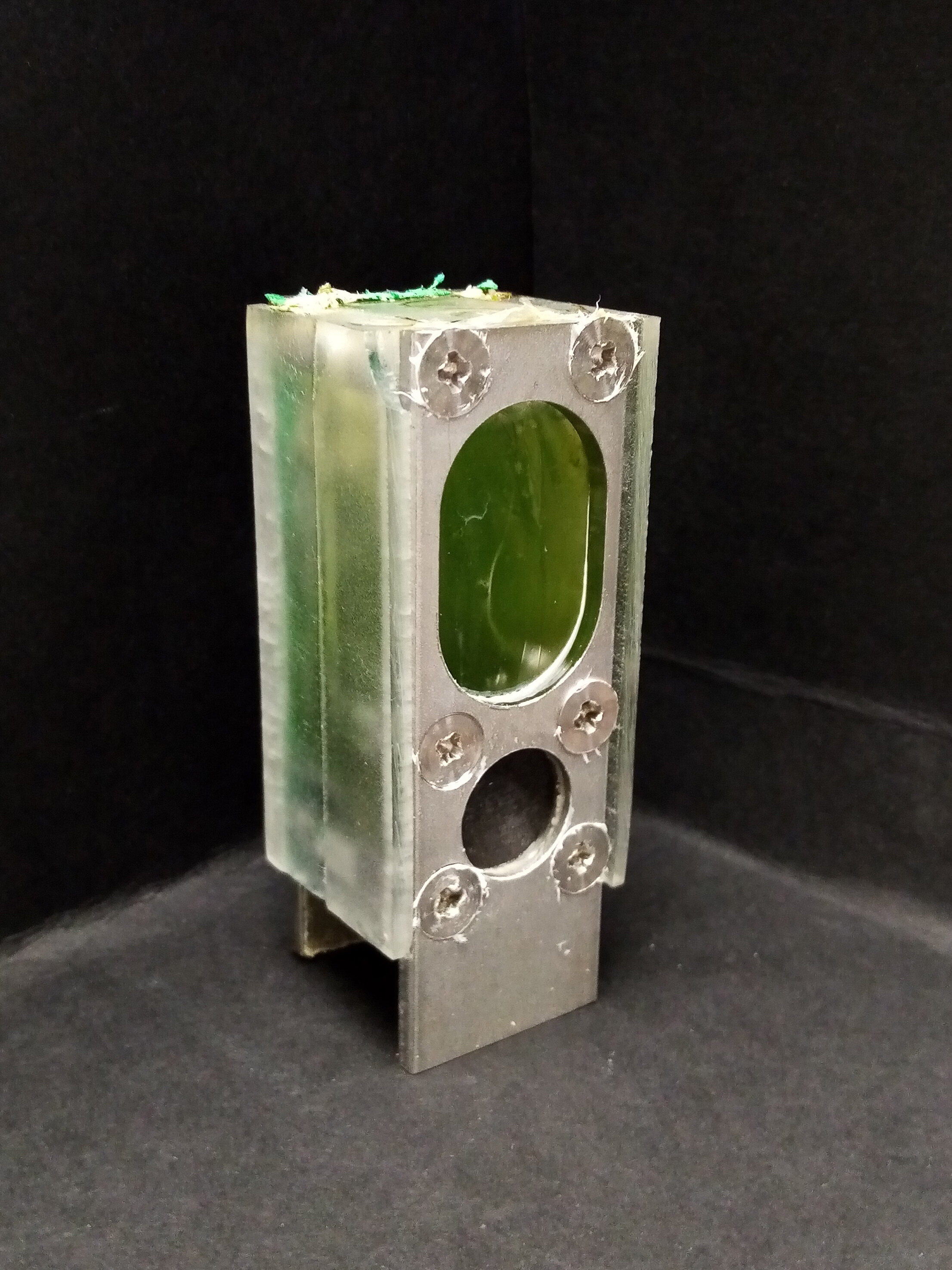
Image credit: Powered a microprocessor continuously for a year using nothing but ambient light and water, Paolo Bombelli, 2022 [link]


The surprising structural reason your kitchen sponge is disgusting
Feb 2022, phys.org

Pattern Language already knows this.

Some bacteria thrive in a diverse community while others prefer a solitary existence. And a physical environment that allows both kinds to live their best lives leads to the strongest levels of biodiversity.

via Duke University: Feilun Wu et al, Modulation of microbial community dynamics by spatial partitioning, Nature Chemical Biology (2022). DOI: 10.1038/s41589-021-00961-w

Notes:
  • A Pattern Language - Towns, Buildings, Construction. Christopher Alexander, Sara Ishikawa, Murray Silverstein. Oxford University Press. New York. 1977.
  • Pattern 240 - Half Inch Trim


Water as a 'glue' for elasticity enhanced, wet attachment of biomimetic structures
Apr 2022, phys.org

Octopus, clingfish and larva use soft biological cups to attach to surfaces under water. Elasticity-enhanced hydrodynamics improved self-healing and high suction at the cup substrate interface to convert water into "glue." The concept of water glue can therefore be used for...

Did he just say "water glue?"

via Leibniz Institute for New Materials in Germany and Mechanical Science and Engineering at U. of Illinois at Urbana-Champaign: Yue Wang et al, Water as a "glue": Elasticity-enhanced wet attachment of biomimetic microcup structures, Science Advances (2022). DOI: 10.1126/sciadv.abm9341

Also, via Weizmann Institute and Oxford: Uri Raviv et al, Fluidity of water confined to subnanometre films, Nature (2002). DOI: 10.1038/35092523


Plant-inspired TransfOrigami microfluidics
May 2022, phys.org

Origami isn't biomimetic (is it?), but it does show up often in this arena...

Bioinspired transformable microfluidics with stimuli-responsive materials embedded to respond to temperature, humidity, and light irradiance.

via Mechanical Engineering at the University of Hong Kong: Yi Pan et al, Plant-inspired TransfOrigami microfluidics, Science Advances (2022). DOI: 10.1126/sciadv.abo1719

Also: Xiaoshi Qian et al, Artificial phototropism for omnidirectional tracking and harvesting of light, Nature Nanotechnology (2019). DOI: 10.1038/s41565-019-0562-3


A water-repellent nanomaterial inspired by nature
Sep 2021, phys.org

"Novel superhydrophobic films" can stay dry even when submerged underwater.

If you've been paying attention to biomimicry at all, you would already know this is based on the lotus leaf, which is really good at repelling water.

In this case, they're using fullerenes (a special Epcot-center-like arrangement of carbon molecules) to create finger-shaped fullerites. Instead of etching the surface of the material, which is what we would normally have to do, they add these fullerites to a gel and apply it.

via University of Central Florida NanoScience Technology Center: Rinku Saran et al, Organic Non‐Wettable Superhydrophobic Fullerite Films, Advanced Materials (2021). DOI: 10.1002/adma.202102108


Nature-inspired self-sensing materials could lead to new developments in engineering
May 2022, phys.org

Mixing a common form of industrial plastic with carbon nanotubes allows the otherwise nonconductive plastic to carry an electric charge throughout its structure.

When the structure is subjected to mechanical loads, its electrical resistance changes. This phenomenon, known as piezoresitivity, gives the material the ability to "sense" its structural health.

The high-resolution 3D printing method allows "mesoscale porous architecture, which helps to reduce each design's overall weight and maximize mechanical performance", but when I hear "porous", all I think is bacterials growth and chemical reservoirs. If this becomes a norm in the fabrication of building materials, it would make the microbiology of buildings into a whole new animal. We might even have to start seeing the building as being alive. 

via University of Glasgow: Jabir Ubaid et al, Multifunctionality of Nanoengineered Self‐Sensing Lattices Enabled by Additive Manufacturing, Advanced Engineering Materials (2022). DOI: 10.1002/adem.202200194


The future of data storage is double-helical, research indicates
Mar 2022, phys.org

I am the storage now.

"DNA is one of the best options, if not the best option, to store archival data especially," said Chao Pan, a graduate student at the University of Illinois Urbana-Champaign and a co-author on this study.

Its longevity rivaled only by durability, DNA is designed to weather Earth's harshest conditions—sometimes for tens of thousands of years—and remain a viable data source. Scientists can sequence fossilized strands to uncover genetic histories and breathe life into long-lost landscapes.

via Beckman Institute for Advanced Science and Technology: S. Kasra Tabatabaei et al, Expanding the Molecular Alphabet of DNA-Based Data Storage Systems with Neural Network Nanopore Readout Processing, Nano Letters (2022). DOI: 10.1021/acs.nanolett.1c04203


Immune to hacks: Inoculating deep neural networks to thwart attacks
Mar 2022, phys.org

An immune-inspired defense system for neural networks 

Immune systems are about to blast off into phase one of the hype cycle. 

via University of Michigan: Ren Wang et al, RAILS: A Robust Adversarial Immune-Inspired Learning System, IEEE Access (2022). DOI: 10.1109/ACCESS.2022.3153036

Sun-loving bacteria skyscrapers harvested for waste electrons, Gabriella Bocchetti, 2022. Researchers from the University of Cambridge used 3D printing to create grids of high-rise ‘skyscrapers’ where sun-loving bacteria can grow quickly. The researchers were then able to extract the bacteria’s waste electrons, left over from photosynthesis, which could be used to power small electronics. [link]

Tiny 'skyscrapers' help bacteria convert sunlight into electricity
Mar 2022, phys.org

Bacteria batteries that run on wasted electrons.

The approach is competitive against traditional methods of renewable bioenergy generation and has already reached solar conversion efficiencies that can outcompete many current methods of biofuel generation.

"The electrodes have excellent light-handling properties, like a high-rise apartment with lots of windows," said Zhang. 

via University of Cambridge: Jenny Zhang, 3D-printed hierarchical pillar array electrodes for high-performance semi-artificial photosynthesis, Nature Materials (2022). DOI: 10.1038/s41563-022-01205-5.


Algae-powered computing: Scientists create reliable and renewable biological photovoltaic cell
May 2022, phys.org

Comparable in size to an AA battery, contains a type of non-toxic algae called Synechocystis that naturally harvests energy from the sun through photosynthesis. The tiny electrical current this generates then interacts with an aluminum electrode and is used to power a microprocessor.

"We were impressed by how consistently the system worked over a long period of time—we thought it might stop after a few weeks but it just kept going"

via University of Cambridge and Arm:  P. Bombelli et al, Powering a microprocessor by photosynthesis, Energy & Environmental Science (2022). DOI: 10.1039/D2EE00233G


Self-propelled, endlessly programmable artificial cilia
May 2022, phys.org

Single-material, single-stimuli programmable microstructure that can outmaneuver even living cilia. 

Unlike previous research, which relied mostly on complex multi-component materials to achieve programmable movement of reconfigurable structural elements, Aizenberg and her team designed a microstructure pillar made of a single material—a photoresponsive liquid crystal elastomer that realign and change shape when light hits it.

"We showed that we can program the choreography of this dynamic dance by tailoring a range of parameters, including illumination angle, light intensity, molecular alignment, microstructure geometry, temperature, and irradiation intervals and duration," said Michael M. Lerch, a postdoctoral fellow in the Aizenberg Lab and co-first author of the paper.

"When these pillars are grouped together, they interact in very complex ways because each deforming pillar casts a shadow on its neighbor, which changes throughout the deformation process," said Li. "Programming how these shadow-mediated self-exposures change and interact dynamically with each other could be useful for such applications as dynamic information encryption."

via Harvard John A. Paulson School of Engineering and Applied Sciences: Shucong Li et al, Self-regulated non-reciprocal motions in single-material microstructures, Nature (2022). DOI: 10.1038/s41586-022-04561-z


Monday, June 21, 2021

Plot Twist

Let's start here -- people have been scared of electromagnetic radiation (aka EMF) for a long time. And you can't really blame them; microwave ovens are pretty hard to believe. Wifi even more so. The same device that can "send movies through the air on invisible electromagnetic waves" can't also read my mind and control my thoughts?

The next exit off the Tinfoil Highway, after mind control, is for cancer. Working in Indoor Air Quality and Environmental Health, we get phone calls from time to time about concerns over EMF exposure. People have some symptoms, either physical or mental, and they wonder if something in their environment is causing the problem, and they know they have these magical waves floating all around their home every day. Technically, we can monitor for EMF exposure, there's equipment for it, but chances are the EMF is not your problem. After years and years of using cell phones, we can't seem to get any signal on them causing cancer.  

But that's hard to explain to someone who is already convinced. And it puts the environmental consultant in the awkward position of offending a potential client.

But now, we get these new discoveries which are the stuff of conspiracy theory nightmares, only in reverse:

Electromagnetic fields hinder spread of breast cancer, study shows
Mar 2021, phys.org
Electromagnetic fields appear to slow cancer cells' metabolism selectively by changing the electrical fields inside an individual cell.
via Ohio State University:  Travis H. Jones et al, Directional Migration of Breast Cancer Cells Hindered by Induced Electric Fields May Be Due to Accompanying Alteration of Metabolic Activity, Bioelectricity (2021). DOI: 10.1089/bioe.2020.0048
Tiny implant cures diabetes in mice without triggering immune response
Jun 2021, phys.org
"The implants floated freely inside the animals, and when we removed them after about six months, the insulin-secreting cells inside the implants still were functioning. And importantly, it is a very robust and safe device."
via Washington University School of Medicine: X. Wang el al., "A nanofibrous encapsulation device for safe delivery of insulin-producing cells to treat type 1 diabetes," Science Translational Medicine (2021). https://stm.sciencemag.org/lookup/doi/10.1126/scitranslmed.abb4601
Controlling insulin production with a smartwatch
Jun 2021, phys.org
"No naturally occurring molecular system in human cells responds to green light, so we had to build something new."

The ETH professor and his colleagues ultimately developed a molecular switch that, once implanted, can be activated by the green light of a smartwatch.

The switch is linked to a gene network that the researchers introduced into human cells. Depending on the configuration of this network—in other words, the genes it contains—it can produce insulin or other substances as soon as the cells are exposed to green light. Turning the light off inactivates the switch and halts the process.
via ETH Zurich: Mansouri M, Hussherr M-D, Strittmatter T, Buchmann P, Xue S, Camenisch G, Fussenegger M: Smart-watch-programmed green-light-operated percutaneous control of therapeutic transgenes. Nature Communications, 2021, 7 June; DOI: 10.1038/s41467-021-23572-4
Remote control of blood sugar - Electromagnetic fields treat diabetes in animal models
Oct 2020, phys.org

Exposing diabetic mice to a combination of static electric and magnetic fields for a few hours per day normalizes two major hallmarks of type 2 diabetes. And it works by remote control, and it can be applied in your sleep to normalize your blood sugar for the rest of the day.

And this makes it even better; "The initial finding was pure serendipity." One scientist borrowed another scientist's mice; he was working on EMF exposure, and she was working on blood sugar. Using his mice in her experiment, she found something strange going on. Now we think the EMFs prolong activation of superoxide molecules in the liver, rebalancing the body's response to insulin.

Later, they even treated human liver cells with EMFs, for six hours, and found that the surrogate marker for insulin sensitivity improved.

via Calvin S. Carter et al, Exposure to Static Magnetic and Electric Fields Treats Type 2 Diabetes, Cell Metabolism (2020). DOI: 10.1016/j.cmet.2020.09.012

Sunday, January 10, 2021

Exobiological Skin Shell Sensors and Remote Control Metabolism Engineering


Just trying to come up with a catchy title for a quick list of developments in color application technology, but also biomimicry, wearables, and radioactive fungi. We're finishing off with some recent bits in the endless stream of synthetic biology advancements that will eventually define the 21st century.

Images courtesy of Nikon's Small World Challenge, best microscopy photos you can get!

The first one is a snail tongue by Dr. Igor Siwanowicz, and has nothing to do with the articles below.


Blue dye from red beets - Chemists devise a new pigment option
Apr 2020, phys.org

Non-toxic and Blue dye do not belong in the same sentence, historically. But now, a new class of dyes called pseudo-natural dyes use the same molecules that come from bright red beets (betalains), and they change the carbon-nitrogen chemical bond to a carbon-carbon bond. These new molecules are called quasibetalains, and they're blue.

On a sidenote, I do not recognize the opening statement in the above link, which says that blue is the most liked color the world over. In my art room, in the box of color pencils, and in the box of markers, both followed the same pattern every year for every class: the red pencils are the first to go, followed by blue; it gets fuzzy after that, but they all end up with nothing but brown, orange and yellow, and in that order. After all, brown is the entropic heat death of the rainbow, kind of an anti-color. 

B. C. Freitas-Dörr et al. A metal-free blue chromophore derived from plant pigments, Science Advances (2020). DOI: 10.1126/sciadv.aaz0421
http://dx.doi.org/10.1126/sciadv.aaz0421


Red light for stress - A color-changing organic crystal
May 2020, phys.org

Here we've got some organic crystals that change color based on pressure, but that can also return to their original shape. And that's called superelastochromism.

The idea here is to use them as sensors to show you where a building is getting out of whack. But there's a whole lot more you can imagine doing with these.

via the University of Tokyo: Toshiki Mutai et al, A superelastochromic crystal, Nature Communications (2020). DOI: 10.1038/s41467-020-15663-5


Liquid crystals create easy-to-read, color-changing sensors
Jul 2020, phys.org

Similar thing here; they're pushing and pulling liquid crystals to manipulate their color. The thing is, these don't just change color based on pressure, but even temperature. The walls in your room could change if the temperature shifts too quickly, for example. 
 
Then again, if you're wearing this, it could show you inflammation in your body. 

via the University of Chicago: "Prolate and oblate chiral liquid crystal spheroids". Juan de Pablo et al. Science Advances (2020). DOI: 10.1126/sciadv.aba6728 

Mohamed Ghassen Nouira makes purple dye.

Passion for purple revives ancient dye in Tunisia
Aug 2020, phys.org

Emperors hate him. This guy figures out how to take special snails and make purple dye out of them, just like how they used to do. Imperial clothiers and dye-makers knew how to do this centuries ago, and the art was lost to the time in between us and them. 

And that wasn't a mistake. The process of making Tyrian Purple was a secret, kind of like how we try to keep people from making believable hundred dollar bills. 

Think about it, if you, a Carthaginian hustlepimp, could make your own purple robe and deceive the court into thinking you were royalty, kind of like an ancient Borat, you could cause a ruckus. And we can't have a ruckus in the upper reaches of the royal elites. 

More importantly, empires made their fortunes selling this dye to other empires. Can't have some guy in his garage creeping into your marketshare. 

100,000 grams (100kg) of shelled murex yields 1 gram of Tyrian Purple, and goes for $2,400 - $4,000 per gram, and takes about a week's worth of work.

Sidenote, if you search the words "royal elite" it reeks of fake shit and dupery, which I think is funny because it's a redundant term that would only be used by people who don't really know what either word means.


Testing Chernobyl fungi as a radiation shield for astronauts
Aug 2020, phys.org

Bioshell.

They want to coat spaceships in a shell of superfungus to protect from radiation. They didn't create these fungi by engineering them in a lab; they found them. 

And where are on earth are you going to find an organism that metabolizes radioactive isotopes? Yes, thank you Chernobyl.

Graham K. Shunk et al. A Self-Replicating Radiation-Shield for Human Deep-Space Exploration: Radiotrophic Fungi can Attenuate Ionizing Radiation aboard the International Space Station, bioRxiv (2020). DOI: 10.1101/2020.07.16.205534. http://dx.doi.org/10.1101/2020.07.16.205534

Beetle leg - Aigars Jukna

Low-cost, fly footpad-like adhesive structure capable of repeated attachment/detachment
Aug 2020, phys.org

The design is based on fly feet, fine, that's pretty standard biomimicry. But the way they learned how to manufacutre the thing is by looking at how the fly itself makes flies, in the pupa. That's next level biomimicry. And it allows you to repeatedly stick and unstick  without losing any of its stickiness.

Ken-ichi Kimura et al, Framework with cytoskeletal actin filaments forming insect footpad hairs inspires biomimetic adhesive device design, Communications Biology (2020). DOI: 10.1038/s42003-020-0995-0


Florida mosquitoes - 750 million genetically modified insects to be released
Aug 2020, BBC News

I'm not sure where this belongs on this list, but modified mosquitoes were approved by federal regulators, fuck yeah.


Development of photovoltaics that can be applied like paint for real-life application
Sep 2020, phys.org

It's a solar cell solution that can coat surfaces. Eventually it will coat your body, so that you can live forever.

So Hyun Park et al, Developement of highly efficient large area organic photovoltaic module: Effects of nonfullerene acceptor, Nano Energy (2020). DOI: 10.1016/j.nanoen.2020.105147


Evergreen needles act as air quality monitors
Sep 2020, phys.org

Biosensors that measure the magnetism of the particulate matter that accumulates on the needles. Pretty smart.

Grant Rea‐Downing et al, Evergreen needle magnetization as a proxy for particulate matter pollution in urban environments, GeoHealth (2020). DOI: 10.1029/2020GH000286

Bindweed Epidermis - Michael Gibson

Electronic skin promises cheap and recyclable alternative to wearable devices
Nov 2020, phys.org

Man.

"Stretchy and fully-recyclable circuit board that's inspired by, and sticks onto, human skin."

via University of Colorado Boulder:  "Heterogeneous integration of rigid, soft, and liquid materials for self-healable, recyclable, and reconfigurable wearable electronics" Science Advances (2020). DOI: 10.1126/sciadv.abd0202


Engineers print wearable sensors directly on skin without heat
Oct 2020, phys.org

Direct printing for on-body sensors, usually hindered by the bonding process on skin. You can't sinter skin. So they add an "aid layer", basically a protective insulator for the skin that bonds at room temperature. And room temperature.


Artificial skin heals wounds and makes robots sweat
Jun 2020, phys.org

It's about time these robots take over. This is a skin (or "smart coating" when we're trying not to make it sound like the robots will become human and take over) that control fluid flow across its membrane via radio, or UV. And it's made of liquid-crystal molecules, like LCD.

Nylon Stockings - Alexander Klepnev

Thanks to flexoskeletons, these insect-inspired robots are faster and cheaper to make
Apr 2020, phys.org

Just flexoskeletons.


Machine learning takes on synthetic biology - algorithms can bioengineer cells for you
Sep 2020, phys.org

This one is about creating virtual laboratories that produce probable outcomes. They used to say, if you can't build it, you can't know it. But now, we just let the computer figure it out. 

Anyway, they specifically say engineering microbiomes. That's a bit new, because although engineering cells has now penetrated the consumer market (fake meat), engineering the entire ecosystem is a new frontier.

Nature Communications. A machine learning Automated Recommendation Tool for synthetic biology. Tijana Radivojević. (2020). DOI: 10.1038/s41467-020-18008-4

Unopened Flower Bud - Charles B. Krebs


Chemists expand genetic code of E. coli to produce 21st amino acid, giving it new abilities
Aug 2020, phys.org

Bodymods and beyond.

They've created a new amino acid, a "noncanonical amino acid" which kind of means not a real amino acid. It's called 5-hydroxyl-tryptophan (5HTP), and it's now the 21st amino acid. Kind of like how the ampersand was the 27th letter in the alphabet for a while.

They put the code for this protein into a "blank" space of the E. coli's genetic code. This means that the bacteria is now a factory that we designed to produce a molecule. It's a living factory. We're all living factories, bioreactors. But we don't make anything we want with our bodies. In this case, we've reverse-engineered the "making" process itself. The is called biohacking. 

Yuda Chen et al, Creation of Bacterial Cells with 5-Hydroxytryptophan as a 21st Amino Acid Building Block, Chem (2020). DOI: 10.1016/j.chempr.2020.07.013


Researchers develop a yeast-based platform to boost production of rare natural molecules
Aug 2020, phys.org

Again, biofarms of the future.


Engineers reprogram yeast cells to become microscopic drug factories
Sep 2020, phys.org

"Metabolic engineering" is another term for this. They're reprogramming yeast cells at the genetic level to convert sugars and amino acids into drugs. (And someting about the name has me thinking these are hallucinogenic drugs?)

Biosynthesis of medicinal tropane alkaloids in yeast, Nature (2020). DOI: 10.1038/s41586-020-2650-9 

Duckweed Root Decay - Dr. Robert Markus

Soil-powered fuel cell promises cheap, sustainable water purification
Oct 2020, phys.org

Soil microbial fuel cells (SMFCs)


Lowering atmospheric CO2 in large-scale renewable energy electrochemical process
Jun 2020, phys.org

This plus synthetic biology aka the biological revolution, or the 5th(?) industrial revolution, and I say that in 100 years, we'll be taking more CO2 out of the air than what we put in. 
Researchers at the National Renewable Energy Laboratory (NREL) have been focusing on improving electrochemical routes to convert CO2, which would otherwise be released into the atmosphere, into a range of value-added products.

the research team created a high rate of formate production and product selectivity, the latter of which is critical to reduce the need for further costly separations processes downstream. The formate could then be fed to biological organisms or coupled with enzymes, resulting in robust interactions between the formate and enzymes that yield high-density chemicals or fuels, such as ethylene or ethanol, respectively.

The program's larger goal is to use highly efficient electrons at industry scale to convert a waste compound such as CO2 into a multitude of more useful industry-relevant, energy-dense fuels or chemicals, such as polyethylene, which has a large global market.

Google conducts largest chemical simulation on a quantum computer to date
Aug 2020, phys.org

Stuff like this scares the shit out of me, although it's hard to articulate why. Probably because quantum chemical simulator is another word for reality generator, and I just don't think we're ready to activate the mass transference device yet.

Hartree-Fock on a superconducting qubit quantum computer, Science  28 Aug 2020: Vol. 369, Issue 6507, pp. 1084-1089, DOI: 10.1126/science.abb9811


IBM announces AI based chemistry lab - RoboRXN
Sep 2020, phys.org

Same as above.

Automating chemical synthesis with RoboRXN. https://www.ibm.com/blogs/research/2020/08/roborxn-automating-chemical-synthesis/

More Snail Tongue - Dr. Igor Siwanowicz

Remote control of blood sugar - Electromagnetic fields treat diabetes in animal models
Oct 2020, phys.org

And lastly; completely fucking bonkers.

Exposing diabetic mice to a combination of static electric and magnetic fields for a few hours per day normalizes two major hallmarks of type 2 diabetes. And it works by remote control, and it can be applied in your sleep to normalize your blood sugar for the rest of the day.

EMF therapy. Sounds like absolute and total bullshit. Remote control blood sugar.

And this makes it even better; "The initial finding was pure serendipity." One scientist borrowed another scientist's mice; he was working on EMF exposure, and she was working on bloodsugar. Using his mice in her experiment, she found something strange going on. Now we think the EMFs prolong activation of superoxide molecules in the liver, rebalancing the body's response to insulin.

Later, they even treated human liver cells with EMFs, for six hours, and found that the surrogate marker for insulin sensitivity improved.

Calvin S. Carter et al, Exposure to Static Magnetic and Electric Fields Treats Type 2 Diabetes, Cell Metabolism (2020). DOI: 10.1016/j.cmet.2020.09.012

Saturday, July 11, 2020

Bio-Inks and Bio-Printers


Bioactive inks printed on wearable textiles can map conditions over the entire surface of the body
June 2020, phys.org

Using near-infrared light to 3-D print an ear inside the body
June 2020, phys.org

Cyclist and driver middle-finger wars - Enter the emoji jacket
Feb 2020, phys.org

First example I've seen of a real use for wearable tech.

Bioengineering the Anthroposphere


Scientists successfully develop 'heat resistant' coral to fight bleaching
May 2020, phys.org

Using a technique called "directed evolution", they then exposed the cultured microalgae to increasingly warmer temperatures over a period of four years.

Say it with me, Direct Evolution (aka Bioengineering the Anthroposphere aka Geoengineering the Anthropocene).

Sustainable light achieved in living plants
May 2020, phys.org
The popular fascination for sustainably glowing foliage is being realized through advances in designer genetics. 
The scientists revealed that bioluminescence found in some mushrooms is metabolically similar to the natural processes common among plants. By inserting DNA obtained from the mushroom, the scientists were able to create plants that glow much brighter than previously possible.