Showing posts with label genes. Show all posts

Saturday, June 2, 2018

When Humans Caught Up With Evolution


I certainly didn't know this, but the spleen acts as a biological SCUBA tank during extended periods underwater.

There are some people from the southern Philippines, Indonesia and Malaysia who evolved bigger spleens because they spend a lot of time diving deep underwater. They live on houseboats, rarely go on land, and spend 8 hours a day repeatedly diving underwater. They split from a very similar group of people nearby about 15,000 years ago - the one group stays on land and the other in the water. Their genes are very similar, except for this distinction, and so the spleen enlargement is correlated to this behavior/culture change.

This is a discovery worthy of reporting because most of the basic body plan that includes our organs is pretty similar across all humans, or so we thought.

We have this idea of a Human Genome being uniquely human, and as a thing we all share in common. (Or at least I do; maybe I just haven't been to 5th grade for a long time, kind of like people who don't realize that just about every star we can see in the night sky has planets revolving around it, a discovery of only the past few years.)

But there is this thing that happens about 10-15 thousand years ago, where human creativity (i.e. technological memes or cultural evolution) evolves faster than our genes. Diving in the ocean all day long doesn't by itself constitute a technological advance, but then again, this is at the 15,000 mark. 10,000 years ago, we see the genetic changes resulting from dairying practices. Because of this, some people continued to be able to digest milk into adulthood (not possible for other mammals).

The change in dairying practices must have relied on some techological change, but it's still hard to call this technology. Is agriculture a technological development? Animal husbandry? Because this is where 'drinking milk' comes from. Leaving the land to live on the water is not so much a technological advance as a group-behavior advance - cultural evolution we could call that. Memetic evolution some would call it.

The main idea here is that at some point around 10,000 years ago, humans began changing themselves faster than their environment changed them. When you hear Ray Kurzweil talk about the Singularity (a moment in our near future where humans learn to evolve ourselves at will), note that we have been evolving ourselves already for thousands of years.

Notes

Bajau people 'evolved bigger spleens' for free-diving
Apr 2018, BBC

Evolution of lactase persistence: an example of human niche construction
Philosophical Transactions B, 2011

Network Address:
Milk Does a Body
FurFuryl Mercapton, Abstract Foods, and Flavor Networks

Thursday, August 31, 2017

Milk Does a Body


Evolution of Adult Lactose Absorption

Farming, cheese, chewing changed human skull shape
Aug 2017, phys.org

The agricultural revolution put the human genome in the spin cycle of a washing machine. Plants, though fibrous, are easier to chew than animals. So during the thousands of years while we were discovering the magic of seed-sowing, and eating the results of our pre-science experimentation, our bodies (our jaws especially) were changing in response.

At this time in our development, the rate of change for a genome was equal to the rate of change of our culture, and our diet, and so the two were able to influence each other. Nowadays, those rates have changed so that our culture moves faster than the genome - i.e., just this week we saw the first 'living drug' that changes the patient's genome so that it attacks cancer.

Anyway, this is our history:

The largest changes in skull morphology were observed in groups consuming dairy products, suggesting that the effect of agriculture on skull morphology was greatest in populations consuming the softest food (cheese!).
-phys.org

I just have to rant for a moment about arguments for an extreme vegetarian diet. I'm all for being healthy and eating more vegetables and less animals, but to say that it is not natural for us to eat meat or dairy products is preposterous, and this is one of those reasons why. Furthermore, to conjure support for the rational adoption of a 'paleo' diet that mimcs the caveman's diet, because 'that is the diet that we evolved to eat', is also preposterous. A lot has happened since caveman days. Sure, the homo sapien is (?) years old (let's just say on the order of 100,000 years). But since that time, our genome has continued to change. Dairying practices are not 100,000 years old, but more like 10,000. And the impact this had on the homo sapien genome was tremendous.

We are the only mammal that maintains lactase into adulthood - that is a genetic modification that we did to ourselves. Nature did not do that to us; we did it. According to this article above, we also changed the shape of our skulls because of eating cheese.

So, in short, we are  complex creatures. We are more complex than any new diet can encapsulate. I'm not trying to tell anyone what to eat up in here. But I am saying that instead of asserting that there is something wrong with the way we are, and that we should try to be more like the way we were, the "natural way", is to ignore the unfathomably complex and epic journey we have made as a species, and that we should continue to make, as long as we don't all kill each other, and as long as the planet that gave us life doesn't go and kill us all.

Post Script
Here's a paper on lactase persistence, perhaps the greatest story in human culture ever, because it was the inflection point beyond which our culture moves faster than our genes can keep up with.
Evolution of lactase persistence: an example of human niche construction, 2011

Friday, April 13, 2012

Natural Selection X Artificial Intelligence

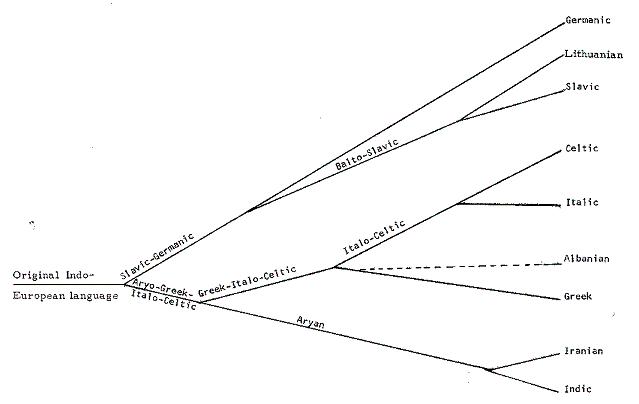
Charles Darwin used the taxonomy of Language to explain his theory of evolution.

That means we assigned what we now know as the process of biological evolution to language before we understood it regarding living organisms.

That is crazy. How is this not the most mind-shattering part of “Charles Darwin” and his theory and the whole science of Evolutionary Biology?

Darwin:

“It may be worthwhile to illustrate this view of classification, by taking the case of languages. If we possessed a perfect pedigree of mankind, a genealogical arrangement of the races of man would afford the best classification of the various languages now spoken throughout the world... The various degrees of difference in the languages from the same stock, would have to be expressed by groups subordinate to groups; but the proper or even only possible arrangement would still be genealogical…”

-Darwin, C. R. 1859. On the origin of species by means of natural selection, or the preservation of favoured races in the struggle for life. London: John Murray. [1st edition]

[page] 422 CLASSIFICATION. CHAP. XIII.

http://darwin-online.org.uk/content/frameset?viewtype=side&itemID=F373&pageseq=440

Steven Pinker - The Genius of Charles Darwin: The Uncut Interviews

~BBC, 2008

http://www.youtube.com/watch?v=yIMReUsxTt4

"The English"

http://networkaddress.blogspot.com/2012/03/english.html


Monday, February 20, 2012

Evolution: Intelligence as Prerequisite for Existence

Genetic evolution ends with consciousness. Genes function within a greater sphere, that which can be called cosmological evolution. Life, living matter, is but a sub-sphere in this system, and extends its existence via the transmission of genetic information. This particular type of information and its reading-and-writing apparatus is intelligent in regards to the physical world. Living matter is exposed to the physical world. It reacts to this stimulus, records the transaction, and transmits the information inter-generationally (via the gene). With communication, language, and writing, intelligence begins to interact with a non-physical world. The record of this interaction is transmitted inter-generationally, and after consciousness, intra-generationally, no loner using the gene, but the meme.

The gene works in the physical realm of the fundamental forces of nature, those being the gravitational, the electro-magnetic, and the nuclear forces. The gene can thus only evolve a physical body. With the advent of the mindspace, it becomes apparent that since evolution continues, despite fundamentally genetic change, as evidenced by the ‘growing’ of civilization, for example, a new information-transmitter must be at work.

This, the meme, interfaces the virtual world, the world of ideas, not of physical things, but ways-of-organizing physical things. The artificial arena of the anthropocene is responded to by the mind, not the body – as even living matter can not interact directly with the non-matter of ideas – and so its intelligence works in an even further sphere, one beyond that of biological evolution.

It is important, then, to distinguish between different kinds of intelligences. Intelligence is only the evidence of evolution. We, as humans, are quite mistaken in assuming that we are intelligent. It is not us, but the thing that is in us, running through us. Life, that proceeding humans, is still intelligent in that it ‘seems to’ predict an outcome and react accordingly, for the benefit of its continued existence. Non-living matter does the same thing, it must; after all, it still exists.

Wednesday, January 25, 2012

The Extended Phenotype: The Long Reach of the Gene

Richard Dawkins, 1982

1999 edition w afterword by Daniel Dennett


Extended Phenotypes are extracorporeal genetic adaptations

Phylogenetic development is the evolution of the species, on an evolutionary timescale

Ontologenetic development is the evolution of the individual, on an individual timescale

“Replicators are not of course, selected directly, but by proxy; they are judged by their phenotypic effects. Although for some purpose it is convenient to think of these phenotypic effects as being packaged together in discrete ‘vehicles’ such as individual organisms, this is not fundamentally necessary. Rather, the replicator should be thought of as having extended phenotypic effects, consisting of all its effects on the world at large, not just its effects on the individual body in which it happens to be sitting (p4).”

[In the same way that gravity and electromagnetic forces shaped the paleontological earth, the life-force of evolution has shaped the earth of our current era. Something, for example, has removed all the oil from the ground and burned it into the air, redistributing the molecules of the planet in the same way that a volcano redistributes molten iron from underneath the crust to on top of it.]

-The meme is a non-genetic replicator flourishing only in the environment of complex, communicating brains. –Dawkins, The Selfish Gene, 1976

-When the meme is “graven into” the receiving brain, it is in a position to broadcast its phenotypic effects using inter-individual communication and imitation apparatus, i.e. humans (~p109).

-The copying process of memes is much less precise than in genes…there is a mutational element in every [meme-] copying event (p112).

The Hierarchy (according to Dawkins)

-Sub-Atomic Particles – fundamental particles below the atomic level

-Atoms – there are about 100 different kinds; they follow their own rules; they are ignored by chemistry

-Molecules

-Crystals

-Living Matter – macromolecules, intracellular membranes, organelles, cells, tissues, organs, organisms, populations, communities, ecosystems…

-Software – integrated circuits, computers

[and how does this compare to Teilhard deChardin?]

Friday, December 23, 2011

Information Loves Us, But…

…A report has recently been released that declares a certain law enforcement policy or program was initiated without a sufficient information-collecting apparatus in place. Years later, the program has no way of analyzing its own performance…

A report asking for more information.


insert partially unrelated image

The speed of memetic iteration rendered genes impotent. The rate-of-change of genetic transmission, or more correctly the speed of its iteration cycles, is dependent on the reproduction of its organism-host.

Memetic iteration, in contrast, if it relies on the ‘speed’ of a periodicity of anything, is limited only by the physical limits of the brain (i.e. – the speed of neuronal transmission).

Now,

Though we capably understand that a micro-processor expands well beyond these limits, memetic transfer is subordinate, still, to something human.

Humans, as the organism-of-choice to deal the death knell to the gene, turned the transmission of information (if that is what unites genes and memes) into a non-physical thing. This is what allows its speed of iteration to perform beyond the previously absolute limits of the physical world, after all. Did life intend for humans to make its own info-propagating mechanism obsolete?

At this level of inquiry, can we ask instead – Did life intend to produce a form of itself that would render itself obsolete?

And then: Would humans intend to produce a form of themselves (the computer is a ‘brain’) that in turn makes them obsolete?

It seems, that in order for technology to continue its role as the accelerator of meme-propagation, it needs to rid of the us in it.


[Note: It seems that an assumption is being made here that the ‘technology’ meme is the paragon-analogue of the ‘human’ gene, what Susan Blackmore would call the advent of ‘temetics’.]

Susan Blackmore on memes and temes. TED2008. Filmed Feb 2008, Posted Jun 2008.
http://www.ted.com/talks/susan_blackmore_on_memes_and_temes.html

[Also note: Memes do not need life to propagate; the written word (if it can be separated from the subjective-reading human), for example, is not alive in any biological sense. The final question, not articulated very well above, is this: What world will supplant the non-physical mindspace of the human?]

Sunday, November 27, 2011

Artificial Projection

Geese don’t try to find a placid lake to spend the afternoon in. They are just following instructions, from the conscious-human perspective. Animals don’t try to do anything. Our tendency to project consciousness into animals reveals this basic understanding of evolution: Animals are a direct result of genetic activity, genes, in themselves being pulled forward by some force. They give some instructions that the animal “unknowingly” executes. But alas, they cannot know, and thus, their execution of genetic operations is a complete subservience to the will of their genes (although even ‘submission’ implies conscious activity). There is a subtle distinction in perspective offered here. Are animals slaves to their genes, evolving eventually to liberate themselves?

Consciousness, of course, is this liberation. But then we must ask, referring to the same relationship between animals and their genes: What “mindless” operations do we undertake? We are conscious, intercepting genetic fulfillment, yet we may be performing under the illusion of self-control. Will we, if we will still be able to call us that, will we look back on us now and see the absolute subservience to evolution once again, in this new phase, now under the soft-formed authority, the chaotic maelstrom of memetics and artificial selection?

And so, as the goose glides in to settle down for a warm autumn day on the water, are we in the same way going forth into the world, our world, the mindspace, with the same absolute fidelity to instructions whittled down by the sands of time, albeit a time of post-biological magnitude. Is this mindspace not a wild frontier that we have yet to fully explore? Is not our world, the one that sits atop the ‘wild’, not just as wild? As those sands of time become a shower of meteors, carving out a place on this earth, who will we become, and where will that be?


and then there's this:
This Aeon article is a must read for anyone interested in just about anything:
When we peer into the fog of the deep future what do we see – human extinction or a future among the stars?
-Ross Anderson, Aeon Magazine, 2013

Prompted by a recent article in Aeon Magazine warning of the threat posed by advanced artificial intelligence, Kristin Centorcelli of SF Signal put together an impressive panel of renowned science fiction authors to get their opinions on the subject.
Mind Meld: The Future of Humans and AI
Kristin Centorcelli, SF Signal Fanzine, April 10th, 2013 http://www.sfsignal.com/archives/2013/04/mind-meld-the-future-of-humans-and-ai/

-via io9