Showing posts with label topo. Show all posts

Saturday, January 11, 2025

We Are Not Ready for the Topological Universe


If you are like me, then you think the universe is like a big box, with all the things in it. And if you, like me, learned about Einstein and gravity and relativity in grade school, then you know that inside the big box, the space isn't exactly uniform, that it warps as it nears objects, because gravity. 

But one day soon, in grade school, people will learn that the big box isn't just warped by gravity, but that it's not a box at all. The universe might be more like a jumbled mess of intersecting toroids, bubbles and tubes. 

Anticipating future discoveries: Scientists explore nontrivial cosmic topology
May 2024, phys.org

Discussing his motivation to pursue this work, he said, "The possibility that the universe has 'interesting' topology is entirely within our Standard Model of physics but is nevertheless typically regarded as exotic."

"I have long been concerned that we would miss an extraordinary discovery about our universe by just looking the other way. In the meantime, there is growing evidence that the universe is not 'statistically isotropic,' i.e. that physics is the same in all directions. Topology is a very natural way for anisotropy to creep into our universe."

via the COMPACT collaboration of scientists including from from Case Western Reserve University: Yashar Akrami et al, Promise of Future Searches for Cosmic Topology, Physical Review Letters (2024). DOI: 10.1103/PhysRevLett.132.171501

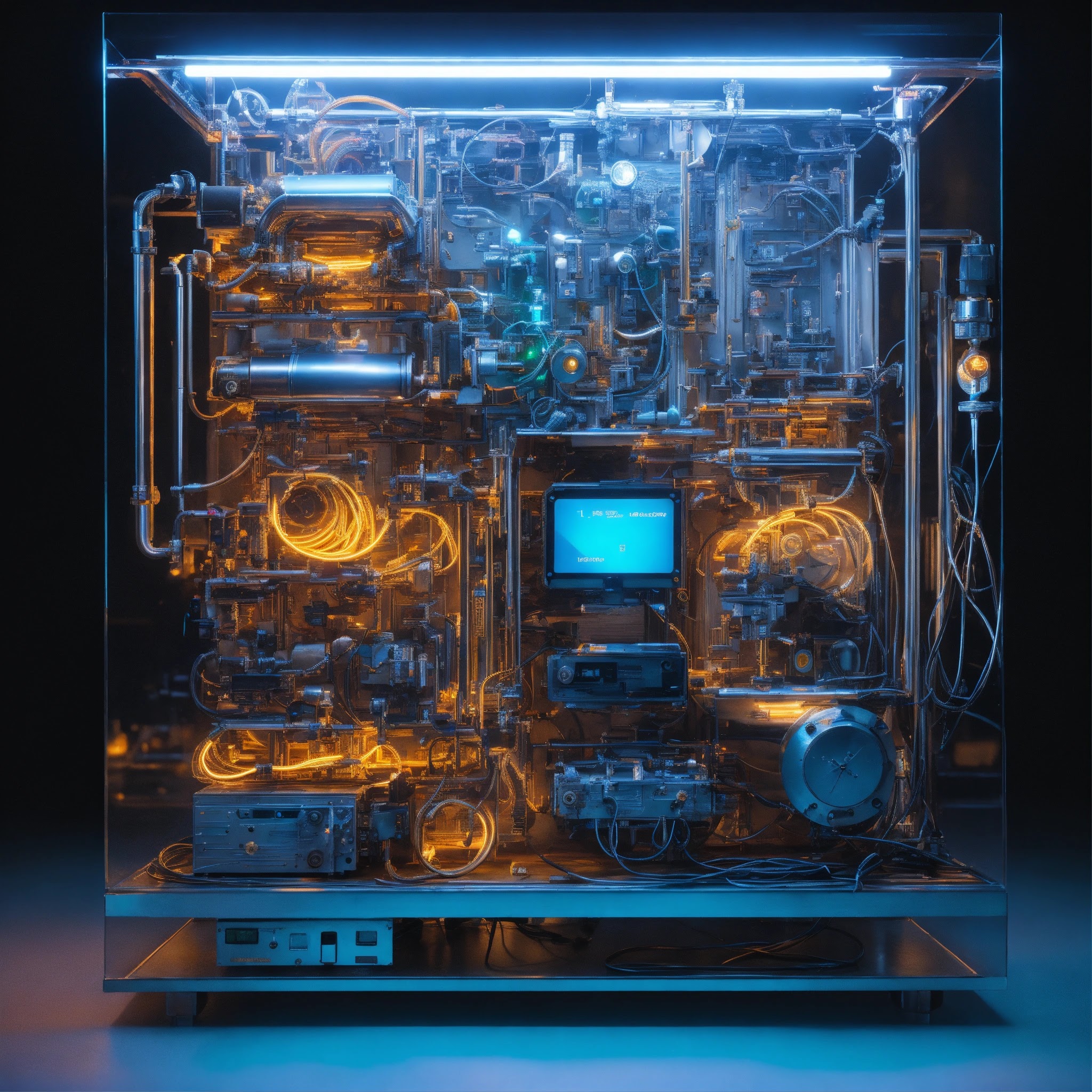
Image credit: The above image is the "first topological frequency comb", and is (ostensibly) a photograph taken by Emily Edwards for the University of Maryland and National Institute of Standards and Technology Joint Quantum Institute, where she is recognized for her ability to communicate with the public about quantum science. (I say the image is ostensibly a photograph, because it just looks way too good to be real, and part of me thinks it's just not properly cited. [link]


New measurements of gravitational anomaly at low acceleration favor modified gravity, researcher claims
Sep 2024, phys.org

When Kuhn talked about revolutions, this is what he was talking about. I'm too young to have felt the excitement upon discovering that E equals MC2, or that gravity affects time. But now I see. 

They keep finding it between binary stars - It's the breakdown of Newtonian gravity at low acceleration, and it's called modified Newtonian dynamics, or MoND, or Milgromian dynamics, because it was introduced 40 years ago by Mordehai (Moti) Milgrom.

While these consistent results are arresting, unlimited reproductions and confirmations are needed for the reported gravitational anomaly to become a true scientific fact. Also, the reported gravitational anomaly will have to be better characterized continually to provide useful constraints on theories.

via Sejong University: Kyu-Hyun Chae, Measurements of the Low-acceleration Gravitational Anomaly from the Normalized Velocity Profile of Gaia Wide Binary Stars and Statistical Testing of Newtonian and Milgromian Theories, The Astrophysical Journal (2024). DOI: 10.3847/1538-4357/ad61e9

Also: Hernandez et al, A critical review of recent Gaia wide binary gravity tests, Monthly Notices of the Royal Astronomical Society (2024). DOI: 10.1093/mnras/stae1823


Observational study supports century-old theory that challenges the Big Bang
Sep 2024, phys.org

Big Bang theory suggests the universe started to expand 13.8 billion years ago. At the same time, preeminent astronomer Fritz Zwicky proposed that galaxies that were more distant from Earth did not really move faster, but the red shift was because the light photons lose their energy as they travel through space. And it's called the Tired Light theory.

"The tired light theory was largely neglected, as astronomers adopted the Big Bang theory as the consensus model of the universe," Shamir said. "But the confidence of some astronomers in the Big Bang theory started to weaken when the powerful James Webb Space Telescope saw first light.

via Kansas State University: Lior Shamir, An Empirical Consistent Redshift Bias: A Possible Direct Observation of Zwicky's TL Theory, Particles (2024). DOI: 10.3390/particles7030041


Post Script:
New photonic chip spawns nested topological frequency comb
Jun 2024, phys.org
https://phys.org/news/2024-06-photonic-chip-spawns-topological-frequency.html

The First Topological Frequency Comb - shines with evenly spaced pristine frequency spikes, relies on a small silicon nitride chip patterned with hundreds of microscopic rings arranged in a two-dimensional grid; a complex pattern of interference takes input laser light and circulates it around the edge of the chip while the material of the chip itself splits it up into many frequencies.

via the University of Maryland and National Institute of Standards and Technology Joint Quantum Institute: Christopher J. Flower et al, Observation of topological frequency combs, Science (2024). DOI: 10.1126/science.ado0053

Wednesday, January 8, 2025

Quantum Progress


Someone said Majorana fermions so I listened:
Physicists move one step closer to topological quantum computing
Jul 2024, phys.org

Theory predicts that a combination of superconductivity and the quantum anomalous Hall effect will give rise to topologically protected particles called Majorana fermions that will potentially revolutionize future technologies such as quantum computers.

Such a combination can be achieved by inducing superconductivity in the edge of a quantum anomalous Hall insulator that is already resistance-free. The resultant chiral Majorana edge state, which is a special type of Majorana fermions, is a key to realizing "flying qubits" (or quantum bits) that are topologically protected.

via University of Cologne, KU Leuven, the University of Basel, and Forschungszentrum Jülich joint Cluster of Excellence Matter and Light for Quantum Computing ML4Q: Anjana Uday et al, Induced superconducting correlations in a quantum anomalous Hall insulator, Nature Physics (2024). DOI: 10.1038/s41567-024-02574-1

Image credit: Quantum computer with outer shielding of dilution refrigerator removed - Anna-Lena Lundqvist at Chalmers University of Technology - 2023


'Kink state' control may provide pathway to quantum electronics
Jul 2024, phys.org

Careful now

Kink states are electrical conduction pathways at the edge of the semiconducting material Bernal bilayer graphene that can regulate the flow of electrons in a quantum system via the quantum valley Hall effect. 

via Pennsylvania State University: Ke Huang et al, High-temperature quantum valley Hall effect with quantized resistance and a topological switch, Science (2024). DOI: 10.1126/science.adj3742


New method could yield fast, cross-country quantum network
Jul 2024, phys.org

They're building long quantum channels using vacuum sealed tubes with an array of spaced-out lenses. These vacuum beam guides, about 20 centimeters in diameter, would have ranges of thousands of kilometers and capacities of more than 1,013 qubits per second, better than any existing quantum communication approach. Photons of light encoding quantum data would move through the vacuum tubes and remain focused thanks to the lenses.

via University of Chicago Pritzker School of Molecular Engineering, Stanford University and the California Institute of Technology Laser Interferometer Gravitational-Wave Observatory LIGO: Yuexun Huang et al, Vacuum Beam Guide for Large Scale Quantum Networks, Physical Review Letters (2024). DOI: 10.1103/PhysRevLett.133.020801.


Test of a prototype quantum internet runs under New York City for half a month
Aug 2024, phys.org

"Progress toward a fully automated practical entanglement network"

Qunnect researchers used a leased 34-kilometer-long fiber circuit they called the GothamQ loop. Using polarization-entangled photons, they operated the loop for 15 continuous days, with fidelity nearly 90%. 

via Qunnect Inc. in Brooklyn, New York: Alexander N. Craddock et al, Automated Distribution of Polarization-Entangled Photons Using Deployed New York City Fibers, PRX Quantum (2024). DOI: 10.1103/PRXQuantum.5.030330

Wednesday, July 17, 2024

Topological Knot Gobbler


Watching two squirrels chase each other up, down, and all around a tree, a revelation came to me - why would we expect the "spatial organization" part of the brain to be limited to two-dimensional hexagonal tiles? These animals spend most of their time running around on trees, not on the ground. Their world is not flat. Their "surface" is a constantly curving tree trunk. Insects, same thing. For them, the basis of spatial dimension is not a flat plane, it's a curved plane. Up, down, and gravity in general are not constants. The default is a curved surface, not the other way around. And that's the more flexible model of the two, so why wouldn't it be the base model?

The idea that the spatial-brain is 2-D is a very human-based bias. It shouldn't be hard to accept the fact that not long after the hexagonal grid brain model was confirmed ("grid cells" 2005), the hyperdimensional toroid model came on the scene (2022). In other words, the brain thinks the landscape is a toroid. 

What's happening in the rapid upheaval of our understanding of space (quantum gravity, Moiré lattices etc.) might be less disorienting if we considered this. I'm not sure how we do this, re-wiring our brains to perform in topological space, but I bet psychedelic mushrooms would help. Or DMT:
The Hyperbolic Geometry of DMT Experiences at the Harvard Science of Psychedelics Club in the year 2020, with Andrés Gómez Emilsson from the Qualia Research Institute

And finally, aside from the spatial implications, topology seems to be a fertile area of study for discoveries on the nature of all things quantum, as seen below. 


Team discovers thousands of new transformable knots
Sep 2023, phys.org

They discovered thousands of new transformable knots including three novel shapes that the humble figure-eight knot can assume, doubling the number documented to date in scientific literature.

via EPFL Ecole Polytechnique Federale de Lausanne Geometric Computing Laboratory: Michele Vidulis et al, Computational Exploration of Multistable Elastic Knots, ACM Transactions on Graphics (2023). DOI: 10.1145/3592399


Molecular knots, left and right: How molecules form knots
Oct 2023, phys.org

They created a computational model for molecular knots, and mostly for optical topology.

via Max Planck Institute for Polymer Research in Mainz, Germany: Yani Zhao et al, Can Polymer Helicity Affect Topological Chirality of Polymer Knots?, ACS Macro Letters (2023). DOI: 10.1021/acsmacrolett.2c00600


Topologically structured light detects the position of nano-objects with atomic resolution
May 2023, phys.org

Just superoscillatory light, optical metrology, and topologically structured light.

via University of Southampton and Nanyang Technological University: Tongjun Liu et al, Picophotonic localization metrology beyond thermal fluctuations, Nature Materials (2023). DOI: 10.1038/s41563-023-01543-y


Researchers demonstrate that quantum entanglement and topology are inextricably linked
Jan 2024, phys.org

Skyrmion topology to be specific:

"We achieved this experimental milestone by entangling two identical photons and customizing their shared wave-function in such a way that their topology or structure becomes apparent only when the photons are treated as a unified entity" 

In the realm of condensed matter physics, skyrmions are highly regarded for their stability and noise resistance. 

"Our work presents a paradigm shift: the topology that has traditionally been thought to exist in a single and local configuration is now nonlocal or shared between spatially separated entities" says Ornelas.

Expanding on this concept, the researchers utilize topology as a framework to classify or distinguish entangled states. They envisage that "this fresh perspective can serve as a labeling system for entangled states, akin to an alphabet," says Dr. Isaac Nape, a co-investigator.

via Structured Light Laboratory in the School of Physics at the University of the Witwatersrand in South Africa, string theorist Robert de Mello Koch from Huzhou University in China, previously from Wits University: Pedro Ornelas et al, Non-local skyrmions as topologically resilient quantum entangled states of light, Nature Photonics (2024). DOI: 10.1038/s41566-023-01360-4

AI Art - Pink Healthy Ovary - 2024

Quantum physicists develop robust and ultra-sensitive topological quantum device
Jan 2024, phys.org

They were the first to realize the topological skin effect on a microscopic scale in a semiconductor material. This quantum phenomenon was initially demonstrated at a macroscopic level three years ago—but only in an artificial metamaterial, not a natural one. This is therefore the first time that a tiny, semiconductor-based topological quantum device that's both highly robust and ultra-sensitive has been developed.

via Würzburg-Dresdner Exzellenzcluster for Complexity and Topology in Quantum Matter: Kyrylo Ochkan et al, Non-Hermitian topology in a multi-terminal quantum Hall device, Nature Physics (2024). DOI: 10.1038/s41567-023-02337-4


Classifying quantum secrets: Pendulum experiment reveals insights into topological materials
Mar 2024, phys.org

Interesting analog (quantum analog)

They built an array of 50 coupled pendula, with string lengths that slightly varied from one pendulum to the other. The strings of each neighboring pair of pendula were connected at a controlled height, such that each one's motion would affect its neighbors' motion.

The system obeyed Newton's laws of motion, but the precise lengths of the pendula and the connections between them created a magical phenomenon: Newton's laws caused the wave of the pendula's motion to approximately obey Schrödinger's equation. Therefore, the motion of the pendula, which is visible in the macroscopic world, reproduces the behaviors of electrons in periodic systems such as crystals.

via the Nuclear Research Center, Department of Biomedical Engineering, School of Mechanical Engineering, and School of Physics and Astronomy at Tel Aviv University: Izhar Neder et al, Bloch oscillations, Landau–Zener transition, and topological phase evolution in an array of coupled pendula, Proceedings of the Nation


'Tube map' around planets and moons made possible by knot theory
Apr 2024, phys.org

Knot Theory

In recent decades, space missions have increasingly relied on the ability to change the course of a satellite's path through space without using fuel by finding 'heteroclinic connections', usually calculated by using vast computing power to churn through one option after another or by making an 'intelligent guess' and then investigating it further. A new technique uses an area of math called knot theory to quickly generate rough trajectories.

via University of Surrey: Danny Owen et al, Applications of knot theory to the detection of heteroclinic connections between quasi-periodic orbits, Astrodynamics (2024). DOI: 10.1007/s42064-024-0201-0


Wednesday, January 10, 2024

The Atoms Themselves Are a Computer


Skepticism about Microsoft results regarding robust quantum bits
May 2023, phys.org

Correction -- "Researchers at the University of Basel have now dampened expectations of using Majorana particles for computation in the near future ... results published by Microsoft in 2022, according to which Majorana particles had been detected in the labs of the company, may not hold water"

Just a general reminder that not everything is true just because science says so, sometimes the true things get retracted too -- "both the current anomaly and the superconducting properties can be reproduced by a small amount of disorder from impurities inside the nanowire."

Also a reminder that Majorana fermions are an irresistible paradox of nature in that they contain both their own particle and anti-particle. They're expected to exist, but they've never been found. 

via University of Basel: Richard Hess et al, Trivial Andreev Band Mimicking Topological Bulk Gap Reopening in the Nonlocal Conductance of Long Rashba Nanowires, Physical Review Letters (2023). DOI: 10.1103/PhysRevLett.130.207001


Quantum matter breakthrough - Tuning density waves
May 2023, phys.org

Cold atomic gas can be programmed, so the atoms themselves are a computer because of the way they interact. In this case, the atoms are lithium, which were cooled, trapped in an optical cavity, and turned into a crystal, although how can a crystal be a wave, right? Quantum something.

via EPFL Ecole Polytechnique Federale de Lausanne: Jean-Phillipe Brantut, Density-wave ordering in a unitary Fermi gas with photon-mediated interactions, Nature (2023). DOI: 10.1038/s41586-023-06018-3.


Unveiling quantum gravity - New results from IceCube and Fermi data
Jun 2023, phys.org

Researchers examined a quantum-gravity model of particle propagation in which the speed of ultrarelativistic particles decreases with rising energy -- they used gamma-ray bursts observed by the Fermi telescope and ultra-high-energy neutrinos detected by the IceCube Neutrino Observatory, testing the hypothesis that some neutrinos and some gamma-ray bursts might have a common origin but are observed at different times as a result of the energy-dependent reduction in speed.

(Findings are preliminary, but) "By combining data from IceCube and Fermi, we found preliminary evidence supporting quantum gravity models that predict this effect. This marks a significant milestone in the field of quantum gravity research since it is the first time that such a level of quantum gravity-supportive statistical evidence is found," says corresponding author, Professor Giovanni Amelino-Camelia of the University of Naples on behalf of the team.

"Supportive statistical evidence" never sounded so science fiction.

via University of Naples Federico II, University of Wroclaw, and University of Bergen: Giovanni Amelino-Camelia et al, Could quantum gravity slow down neutrinos?, Nature Astronomy (2023). DOI: 10.1038/s41550-023-01993-z

AI Art - Tiny Machines - 2023

New device opens door to storing quantum information as sound waves
Jun 2023, phys.org

"Phonon" -- the sound equivalent of a light particle called a photon

To understand how a sound wave can store information, imagine an extremely echoey room. Now, let's say you need to remember your grocery list for the afternoon, so you open the door to that room and shout, "Eggs, bacon, and milk!" and shut the door. An hour later, when it's time to go to the grocery store, you open the door, poke your head inside, and hear your own voice still echoing, "Eggs, bacon, and milk!" You've just used sound waves to store information.

I mean if you can store light, you can store sound right?

via California Institute of Technology: Alkim Bozkurt et al, A quantum electromechanical interface for long-lived phonons, Nature Physics (2023). DOI: 10.1038/s41567-023-02080-w


Could quantum gravity models arising from holography explain cosmological acceleration?
Jun 2023, phys.org

"We now have fully consistent models of quantum gravity via an approach called holography, where the gravitational physics is encoded in a simpler, lower dimensional non-gravitational quantum system."

"We observed that quantum gravity models arising from holography can naturally explain cosmological acceleration in a novel way, with a changing dark energy that eventually becomes negative," Van Raamsdonk said. "We don't know for sure if our universe works this way, but it's something that we can look for in cosmological observations."

via University of Maryland and University of British Columbia: Stefano Antonini et al, Accelerating Cosmology from a Holographic Wormhole, Physical Review Letters (2023). DOI: 10.1103/PhysRevLett.130.221601


Scientists edge toward scalable quantum simulations on a photonic chip
Jun 2023, phys.org

Oh no you didn't! "quantum-correlated synthetic crystal"

What he really means: "Scientists have made an important step toward developing computers advanced enough to simulate complex natural phenomena at the quantum level. While these types of simulations are too cumbersome or outright impossible for classical computers to handle, photonics-based quantum computing systems could provide a solution."

via University of Rochester: Usman A. Javid et al, Chip-scale simulations in a quantum-correlated synthetic space, Nature Photonics (2023). DOI: 10.1038/s41566-023-01236-7

AI Art - Many Parts High Tech - 2023

Scientists observe first evidence of 'quantum superchemistry' in the laboratory
Aug 2023, phys.org

In the experiments, the scientists cooled down cesium atoms and coaxed them into the same quantum state. Next, they watched as the atoms reacted to form molecules.

In ordinary chemistry, the individual atoms would collide, and there's a probability for each collision to form a molecule. However, quantum mechanics predicts that atoms in a quantum state perform actions collectively instead.

"You are no longer treating a chemical reaction as a collision between independent particles, but as a collective process," explained Chin. "All of them are reacting together, as a whole."

One consequence is that the reaction happens faster than it would under ordinary conditions. In fact, the more atoms in the system, the faster the reaction happens.

And also, the reaction was taking place as a three-body interaction more often than as a two-body interaction (three atoms would collide; two would form a molecule, and the third remained single).

via James Franck Institute, Enrico Fermi Institute and U of Chicago: Zhendong Zhang et al, Many-body chemical reactions in a quantum degenerate gas, Nature Physics (2023). DOI: 10.1038/s41567-023-02139-8


Research team simulates super diffusion on a quantum computer
Aug 2023, phys.org

We are actually using quantum computers now, that's it -- 

Quantum physicists have successfully simulated super diffusion in a system of interacting quantum particles on a quantum computer consisting of 27 superconducting qubits and is physically located in IBM's lab in Yorktown Heights in New York and programmed remotely from Dublin.

"We were interested in a particular regime where something called super-diffusion occurs due to the underlying physics being governed by something called the Kardar-Parisi-Zhang equation. This is an equation which typically describes the stochastic growth of a surface or interface like how the height of snow grows during a snowstorm, how the stain of a coffee cup on cloth grows with time, or how a fluff fire grows. The propagation is known to give super diffusive transport." (follow the link above for a cool video of a poplar or cottonwood fluff fire)

"Consider the 27 qubits on this particular device. In quantum mechanics the state of such a system is described mathematically by an object called a wave function. In order to use a standard computer to describe this object you require a huge number of coefficients to be stored in memory and the demands scale exponentially with the number of qubits; roughly 134 million coefficients, in the case of this simulation."

"As you grow the system to say 300 qubits you would need more coefficients than there are atoms in the observable universe to describe such a system and no classical computer will be able to exactly capture the system's state. In other words we hit a wall when simulating quantum systems," Goold said.

via Trinity College of Dublin and IBM Dublin: Nathan Keenan et al, Evidence of Kardar-Parisi-Zhang scaling on a digital quantum simulator, npj Quantum Information (2023). DOI: 10.1038/s41534-023-00742-4


Researchers advance effort to turn diamonds into a quantum simulator
Oct 2023, phys.org

They bombarding diamonds with nitrogen atoms meant to dislodge the carbon atoms, creating flaws in an otherwise perfect crystal, that are then filled with electrons that have their own spin and magnetism, which are quantum properties that can be measured and manipulated for a wide range of applications.

via Washington University in St. Louis: Guanghui He et al, Quasi-Floquet Prethermalization in a Disordered Dipolar Spin Ensemble in Diamond, Physical Review Letters (2023). DOI: 10.1103/PhysRevLett.131.130401

Monday, February 27, 2023

The Topological Zoo


Is it topological? A new materials database has the answer
May 2022, phys.org

Topo is coming:

Harnessing the power of multiple supercomputers to map the electronic structure of more than 96,000 natural and synthetic crystalline materials to determine whether and what kind of topological traits exist in each structure.

Overall, they found that 90 percent of all known crystalline structures contain at least one topological property, and more than 50 percent of all naturally occurring materials exhibit some sort of topological behavior.

Topological Materials Database - periodic table of topology
Inorganic Crystal Structure Database - atomic and chemical structures of crystalline materials

via MIT, Princeton and the École Normale Supérieure Paris: Maia G. Vergniory et al, All Topological Bands of All Non-Magnetic Stoichiometric Materials, Science (2022). DOI: 10.1126/science.abg9094

Image credit: Topological Zoo - Anatoly Fomenko - 1967