Showing posts with label biomimetics. Show all posts

Wednesday, January 10, 2024

Biocomputers and Engineered Living Material


Using mycelium to create a self-healing wearable leather-like material
Apr 2023, phys.org

Mushroom leather made of mycelium mats

via Newcastle and Northumbria Universities: Elise Elsacker et al, Fungal Engineered Living Materials: The Viability of Pure Mycelium Materials with Self‐Healing Functionalities, Advanced Functional Materials (2023). DOI: 10.1002/adfm.202301875


New biocomputing method uses enzymes as catalysts for DNA-based molecular computing
May 2023, phys.org

Traditional computer hardware is limited in its ability to interface with living organs, which has constrained the development of medical devices. Through the use of biological molecules such as DNA or proteins, biocomputing has the potential to overcome these limitations.

Biocomputing is typically done either with live cells or with non-living, enzyme-free molecules. This team has developed a platform for a third method of biocomputing: Trumpet, or Transcriptional RNA Universal Multi-Purpose GatE PlaTform.

"Trumpet is a non-living molecular platform, so we don't have most of the problems of live cell engineering. We don't have to overcome evolutionary limitations against forcing cells to do things they don't want to do."

via University of Minnesota: Judee A. Sharon et al, Trumpet is an operating system for simple and robust cell-free biocomputing, Nature Communications (2023). DOI: 10.1038/s41467-023-37752-x


Scientists make common pain killers from pine trees instead of crude oil
Jul 2023, phys.org

Using the "biorefinery" approach, the precursors for paracetamol and ibuprofen, as well as beta-blockers and an asthma inhaler drug, as well as other chemicals for perfumes and cleaning products have all been made from biorenewable β-pinene, a component of turpentine and by-product from the paper industry. (Because using oil to make pharmaceuticals is unsustainable.)

via University of Bath: Joshua Dale Tibbetts et al, Sustainable Syntheses of Paracetamol and Ibuprofen from Biorenewable β‐pinene, ChemSusChem (2023). DOI: 10.1002/cssc.202300670

AI Art - Bioalchemy Neural Net 2 - 2023

3D-printed 'living material' could clean up contaminated water
Sep 2023, phys.org

"Engineered living material" - 3D-printed structure made of a seaweed-based polymer called alginate and bacteria that have been genetically engineered to produce an enzyme that transforms various organic pollutants into benign molecules. The bacteria were also engineered to self-destruct in the presence of a molecule called theophylline, which is often found in tea and chocolate. "What's innovative is the pairing of a polymer material with a biological system to create a living material."

via University of California San Diego Materials Research Science and Engineering Center: Debika Datta et al, Phenotypically complex living materials containing engineered cyanobacteria, Nature Communications (2023). DOI: 10.1038/s41467-023-40265-2


Metal-loving microbes offer a green way to refine rare earth elements
Oct 2023, phys.org

Cornell scientists have characterized the genome of Shewanella oneidensis - a metal-loving bacteria with an affinity for rare earth elements - to replace the harsh chemical processing with a benign practice called biosorption.

via Cornell: Sean Medin et al, Genomic characterization of rare earth binding by Shewanella oneidensis, Scientific Reports (2023). DOI: 10.1038/s41598-023-42742-6


New pipeline makes valuable organic acid from plants—saving money and emissions
Oct 2023, phys.org

They're making succinic acid from sugarcane using Issatchenkia orientalis, a yeast like Saccharomyces cerevisiae or the bacteria Escherichia coli, but one that thrives in pH 3-4 acidic conditions. This means it doesn't produce unwanted by-products that need to be separated-out at high cost. 

The researchers did extensive metabolic engineering to rewire I. orientalis to produce robust levels of succinic acid, which is widely used additive for food and beverages.

via University of Illinois at Urbana-Champaign Center for Advanced Bioenergy and Bioproducts Innovation, and Princeton: Vinh G. Tran et al, An end-to-end pipeline for succinic acid production at an industrially relevant scale using Issatchenkia orientalis, Nature Communications (2023). DOI: 10.1038/s41467-023-41616-9

AI Art - Bioalchemy Neural Net 3 - 2023

Scientists report completion of chromosome XI, a major step towards creating the world's first synthetic yeast
Nov 2023, phys.org

World's first synthetic yeast genome -- The synthetic chromosome has replaced one of the natural chromosomes of a yeast cell and, after a painstaking debugging process, now allows the cell to grow with the same fitness level as a natural cell. The synthetic genome will not only help scientists to understand how genomes function, but it will have many applications. 
 
via University of Nottingham and Imperial College London: Synthetic yeast chromosome XI design provides a testbed for the study of extrachromosomal circular DNA dynamics, Cell Genomics (2023). DOI: 10.1016/j.xgen.2023.100418.


Charged 'molecular beasts' as the foundation for new chemical compounds
Nov 2023, phys.org

They are modifying mass spectrometers to synthesize new molecules.

Note that a mass spectrometer is supposed to break things apart so you can look at them one by one, but this is now making entirely new chemicals with parts of the broken molecules. 

The basic strategy of controlling reactive chemicals in mass spectrometers is not new, but the  substances are only produced in tiny quantities and cannot be extracted. They are destroyed when the signal used for analyses is generated. 

They're doing "preparative mass spectrometry" and making new molecules. 

via Physical and Theoretical Chemistry at Leipzig University: Markus Rohdenburg et al, Chemical Synthesis with Gaseous Molecular Ions: Harvesting [B12Br11N2]− from a Mass Spectrometer, Angewandte Chemie International Edition (2023). DOI: 10.1002/anie.202308600


New antibiotic approach proves promising against Lyme bacterium
Nov 2023, phys.org

Change some of the words, or not even, and it sounds like the most diabolical scifi weapon scenario:

"This transport mechanism gets internalized in the bacterium and brings in a molecule that causes what we've described as a berserker reaction - a programmed death response," said lead author Timothy Haystead, Ph.D., professor in Duke's Department of Pharmacology and Cancer Biology. "It wipes out the bacteria - sterilizes the culture with a single dose of light. And then when you look at what occurs with electron microscopy, you see the collapse of the chromosome."

via Duke University Medical Center: Dave L. Carlson et al, Targeting Borrelia burgdorferi HtpG with a berserker molecule, a strategy for anti-microbial development, Cell Chemical Biology (2023). DOI: 10.1016/j.chembiol.2023.10.004

Wednesday, July 27, 2022

Just Let Someone Else Do It


What if one day someone thought it would be a good idea to "protect" nature's ideas, and make it against the law to use biomimetic designs as being in violation of intellectual property? Kind of how one global superpower thinks that (highly protected) innovative technological advances grow on trees, so they're fair game to copy from another global superpower, when in fact they are the result of tons of investment in research and development, as well as the maintenance of an open market that encourages competition and novel solutions. 

So what if someone thought that if we can't respect the investment that Nature has made in creating all these really effective design solutions, then we're not allowed to use them in technologies that destroy nature's R&D factory (i.e. Earth)? Stranger things happen. 

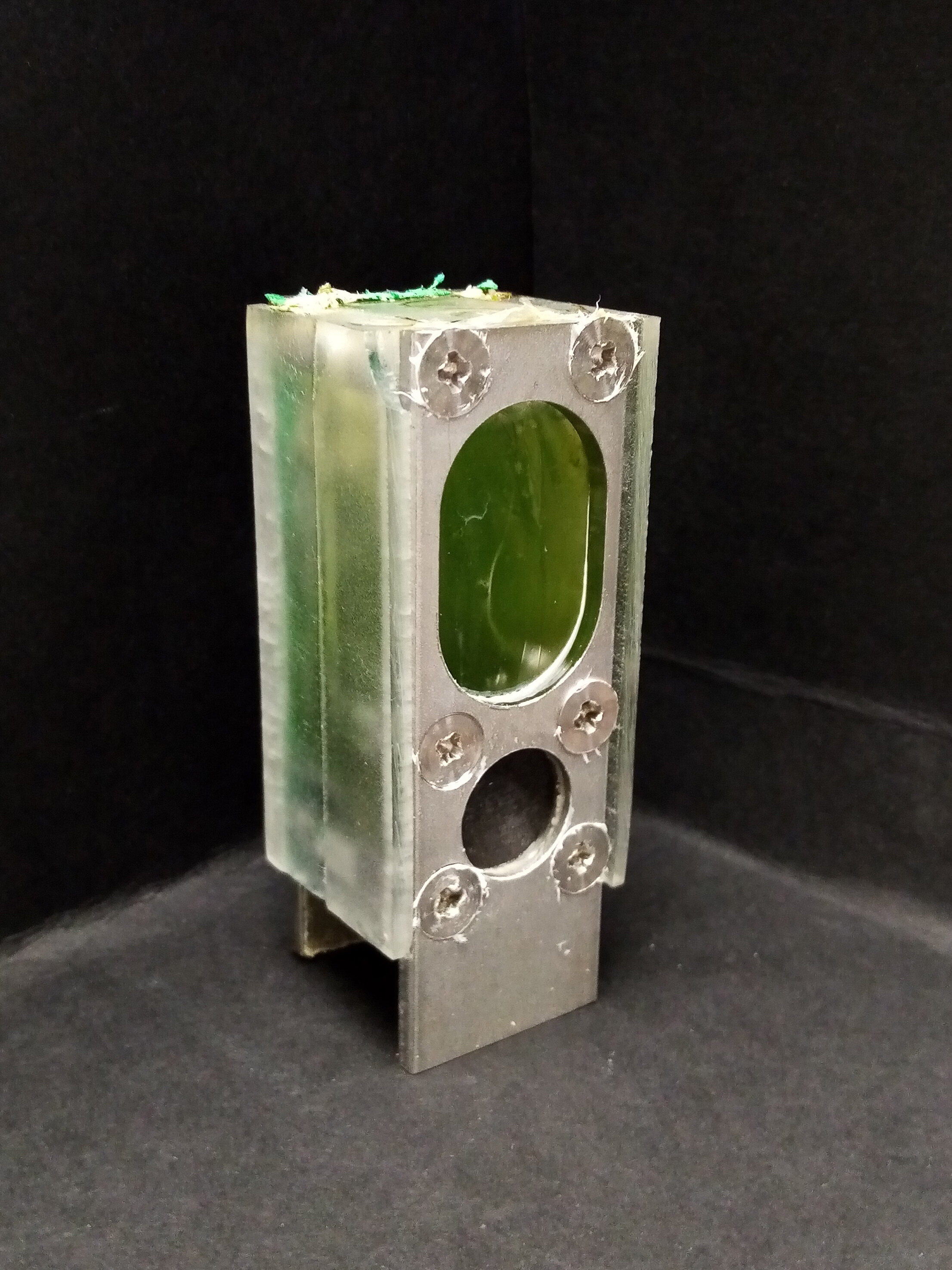
Image credit: Powered a microprocessor continuously for a year using nothing but ambient light and water, Paolo Bombelli, 2022 [link]


The surprising structural reason your kitchen sponge is disgusting
Feb 2022, phys.org

Pattern Language already knows this.

Some bacteria thrive in a diverse community while others prefer a solitary existence. And a physical environment that allows both kinds to live their best lives leads to the strongest levels of biodiversity.

via Duke University: Feilun Wu et al, Modulation of microbial community dynamics by spatial partitioning, Nature Chemical Biology (2022). DOI: 10.1038/s41589-021-00961-w

Notes:
  • A Pattern Language - Towns, Buildings, Construction. Christopher Alexander, Sara Ishikawa, Murray Silverstein. Oxford University Press. New York. 1977.
  • Pattern 240 - Half Inch Trim


Water as a 'glue' for elasticity enhanced, wet attachment of biomimetic structures
Apr 2022, phys.org

Octopus, clingfish and larva use soft biological cups to attach to surfaces under water. Elasticity-enhanced hydrodynamics improved self-healing and high suction at the cup substrate interface to convert water into "glue." The concept of water glue can therefore be used for...

Did he just say "water glue?"

via Leibniz Institute for New Materials in Germany and Mechanical Science and Engineering at U. of Illinois at Urbana-Champaign: Yue Wang et al, Water as a "glue": Elasticity-enhanced wet attachment of biomimetic microcup structures, Science Advances (2022). DOI: 10.1126/sciadv.abm9341

Also, via Weizmann Institute and Oxford: Uri Raviv et al, Fluidity of water confined to subnanometre films, Nature (2002). DOI: 10.1038/35092523


Plant-inspired TransfOrigami microfluidics
May 2022, phys.org

Origami isn't biomimetic (is it?), but it does show up often in this arena...

Bioinspired transformable microfluidics with stimuli-responsive materials embedded to respond to temperature, humidity, and light irradiance.

via Mechanical Engineering at the University of Hong Kong: Yi Pan et al, Plant-inspired TransfOrigami microfluidics, Science Advances (2022). DOI: 10.1126/sciadv.abo1719

Also: Xiaoshi Qian et al, Artificial phototropism for omnidirectional tracking and harvesting of light, Nature Nanotechnology (2019). DOI: 10.1038/s41565-019-0562-3


A water-repellent nanomaterial inspired by nature
Sep 2021, phys.org

"Novel superhydrophobic films" can stay dry even when submerged underwater.

If you've been paying attention to biomimicry at all, you would already know this is based on the lotus leaf, which is really good at repelling water.

In this case, they're using fullerenes (a special Epcot-center-like arrangement of carbon molecules) to create finger-shaped fullerites. Instead of etching the surface of the material, which is what we would normally have to do, they add these fullerites to a gel and apply it.

via University of Central Florida NanoScience Technology Center: Rinku Saran et al, Organic Non‐Wettable Superhydrophobic Fullerite Films, Advanced Materials (2021). DOI: 10.1002/adma.202102108


Nature-inspired self-sensing materials could lead to new developments in engineering
May 2022, phys.org

Mixing a common form of industrial plastic with carbon nanotubes allows the otherwise nonconductive plastic to carry an electric charge throughout its structure.

When the structure is subjected to mechanical loads, its electrical resistance changes. This phenomenon, known as piezoresitivity, gives the material the ability to "sense" its structural health.

The high-resolution 3D printing method allows "mesoscale porous architecture, which helps to reduce each design's overall weight and maximize mechanical performance", but when I hear "porous", all I think is bacterials growth and chemical reservoirs. If this becomes a norm in the fabrication of building materials, it would make the microbiology of buildings into a whole new animal. We might even have to start seeing the building as being alive. 

via University of Glasgow: Jabir Ubaid et al, Multifunctionality of Nanoengineered Self‐Sensing Lattices Enabled by Additive Manufacturing, Advanced Engineering Materials (2022). DOI: 10.1002/adem.202200194


The future of data storage is double-helical, research indicates
Mar 2022, phys.org

I am the storage now.

"DNA is one of the best options, if not the best option, to store archival data especially," said Chao Pan, a graduate student at the University of Illinois Urbana-Champaign and a co-author on this study.

Its longevity rivaled only by durability, DNA is designed to weather Earth's harshest conditions—sometimes for tens of thousands of years—and remain a viable data source. Scientists can sequence fossilized strands to uncover genetic histories and breathe life into long-lost landscapes.

via Beckman Institute for Advanced Science and Technology: S. Kasra Tabatabaei et al, Expanding the Molecular Alphabet of DNA-Based Data Storage Systems with Neural Network Nanopore Readout Processing, Nano Letters (2022). DOI: 10.1021/acs.nanolett.1c04203


Immune to hacks: Inoculating deep neural networks to thwart attacks
Mar 2022, phys.org

An immune-inspired defense system for neural networks 

Immune systems are about to blast off into phase one of the hype cycle. 

via University of Michigan: Ren Wang et al, RAILS: A Robust Adversarial Immune-Inspired Learning System, IEEE Access (2022). DOI: 10.1109/ACCESS.2022.3153036

Sun-loving bacteria skyscrapers harvested for waste electrons, Gabriella Bocchetti, 2022. Researchers from the University of Cambridge used 3D printing to create grids of high-rise ‘skyscrapers’ where sun-loving bacteria can grow quickly. The researchers were then able to extract the bacteria’s waste electrons, left over from photosynthesis, which could be used to power small electronics. [link]

Tiny 'skyscrapers' help bacteria convert sunlight into electricity
Mar 2022, phys.org

Bacteria batteries that run on wasted electrons.

The approach is competitive against traditional methods of renewable bioenergy generation and has already reached solar conversion efficiencies that can outcompete many current methods of biofuel generation.

"The electrodes have excellent light-handling properties, like a high-rise apartment with lots of windows," said Zhang. 

via University of Cambridge: Jenny Zhang, 3D-printed hierarchical pillar array electrodes for high-performance semi-artificial photosynthesis, Nature Materials (2022). DOI: 10.1038/s41563-022-01205-5.


Algae-powered computing: Scientists create reliable and renewable biological photovoltaic cell
May 2022, phys.org

Comparable in size to an AA battery, contains a type of non-toxic algae called Synechocystis that naturally harvests energy from the sun through photosynthesis. The tiny electrical current this generates then interacts with an aluminum electrode and is used to power a microprocessor.

"We were impressed by how consistently the system worked over a long period of time—we thought it might stop after a few weeks but it just kept going"

via University of Cambridge and Arm:  P. Bombelli et al, Powering a microprocessor by photosynthesis, Energy & Environmental Science (2022). DOI: 10.1039/D2EE00233G


Self-propelled, endlessly programmable artificial cilia
May 2022, phys.org

Single-material, single-stimuli programmable microstructure that can outmaneuver even living cilia. 

Unlike previous research, which relied mostly on complex multi-component materials to achieve programmable movement of reconfigurable structural elements, Aizenberg and her team designed a microstructure pillar made of a single material—a photoresponsive liquid crystal elastomer that realign and change shape when light hits it.

"We showed that we can program the choreography of this dynamic dance by tailoring a range of parameters, including illumination angle, light intensity, molecular alignment, microstructure geometry, temperature, and irradiation intervals and duration," said Michael M. Lerch, a postdoctoral fellow in the Aizenberg Lab and co-first author of the paper.

"When these pillars are grouped together, they interact in very complex ways because each deforming pillar casts a shadow on its neighbor, which changes throughout the deformation process," said Li. "Programming how these shadow-mediated self-exposures change and interact dynamically with each other could be useful for such applications as dynamic information encryption."

via Harvard John A. Paulson School of Engineering and Applied Sciences: Shucong Li et al, Self-regulated non-reciprocal motions in single-material microstructures, Nature (2022). DOI: 10.1038/s41586-022-04561-z