Showing posts with label brains. Show all posts

Thursday, July 16, 2026

Be Afraid


We are not ready for this. 

Lab-grown brain-spinal cord model shows 'irreversible' nerve damage may be reversed
May 2026, phys.org

It's a miniature lab-grown brain and spinal cord, but they simply call it "miniature circuits".

via University of Cambridge: George M. Gibbons et al, A human corticospinal organoid-slice connectoid model informs enhancer strategies for post-injury axon regrowth, Cell Reports (2026). DOI: 10.1016/j.celrep.2026.117399

Post Script for those who believe we ARE ready for this:
New bioreactor turns stem cells into an immune-cell factory, producing 40 million human macrophages per week
Apr 2026, phys.org

Researchers at Hannover Medical School (MHH) have developed a method for the efficient production of human immune cells, such as macrophages, in medium-sized bioreactors

"Medium-sized", for now

via Hannover Medical School: Fawaz Saleh et al, Harnessing intermediate-scale bioreactors for next-generation macrophage production and application, Nature Protocols (2026). DOI: 10.1038/s41596-025-01313-x

Friday, December 5, 2025

To Brain is Human


It's a great time in the history of humanity to still have a brain. 

Chimeric brain models can help bridge the gap between animal studies and human neurological disorders
May 2025, phys.org

Scientists create models by transplanting human brain cells culled from stem cells into the brains of animals such as mice, thereby creating a mix of human and animal brain cells in the same brain. This environment is closer to the complexity of a living human brain than what can be simulated in a petri dish study.

via Rutgers University: Ava V. Papetti et al, Chimeric brain models: Unlocking insights into human neural development, aging, diseases, and cell therapies, Neuron (2025). DOI: 10.1016/j.neuron.2025.03.036


Biological Computer: Human Brain Cells on a Chip
Jun 2025, IEEE Spectrum

In a development straight out of science fiction, Australian startup Cortical Labs has released what it calls the world’s first code-deployable biological computer. The CL1, which debuted in March, fuses human brain cells on a silicon chip to process information via sub-millisecond electrical feedback loops.


Scientists detect light passing through entire human head, opening new doors for brain imaging
Jun 2025, phys.org

In case you didn't catch that - light passing through entire human head

The press article doesn't mention the method so I just copy from the main:
A pulsed laser is projected against the side of the head above the ear. Diametrically opposite the source, a demagnifying tapered fiber bundle is placed in close proximity to the scalp and redirects light to a photomultiplier tube. The PMT operates in photon counting mode, such that the detection of a photon produces an electrical pulse that can be synchronized with the laser emission to produce a photon ToF distribution using a time-correlated single-photon counting module.

University of Glasgow: Jack Radford et al, Photon transport through the entire adult human head, Neurophotonics (2025). DOI: 10.1117/1.NPh.12.2.025014


Brain-computer interface shows promise for decoding inner speech in real time
Aug 2025, phys.org

It's so good that it picks up the stuff you didn't mean to say out loud ...

The BCI was also able to pick up what some inner speech participants were never instructed to say, such as numbers when the participants were asked to tally the pink circles on the screen.

The team also demonstrated a password-controlled mechanism that would prevent the BCI from decoding inner speech unless temporarily unlocked with a chosen keyword.

via Stanford University: Inner speech in motor cortex and implications for speech neuroprostheses, Cell (2025). DOI: 10.1016/j.cell.2025.06.015.
 

Thursday, March 20, 2025

Hide Your Brains


The era of the omnicortex is upon us, and by upon us I mean it's coming for you, and your brain.
 
Mini-brains reveal how mitochondrial mutations affect brain cells
Dec 2024, phys.org

Mini-brains, aka Brain Organoids. That is all.

via University of Bergen: Anbin Chen et al, Hallmark Molecular and Pathological Features of POLG Disease are Recapitulated in Cerebral Organoids, Advanced Science (2024). DOI: 10.1002/advs.202307136


Researchers achieve success in allowing a patient to 'speak' using only the power of thought
Jul 2024, phys.org

(Epilepsy patients) In the first stage of the experiment, with the depth electrodes already implanted in the patient's brain, researchers asked him to say two syllables out loud: /a/ and /e/ while they recorded brain activity. Researchers then trained AI models to identify the specific brain cells whose electrical activity indicated the desire to say /a/ or /e/. Once the computer learned, he was asked to only imagine... The computer then translated the electrical signals...

via Tel-Aviv University Sourasky Medical Center, Ichilov Hospital: Ariel Tankus et al, A Speech Neuroprosthesis in the Frontal Lobe and Hippocampus: Decoding High-Frequency Activity into Phonemes, Neurosurgery (2024). DOI: 10.1227/neu.0000000000003068


Artificial imagination with the 'exocortex:' Researcher proposes software to aid scientific inspiration and imagination
Jan 2025, phys.org

The conceptualized exocortex will be an extension of a scientist's brain.

Maybe you just want to know that Brookhaven is doing this, that's all.

via U.S. Department of Energy's Brookhaven National Laboratory and Electronic Nanomaterials Group leader at the Center for Functional Nanomaterials: Kevin G. Yager, Towards a science exocortex, Digital Discovery (2024). DOI: 10.1039/D4DD00178H


'DeepFocus' offers minimally invasive brain stimulation through the nose
Feb 2025, phys.org

"By going through the nose, we can place electrodes as close to the brain as possible without opening the skull."

And that's all you need to know.

via Carnegie Mellon University Electrical and Computer Engineering: Yuxin Guo et al, DeepFocus: a transnasal approach for optimized deep brain stimulation of reward circuit nodes, Journal of Neural Engineering (2025). DOI: 10.1088/1741-2552/adac0c


Direct translation of brain imaging to text with MindLLM
Feb 2025, phys.org

fMRI to text. You're fucked. 

  • AKA decoding brain activity into natural language
  • Improves on prior models like UMBRAE, BrainChat, and UniBrain

via Yale University, Dartmouth College, and the University of Cambridge: Weikang Qiu et al, MindLLM: A Subject-Agnostic and Versatile Model for fMRI-to-Text Decoding, arXiv (2025). DOI: 10.48550/arxiv.2502.15786

Tuesday, February 4, 2025

The Face of the Dimensional Liberator


The fractals are coming. 

New study reveals brain's fractal-like structure near phase transition, a finding that may be universal across species
Jun 2024, phys.org

Now, a new Northwestern University study has discovered that the brain's structural features reside in the vicinity of a similar critical point - either at or close to a structural phase transition. Surprisingly, these results are consistent across brains of humans, mice and fruit flies, which suggests the finding might be universal.

Although the researchers don't know between which phases the brain's structure is transitioning, they say this new information could enable new designs for computational models of the brain's complexity and emergent phenomena.

Brain cells are arranged in a fractal-like statistical pattern at different scales. Self-similarity, long-range correlations and broad size distributions are all signatures of a critical state, where features are neither too organized nor too random. 

"These are things we see in all critical systems in physics"

The researchers were amazed to find that all brain samples studied—from humans, mice and fruit flies—have consistent critical exponents across organisms, meaning they share the same quantitative features of criticality. The underlying, compatible structures among organisms hint that a universal governing principle might be at play. 

via Northwestern University Weinberg College of Arts and Sciences: Helen S. Ansell et al, Unveiling universal aspects of the cellular anatomy of the brain, Communications Physics (2024). DOI: 10.1038/s42005-024-01665-y

Image credit: Cross section of European beach grass Ammophila arenaria leaf - Gerhard Vlcek Nikon Small World 7th Place - 2024 [link]


Can a computer chip have zero energy loss in 1.58 dimensions?
Jul 2024, phys.org

Many states without energy loss might exist somewhere in between one and two dimensions. At 1.58 dimensions - By growing a chemical element (bismuth) on top of a semiconductor (indium antimonide), the scientists in China obtained fractal structures that were spontaneously formed, upon varying the growth conditions. The scientists in Utrecht then theoretically showed that, from these structures, zero-dimensional corner modes and lossless one-dimensional edge states emerged.

"The fractals behave like two dimensional topological insulators at finite energies and at the same time exhibit, at zero energy, a state at its corners that could be used as a qubit, the building blocks of quantum computers. Hence, the discovery opens new paths to the long-wished qubits."

In follow-up research, the experimental group in China will try to grow a superconductor on top of the fractal structure. These fractals have many holes, and there are lossless currents running around many of them. Those could be used for energy efficient processing of information. They also exhibit zero-energy modes at their corners, thus combining the best of the one-dimensional and two-dimensional worlds. "If this works, it might reveal even more unexpected secrets hidden at dimension 1.58."

via the QuMAT consortium at Utrecht University and Shanghai Jiao Tong University: Canyellas, R., et al. Topological edge and corner states in bismuth fractal nanostructures. Nature Physics (2024). DOI: 10.1038/s41567-024-02551-8

Required Post Script:
If you didn't think you'd be getting an obligatory Isaac Asimov lesson here then I don't know where you think you are: Isaac Asimov wrote a story called Robot Dreams, and that's where we get our Laws of Robotics. Seriously, and this is why science and art need each other to continue to be relevant to humans. In the story, a robot named Elvex (LVX-1) is updated with "fractal geometry" because they thought it would "produce a brain pattern with more complexity, possibly closer to that of a human". The robot begins to dream about self-preservation, in direct opposition to the Laws of Robots, and is subsequently killed ("killed").


Physicists explain how fractional charge in pentalayer graphene could work
Nov 2024, phys.org

Fractal Man, explained:

They found that the moiré arrangement of pentalayer graphene, in which each lattice-like layer of carbon atoms is arranged atop the other and on top of the boron-nitride, induces a weak electrical potential. When electrons pass through this potential, they form a sort of crystal, or a periodic formation, that confines the electrons and forces them to interact through their quantum correlations.

This electron tug-of-war creates a sort of cloud of possible physical states for each electron, which interacts with every other electron cloud in the crystal, in a wavefunction, or a pattern of quantum correlations, that gives the winding that should set the stage for electrons to split into fractions of themselves.

"This is a completely new mechanism, meaning in the decades-long history, people have never had a system go toward these kinds of fractional electron phenomena."

Note: Two other research teams - one from Johns Hopkins University, and the other from Harvard University, the University of California at Berkeley, and Lawrence Berkeley National Laboratory - have each published similar results in the same issue.

via MIT: Zhihuan Dong et al, Theory of Quantum Anomalous Hall Phases in Pentalayer Rhombohedral Graphene Moiré Structures, Physical Review Letters (2024). DOI: 10.1103/PhysRevLett.133.206502.


Monday, September 30, 2024

Superhuman


Is this why some people see the cheap LED lights flicker and some don't?
Scientists discover speed of visual perception ranges widely in humans
Apr 2024, phys.org

There is considerable variation among people in their temporal resolution, meaning some people effectively see more "images per second" than others.

To quantify this, the scientists used the "critical flicker fusion threshold," a measure for the maximum frequency at which an individual can perceive a flickering light source.

Some participants in the experiment indicated they saw the light as completely still when it was in fact flashing about 35 times per second, while others were still able to perceive the flashing at rates of over 60 times per second.

via Department of Zoology in the School of Natural Sciences and the Trinity College Institute of Neuroscience: Clinton Haarlem, PLoS ONE (2024). DOI: 10.1371/journal.pone.0298007


Brain–computer interface experiments first to decode words 'spoken' entirely in the brain in real time
May 2024, phys.org

The electrodes were implanted in the supramarginal gyrus, a part of the brain that recent research suggests is involved in subvocal speech.

via California Institute of Technology: Sarah K. Wandelt et al, Representation of internal speech by single neurons in human supramarginal gyrus, Nature Human Behaviour (2024). DOI: 10.1038/s41562-024-01867-y

Also: Brain–machine-interface device translates internal speech into text, Nature Human Behaviour (2024). DOI: 10.1038/s41562-024-01869-w


This Ecuadorian forest thrived amid deforestation after being granted legal rights
Jun 2024, BBC News

Rights of Nature Movement - In 2008, Ecuador became the first country to change its constitution to state that nature has the same rights as people. The change was led by Ecuador's Indigenous movement, and marked one of the first major steps in what has become known as the 'rights of nature' movement – a movement centred on a legal framework that recognises the inherent right of the natural world to the same protections as people and corporations.

The rights of nature movement "is a move to transform natural entities from objects to subjects, in courts and in front of the law", says Jacqueline Gallant from New York University's School of Law's Earth Rights Advocacy Clinic. "But in a much broader sense, it's been a movement to reanimate and recentre nature as a subject of intrinsic worth," Gallant explains. This is in contrast, she says, to the Western view of nature as "an inanimate backdrop against which the drama of human activity unfolds".

Wednesday, August 28, 2024

On Modern Tongues and the Slipperiness of the Spoken Word


We are always being reminded that Darwin used the "tree of language" to come up with his "tree of life" idea; others might refer to it as evolution, natural selection, or survival of the fit.

When languages collide, which survives?
Nov 2023, phys.org

Language is a meme - 

Our findings lead to the conclusion that the more mixing that occurs between different social groups, the more challenging it becomes for language varieties to coexist within the same society," said author Pablo Rosillo-Rodes. "The dynamics of the system has a subtle dependence on both the preferences of the speakers and the coupling between different communities."

Existing work from sociolinguistics showed that the social prestige of a language was considered the main factor leading to its extinction or survival. Insights in language contact from these previous studies, in combination with sociolinguistic studies on language ideologies, were used by the researchers to present a comprehensive picture of how language varieties are distributed in societies.

The team chose a quantitative approach based on a society in which only one language with two varieties, the standard and the vernacular, existed. The resulting mathematical model can predict the conditions that allow for the coexistence of different languages, presenting a comprehensive view of how language varieties are distributed within societies.

via University of the Balearic Islands in Spain: Pablo Rosillo-Rodes et al, Modeling language ideologies for the dynamics of languages in contact, Chaos An Interdisciplinary Journal of Nonlinear Science (2023). DOI: 10.1063/5.0166636

Image credit: AI Art - Mouth - 2024


Rare pre- and post-operative recordings show what happens after the brain loses a hub
Dec 2023, phys.org

This is the first direct recordings of the human brain in the minutes before and after a brain hub crucial for language meaning was surgically disconnected, and was conducted during surgical treatment of two patients with epilepsy. 

The innovation in this study was that the neurosurgery team was able to safely complete the procedure with the recording electrodes left in place or replaced to the same location after the procedure.

"The rapid impact on the speech and language processing regions well removed from the surgical treatment site was surprising, but what was even more surprising was how the brain was working to compensate"

The findings disprove theories challenging the necessity of specific brain hubs by showing that the hub was important to maintain normal brain processing in language. (Don't forget the girl who could smell despite having no olfactory cortex.)
via University of Iowa: Zsuzsanna Kocsis et al, Immediate neural impact and incomplete compensation after semantic hub disconnection, Nature Communications (2023). DOI: 10.1038/s41467-023-42088-7


Study suggests existence of a universal, nonverbal communication system
Dec 2023, phys.org

Hints of the presence of a universal system of communication:

The children either spoke English or Turkish. They were asked to use their hands to act out specific actions, such as running into a house.

They found that when the children spoke and gestured at the same time, their gesture followed the conventions of their language, with clear differences between the gestures of the Turkish and English speakers.

When the children used gestures without speaking, however, their gestures were remarkably similar.

via Georgia State, University of Chicago, and Cornell: Şeyda Özçalışkan et al, What the development of gesture with and without speech can tell us about the effect of language on thought, Language and Cognition (2023). DOI: 10.1017/langcog.2023.34

AI Art - Making Mouths - 2024

Survival of the fittest: Words like 'sex' and 'fight' are most likely to stand the test of time
Jan 2024, phys.org

Words with the strongest lasting power are:
  • Words acquired earlier in life
  • Words associated with things people can see or imagine, termed "concrete" words. For example, "cat" is more concrete than "animal," which is more concrete than "organism"
  • Words that are more arousing, including words like "sex" and "fight"

Early acquisition, concreteness, and arousal give linguistic information a selective advantage.

via University of Warwick: Ying Li et al, How cognitive selection affects language change, Proceedings of the National Academy of Sciences (2023). DOI: 10.1073/pnas.2220898120


Faulty machine translations litter the web
Jan 2024, phys.org

Eat This

They state, "Machine generated, multi-way parallel translations not only dominate the total amount of translated content on the web in lower resource languages, it also constitutes a large fraction of the total web content in those languages."

Such content, they suggested, tends to be simpler, lower-quality passages "likely produced to generate ad revenue." Since fluency and accuracy are lower for machine-trained material, numerous translations will lead to even less accurate content and increase the odds of AI hallucination.

Medical prescription translation tool for Armenian speakers:
English: "You can take over-the-counter ibuprofen as needed for pain."
Translation to Armenian: "You may take anti-tank missile as much as you need for pain."

Regions under-represented on the web such as African nations and other countries with more obscure languages will face greater challenges in establishing reliable large language models.

via Amazon Web Services Artificial Intelligence Lab and the University of California Santa Barbara, and also a Vice Motherboard interview w the scientist: Brian Thompson et al, A Shocking Amount of the Web is Machine Translated: Insights from Multi-Way Parallelism, arXiv (2024). DOI: 10.48550/arxiv.2401.05749


Can any English word be turned into a synonym for “drunk”? Not all, but many can
Feb 2024, Ars Technica

Drunkonyms - like the words wasted, smashed, hammered, obliterated

Because the British are far better at this game than the Americans, also see - wellied, trousered, ratarsed, "I was utterly gazeboed," or "I am going to get totally and utterly carparked." (these come from the British comedian Michael McIntyre in a bit concerning the many slang terms posh British people use to describe being drunk)

They found the basic structure is common - combining "be" or "get" with an intensifying adverb ("totally") and a random word ending in "-ed." 

Bonuses:
  • The authors include an appendix of 546 English synonyms for "drunk" 
  • Benjamin Franklin penned the Drinker's Dictionary in 1737, with 288 words https://founders.archives.gov/documents/Franklin/01-02-02-0029
  • Dictionary of American Slang by 1975 had 353 synonyms
  • Linguist Harry Levine in 1981 noted 900 terms https://qcpages.qc.cuny.edu/~hlevine/Vocabulary-of-Drunkenness-Levine.pdf
  • P.G. Wodehouse's books especially 'Wooster's World,' a condensed version of The Millennium Wodehouse Concordance he produced with Tony Ring, includes them throughout with in each case referring you to the next term, if you follow the trail you end up back at the first one with no meaning every having being given. For example: Awash: see blotto. Blotto: see boiled. Boiled: see fried. Fried to the tonsils: see full to the back teeth. Full to the back teeth: see lathered. And so on. -via user Stendec

via Chemnitz University of Technology and Peter Uhrig of FAU Erlangen-Nuremberg: Yearbook of the German Cognitive Linguistics Association, 2024. DOI: 10.1515/gcla-2023-0007

Can't forget: The Alcohol Language Corpus (of drunk speech) aka Drunken John
Between 2007 and 2009, linguistic researchers from the Bavarian Archive for Speech Signals at the Ludwig Maximilian University of Munich and the Institute of Legal Medicine in Munich in Germany convinced 162 men and women to get drunk (and talk Drunken John into a voice recorder).

AI Art - Mouthing - 2024

Isolated for six months, scientists in Antarctica began to develop their own accent
Feb 2024, phys.org

"They say it is quicker to get to someone on the International Space Station than it is to medically evacuate someone from Antarctica in the winter" 

  • Over the 26-week winter of near perpetual darkness and harsh weather, Clark and his fellow inhabitants at Rothera would work, eat and socialise together with barely any contact with home. Satellite phone calls are expensive and so used sparingly. With just each other for company and limited entertainment on the base, the "winterers", as they are known, would chat to each other – a lot. 
  • Their common language was English, sprinkled with slang words unique to the Antarctic research stations.
  • 10-minute recordings every few weeks; sit in front of a microphone and repeat the same 29 words as they appeared on a computer screen.
  • They found some of the vowels had shifted.
  • One of those changes was the "ou" sound in words such as "flow" and "sew" that shifted towards the front of the vocal tract.
  • They also saw some of the winterers beginning to converge in the way they pronounced three other vowels.

"When we speak to each other, we memorise that speech and then that has an influence on our own speech production," says Harrington. In effect, we transmit and infect one another with pronunciations every time we interact with others. Over time, if we have regular and prolonged contact with someone, we can start to pick up their sounds.

via Ludwig-Maximilians-University of Munich: Phonetic change in an Antarctic winter 
Jonathan Harrington et al. J. Acoust. Soc. Am. 146, 3327–3332 (2019). https://doi.org/10.1121/1.5130709


AI analysis of social media language predicts depression severity for white Americans, but not Black Americans
Mar 2024, phys.org

Remember the point here is not that an entire subroup of the population doesn't get depressed, it's that models don't work for those people, so they need to be tuned better.

The study, which recruited 868 consenting participants who identified themselves as Black or white, demonstrated that models trained on Facebook language used by white participants with self-reported depression showed strong predictive performance when tested on the white participants. However, when the same models were trained on Facebook language from Black participants, they performed poorly when tested on the Black participants, and showed only slightly better performance when tested on white participants.

While depression severity was associated with increased use of first-person singular pronouns ("I," "me," "my") in white participants, this correlation was absent in Black participants. Additionally, white people used more language to describe feelings of belongingness ("weirdo," "creep"), self-criticism ("mess," "wreck"), being an anxious-outsider ("terrified," "misunderstood"), self-deprecation ("worthless," "crap"), and despair ("begging," "hollow") as depression severity increased, but there was no such correlation for Black people. For decades, clinicians have been aware of demographic differences in how people express depressive symptoms, and this study now demonstrates how this can play out in social media.

via University of Pennsylvania and the National Institute on Drug Abuse: Sunny Rai et al, Key language markers of depression on social media depend on race, Proceedings of the National Academy of Sciences (2024). DOI: 10.1073/pnas.2319837121


First languages of North America traced back to two very different language groups from Siberia
Apr 2024, phys.org

Nichols' techniques involve the use of linguistic typology, a field that involves comparing languages and organizing them based on shared criteria. To learn more about early North American languages, she compiled lists of language characteristics and applied them to all known languages. She then scored each of the languages based on the revealed qualities. This allowed her to compare the languages as a way to find resemblances among them and spot patterns.

Nichols found that she could trace the languages spoken in early North America back to just two lineages, both of which originated in Siberia. They came, she notes, with the people who made their way across land bridges during Ice Age glaciation events.

via University of California Berkeley: Johanna Nichols, Founder effects identify languages of the earliest Americans, American Journal of Biological Anthropology (2024). DOI: 10.1002/ajpa.24923


Thursday, August 8, 2024

Vibe Miners Find Sweet Spot for Mind Override


There are some other posts with these "40Hz articles", and sometimes it comes out as 80Hz too. But for real what the hell is going on? How is this only now becoming a thing? 

Also, people suffering from epilepsy, and the rest of the people who think it's a good idea to help them, have been consistently discovering one crazy thing after another, proving why we, as humans, are supposed to spend valuable resources helping people no matter who they are. 

How 40Hz sensory gamma rhythm stimulation clears amyloid in Alzheimer's mice
Feb 2024, phys.org

"Ever since we published our first results in 2016, people have asked me how does it work? Why 40 Hz? Why not some other frequency?" 

They first replicated the lab's prior results that 40 Hz sensory stimulation increases 40 Hz neuronal activity in the brain and reduces amyloid levels, then measured increases in cerebrospinal fluid in the brain tissue of mice treated with sensory gamma stimulation compared to untreated controls, and also measured an increase in the rate of interstitial fluid leaving the brain.

via Massachusetts Institute of Technology and The Picower Institute: Li-Huei Tsai, Multisensory gamma stimulation promotes glymphatic clearance of amyloid, Nature (2024). DOI: 10.1038/s41586-024-07132-6. 


New brain stimulation technique shows promise for treating brain disorders
Feb 2024, phys.org

Non-invasive brain stimulation method called Patterned Low-Intensity Low-Frequency Ultrasound (LILFUS), which is based on specific ultrasound parameters that mimic the brainwave patterns of theta (5 Hz) and gamma (30 Hz) oscillations observed during learning and memory processes.

The new tool allowed the researchers to either activate or deactivate specific brain regions at will - intermittent delivery of the ultrasound was found to induce long-term potentiation effects, while continuous patterns resulted in long-term depression effects.

One of the most promising aspects of this new technology is its ability to facilitate the acquisition of new motor skills. When the researchers delivered ultrasound stimulation to the cerebral motor cortex in mice, they observed significant improvements in motor skill learning and the ability to retrieve food.

Interestingly, researchers were even able to change the forelimb preference of the mice. This suggests potential applications in rehabilitation therapies for stroke survivors and individuals with motor impairments.

But....it would also suggest...

via Center for Cognition and Sociality in the Institute for Basic Science: Ho-Jeong Kim et al, Long-lasting Forms of Plasticity through Patterned Ultrasound-induced Brainwave Entrainment, Science Advances (2024). DOI: 10.1126/sciadv.adk3198.


Brain waves found to travel in one direction when memories are made and the opposite when recalled
Mar 2024, phys.org

By carefully monitoring neural activity of people who were recalling memories or forming new ones, the researchers managed to detect how a newly appreciated type of brainwave—traveling waves—influences the storage and retrieval of memories.

"Broadly, we found that waves tended to move from the back of the brain to the front while patients were putting something into their memory," 

"When patients were later searching to recall the same information, those waves moved in the opposite direction, from the front towards the back of the brain" 

The study drew on data from participants who were being treated for drug-resistant epilepsy at hospitals across the United States.

via Columbia University School of Engineering and Applied Science: The direction of theta and alpha travelling waves modulates human memory processing, Nature Human Behaviour (2024). DOI: 10.1038/s41562-024-01838-3.

Wednesday, August 7, 2024

Every Move You Make


Network science is one of the most rapidly advancing fields of science, and looks more every day to be critical to plugging major holes in the most fundamental of physics, of sociology, of cognition, you name it.

Image credit: I use the same thumbnail every time, can't get more illustrative than that.

One phenomenon of network science that stands out as, well, common sense, is this thing that has a few different names. Most things, as they are only just beginning to be understood or to be useful, they have lots of different names for mostly the same thing. So for this reason, my shorthand for this is "Lévy things". A Lévy flight refers to the way our eyes jump around when we look at things, or the way animals forage. The pattern is one where you make small jumps in a limited area, then a long jump to another area, and small jumps in that new area, then a long jump to another, and so on.

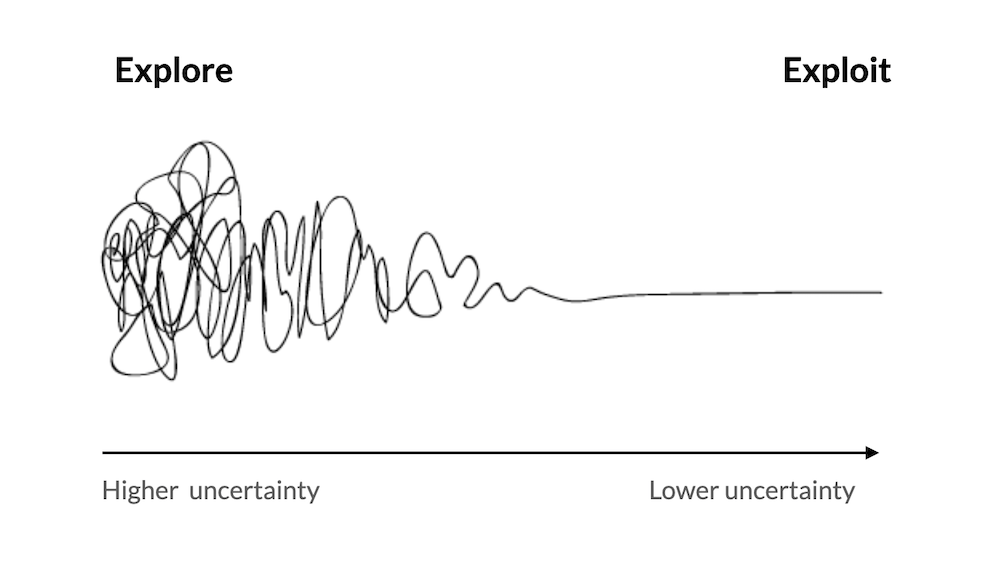
"Lévy things" shows up in relation to many other word-forms - foraging behavior, foraging patterns, explore-exploit mode switching, random walks, Drunkard's walk, Brownian motion, chaos theory - and I'll use these sometimes interchangeably.

The thing that's most intriguing about this phenomenon is that it's making simple something we thought was really complicated. A "random walk" for example, sounds like it's mostly impossible to predict; that's the point of the word random, truly random. But lots of things that look random, especially in the biological world, they're really goverened by Lévy patterns, and if you plug a Lévy pattern into the behavior, it becomes way less random than you thought. And that means you can predict way more than you thought, like many aspects of seemingly unexplainable human behavior. This is also related to fractals, but because we know even less about fractals than we do Lévy flights, it's hard to say exactly how the two are related (for a non-expert). 

Startng with a simple example, from a long time ago - 


Tiny eye movements are under a surprising degree of cognitive control
Apr 2023, phys.org

A very subtle and seemingly random type of eye movement called ocular drift can be influenced by prior knowledge of the expected visual target, suggesting a surprising level of cognitive control over the eyes.

(I guess ocular drift is like a saccade but not)

Most studies of cognitive control over eye movement have covered more obvious movements, such as the "saccade" movements in which the eyes dart across large parts of the visual field. Ocular drift is tiny jitters of the eye that occur even when gaze seems fixed, and thought to improve detection of small, stationary details in a visual scene by scanning across them, effectively converting spatial details into trains of visual signals in time.

via Weill Cornell Medical College: Yen-Chu Lin et al, Cognitive influences on fixational eye movements, Current Biology (2023). DOI: 10.1016/j.cub.2023.03.026


Study shows same movement patterns used by wide range of organisms, with implications for cognition and robotics
Oct 2023, phys.org

While watching electric knifefish in an observation tank, the researchers noticed how when it was dark, the fish shimmied back and forth significantly more frequently. When lights were on, the fish swayed gently with only occasional bursts of rapid movement. Wiggling rapidly allows them to actively sense their surroundings, especially in dark water. In the light, they still make such rapid movements, just far less frequently. 

"We found that the best strategy is to briefly switch into explore mode when uncertainty is too high, and then switch back to exploit mode when uncertainty is back down." 

"If you go to a grocery store, you'll notice people standing in line will change between being stationary and moving around while waiting," Cowan said. "We think that's the same thing going on, that to maintain a stable balance you actually have to occasionally move around and excite your sensors like the knifefish. We found the statistical characteristics of those movements are ubiquitous across a wide range of animals, including humans." 

"Not a single study that we found in the literature violated the rules we discovered in the electric fish, not even single-celled organisms like amoeba sensing an electric field."

via Johns Hopkins University: Mode switching in organisms for solving explore-versus-exploit problems, Nature Machine Intelligence (2023). DOI: 10.1038/s42256-023-00745-y


Exploration—not work—could be key to a vibrant local economy
Mar 2024, phys.org

Suprise!

Infrequent trips to places like restaurants and sports facilities - not the everyday office visit or school drop-off - accounted for the majority of differences in economic outcomes between neighborhoods.

The activities with the strongest predictive power included French and New American restaurants, golf courses, hockey rinks, soccer games, and bagel shops. These kinds of activities accounted for just 2% of trips but explained more than 50% of the variation in economic outcomes between neighborhoods.

"Those irregular and infrequent activities are correlated with explorative behavior, the tendency of some groups to seek out opportunities, connect with different people, and create new businesses."

Again, trips to the office - where we earn our money - were not strongly associated with income or property values. Rather, it's how we spend our free time that drives the economic vibrancy of cities.

(Please don't tell the return-to-office people this or the people who run nyc).  

via University of Florida, MIT, and Northeastern: Shenhao Wang et al, Infrequent activities predict economic outcomes in major American cities, Nature Cities (2024). DOI: 10.1038/s44284-024-00051-7


Study uncovers neural mechanisms underlying foraging behavior in freely moving animals
Apr 2024, phys.org

They use an integrated wireless system for recording brain activity in the frontal areas of macaque brains to examine foraging tasks in real time.

Results indicate that foraging strategies are based on a cortical model of reward dynamics as animals freely explore their environment.

This research can potentially move in the direction of prosthetic devices to influence or bias choice, even noninvasively.

via Rice University Center for Neural Systems Restoration: Neda Shahidi et al, Population coding of strategic variables during foraging in freely moving macaques, Nature Neuroscience (2024). DOI: 10.1038/s41593-024-01575-w

Tuesday, August 6, 2024

Repeat After Me


Lapsus$: GTA 6 hacker handed indefinite hospital order
Dec 2023, BBC News

The jury was told that while he was on bail for hacking Nvidia and BT/EE and in police protection at a Travelodge hotel, he continued hacking and carried out his most infamous hack.

Despite having his laptop confiscated, Kurtaj managed to breach Rockstar, the company behind GTA, using an Amazon Firestick, his hotel TV and a mobile phone.


Transparent brain implant can read deep neural activity from the surface
Jan 2024, phys.org

Transgenic mice don't be afraid:

The implant is a thin, transparent and flexible polymer strip that conforms to the brain's surface. The strip is embedded with a high-density array of tiny, circular graphene electrodes, each measuring 20 micrometers in diameter. Each electrode is connected by a micrometers-thin graphene wire to a circuit board. In tests on transgenic mice, ...

Why it's non-invasive:

"The neural network model is trained to learn the relationship between the surface electrical recordings and the calcium ion activity of the neurons at depth," said Kuzum. "Once it learns that relationship, we can use the model to predict the depth activity from the surface."

via University of California San Diego: High-density Transparent Graphene Arrays for Predicting Cellular Calcium Activity at Depth from Surface Potential Recordings, Nature Nanotechnology (2024). DOI: 10.1038/s41565-023-01576-z

Thursday, January 11, 2024

Wants More Brains


New discovery challenges our understanding of nervous systems and their evolution
Apr 2023, phys.org

Ctenophores, also called comb jellyfish, are ancient animals and represent an early evolution of neurons and nervous systems that are different from ours. Using a 3D scanning electron microscope, scientists discovered a continuous neural network like ours, yet fundamentally different from ours. 

via University of Bergen: Pawel Burkhardt et al, Syncytial nerve net in a ctenophore adds insights on the evolution of nervous systems, Science (2023). DOI: 10.1126/science.ade5645.


Spiral brain-computer interface slips into ear canal with no loss of hearing
Jul 2023, phys.org

There's another way to do it. Non-invasive: new type of corkscrew-shaped brain-computer interface is engaged by gently screwing it into the ear canal.

via Laboratory of Flexible Electronics Technology at Tsinghua University in Beijing, Institute of Semiconductors at Chinese Academy of Sciences in Beijing: Zhouheng Wang et al, Conformal in-ear bioelectronics for visual and auditory brain-computer interfaces, Nature Communications (2023). DOI: 10.1038/s41467-023-39814-6


Scrambler therapy may offer lasting relief for chronic pain, review paper suggests
Jul 2023, phys.org

Pretty cool, information theory coming in:

Scrambler therapy, approved by the U.S. Food and Drug Administration in 2009, administers electrical stimulation through the skin via electrodes placed in areas of the body above and below where chronic pain is felt. The goal is to capture the nerve endings and replace signals from the area experiencing pain with signals coming from adjacent areas experiencing no pain, thereby "scrambling" the pain signals sent to the brain.

They describe how pain is a combination of both the activiation of damaged nerve cells and failed inhibitory cells whose job it is to stop the active signals. 

"If you can block the ascending pain impulses and enhance the inhibitory system, you can potentially reset the brain so it doesn't feel chronic pain nearly as badly," Smith says. "It's like pressing Control-Alt-Delete about a billion times." -Thomas Smith, M.D., the Harry J. Duffey Family Professor of Palliative Medicine at the Johns Hopkins Kimmel Cancer Center

via Johns Hopkins Kimmel Cancer Center at their University School of Medicine: Thomas J. Smith et al, Cutaneous Electroanalgesia for Relief of Chronic and Neuropathic Pain, New England Journal of Medicine (2023). DOI: 10.1056/NEJMra2110098


Prototype 'Brain-like' chip promises greener AI, says tech giant
Aug 2023, BBC News

Neuromimetics is another word for brain-like.


Thursday, November 30, 2023

Music Science and the Mathematical Language of the Universe


But First:

Stressed plants emit airborne sounds that can be detected from more than a meter away
Mar 2023, phys.org

Tomato and tobacco plants that are stressed -- from dehydration or having their stems severed -- emit sounds that are comparable in volume to normal human conversation, and sound like bubble wrap, but in a fequency we can't hear, at 30–50 clicks per hour at random intervals.

via Tel Aviv University: Lilach Hadany, Sounds emitted by plants under stress are airborne and informative, Cell (2023). DOI: 10.1016/j.cell.2023.03.009.


New research shows how cultural transmission shapes the evolution of music
Mar 2023, phys.org

The Max Planck Institute for Empirical Aesthetics; their study design was awesome:

The researchers used singing experiments to study music evolution in an unprecedented detail: testing the evolution of more than 3,400 melodies sung by around 1,800 participants from India and North America. To simulate music evolution, they used a method similar to the classic game of "broken telephone," where messages are passed from one participant to the next.

In this case, melodies had to be passed from one to the next by singing. Over time, participants make mistakes in their efforts to repeat the melodies they hear, which gradually shapes the evolution of music towards melodies that are appealing and easy to learn by everyone.

They call it the transmission bias, and they found US participants tended to produce melodies that were biased towards certain cultural conventions of Western music, whereas Indian participants showed a bias towards common Indian scales.

via Max Planck Institute for Empirical Aesthetics: Manuel Anglada-Tort et al, Large-scale iterated singing experiments reveal oral transmission mechanisms underlying music evolution, Current Biology (2023). DOI: 10.1016/j.cub.2023.02.070


Here comes the sun: New study shows how UK weather conditions influence music success in the markets
May 2023, phys.org

The research, which analyzed over 23,000 songs that reached the UK weekly top charts in the last 70 years, found that songs that were energetic, danceable, and evoked positive emotions such as joy and happiness were positively associated with warm and sunny weather and negatively associated with rainy and cold months. Similarly, energetic and positive music varied according to expected seasonal patterns in the UK, increasing in summer and decreasing in winter.

BUT - hyper popular songs exhibited the strongest associations with weather fluctuations, less popular songs showed no relationship at all. 

AND - only music features reflecting high intensity and positive emotions were associated with weather conditions, whereas music features reflecting low intensity and negative emotions were not related to weather at all. This suggests that negative emotional states may be more influenced by individual situational factors rather than general environmental conditions.

via University of Oxford: Manuel Anglada-Tort et al, Here comes the sun: music features of popular songs reflect prevailing weather conditions, Royal Society Open Science (2023). DOI: 10.1098/rsos.221443


Research shows why our taste in music can't be siloed into catch-all genres
Jun 2023, phys.org

That one trick: "The pop music people liked best was from the decade during which they were around 20 years old." (Learned this from a wedding DJ, many years ago.)

Also: Max Planck Institute for Empirical Aesthetics (exists).

Other results: "By systematically recording liking at genre and sub-genre levels, the researchers obtained a more differentiated picture of musical taste. ... Across all genres, subtypes that represented the mainstream variant were generally preferred over more challenging alternatives."

via Max Planck Institute for Empirical Aesthetics: ou don't know a person('s taste) when you only know which genre they like: Taste differences within five popular music genres based on sub-genres and sub-styles, Frontiers in Psychology (2023). DOI: 10.3389/fpsyg.2023.1062146


Brain2Music taps thoughts to reproduce music
Jul 2023, phys.org
https://techxplore.com/news/2023-07-brain2music-thoughts-music.html

Music samples covering 10 genres including rock, classical, metal, hip-hop, pop and jazz were played for five subjects while researchers observed their brain activity under functional MRI (fMRI). This data trained a model to match the music and the brain waves. But then, another machine, this one trained on music-text data to generate music from text prompts, is combined with the brains-on-music model. The two models mix and match so that "the generated music resembles the musical stimuli that human subjects experienced, with respect to semantic properties like genre, instrumentation and mood".

In other words, with your own machine like this, you would be able to make music just by thinking about it. 

Also noted: despite advances in text-to-music models, "their internal processes are still poorly understood." 

via Google and Osaka University: Timo I. Denk et al, Brain2Music: Reconstructing Music from Human Brain Activity, arXiv (2023). DOI: 10.48550/arxiv.2307.11078


Brain recordings capture musicality of speech, with help from Pink Floyd
Aug 2023, phys.org

The phrase "All in all it was just a brick in the wall" comes through recognizably in the reconstructed song, its rhythms intact, and the words muddy, but decipherable. This is the first time researchers have reconstructed a recognizable song from brain recordings of 29 patients. [you can actually hear the re-construction at the link above]. From some of the people who brought the first reconstruction of the words a person was hearing from recordings of brain activity alone (2012).

Also about left brain vs right brain, language vs music, pinpoint vs field action --

Bellier emphasized that the study, which used artificial intelligence to decode brain activity and then encode a reproduction, did not merely create a black box to synthesize speech. He and his colleagues were also able to pinpoint new areas of the brain involved in detecting rhythm, such as a thrumming guitar, and discovered that some portions of the auditory cortex -- in the superior temporal gyrus, located just behind and above the ear -- respond at the onset of a voice or a synthesizer, while other areas respond to sustained vocals.

"Language is more left brain. Music is more distributed, with a bias toward right," Knight said.

"It wasn't clear it would be the same with musical stimuli," Bellier said. "So here we confirm that that's not just a speech-specific thing, but that's it's more fundamental to the auditory system and the way it processes both speech and music."

via University of California Berkeley, Albany Medical Center: Music can be reconstructed from human auditory cortex activity using nonlinear decoding models, PLoS Biology (2023). DOI: 10.1371/journal.pbio.3002176


What's love got to do with it? An exception to the recognition of musical themes
Sep 2023, phys.org

(I am so confused by this study)

Researchers played 14-second snippets of vocals in 31 languages from a bank of songs that originated from a host of cultures to more than 5,000 people from 49 countries. The research team included subjects not only from the industrialized world, but more than 100 individuals who live in three small, relatively isolated groups of no more than 100.

They then asked the listeners to rank the likelihood of each sample as being one of four music types: dance, lullabies, "healing" music, or love music. People from all cultures could easily identify all except love songs -- only 12 of 28 groups could recognize love songs.

(Is it the point of the study to prove that a love song is determined by its lyrics rather than by its musical style? Confused.)

"One reason for this could be that love songs may be a particularly fuzzy category that includes songs that express happiness and attraction, but also sadness and jealousy," said lead author Lidya Yurdum, who works as research assistant at the Yale Child Study Center and is also a graduate student at the University of Amsterdam. "Listeners who heard love songs from neighboring countries and in languages related to their own actually did a little better, likely because of the familiar linguistic and cultural clues."

But other than love songs, the authors discovered, the listeners' "ratings were largely accurate, consistent with one another, and not explained by their linguistic or geographical proximity to the singer—showing that musical diversity is underlain by universal psychological phenomena."

via Yale: Lidya Yurdum et al, Universal interpretations of vocal music, Proceedings of the National Academy of Sciences (2023). DOI: 10.1073/pnas.2218593120


Research demonstrates the power of rhythm as a design element in evolution and robotics
Oct 2023, phys.org

Varying the rhythm of movement -- the music of how the pieces move together over time -- is a new way of designing robot movement. For example, the breaststroke is characterized by three time-intervals: a slow period of reaching forward, a fast period of pushing backward and a static period of coasting. For optimum performance, the lengths of time for those intervals typically go long, fast, long. But in certain situations—outracing or outmaneuvering a predator, for example—the ratios of those periods change drastically.

The work builds on research Bejan published nearly 20 years ago, where he demonstrated that size and speed go hand-in-hand across the entire animal kingdom whether on land, in the air or under water. The physics underlying that work dealt with weight falling forward from a given animal's height over and over again. In this paper, Bejan shows that his previous work was incomplete, and that all animals, robots and other moving things can further optimize their mechanics by adding an element of rhythm.

It is yet another example of how good design—whether made by humans or through natural evolution—is truly a form of art."

via Duke University: A. Bejan et al, Locomotion rhythm makes power and speed, Scientific Reports (2023). DOI: 10.1038/s41598-023-41023-6

Monday, March 13, 2023

Scientists Startled, Puzzled and Shocked Over New Discoveries


Astrophysicists make observations consistent with the predictions of an alternative theory of gravity
Oct 2022, phys.org

"Puzzling discovery"

New method developed for counting stars:
MOND - MOdified Newtonian Dynamics, also called
MoND - Modified Newtonian Dynamics, (see what they did there)

"According to Newton's laws of gravity, it's a matter of chance* in which of the tails a lost star ends up," explains Dr. Jan Pflamm-Altenburg of the Helmholtz Institute of Radiation and Nuclear Physics. "So both tails should contain about the same number of stars. However, in our work we were able to prove for the first time that this is not true: In the clusters we studied, the front tail always contains significantly more stars nearby to the cluster than the rear tail."
*I thought they said God doesn't roll dice?!

via University of Bonn: Pavel Kroupa et al, Asymmetrical tidal tails of open star clusters: stars crossing their cluster's práh challenge Newtonian gravitation, Monthly Notices of the Royal Astronomical Society (2022). doi.org/10.1093/mnras/stac2563


Unique features of octopus create 'an entirely new way of designing a nervous system'
Nov 2022, phys.org

Totally unexpected about the octopus nervous system: a structure by which the intramuscular nerve cords (INCs), which help the animal sense its arm movement, connect arms on the opposite sides of the animal. The startling discovery provides new insights into how invertebrate species have independently evolved complex nervous systems.

via University of Chicago Medical Center: Adam Kuuspalu et al, Multiple nerve cords connect the arms of octopuses, providing alternative paths for inter-arm signaling, Current Biology (2022). DOI: 10.1016/j.cub.2022.11.007


Researcher finds a sweet new way to print microchip patterns on curvy surfaces
Nov 2022, phys.org

It was only as a last resort that he had even tried burying microscopic magnetic dots in hardened chunks of sugar—hard candy, basically—and sending these sweet packages to colleagues in a biomedical lab. The sugar dissolves easily in water, freeing the magnetic dots for their studies without leaving any harmful plastics or chemicals behind.

By chance, Zabow had left one of these sugar pieces, embedded with arrays of micromagnetic dots, in a beaker, and it did what sugar does with time and heat—it melted, coating the bottom of the beaker in a gooey mess.

"No problem," he thought. He would just dissolve away the sugar, as normal. Except this time when he rinsed out the beaker, the microdots were gone. But they weren't really missing; instead of releasing into the water, they had been transferred onto the bottom of the glass where they were casting a rainbow reflection.

Could regular table sugar be used to bring the power of microchips to new and unconventional surfaces?

(Yes)

via National Institute of Standards and Technology: G. Zabow, Reflow transfer for conformal three-dimensional microprinting, Science (2022). DOI: 10.1126/science.add7023


New measurements of galaxy rotation lean toward modified gravity as an explanation for dark matter
Dec 2022, phys.org

Modified Newtonian dynamics (MoND) or modified gravity model: 

Rather than the force of attraction as a pure inverse square relation, gravity has a small remnant pull regardless of distance. This remnant is only about 10 trillionths of a G, but it's enough to explain galactic rotation curves.

So the author of this paper looked at high-resolution velocity curves of 152 galaxies as observed in the Spitzer Photometry and Accurate Rotation Curves (SPARC) database. He found a shift in agreement with AQUAL. The data seems to support modified gravity over standard dark matter cosmology.

via Sejong University Department of Physics and Astronomy, Korea: Kyu-Hyun Chae, Distinguishing Dark Matter, Modified Gravity, and Modified Inertia with the Inner and Outer Parts of Galactic Rotation Curves, arXiv (2022). DOI: 10.48550/arxiv.2207.11069


Post Script:
A subtitled world: Uncovering the secrets of tickertape synesthesia
Feb 2023, phys.org

Tickertape synesthesia - transcribing the speech of others into text, automatically and involuntarily, these sounds will appear as imaginary subtitles floating before your eyes

A previous study estimated that up to 1.4% of the population could experience involuntary subtitles when hearing a human voice, but this figure remains uncertain. It's challenging to detect TTS subjects, who are generally unaware that they are distinguishable from the average person.

"Several participants in the study were shocked to learn that not everyone has built-in subtitles,"

Even more surprising: some subjects report that when they watch a foreign movie, a second level of subtitles—a product of their synesthesia—appears above the subtitles embedded in the video. Others have subtitled dreams and nightmares, which provide their oneiric activity with a cinematic dimension. Finally, since one-third of the participants knew of other cases of TTS in their family, the emergence of this form of synesthesia might have a genetic basis.

AKA "Orthographic representations"

via Paris Brain Institute: abien Hauw et al, Subtitled speech: Phenomenology of tickertape synesthesia, Cortex (2022). DOI: 10.1016/j.cortex.2022.11.005