Showing posts with label urban planning. Show all posts

Thursday, May 14, 2026

In the Midst of Things - The Social Life of Objects in Public Spaces


by Mike Owen Benediktsson, Princeton University Press, 2022 

First, there is a note, on the second to last page, on the typography used in the book, and that it's Adobe Text and Gotham, and that "Gotham, inspired by New York street signs, was designed by Tobias-Frere-Jones for Hoefler and Co.; something I've never seen before.

  • "We shape our buildings, and after, our buildings shape us." -Winston Churchill
  • The "informal proxemics" of the street vs Covid lockdown (on his writing this book during covid) pxi
  • "What we generally do not see, is that [manmade] objects have ideas in them ... Sometimes, the ideas that are designed into objects are oriented on individual human users. Other times, they involve social norms or relationships ... ." p1
  • public objects vs private possessions p2

This book is so beautifully organized:
1. Appearance - Public Lawn, Folding Chair
2. Disruption - Traffic Divider, Subway Door
3. Disappearance - Newsstand, Bench

  • This book seems to be (or I want it to be) about the trans-substantiation of material objects into ideas, policies, laws, etc., something about dematerialization and "the objects as intermediary" between the physical and the social ~p3
  • "Material Sociology" which he says "is not really a thing" p3
  • Objects "fix the contents" of society, George Simmel p4
  • "Obviously, objects enter into our social consciousness practically every day. They are useful metaphors - they make abstract social processes more concrete. We communicate using an everyday poetry that links material things in our social world, without thinking about why these linguistic shortcuts work. We know that the "white collar worker" or "pencil-pusher" is different from the "blue-collar worker" or "hardhat." The "latte-sipping elitist" is different from "Joe sixpack." The "white tablecloth banquet" is different from the "brown bag lunch." Social structure is not something we can easily see or feel, so we refer to its material correlates, in a form of metonymy." p4
  • "Affordances" are "the ideas objects have about us" [this sounds much like Kevin Kelly's What Technology Wants and Richard Dawkins' Selfish Gene, aka We Don't Wear Earrings. Earrings Wear Us]; "the behavioral possibilities that are endorsed by an object or places." "Affordances do not exist inside of an object, but in the relationship between an object and a person" p4-5
  • "Programming" is the act of embedding affordances in an object or place ... used to suggest what should be done (or not done). p5
  • Once programmed into the material surfaces of an object or a place, affordances can become physically coercive in their control over human behavior p5
  • "Symbolic Programming" are signs and labels that reinforce intended behavior. p5
  • "Institutional Programming" is typically invisible; they may be written down, but most likely are simply known by users. ... it implies a third party who provides incentives and sanctions, such as a property owner, an anonymous stranger, a neighbor, or the government. "Sidewalks because they are public, are institutionally programmed, or regulated, in a way that one's living room is not." ... when they're effective, they're invisible. p6
  • When public objects fail, they disrupt the social order (repurposing Harold Garfunkel) p6
  • All blueprints are blueprints for human behavior (from Thomas Gieryn)
  • Design professionals translate social context into material form. p7
  • In the real world, after a thing is built, and real people show up: The "potential environment" envisioned by the designers and planners is supplanted by the "effective environment" created through human use. (these terms invented by sociologist Herbert Gans) p8
  • Home telephones were initially intrusive. p8
  • The real test is when an object enters the sociological wilderness of unpredictable, everyday life. p9
  • Entropy! footnote 22
  • Some public objects reveal their broader importance to a community when threatened or removed. p11
  • The subway pole is the fireman's pole is the stripper pole. Things are given meaning by the place in which they're found. p13
  • Public objects are Rosetta stones, decoding the sociology of urban life. p16
  • "The social role of material objects is invisible under most circumstances." p16
  • On the Traffic Divider (the Social Divider!) p18
  • On the Subway Door - "informal infrastructure," i.e., passenger etiquette: disruptions beget behavioral engineering [nice word], like turnstyles. p18-19
  • "These spaces are physically open, but sociologically closed, earmaked for certain kinds of rituals." p24
  • Olmstead on public lawns and the single most important benefit provided by an urban park, "escape from the cramped, confined and controlling circumstances of the streets of the town: in other words, a sense of enlarged freedom." He wanted no fences and no walls around his parks, so you could see right through them from one side to the other. (Olmstead, 1866) p24
  • The lawn, originally represented exclusivity and privilege, costly to maintain, and visible from outside the house ... "grass externalizes and manifests socioeconomic status" p33
  • Ownership vs Usership - this is where the condos in the park of One Brooklyn Bridge Park were advertised to a specific sub-population who would use it in a specific way. They won't own the property, but they do, sort-of, because what it affords is accessible to and desired by them. p36
  • The folding chair "is an expression of trust in the urban society itself'. p61
  • The Wiley-Smartz NYC DOT Public Space Unit put maintenance under local partners, not the city, to avoid a race to the bottom. p61
  • 2013 "desnudas" in Times Square (naked women with painted-on bikinis). Totally legal btw. By 2015 he says it was being called a strip club without walls because men would line up their chairs and watch for hours. ... also considering "Times Square as a mecca of tourism and unrestrained commercialism", it was hard to avoid. p65-66
  • Single men are limited in their use fo public space; in playgrounds and ball fields they look like predators. p70
  • When La Plaza de las Americas in Washington Heights was opened, "They knew what to do here" [says a park inhabitant when interviewed] because they had plazas in the countries where they came from. p73
  • Social activity itself discourages disorder and encourages informal social control (like Jane Jacobs' eyes on the street) p81
  • [I see "White" people capitalized for the first time (2022)] p85
  • "Flexible public space is an expression of trust in urban society. But not all communities trust themselves." p90
  • There's a great and illustrative picture on p 102 that shows the walking path along Black and White Horse Pike in South Jersey, with a 55 MPH speed limit sign, mangled by an 18-wheeler probably going a lot faster than 55. He also uses the word "fear lines" in opposition to "desire lines" ~p106
  • "There exists an entire world of inconvenience and humiliation for the pedestrian users of this space." p108
  • And he makes reference to upstairs/downstairs and front/back of the house "vibrating w programmatic conflict" 
  • Infrastructure becomes visible when it breaks. p109 ft 25 SL Star...
  • Signs and symbols act to clarify the program embedded in a materials object, or to specify a legally endorsed pattern of behavior. They act as a stopgap in cases where the built environment is deemed insufficiently legible by the people or institutions who are responding to programmatic conflict. p114
  • [We domesticate technology, through recursion from raw tech to normative infst] ~p126
  • "feral technology" p131
  • He's talking about sociothermodynamics, the space and the mental organization of behavior in it, by it, is what causes altercations; it's not the personalities of the people, it's the space they're in and how it's designed (like people waiting for a train that's late, or trying to fit on a train that's crowded), and he says one of the causes is "temporal ambiguity" in the breakdown of normative infrastructure. p150-152
  • [personal thought] graffiti on buses (and subways) pre-dated advertisements on buses
  •  (I didn't jux these, it was him, but I think its cool)
  • The newsstand - more than just an amenity for anonymous pedestrians - an integral part of the social fabric of a block. p183
  • ...a city loses something when people stop asking for directions. 
  • The "benevolent friction" of the newsstand p186

The Bench - this is why I bought the book. I inhabit New York City often, and use mass transit infrastructure, which includes the stations, but which themselves do not include places to sit, and I've often wondered about how treating homeless people like shit actually leads to treating just about everyone like shit, because I'm not homeless, but after working on my feet for 14 hours, and facing a possible 2-hour commute home, I'd really like to sit down in the train station while I wait for my delayed or cancelled train.

  • The Bench at Trump Tower - Which brings us to the matter of the bench. Public spaces are subject to a set of design provisions - among them, a stipulation that they contain ample public seating. Originally, the atrium contained a large marble bench, where the black metal benches currently sit; in order to satisfy this requirement. However, once he had benefitted from the bonus plaza provision, Trump began to undercut the public function of the space, repeatedly closing the atrium for private events and instructing his private security guards to deny public access, a pattern that drew the attention of city regulators. In 1984, Philip Schneider, of the New York City Planning Department, paid an unannounced visit to the atrium of Trump Tower and found the large marble bench covered with flowerpots that prevented its intended use. ... Eventually, after thousands of dollars in fines, Trump removed the flowerpots. Later, however, the marble bench disappeared entirely. In its place a massive kiosk of wood and glass labeled "Trump Store" appeared ... [Commercial structures in privately owned public space require permitting.] After the court ruled against Trump, the kiosk vanished. ... The black bench appeared in its place. p192-194
  • Why bother thinking about everyday objects? The bench offers an answer: it suggests that there are no social forces, no crosscurrents of political or cultural upheaval so lofty and so remote that they do not produce telling reverberations in the material world. p194-195
  • Reframed this way, the story of the bench does not just embody a broader drama pitting private interest against public well being. It illustrates the ability of materials objects to translate such drama into something far less grand, but also more tangible and more immediate. ... social control, inequality, unpredictability of material things in public spaces, interactions between the social and the material. p195
  • When we engage with public objects, we typically make small decisions, or no decisions at all. p196 [that's why it can be called invisible]
  • Things Exert Social Control - it's a section title, but my reason for reading a book like this. p197
  • Power emerges more clearly into view via the aggregation of small-scale everyday encounters between people and things. p197
  • He uses the word polysemic (p199), and that's the only time I've ever seen it written. 

Tuesday, December 16, 2025

My Uncle Was a Matrix Multiplier


Turn people into numbers and make them do whatever you want!
 
The secret behind pedestrian crossings—and why some spiral into chaos
Mar 2025, phys.org

If you ever have the desire to just fuck shit up, now you know how:

The researchers found that for order to be maintained, the spread of different directions people walk in must be kept below a critical angle of 13 degrees.

When it comes to pedestrian crossings, this could be achieved by limiting the width of a crossing or considering where a crossing is placed, so pedestrians are less tempted to veer off track towards nearby destinations.

Based on their calculations, the researchers found that pedestrians are more likely to form lanes when pedestrians from opposite directions walk relatively straight across a road. This order largely holds until people start veering across at more extreme angles, of 13 degrees or higher. Then, the equation predicts that the pedestrian flow is likely to be disordered, with few to no lanes forming.

via University of Bath, MIT, and Academy of Physical Education in Katowice in Poland: Bacik, Karol A., Order–disorder transition in multidirectional crowds, Proceedings of the National Academy of Sciences (2025). DOI: 10.1073/pnas.2420697122.


US political rhetoric: Analysis of 8 million speeches shows increased reliance on personal beliefs over facts
Apr 2025, phys.org

Researchers examined political rhetoric in 8 million speeches by members of the US Congress between 1879 and 2022 to see if the focus of their language was more on data and facts or personal convictions and subjective interpretations:
  • 49 keywords for fact-based language - "analyze," "data," "findings" and "investigation"
  • 35 keywords for intuition-based language - "point of view," "common sense," "guess" and "believe"
The team noticed a significant decline in the use of evidence-based political rhetoric since the 1970s, with a historic low in the present. Over the same period, the researchers observed a decline in legislative productivity, an increase in the political polarization of both political parties as well as growing economic inequality in the US.

After 1940, the balance tipped towards facts and peaked in the mid-1970s. From 1976 to 2022, however, there was a significant, continual decline in the use of facts in congressional speeches, with a historic low in the present. Both US parties are affected by this downward trend, although the drop has been even steeper for Republicans since 2021.

"One remarkable aspect of our results is the strong association between evidence-based language and performance. The more speeches in Congress reflect a reliance on evidence and facts rather than intuition, the better the performance of Congress and the less polarization between parties."

In many democracies, there is currently much concern about 'truth decay': the blurring of the boundary between fact and fiction, not only fueling polarization but also undermining public trust in institutions"

via University of Konstanz: Segun T. Aroyehun et al, Computational analysis of US congressional speeches reveals a shift from evidence to intuition, Nature Human Behaviour (2025). DOI: 10.1038/s41562-025-02136-2


How agricultural practices and governance have shaped wealth inequality over the last 10,000 years
Apr 2025, phys.org

They're using a new database of 27 scientists from around the world who analyzed about 47,000 houses from more than 1,700 archaeological settlements.

This study looks at wealth inequality and floor space by square footage.

"The emergence of high wealth inequality wasn't an inevitable result of farming. It also wasn't a simple function of either environmental or institutional conditions. It emerged where land became a scarce resource that could be monopolized. At the same time, our study reveals how some societies avoided the extremes of inequality through their governance practices."

They found that in regions with land-intensive farming systems, such as those with specialized animal traction for plowing, high wealth inequality became persistent, with a small number of households controlling productive land. In regions without traction animals, land became highly valued through terracing, irrigation or drainage. While such engineering projects could begin as cooperative endeavors, a minority of households often gained control of these landscapes.

The study shows how high wealth inequality emerged in diverse world regions. If land came under pressure, for example through local population growth, investments like terracing and irrigation or specialized plow animals boosted production, but also made land more valuable, fueling competition. Over time, larger settlements developed as hubs of wider settlement hierarchies and were sustained through land-intensive farming systems.

The findings challenge the idea that high wealth inequality is inevitable. Instead, it was often a localized consequence of expanding societies with a lack of political mechanisms to deal fairly with land constraints. 

via Oxford and Washington State University: Amy Bogaard et al, Labor, land, and the global dynamics of economic inequality, Proceedings of the National Academy of Sciences (2025). DOI: 10.1073/pnas.2400694122


Archaeological database reveals links between housing and inequality in ancient world
Apr 2025, phys.org

This goes w the other article - "What we did was we crowdsourced, in a sense," Ortman says. "We put out a request for information from archaeologists working around the world, who knew about the archaeological record of housing in different parts of the world and got them together to design a database to capture what was available from ancient houses in societies all over the world."

They studied 55,000 floor area measurements from across North and South America, Asia, Europe and Africa, back 12,0000 years. 

via Universities of Colorado Boulder, Oxford and Florida: Kohler, Timothy A., Economic inequality is fueled by population scale, land-limited production, and settlement hierarchies across the archaeological record, Proceedings of the National Academy of Sciences (2025). DOI: 10.1073/pnas.2400691122. doi.org/10.1073/pnas.2400691122

GINI Project data, as well as the analysis program developed for them, will be available open access via the Digital Archaeological Record.


Across 50 countries, female faces consistently rank higher in attractiveness than male faces
Jun 2025, phys.org

Female faces received significantly higher attractiveness ratings than male faces, an effect size that the authors describe as medium to large. That difference held across both same-sex and opposite-sex evaluations.

Female raters produced a larger disparity between ratings of male and female faces than male raters did. Male raters tended to give lower attractiveness scores overall, regardless of the gender of the face.

But - Most cultural groups showed the same female-favoring gap. Yet among Sub-Saharan African raters, no significant differences appeared. A similar absence was observed in ratings of African faces, suggesting a cultural or representational divergence not found in other ethnic categories.

via Max Planck Institute for Empirical Aesthetics: Eugen Wassiliwizky et al, The Gender Attractiveness Gap, bioRxiv (2025). DOI: 10.1101/2025.05.21.655261


'Dark' personality traits thrive in societies with corruption and inequality, global study shows
Jun 2025, phys.org

Aversive social conditions (high corruption, inequality, poverty and violence) are linked to what they call "The Dark Factor of Personality." This is the essence of aversive ("dark") personality traits such as narcissism, psychopathy, and sadism.

"The more adverse conditions in a society, the higher the level of the Dark Factor of Personality among its citizens. In societies where rules are broken without consequences and where the conditions for many citizens are bad, individuals perceive and learn that one should actually think of oneself first."

Countries such as Indonesia and Mexico or U.S. states such as Louisiana and Nevada have higher "Dark Factor" levels than countries such as Denmark and New Zealand or states such as Utah and Vermont

"Our findings substantiate that personality is not just something we are born with, but also shaped by the society we grew up and live in." (Reminds me of Sapolsky's book Determined.)

via University of Copenhagen: Ingo Zettler et al, Aversive societal conditions explain differences in "dark" personality across countries and US states, Proceedings of the National Academy of Sciences (2025). DOI: 10.1073/pnas.2500830122


Beyond health: The political effects of infectious disease outbreaks
Jul 2025, phys.org

Individuals who have experienced an infectious disease outbreak show significantly less trust in the political establishment. This is especially true of their confidence in the president, parliament and ruling party of the country they live in.

To evaluate the political impact of these outbreaks, the team combined outbreak data from the Geolocated Zoonotic Disease Outbreak Dataset (GZOD) with geolocated information from the Afrobarometer surveys. The latter database records the political and social attitudes of citizens in several African states through regular surveys, and also includes information about respondents' trust in various political actors. (The Afrobarometer)

"Governments should integrate trust-preservation strategies into their epidemic response plans and make sure their decision-making is transparent, and communication is clear and consistent" (yeah good luck with that).

via University of Konstanz: Koren, Ore, Infectious disease outbreaks drive political mistrust, Proceedings of the National Academy of Sciences (2025). DOI: 10.1073/pnas.2506093122


Rising temperatures linked to declining moods around the world
Aug 2025, phys.org

1.2 billion Twitter and Weibo posts from 157 countries over the span of the year 2019 were analyzed by BERT; research finds that when the temperature rises above 95 F (35 C), expressed sentiments become about 25% more negative in lower-income countries and about 8% more negative in better-off countries.

via MIT's Department of Urban Studies and Planning (DUSP) and Center for Real Estate:  Unequal Impacts of Rising Temperatures on Global Human Sentiment, One Earth (2025). DOI: 10.1016/j.oneear.2025.101422.


Using game theory to explain how institutions arise naturally to manage limited resources
Aug 2025, phys.org

Simple model predicts emergence of self-organized institutions that manage limited resources such as fisheries or irrigation water:

At each step, a person decides whether to harvest. Their decision is based on current fish stocks and how well off they and the other person are.

They have three options: cooperate with the other person by showing restraint in harvesting, punish them by over-harvesting if they feel the other person was selfish, or to act selfishly themselves.

Which category a person's response falls into depends on current fish stocks and their past history of interactions with the other person. (sounds like tit for tat)

via RIKEN Center for Brain Science: Kenji Itao et al, Self-organized institutions in evolutionary dynamical-systems games, Proceedings of the National Academy of Sciences (2025). DOI: 10.1073/pnas.2500960122


Cities obey the same laws of living systems, researchers claim
Aug 2025, phys.org

The difference from the Geoffrey West Santa Fe work, is that there's apparently no efficiency in scaling up:
The scientists examined three variables: urban population (analogous to an animal's mass), carbon emissions (equivalent to the metabolic rate of a living organism) and road networks (the circulatory system).

"When properly rescaled, we found that the probability distributions of these variables follow a unique curve for all cities—large and small—implying that urban form and functions are governed by universal laws similar to those that apply to living organisms."

"Contrary to what's often been claimed, large cities aren't necessarily more sustainable than small ones—what matters is the covariation in space of population density, transport networks, and economic activities, which are all inter-related."

Because of the variation in city sizes, the authors divided each city into smaller units - like "pixels" - and employed a finite-size scaling approach.

via EPFL's Laboratory of Urban and Environmental Systems: Martin Hendrick et al, A stochastic theory of urban metabolism, Proceedings of the National Academy of Sciences (2025). DOI: 10.1073/pnas.2501224122


Why some US cities thrive while others decline: New study uncovers law of economic coherence of cities
Sep 2025, phys.org

650 million U.S. census records, 6 million patents, and other historical sources covering nearly two centuries of urban development.

"We observed that, on average, the cities that make up the U.S urban system transform gradually but surely over time - from craftsmanship and manufacturing to services and engineering. Despite this, they maintain a constant level of coherence for nearly two centuries,"

"This also happened and in the same way on the West Coast, which developed later and initially in isolation from the wider U.S.. In 1850, cities such as Los Angeles and San Francisco are just emerging there with the onset of the Gold Rush," although "The transformation was massive–faster and more pronounced than on the East Coast," and "despite rapid diversification, West Coast cities' average coherence remained remarkably constant and at levels that were comparable to those of eastern US cities."

The study also shows that larger cities are consistently less coherent. A highly coherent city tends to have fewer industries that are closely related, like Detroit during its golden age of car-making, while a less coherent city, such as New York City, may span many unrelated sectors.

via Complexity Science Hub Vienna: Simone Daniotti et al, The coherence of US cities, Proceedings of the National Academy of Sciences (2025). DOI: 10.1073/pnas.2501504122

Monday, April 28, 2025

The Sociothermodynamic Superhighway


Urban highways cut opportunities for social relationships, says study
Mar 2025, phys.org

Highways were intended to shorten the commute to work and make traveling within the city easier.

"But this comes at a price, especially over short distances. If someone wants to cross a multi-lane highway, it takes a lot of effort. So highways connect over long distances, but divide over short ones."

via Complexity Science Hub Vienna: Luca Maria Aiello et al, Urban highways are barriers to social ties, Proceedings of the National Academy of Sciences (2025). DOI: 10.1073/pnas.2408937122


Urban inequality scaling throughout the ages: Ancient and modern cities show predictable elite wealth patterns
Mar 2025, phys.org

Don't forget the Santa Fe Institute mixup on this topic - about ten years ago they thought population density rises in tandem with wealth, according to scaling laws, but a few years ago that thought was revised to show that only the average rises, but if you break it down, there's less people with more money and more people with less money:

The researchers found that the same scaling relationships that appear to shape modern economic activity—in which cities grow richer and more productive as they get larger—may also shape the way wealth is concentrated at the top. In other words, the processes that make cities wealthy may also often make them unequal.

"It seems as if inequality isn't a side-effect of city living under particular cultural or economic conditions; it may be a built-in consequence of urban growth itself."

Scientists analyzed evidence from both ancient Roman and modern cities to see how wealth scales with city size. The data for Roman cities included numbers of monuments and counts of inscriptions dedicating monuments to elite patrons. Data for modern cities included counts of very tall buildings, as well as counts of billionaires per city. They then applied statistical scaling methods to test for mathematical relationships between city size and indicators of elite wealth.

via Max Planck Institute of Geoanthropology: Parallel scaling of elite wealth in ancient Roman and modern cities with implications for understanding urban inequality, Nature Cities (2025). DOI: 10.1038/s44284-025-00213-1

Friday, April 11, 2025

Did Not See That Coming


I thought about whether I should use these thumbnails, or just provide a verbal description and a link, because honestly they are disturbing. Sometimes the truth hurts. But sometimes, it's necessary: "What was considered a granivorous species actually is an opportunistic omnivore and more flexible in its diet than was assumed".

Carnivorous squirrels documented in California
Dec 2024, phys.org

Surprise!

via University of Wisconsin-Eau Claire and University of California Davis: Vole hunting: Novel predatory and carnivorous behavior by California ground squirrels, Journal of Ethology (2024). DOI: 10.1007/s10164-024-00832-6


Collaboration uncovers how gravity influences qubits
Feb 2025, phys.org

Quantum and gravity together at last:

"Our research reveals that the same finely tuned qubits engineered to process information can also serve as precise gravity sensors—so sensitive, in fact, that future quantum chips may double as practical gravity sensors." (and that was a surprise)

via Nordic Institute for Theoretical Physics, Stockholm University and Google Quantum AI: Alexander V. Balatsky et al, Quantum sensing from gravity as a universal dephasing channel for qubits, Physical Review A (2025). DOI: 10.1103/PhysRevA.111.012411


An unexpected connection between the equations for crystalline lattice defects and electromagnetism
Mar 2025, phys.org

Researchers uncovered an unexpected connection between the equations for defects in a crystalline lattice and a well-known formula from electromagnetism.

via Osaka University: Biot-Savart law in the geometrical theory of dislocations, Royal Society Open Science (2025). DOI: 10.1098/rsos.241568.

Wednesday, January 29, 2025

Mindless Autonomy


Everybody loves slime molds, nature's gift to urban planning, so let's start there.

Evidently efficient - Self-organization of informal bus lines in the Global South
July 2024, phys.org

The Global North usually have centrally planned public transport systems, and the Global South has it provided by informal services and ad hoc routes. They studied 7,000 formal and informal bus lines across 36 cities and 22 countries using open GPS data.

The routes of informal transport self-organize in a way that reaches or even exceeds the efficiency level of centralized services. The findings call into question the general perception of informal transport as an "inferior alternative" to centrally organized services.

"Informal transport, however, has fewer detours and more uniform routes than centrally planned services, so the routes are efficient - and profitable even without the extensive subsidies that are common in the Global North" 

Ah yes, the transfer of money from public funds to private funds, where the public gets a less efficient, lower quality system, and rich people who own the private entities get a nice, consistent, government-guaranteed source of income for their (dis)service.

via Dresden University of Technology: Kush Mohan Mittal et al, Efficient self-organization of informal public transport networks, Nature Communications (2024). DOI: 10.1038/s41467-024-49193-1


Study explores the link between stock market fluctuations and emergency room visits in China
Jul 2024, phys.org

Using daily emergency room visit records from the three largest hospitals in Beijing from 2009 to 2012, we find that a one percentage point decrease in daily market returns is associated with 0.185 increased cases of cardiovascular diseases and 0.020 increased cases of mental disorders on that day. Moreover, a one percentage point increase in daily market returns is associated with 0.035 increase in cases of alcohol abuse on that day. By contrast, diseases that are less related to psychological stress (infections, parasitic diseases, etc) are not significantly affected by market fluctuations.

via National University of Singapore, Jinan University, Peking University and Sun Yat-sen University: Sumit Agarwal et al, Associations between stock market fluctuations and stress-related emergency room visits in China, Nature Mental Health (2024). DOI: 10.1038/s44220-024-00267-5


Women's education influences fertility rates in sub-Saharan Africa, forecasting model finds
Nov 2024, phys.org

So it's not just GDP but also women's education that lowers fertility:

They developed a fertility forecasting model based on education levels of 138 demographic and health surveys conducted in 39 sub-Saharan African countries between 1986 and 2022, and found not only the education of the individual women matters, but also the average education of the environment in which the women live. Higher average educational attainment is significantly correlated with lower ideal family size and lower actual fertility for women in each separate education category. 

"Educated women are leading the shift towards smaller family sizes in high-fertility communities, even influencing the choices of women with less education around them."

via International Institute for Applied Systems Analysis, Max Planck Institute for Demographic Research, University of Vienna, and the Wittgenstein Center for Demography and Global Human Capital: Saroja Adhikari et al, Forecasting Africa's fertility decline by female education groups, Proceedings of the National Academy of Sciences (2024). DOI: 10.1073/pnas.2320247121


Researchers propose a mathematical definition of cell death
Nov 2024, phys.org

"My long-term scientific goal is to understand the inherent difference between life and nonlife, mathematically; why the transition from nonlife to life is so difficult, while the other way around is so easy."

This led them to develop a computational method for quantifying the life-death boundary, which they call "stoichiometric rays." The method was developed by focusing on enzymatic reactions and the second law of thermodynamics, which states that systems naturally move from ordered to disordered states.

"We naively believe that death is irreversible, but it is not so trivial and does not have to be the case. I believe that should death come more under our control, human beings, our understanding of life, and society will change completely. In this sense, to understand death is crucial in terms of science and also in terms of social implications."

via University of Tokyo: Yusuke Himeoka et al, A theoretical basis for cell deaths. Physical Review Research (2024). On arXiv. DOI: 10.48550/arxiv.2403.02169

Wednesday, August 7, 2024

Every Move You Make


Network science is one of the most rapidly advancing fields of science, and looks more every day to be critical to plugging major holes in the most fundamental of physics, of sociology, of cognition, you name it.

Image credit: I use the same thumbnail every time, can't get more illustrative than that.

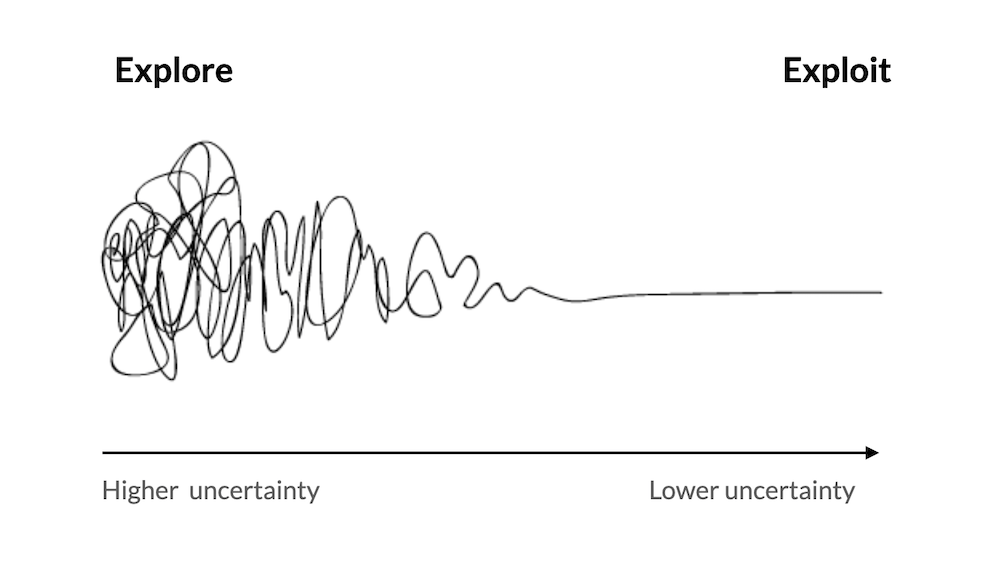
One phenomenon of network science that stands out as, well, common sense, is this thing that has a few different names. Most things, as they are only just beginning to be understood or to be useful, they have lots of different names for mostly the same thing. So for this reason, my shorthand for this is "Lévy things". A Lévy flight refers to the way our eyes jump around when we look at things, or the way animals forage. The pattern is one where you make small jumps in a limited area, then a long jump to another area, and small jumps in that new area, then a long jump to another, and so on.

"Lévy things" shows up in relation to many other word-forms - foraging behavior, foraging patterns, explore-exploit mode switching, random walks, Drunkard's walk, Brownian motion, chaos theory - and I'll use these sometimes interchangeably.

The thing that's most intriguing about this phenomenon is that it's making simple something we thought was really complicated. A "random walk" for example, sounds like it's mostly impossible to predict; that's the point of the word random, truly random. But lots of things that look random, especially in the biological world, they're really goverened by Lévy patterns, and if you plug a Lévy pattern into the behavior, it becomes way less random than you thought. And that means you can predict way more than you thought, like many aspects of seemingly unexplainable human behavior. This is also related to fractals, but because we know even less about fractals than we do Lévy flights, it's hard to say exactly how the two are related (for a non-expert). 

Startng with a simple example, from a long time ago - 


Tiny eye movements are under a surprising degree of cognitive control
Apr 2023, phys.org

A very subtle and seemingly random type of eye movement called ocular drift can be influenced by prior knowledge of the expected visual target, suggesting a surprising level of cognitive control over the eyes.

(I guess ocular drift is like a saccade but not)

Most studies of cognitive control over eye movement have covered more obvious movements, such as the "saccade" movements in which the eyes dart across large parts of the visual field. Ocular drift is tiny jitters of the eye that occur even when gaze seems fixed, and thought to improve detection of small, stationary details in a visual scene by scanning across them, effectively converting spatial details into trains of visual signals in time.

via Weill Cornell Medical College: Yen-Chu Lin et al, Cognitive influences on fixational eye movements, Current Biology (2023). DOI: 10.1016/j.cub.2023.03.026


Study shows same movement patterns used by wide range of organisms, with implications for cognition and robotics
Oct 2023, phys.org

While watching electric knifefish in an observation tank, the researchers noticed how when it was dark, the fish shimmied back and forth significantly more frequently. When lights were on, the fish swayed gently with only occasional bursts of rapid movement. Wiggling rapidly allows them to actively sense their surroundings, especially in dark water. In the light, they still make such rapid movements, just far less frequently. 

"We found that the best strategy is to briefly switch into explore mode when uncertainty is too high, and then switch back to exploit mode when uncertainty is back down." 

"If you go to a grocery store, you'll notice people standing in line will change between being stationary and moving around while waiting," Cowan said. "We think that's the same thing going on, that to maintain a stable balance you actually have to occasionally move around and excite your sensors like the knifefish. We found the statistical characteristics of those movements are ubiquitous across a wide range of animals, including humans." 

"Not a single study that we found in the literature violated the rules we discovered in the electric fish, not even single-celled organisms like amoeba sensing an electric field."

via Johns Hopkins University: Mode switching in organisms for solving explore-versus-exploit problems, Nature Machine Intelligence (2023). DOI: 10.1038/s42256-023-00745-y


Exploration—not work—could be key to a vibrant local economy
Mar 2024, phys.org

Suprise!

Infrequent trips to places like restaurants and sports facilities - not the everyday office visit or school drop-off - accounted for the majority of differences in economic outcomes between neighborhoods.

The activities with the strongest predictive power included French and New American restaurants, golf courses, hockey rinks, soccer games, and bagel shops. These kinds of activities accounted for just 2% of trips but explained more than 50% of the variation in economic outcomes between neighborhoods.

"Those irregular and infrequent activities are correlated with explorative behavior, the tendency of some groups to seek out opportunities, connect with different people, and create new businesses."

Again, trips to the office - where we earn our money - were not strongly associated with income or property values. Rather, it's how we spend our free time that drives the economic vibrancy of cities.

(Please don't tell the return-to-office people this or the people who run nyc).  

via University of Florida, MIT, and Northeastern: Shenhao Wang et al, Infrequent activities predict economic outcomes in major American cities, Nature Cities (2024). DOI: 10.1038/s44284-024-00051-7


Study uncovers neural mechanisms underlying foraging behavior in freely moving animals
Apr 2024, phys.org

They use an integrated wireless system for recording brain activity in the frontal areas of macaque brains to examine foraging tasks in real time.

Results indicate that foraging strategies are based on a cortical model of reward dynamics as animals freely explore their environment.

This research can potentially move in the direction of prosthetic devices to influence or bias choice, even noninvasively.

via Rice University Center for Neural Systems Restoration: Neda Shahidi et al, Population coding of strategic variables during foraging in freely moving macaques, Nature Neuroscience (2024). DOI: 10.1038/s41593-024-01575-w

Wednesday, July 31, 2024

Social Math and the Particle Physics of People


As a teenager I spent my lunch hour staring at strangers in the mall, trying to figure out their relationship to each other based on no criteria whatsoever, mostly because I was reading Deepak Chopra, the Celestine Prophecy, and Carlos Castaneda, and I thought maybe you really could develop superpowers and see invisible energy fields connecting people together. I did not develop Kirlian vision, but I did learn how to read mostly invisible body language and subtle interpersonal dynamics. Maybe there was some rudimentary social network mapping going on as well:


Math can help people identify the bonds of friendship
Apr 2023, phys.org

People use statistical information to determine bonds between people. It found that children as young as five can enter a room and use statistics on social cues to determine whether two people are friends.

Researchers presented participants with diagrams of social networks that showed lines drawn between two main characters and other people in the group. Participants were told that these lines indicated friendship, and importantly, researchers did not show a line connecting the two main characters. Researchers then asked participants how likely it was that the two main characters were friends.

Both children and adults thought the two main characters were friends when they had a lot of overlap in their social connections in common. This pattern was found in children as young as five years old.

Participants were also able to conclude the strength of social connections from the size of the network. For example, when a character had many mutual connections with someone with a smaller network, participants saw this as more meaningful than having many mutual connections with someone with a larger social network.

via University of Waterloo: Claudia G. Sehl et al, The social network: How people infer relationships from mutual connections., Journal of Experimental Psychology: General (2022). DOI: 10.1037/xge0001330

Totally unrelated image credit: AI Art - Artificial Meat_2 - 2024


Spike in major league home runs tied to climate change
Apr 2023, phys.org

With enough data, you can see all kinds of things

While the researchers attribute only 1% of recent home runs to climate change, they found that rising temperatures could account for 10% or more of home runs by 2100 if greenhouse gas emissions and climate change continue unabated.

"There's a very clear physical mechanism at play in which warmer temperatures reduce the density of air. Baseball is a game of ballistics, and a batted ball is going to fly farther on a warm day," said senior author Justin Mankin, an assistant professor of geography.

The researchers analyzed more than 100,000 major league games and 220,000 individual hits to correlate the number of home runs with the occurrence of unseasonably warm temperatures. 

via Dartmouth: Christopher W. Callahan et al, Global warming, home runs, and the future of America's pastime, Bulletin of the American Meteorological Society (2023). DOI: 10.1175/BAMS-D-22-0235.1


The more stakeholders are included in policy planning, the better their policies protect them
Jun 2023, phys.org

This relates to network science in that it relies on a big complex system (of people and decision making) for maximum effect

"It's a big deal that we found empirical evidence that stakeholder integration leads to better protection. There are very few published papers that show this connection empirically."

"I was pretty stunned. I thought this was going to be a different paper." (Surprise!)

via University of California Santa Barbara: Debra Perrone et al, Stakeholder integration predicts better outcomes from groundwater sustainability policy, Nature Communications (2023). DOI: 10.1038/s41467-023-39363-y

AI Art - Artificial Meat_3 - 2024

Ridesourcing platforms thrive on socio-economic inequality, say researchers
Apr 2024, phys.org

Platforms that offer rides to passengers, such as Uber and DiDi, thrive on socio-economic inequality. It explains why in some cities ridesourcing services can be big players in the mobility system, while in other cities they don't get off the ground. 

"In cities like Amsterdam, with relatively low inequality, short travel distances and well-established bicycle and public transport networks, Uber is unlikely to flourish," researcher Arjan de Ruijter explains. "Therefore, transport authorities in such cities should rather focus on providing shared bikes and scooters to improve station access."

Conversely, in cities marked by significant inequality, like Johannesburg or Rio de Janeiro, Uber-like ridesourcing platforms thrive. Various explanations, taking into account driver's and passenger's behavior, emerge in the study. The platform capitalizes on a workforce willing to accept lower wages, leading to a service with limited waiting times for passengers. Moreover, it acknowledges the demand for mobility on demand among the affluent segments of unequal societies, willing to pay for a premium-like service.

"In a society with high inequality, companies can charge higher commissions to drivers, as drivers have limited alternative labor opportunities."

"On the other hand, in societies with low inequality, all else being equal, pricing strategies must attract more selective job seekers, resulting in lower commission rates."

via Delft University of Technology: Arjan de Ruijter et al, Ridesourcing platforms thrive on socio-economic inequality, Scientific Reports (2024). DOI: 10.1038/s41598-024-57540-x


Families will change dramatically over the years to come, says study
Jan 2024, phys.org

Gentle reminder 

  • The number of relatives that an individual has is expected to decrease by more than 35% in the near future. 
  • In 1950, a 65-year-old woman had an average of 41 living relatives. By 2095, a woman of the same age will have an average of only 25 living relatives.
  • The number of cousins, nieces, nephews and grandchildren will decline sharply, while the number of great-grandparents and grandparents will increase significantly.
  • The effects will be felt less in North America and Europe and more in South America and the Caribbean. 

via Max Planck Institute for Demographic Research in Rostock, University of Buenos Aires, and University of Amsterdam: Diego Alburez-Gutierrez et al, Projections of human kinship for all countries, Proceedings of the National Academy of Sciences (2023). DOI: 10.1073/pnas.2315722120

Monday, July 29, 2024

Planet Money, Urban Planning, and the Redistribution of Social Order


No plan survives first contact with the enemy, but we can try. Or we can continue to let the richest 1% of the population make those decisions for us. Either way, it's probably a good idea to keep these things in mind:

Enhancing resilience of urban public transport systems through greater network interconnectedness
Jan 2024, phys.org

Safe-to-Fail urban mobility: Multi-modal public transportation networks integrate different modes of transportation (rail, franchised buses, green minibuses, light rail, ferries and trams) to improve resiliance to failures.

"Our findings suggest that interconnectedness offers a distinct approach to enhancing transportation resilience, beyond simply improving each system in isolation or introducing an entirely new system" 

via City University of Hong Kong: Zizhen Xu et al, Interconnectedness enhances network resilience of multimodal public transportation systems for Safe-to-Fail urban mobility, Nature Communications (2023). DOI: 10.1038/s41467-023-39999-w


Research identifies characteristics of cities that would support young people's mental health
Mar 2024, phys.org

Another example of how consumerism breeds loneliness. Public space makes social capital, whereas private space makes money. When you have to spend money in order to see other people, it's depressing.

They used an initial survey starting in April 2020 to a panel of more than 400 individuals from 53 countries, including 327 young people ages 14 to 25, from a cross-section of fields, including education, advocacy, adolescent health, mental health and substance use, urban planning and development, data and technology, housing, and criminal justice. Then they administered three sequential surveys to panelists beginning in April 2020 that asked panelists to identify elements of urban life that would support mental health for young people.

The findings suggest that creating a mental health-friendly city for young people requires investments across multiple interconnected sectors like transportation, housing, employment, health, and urban planning, with a central focus on social and economic equity.

They also require urban planning policy approaches that commit to systemic and sustained collaboration, without magnifying existing privileges through initiatives like gentrification and developing green spaces at the expense of marginalized communities in need of affordable housing.

via Johns Hopkins Bloomberg School of Public Health’s Department of Mental Health: Collins, P.Y., Sinha, M., Concepcion, T. et al. Making cities mental health friendly for adolescents and young adults. Nature 627, 137–148 (2024). https://doi.org/10.1038/s41586-023-07005-4


Public transit agencies may need to adapt to the rise of remote work, says new study
Apr 2024, phys.org

Something something opportunity 

"Transit agencies need to be very concerned"

"People mostly rely on transit to go to work. On the other hand, many people rely on vehicles for trips other than going to work - shopping, restaurants and leisure activities. Transit agencies could provide more services during the off-peak hours in residential areas to better serve remote workers."

via University of Florida, Massachusetts Institute of Technology and Peking University: Impacts of remote work on vehicle miles traveled and transit ridership in the USA, Nature Cities (2024). DOI: 10.1038/s44284-024-00057-1

Friday, July 5, 2024

No Mystery Here


As a wet bag of twitching proteins, your biosignatures are unavoidable. Everything you do sends a signal, waiting for someone, something to recognize your existence, your intent, your fate. You are not a mystery; your every move, every decision, every thought and desire, they are all being broadcast, in myriad ways. You think that CIA agent has a superpower because she can tell that you're lying by looking at the micro-twitches on your face? Nothing. We are no match for what's coming. And if we don't become half robot very soon, the Anthropocene will be marked not by plutonium or "plastic rocks" but by the sudden disappearance of humans from the fossil record. Let's begin:

Eye movements can be decoded by the sounds they generate in the ear, study shows
Nov 2023, phys.org

Fucking "ear squeaks" - 

In 2018, Groh's team discovered that the ears make a subtle, imperceptible noise when the eyes move; the Duke team now shows that these sounds can reveal where your eyes are looking.

via Duke University: Stephanie N. Lovich et al, Parametric information about eye movements is sent to the ears, Proceedings of the National Academy of Sciences (2023). DOI: 10.1073/pnas.2303562120


AI-powered satellite analysis reveals the unseen economic landscape of underdeveloped nations
Dec 2023, phys.org

The researchers used Sentinel-2 satellite images from the European Space Agency (ESA) that are publicly available. They split these images into small six-square-kilometer grids. At this zoom level, visual information such as buildings, roads, and greenery can be used to quantify economic indicators.

The key feature of their research model is the "human-machine collaborative approach," which lets researchers combine human input with AI predictions for areas with scarce data. In this research, 10 human experts compared satellite images and judged the economic conditions in the area, with the AI learning from this human data and giving economic scores to each image. The results showed that the Human–AI collaborative approach outperformed machine-only learning algorithms.

via KAIST Korea Advanced Institute of Science and Technology: Donghyun Ahn et al, A human-machine collaborative approach measures economic development using satellite imagery, Nature Communications (2023). DOI: 10.1038/s41467-023-42122-8


Artificial intelligence can predict events in people's lives, researchers show
Dec 2023, phys.org

Researchers have analyzed health data and attachment to the labor market for 6 million Danes in a model dubbed life2vec. Then they trained it, and asked for answers to general questions such as: 'death within four years'? 

Results are consistent with existing findings within the social sciences; for example, all things being equal, individuals in a leadership position or with a high income are more likely to survive, while being male, skilled or having a mental diagnosis is associated with a higher risk of dying.

In a way, this thing is sequencing the events of a person's life, and making a prediction the same way it can already look at the words in your prompt and produce what should be the expected response. 

via Technical University of Denmark, University of Copenhagen, ITU, and Northeastern University: Sune Lehmann, Using sequences of life-events to predict human lives, Nature Computational Science (2023). DOI: 10.1038/s43588-023-00573-5. 


Researchers develop algorithm that crunches eye-movement data of screen users
Feb 2024, phys.org

Hold onto your eyeballs 

Raw Eye Tracking and Image Ncoder Architecture (RETINA) can zero in on selections before people even made their decisions.

Can you read this and ask yourself on what planet you would ever want this?

The algorithm could be applied in many settings by all types of companies. For example, a retailer like Walmart could use it to enhance the virtual shopping experiences they are developing in the metaverse, a shared, virtual online world. Many of the VR devices people will use to explore the metaverse will have built-in eye tracking to help better render the virtual environment. With this algorithm, Walmart could tailor the mix of products on display in their virtual store to what a person will likely choose, based on their initial eye movements.

"Even before people have made a choice, based on their eye movement, we can say it's very likely that they'll choose a certain product," Wedel says. "With that knowledge, marketers could reinforce that choice or try to push another product instead."

The researchers are already working to commercialize the algorithm and extend their research to optimize decision-making.

"We think eye tracking will become available at very large scales"

via (get ready) University of Maryland's PepsiCo Chair in Consumer Science in the Robert H. Smith School of Business, as well as Tel Aviv University and New York University: Moshe Unger et al, Predicting consumer choice from raw eye-movement data using the RETINA deep learning architecture, Data Mining and Knowledge Discovery (2023). DOI: 10.1007/s10618-023-00989-7

AI Art - Affluent Gentleman w Money Surrounded by Envious People 2 - 2024

Study discovers neurons in the human brain that can predict what we are going to say before we say it
Feb 2024, phys.org

"Although speaking usually seems easy, our brains perform many complex cognitive steps in the production of natural speech - including coming up with the words we want to say, planning the articulatory movements and producing our intended vocalizations" 

New neural probes allow scientists to see certain neurons become active before a phoneme is spoken out loud.  

Neuropixel probes were first pioneered at Massachusetts General Hospital and are smaller than the width of a human hair, yet have hundreds of channels capable of simultaneously recording the activity of dozens or even hundreds of individual neurons"

via Massachusetts General Hospital and Harvard Medical School: Arjun R. Khanna et al, Single-neuronal elements of speech production in humans, Nature (2024). DOI: 10.1038/s41586-023-06982-w


Improving traffic signal timing with a handful of connected vehicles
Feb 2024, phys.org

With GPS data from as little as 6% of vehicles on the road, the team used connected vehicle data, resulting in a 20% to 30% decrease in the number of stops at signalized intersections.

"While detectors at intersections can provide traffic count and estimated speed, access to vehicle trajectory information, even at low penetration rates, provides more valuable data including vehicle delay, number of stops, and route selection"

via University of Michigan Center for Connected and Automated Transportation: Xingmin Wang et al, Traffic light optimization with low penetration rate vehicle trajectory data, Nature Communications (2024). DOI: 10.1038/s41467-024-45427-4

Post Script: It occurs to me that we have here one of the use cases for connected services data collected by your car likely without you knowing about it, "The team used connected vehicle data insights provided by General Motors to test its system ...".


Smartphone app uses AI to detect depression from facial cues
Feb 2024, phys.org

It's really instructive how easy it is to fuck things up real good - instead of being a boon to mental health, this sounds like complete dystopia, where humans have lost all control over their lives and live in absolute subjugation to machines infinitely smarter than us and upon whom we are hopelessly reliant for everyday existence (the simple act of unlocking your phone...)  

MoodCapture took 125,000 images of 177 participants over 90 days. A first group of participants was used to program MoodCapture; if they answered the question, "I have felt down, depressed, or hopeless" from the eight-point Patient Health Questionnaire or PHQ-8, the program correlated self-reports of feeling depressed with specific facial expressions such as gaze, eye movement, positioning of the head, and muscle rigidity, and environmental features such as dominant colors, lighting, photo locations, and the number of people in the image.

The new study shows that passive photos are key to successful mobile-based therapeutic tools, Campbell said. They capture mood more accurately and frequently than user-generated photographs—or selfies—and do not deter users by requiring active engagement.

"These neutral photos are very much like seeing someone in-the-moment when they're not putting on a veneer, which enhanced the performance of our facial-expression predictive model," Campbell said.

via Dartmouth College: MoodCapture: Depression Detection using In-the-Wild Smartphone Images, arXiv (2024). DOI: 10.1145/3613904.3642680. arxiv.org/pdf/2402.16182.pdf


AI model trained with images can recognize visual indicators of gentrification
Mar 202,4 phys.org

Wow, science
The ten-year U.S. Census and the five-year American Community Survey are aggregated by census tract rather than building by building; not sufficiently fine-grained.

Now they're using visual cues of gentrification like new construction or renovations from Google Street View images for entire cities.

They got construction permits to identify where construction was planned, and extracted data on business upscaling (laundry to coffee shop; grocery to high-end restaurant) from a national business directory. Then, manually looking at pairs of images from 2007 through 2022 from the full Google Street View data set for three cities Oakland, Denver, and Seattle.

About 74% of the time the model predicted gentrification in the same places where gentrification had been previously found in other studies.

Interestingly, the model identified a significant number of what could be false positives—census tracts the model labeled as gentrifying that had been labeled non-gentrifying in the past. These could have been errors by the model, but when the researchers looked at paired images in those census tracts, they found what looked like gentrification—new apartment buildings and neighborhood upgrades.

The conclusion: Because the model leveraged granular street-level imagery, it seemed to be spotting early signs of gentrification that previous studies had missed.

via Stanford: Tianyuan Huang et al, CityPulse: Fine-Grained Assessment of Urban Change with Street View Time Series, arXiv (2024). DOI: 10.48550/arxiv.2401.01107

Also: Tianyuan Huang et al, Detecting Neighborhood Gentrification at Scale via Street-level Visual Data, 2022 IEEE International Conference on Big Data (Big Data) (2023). DOI: 10.1109/BigData55660.2022.10020341

AI Art - Affluent Gentleman w Money Surrounded by Envious People 3 - 2024

Machine learning tools can predict emotion in voices in just over a second
Mar 2024, phys.org

As good as any human they say 

"Machine learning can be used to recognize emotions from audio clips as short as 1.5 seconds. Our models achieved an accuracy similar to humans when categorizing meaningless sentences with emotional coloring spoken by actors."

The researchers drew nonsensical sentences from two datasets - one Canadian, one German - which allowed them to investigate whether ML models can accurately recognize emotions regardless of language, cultural nuances, and semantic content.

Each clip was shortened to a length of 1.5 seconds, as this is how long humans need to recognize emotion in speech. It is also the shortest possible audio length in which overlapping of emotions can be avoided.

The emotions included in the study were joy, anger, sadness, fear, disgust, and neutral.

Deep neural networks filter sound components like frequency or pitch, for example when a voice is louder because the speaker is angry—to identify underlying emotions.

Convolutional neural networks scan for patterns in the visual representation of soundtracks, much like identifying emotions from the rhythm and texture of a voice.

This hybrid model merges both techniques.

But alas, good-as-human is not better-than-human:
"We wanted to set our models in a realistic context and used human prediction skills as a benchmark," Diemerling explained. "Had the models outperformed humans, it could mean that there might be patterns that are not recognizable by us." The fact that untrained humans and models performed similarly may mean that both rely on resembling recognition patterns, the researchers said.

via Center for Lifespan Psychology at the Max Planck Institute for Human Development: Implementing Machine Learning Techniques for Continuous Emotion Prediction from Uniformly Segmented Voice Recordings, Frontiers in Psychology (2024). DOI: 10.3389/fpsyg.2024.1300996


Robotic face makes eye contact, uses AI to anticipate and replicate a person's smile before it occurs
Mar 2024, phys.org

Coexpression - when a person, or a robot, smiles at you while you're smiling at them.

Emo is a robot that anticipates facial expressions and executes them simultaneously with a human. It can predict a forthcoming smile about 840 milliseconds before the person smiles.

Emo could predict people's facial expressions by observing tiny changes in their faces as they begin to form an intent to smile.

via the Creative Machines Lab at Columbia University School of Engineering and Applied Science: Yuhang Hu et al, Human-robot facial coexpression, Science Robotics (2024). DOI: 10.1126/scirobotics.adi4724

Also: Rachael E. Jack, Teaching robots the art of human social synchrony, Science Robotics (2024). DOI: 10.1126/scirobotics.ado5755


Exploring the factors that influence people's ability to detect lies online
Apr 2024, phys.org

People were more suspicious of others if they had themselves lied during the game, but also when other players had reported holding a statistically unlikely card.

When compared to the predictions of an artificial, simulated lie detector, poor lie detection was associated with an over-reliance on one's own honesty (or dishonesty) and an under-reliance on statistical cues.

These findings imply that honest people may be particularly susceptible to scams, because they are the least likely to suspect a lie and thus detect a scam.

Moreover, as social media platforms use recommendation systems that feed people with more of the same content they like, these systems distort the likelihood of seeing certain information - fake news included.

People's natural reliance on statistical likelihoods to infer what is true thus will not work well in these contexts.

via University College London (UCL) and Massachusetts Institute of Technology: Sarah Ying Zheng et al, Poor lie detection related to an under-reliance on statistical cues and overreliance on own behaviour, Communications Psychology (2024). DOI: 10.1038/s44271-024-00068-7