Showing posts with label networks. Show all posts

Tuesday, February 4, 2025

The Face of the Dimensional Liberator


The fractals are coming. 

New study reveals brain's fractal-like structure near phase transition, a finding that may be universal across species
Jun 2024, phys.org

Now, a new Northwestern University study has discovered that the brain's structural features reside in the vicinity of a similar critical point - either at or close to a structural phase transition. Surprisingly, these results are consistent across brains of humans, mice and fruit flies, which suggests the finding might be universal.

Although the researchers don't know between which phases the brain's structure is transitioning, they say this new information could enable new designs for computational models of the brain's complexity and emergent phenomena.

Brain cells are arranged in a fractal-like statistical pattern at different scales. Self-similarity, long-range correlations and broad size distributions are all signatures of a critical state, where features are neither too organized nor too random. 

"These are things we see in all critical systems in physics"

The researchers were amazed to find that all brain samples studied—from humans, mice and fruit flies—have consistent critical exponents across organisms, meaning they share the same quantitative features of criticality. The underlying, compatible structures among organisms hint that a universal governing principle might be at play. 

via Northwestern University Weinberg College of Arts and Sciences: Helen S. Ansell et al, Unveiling universal aspects of the cellular anatomy of the brain, Communications Physics (2024). DOI: 10.1038/s42005-024-01665-y

Image credit: Cross section of European beach grass Ammophila arenaria leaf - Gerhard Vlcek Nikon Small World 7th Place - 2024 [link]


Can a computer chip have zero energy loss in 1.58 dimensions?
Jul 2024, phys.org

Many states without energy loss might exist somewhere in between one and two dimensions. At 1.58 dimensions - By growing a chemical element (bismuth) on top of a semiconductor (indium antimonide), the scientists in China obtained fractal structures that were spontaneously formed, upon varying the growth conditions. The scientists in Utrecht then theoretically showed that, from these structures, zero-dimensional corner modes and lossless one-dimensional edge states emerged.

"The fractals behave like two dimensional topological insulators at finite energies and at the same time exhibit, at zero energy, a state at its corners that could be used as a qubit, the building blocks of quantum computers. Hence, the discovery opens new paths to the long-wished qubits."

In follow-up research, the experimental group in China will try to grow a superconductor on top of the fractal structure. These fractals have many holes, and there are lossless currents running around many of them. Those could be used for energy efficient processing of information. They also exhibit zero-energy modes at their corners, thus combining the best of the one-dimensional and two-dimensional worlds. "If this works, it might reveal even more unexpected secrets hidden at dimension 1.58."

via the QuMAT consortium at Utrecht University and Shanghai Jiao Tong University: Canyellas, R., et al. Topological edge and corner states in bismuth fractal nanostructures. Nature Physics (2024). DOI: 10.1038/s41567-024-02551-8

Required Post Script:
If you didn't think you'd be getting an obligatory Isaac Asimov lesson here then I don't know where you think you are: Isaac Asimov wrote a story called Robot Dreams, and that's where we get our Laws of Robotics. Seriously, and this is why science and art need each other to continue to be relevant to humans. In the story, a robot named Elvex (LVX-1) is updated with "fractal geometry" because they thought it would "produce a brain pattern with more complexity, possibly closer to that of a human". The robot begins to dream about self-preservation, in direct opposition to the Laws of Robots, and is subsequently killed ("killed").


Physicists explain how fractional charge in pentalayer graphene could work
Nov 2024, phys.org

Fractal Man, explained:

They found that the moiré arrangement of pentalayer graphene, in which each lattice-like layer of carbon atoms is arranged atop the other and on top of the boron-nitride, induces a weak electrical potential. When electrons pass through this potential, they form a sort of crystal, or a periodic formation, that confines the electrons and forces them to interact through their quantum correlations.

This electron tug-of-war creates a sort of cloud of possible physical states for each electron, which interacts with every other electron cloud in the crystal, in a wavefunction, or a pattern of quantum correlations, that gives the winding that should set the stage for electrons to split into fractions of themselves.

"This is a completely new mechanism, meaning in the decades-long history, people have never had a system go toward these kinds of fractional electron phenomena."

Note: Two other research teams - one from Johns Hopkins University, and the other from Harvard University, the University of California at Berkeley, and Lawrence Berkeley National Laboratory - have each published similar results in the same issue.

via MIT: Zhihuan Dong et al, Theory of Quantum Anomalous Hall Phases in Pentalayer Rhombohedral Graphene Moiré Structures, Physical Review Letters (2024). DOI: 10.1103/PhysRevLett.133.206502.


Monday, January 27, 2025

The Paradigm Liberation Front


This weblog is typically avoiding all things health-related, and because that's a mess that can swallow you whole, but this is from the Santa Fe Institute. Along with the Complexity Hub in Vienna, and sometimes the RIKEN Institute in Japan, the Santa Fe Institute is the premier institution in the world for those interested in the other side of the cutting edge of science, where the rules haven't been written yet, and all the departments kind sound like each other:

Western diets pose greater risk of cancer and inflammatory bowel disease
Jul 2024, phys.org

From SFI's new outpost in Ireland: They examined Mediterranean, high-fiber, plant-based, high-protein, ketogenic, and Western diets, to underscore the detrimental effects of the Western diet, characterized by high fat and sugar intake, compared to the benefits of diets rich in plant-based and high-fiber foods. By contrast, it finds that a Mediterranean diet, high in fruits, vegetables, is effective in managing conditions such as cardiovascular disease, IBD, and type 2 diabetes.

via APC Microbiome Ireland, an SFI Research Centre at University College Cork, and Teagasc: Fiona C. Ross et al, The interplay between diet and the gut microbiome: implications for health and disease, Nature Reviews Microbiology (2024). DOI: 10.1038/s41579-024-01068-4


How higher-order interactions can remodel the landscape of complex systems
Oct 2024, phys.org

Higher-order interactions can lead to deeper "basins of attraction," which are collections of starting points that end up at the same state as the system moves forward in time. If the system were a pendulum, the lowest point is an attractor, and every possible starting point is in the basin of attraction because they all eventually converge there. 

If the system were a brain working through a complicated math problem, then the thought processes that lead to a solution—hopefully the correct one—are in the basin of attraction. A deeper basin means that the solutions are more stable—that is, starting points get to the bottom faster or more quickly recover from small perturbations.

But even though the basins get deeper, they become narrower. What starting points do end up in the basin get there faster, but overall, fewer starting points lead to the bottom.

via Santa Fe Institute: Yuanzhao Zhang et al, Deeper but smaller: Higher-order interactions increase linear stability but shrink basins, Science Advances (2024). DOI: 10.1126/sciadv.ado8049.


This one is old as hell:
Aging societies more vulnerable to collapse, suggests analysis
Dec 2023, phys.org

This new study shows that pre-modern states faced a steeply increasing risk of collapse within the first two centuries after they formed.

"This approach is commonly used to study the risk of death in aging humans, but nobody had the idea to look at societies this way." 

In humans, the risk of dying doubles approximately every six to seven years after infancy. As that exponential process compounds with great age, few people survive more than 100 years. The authors show that it works differently for states. Their risk of termination rises steeply over the first two centuries but then levels off, allowing a few to persist much longer than usual.

They found a similar pattern all over the world from European pre-modern societies to early civilizations in the Americas to Chinese dynasties. (Gulps in American)

via Santa Fe Institute: Marten Scheffer et al, The vulnerability of aging states: A survival analysis across premodern societies, Proceedings of the National Academy of Sciences (2023). DOI: 10.1073/pnas.2218834120

RIKEN calling in:
Chaotic dynamics in the brain may enable probabilistic thinking
Jul 2024, phys.org    

Even when watching a blank screen with no sound, neurons in the cortex fluctuate spontaneously. Some experiments suggest that this spontaneous activity corresponds to the brain ruminating over imagined possible scenarios—perhaps based on sensory inputs the brain has been presented with in the past, and that this activity follows chaotic dynamics.

The pair fed a computational neural network, driven by chaotic dynamics, with sensory inputs about an object's location.

"One neuron would fire for the object being in the north, another for it being in the northeast, and so on." At any one moment, because of the chaos, the firing neuron can change irregularly. But when averaged over time, the frequency of neurons firing mapped to the correct probability for the object's location.

"In our model, the ultimate probabilistic distribution is robust and gives nearly optimal results, despite the chaos."

via RIKEN: Yu Terada et al, Chaotic neural dynamics facilitate probabilistic computations through sampling, Proceedings of the National Academy of Sciences (2024). DOI: 10.1073/pnas.2312992121

Post Script: Spoken like someone who works at RIKEN: "Today's AI is very good, but it's not blowing our minds"


Exploring the evolution of social norms with a supercomputer
Aug 2024, phys.org

RIKEN meets the Max Planck Institute for Evolutionary Biology; you're in some sh** now:

Thye've created an arena of natural selection (artificial selection) for social norms, so they fight it out and see who wins. This is hard because the norms added to the model, the more complex the interactions. But that's ok, because they used RIKEN's Fugaku, one of the fastest supercomputers worldwide.

They analyzed the reputation dynamics among all 2,080 norms of a natural complexity class, the so-called "third-order norms."

The research shows that cooperative norms are difficult to sustain if the population consists of a single well-mixed community. However, if the population is subdivided into several smaller communities, cooperative norms evolve more easily.

The most successful norm in the simulations is particularly simple. It views cooperation as universally positive and defection as generally negative—except when defection is used as a means to discipline other defectors.

It suggests that the structure of a population significantly influences which social norms prevail and how durable cooperation is. 

via RIKEN Center for Computational Science and Max Planck Institute for Evolutionary Biology in Plön: Yohsuke Murase et al, Computational evolution of social norms in well-mixed and group-structured populations, Proceedings of the National Academy of Sciences (2024). DOI: 10.1073/pnas.2406885121


Saturday, January 25, 2025

Peak Climate Confusion


There's a lot happening in the climate news, but Network Address is less interested in the facts, and more interested in the meta-facts, like how many superlatives an article uses, or how many new words have to be coined in order to keep track of what the heck is going on, or just cases where the weather centers monitoring disasters are themselves in the disaster zone, or maybe just outer space observatories that were never meant to be weather stations yet provide more accurate data than actual weather stations. It's all in there:

But first! More examples of scientists saying the word "crazy"
Hurricane Beryl supercharged by ‘crazy’ ocean temperatures, experts say
Jul 2024, The Guardian

“In the Caribbean Sea it has actually been warmer than its usual peak since mid-May, which is absolutely crazy,” said McNoldy. “If the ocean already looks like it’s the peak of hurricane season, we are going to get peak hurricanes.” [Not just crazy but absolutely crazy.]


Shipping emissions regulations enacted in 2020 improved air quality but accelerated warming
Aug 2024, phys.org

Regulations put into effect in 2020 by the International Maritime Organization required a roughly 80% reduction in the sulfur content of shipping fuel used globally.

They scanned over a million satellite images and quantified the declining count of ship tracks, estimating a 25 to 50% reduction in visible tracks. Where the cloud count was down, the degree of warming was generally up.

Further work by the authors simulated the effects of the ship aerosols in three climate models and compared the cloud changes to observed cloud and temperature changes since 2020. Roughly half of the potential warming from the shipping emission changes materialized in just four years, according to the new work. In the near future, more warming is likely to follow as the climate response continues unfolding. (Although it is noted that the magnitude of warming in 2023 is too significant to be attributed to the emissions change alone, according to their findings.)

via Department of Energy's Pacific Northwest National Laboratory: A. Gettelman et al, Has Reducing Ship Emissions Brought Forward Global Warming?, Geophysical Research Letters (2024). DOI: 10.1029/2024GL109077


Say something about the speed of new word occurrence in a general field as related to a kind of turbulence or unpredictability or some kind of measurement of entropy in a system: 

Mexico counting dead from 'zombie storm' John
Sep 2024, BBC News

The term "zombie storm" was first used by meteorologists from the US National Weather Service in 2020 to describe a storm which dissipates only to regenerate again.

This storm hit Mexico's Pacific Coast, then dissipated over the mountains before regaining strength over the waters of the Pacific and hitting the Mexican coast a second time.


We’re only beginning to understand the historic nature of Helene’s flooding
Sep 2024, Eric Berger for Ars Technica

The National Climatic Data Center maintains the world's largest climate data archive and provides historical perspective to put present-day weather conditions and natural disasters into context in a warming world due to climate change.

Unfortunately, the National Climatic Data Center is based in Asheville, North Carolina. As I write this, the center's website remains offline. That's because Asheville, a city in North Carolina's Blue Ridge Mountains, is the epicenter of catastrophic flooding from Hurricane Helene that has played out over the last week. The climate data facility is inoperable because water and electricity services in the region have entirely broken down due to flooding.

N.J. weather - Is this our driest October ever?
Oct 2024, nj.com

So many superlatives:
If our long streak of dry weather continues, this not only will turn out to be the driest October in most areas of New Jersey — but also the driest of any month on record.

If the month ended today, this would be the driest October ever recorded in the Newark, Trenton and Atlantic City areas, as well as New York City and Philadelphia.

It also would be number one for the least amount of rain to fall from the sky in any month of any year — not just October, according to the weather data.


Observatory finds local 1.1 ºC increase in 20 years, twice as much as predicted by climate models
Oct 2024, phys.org

Surprise - At the observatory, the weather station has sent data on temperature, relative humidity, atmospheric pressure and wind speed and direction every two seconds for the past twenty years. "The station was built with the intention to have some guidance for telescope operations, not to characterize local weather professionally, let alone the effects of climate change on the measured parameters. But the fact that they were relatively low-cost devices has been an advantage, since they had to be changed and recalibrated every two years or so, which has favored the reliability of the data and greatly limited the effects of long-term sensor drifts, which are difficult to detect."

But alas - The experimental data obtained show an increase of 1.1ºC over the past 20 years, i.e., 0.55ºC per decade. This is more than double the increase predicted by climate models for the same area, and even more than expected for the next 20 years.

via Department of Physics of the Autonomous University of Barcelona and the Roque de los Muchachos  Observatory: Markus Gaug et al, Detailed analysis of local climate at the CTAO-North site on La Palma from 20 yr of MAGIC weather station data, Monthly Notices of the Royal Astronomical Society (2024). DOI: 10.1093/mnras/stae2214


'Doomsday' Antarctic glacier melting faster than expected, fueling calls for geoengineering
Nov 2024, phys.org

This is about glacial geoengineering not just the "regular kind" (i.e., stratospheric injection)

One example - creating a giant submarine curtain that would at least partially prevent warm tidal currents from reaching the glacier ice. 

via the Columbia University Climate School


Unexplained heat-wave 'hotspots' are popping up across the globe
Nov 2024, phys.org

Just here for the ad copy:

Distinct regions are seeing repeated heat waves that are so extreme, they fall far beyond what any model of global warming can predict or explain.

For instance, a nine-day wave that hammered the U.S. Pacific Northwest and southwestern Canada in June 2021 broke daily records in some locales by 30°C, or 54°F. This included the highest ever temperature recorded in Canada, 121.3°F, in Lytton, British Columbia. The town burned to the ground the next day ... .

via Columbia Climate School's Lamont-Doherty Earth Observatory: Kai Kornhuber et al, Global emergence of regional heatwave hotspots outpaces climate model simulations, Proceedings of the National Academy of Sciences (2024). DOI: 10.1073/pnas.2411258121

You know we're having a problem making sense of what's happening with the climate when we're willing to take into consideration the quantum effects of water:

Quantum mechanism identified as a key to accelerating ocean temperatures
Nov 2024, phys.org

Professor Smith said the apparent role of non-thermal energy in accelerating ocean temperatures now needs to be factored into climate models:

"When ocean water is heated by radiation from the sun and the sky it stores energy not only as heat, but as hybrid pairs of photons coupled to oscillating water molecules.

"These pairs are a natural form of quantum information, different to the information researchers are pursuing in the development of quantum computing. This extra store of energy has always been present and aided ocean thermal stability prior to 1960.

"But now the average heat dissipated overnight from each day's heating is no longer stable as extra heat input from Earth's atmosphere raises both forms of stored energy [including the quantum energy described above]."

via University of Technology Sydney: G B Smith, A many-body quantum model is proposed as the mechanism responsible for accelerating rates of heat uptake by oceans as anthropogenic heat inputs rise, Journal of Physics Communications (2024). DOI: 10.1088/2399-6528/ad8f11


On the heels of recent concern over the use of the word "tipping point" as having become kind of useless, and the scientific community is asking to stop using the word because it's confusing and counterproductive:

Rapid surge in global warming mainly due to reduced planetary albedo, researchers suggest
Dec 2024, phys.org

Far worse than expected - not only is it yes to the shipping sulfur aerosols, but also the warming itself is doing this, which means we've passed the tipping point (decades early).

"The 0.2-degree-Celsius 'explanation gap' for 2023 is currently one of the most intensely discussed questions in climate research."

One trend appears to have significantly affected the reduced planetary albedo: the decline in low-altitude clouds in the northern mid-latitudes and the tropics. In this regard, the Atlantic particularly stands out, i.e., exactly the same region where the most unusual temperature records were observed in 2023. [Albedo being the reflection of sunlight back off the earth, so that it never accumulates as heat.]

"It's conspicuous that the eastern North Atlantic, which is one of the main drivers of the latest jump in global mean temperature, was characterized by a substantial decline in low-altitude clouds not just in 2023, but also—like almost all of the Atlantic—in the past 10 years." 

It appears global warming itself is reducing the number of low clouds.

"If a large part of the decline in albedo is indeed due to feedbacks between global warming and low clouds, as some climate models indicate, we should expect rather intense warming in the future. We could see global long-term climate warming exceeding 1.5 degrees Celsius sooner than expected to date."

via Alfred Wegener Institute, Helmholtz Center for Polar and Marine Research, and European Center for Medium-Range Weather Forecasts: Helge F. Goessling, Recent global temperature surge intensified by record-low planetary albedo, Science (2024). DOI: 10.1126/science.adq7280.

Saturday, January 4, 2025

Measuring Things for Old Time's Sake


Starting with a stretch, this first one requires some concentration. We're talking about macro time vs micro time, and one where the time is measured by genetic changes. It's a new way to measure evolutionary time. Also it's scalar, which means fractals:

New research shows microevolution can be used to predict how evolution works on much longer timescales
May 2024, phys.org

By compiling and analyzing datasets from existing species and from fossils, researchers showed the evolvability responsible for microevolution (the evolution of a species over a few generations) of many different traits predicts the amount of change observed between populations and species separated by up to one million years (macroevolution).

"Darwin suggested that species gradually evolve, but what we found is that even though populations rapidly evolve over the short term, this (short-term) evolution doesn't accumulate over time. However, how divergent populations and species are, on average, over long periods of time still depends on their ability to evolve on the short term." 

via Norwegian University of Science and Technology Department of Biology: Agnes Holstad et al, Evolvability predicts macroevolution under fluctuating selection, Science (2024). DOI: 10.1126/science.adi8722

Further reading, from above: Traits with higher evolvability change rapidly because they are able to respond to environmental changes more quickly.

Highly evolvable traits can rapidly respond to these fluctuations in selection and will fluctuate over time with high amplitude. Traits with little evolvability will also fluctuate but more slowly and thus with lower amplitude.

"Populations or species that are geographically distant from each other are exposed to environments whose fluctuations are not synchronized. Consequently, these populations will have different trait values, and the size of this difference will depend on the amplitude of the trait's fluctuation, and therefore on the evolvability of the trait."

Note: "Evolvability" depends on the amount of heritable (genetic) variation in a species (which sounds like heterozygosity?).


Researchers more precisely calculate how much faster time passes on the moon
Jul 2024, phys.org

The team found that time on the moon ticks by at 0.0000575 seconds faster per day (57.50 µs/d) than it does on Earth. Based on that number, other calculations can be made - if a person were to live on the moon for 274 years, for example, they would be 5.76 seconds older than they would be had they lived on Earth all that time.

It doesn't seem like a big deal until you try to do something like dock with a space station.

via NASA's Jet Propulsion Laboratory at the California Institute of Technology: Slava G. Turyshev et al, Time transformation between the solar system barycenter and the surfaces of the Earth and Moon, arXiv (2024). DOI: 10.48550/arxiv.2406.16147


Why timekeeping is now on the verge of a giant leap forward in accuracy
Nov 2024, phys.org

Atomic clocks are about to be replaced by nuclear clocks that can use the Thorium atom instead of the Cesium or Strontium atom, because it has a faster electron transition, so with it we can measure time to the nineteenth decimal place, possibly redefining the second by 2030.

Some background:
  • Water clocks appeared around 2,000BC and measure time by regulating the flow of water into or out of a vessel.
  • The mechanical clock was established in the late 13th century.
  • Until 1967, a second was defined as 1/86,400 of a day.
  • The International System of Units then changed things: "The second… is defined by taking the… transition frequency of the cesium-133 atom, to be 9192631770 when expressed in the unit Hz, which is equal to s⁻¹."

Bonus: 
Scientists successfully create a time crystal made of giant atoms
Jul 2024, phys.org

via Vienna University of Technology Institute of Theoretical Physics and Tsinghua University: Xiaoling Wu et al, Dissipative time crystal in a strongly interacting Rydberg gas, Nature Physics (2024). DOI: 10.1038/s41567-024-02542-9.

Friday, January 3, 2025

Entropy Engineering and Social Syncopation


Singing researchers find cross-cultural patterns in music and language
May 2024, phys.org

An international team of researchers recorded themselves performing traditional music and speaking in their native language. In all 50+ languages, the rhythms of songs and instrumental melodies were slower than those of speech, while the pitches were higher and more stable.

Speculating on underlying reasons for the cross-cultural similarities, Savage suggests songs are more predictably regular than speech because they are used to facilitate synchronization and social bonding.

"Slow, regular, predictable melodies make it easier for us to sing together in large groups," he says. "We're trying to shed light on the cultural and biological evolution of two systems that make us human: music and language."

via Max Planck Institute for Psycholinguistics in Nijmegen: Yuto Ozaki et al, Globally, songs and instrumental melodies are slower, higher, and use more stable pitches than speech: A Registered Report, Science Advances (2024). DOI: 10.1126/sciadv.adm9797. 


Neuroplasticity study shows how singing rehabilitates speech production in post-stroke aphasia
May 2024, phys.org

According to the findings, singing repairs the structural language network of the brain. The language network processes language and speech in our brain. In patients with aphasia, the network has been damaged.

"For the first time, our findings demonstrate that the rehabilitation of patients with aphasia through singing is based on neuroplasticity changes"

via University of Helsinki: Aleksi J. Sihvonen et al, Structural Neuroplasticity Effects of Singing in Chronic Aphasia, eNeuro (2024). DOI: 10.1523/ENEURO.0408-23.2024


Study shows the power of social connections to predict hit songs
Jun 2024, phys.org

The team analyzed data from last.fm, analyzing 2.7 million users, 10 million songs, and 300 million plays, along with networks of mapping friendships and another capturing influence dynamics (who listens to a song and who follows suit). 

Examining the first 200 plays of a new song, they predicted its chances of becoming a hit.

The researchers improved the precision of predicting hit songs from 14% to 21%.

Existing models often focus on artist fame and listening metrics, but the CSH study highlights the overlooked social aspect - musical homophily, which is the tendency for friends to listen to similar music.

via Complexity Science Hub Vienna: Niklas Reisz et al, Quantifying the impact of homophily and influencer networks on song popularity prediction, Scientific Reports (2024). DOI: 10.1038/s41598-024-58969-w


Understanding the synchronization of physiological states during a live music performance
Jul 2024, phys.org

"Music-induced synchronization of heart rate may be the mechanism underlying the coherent behavior of a large audience in a theater." 

Synchronization of physical and cognitive processes is better within an individual compared to that between different individuals; and heart rate synchronization in response to music depends on the reliable physiological responses of the listener, not on their mood or music preferences.

Note that in the study, to guage mood, they had participants in the study listen to the same piece of music on different days. And to quantify the influence of music preference on heart rate synchronization, he investigated whether a person listening to a piece of music selected by the researcher differed in synchronization response to a piece of music that deeply moves them when played in a randomized order.

Why - "From data on small audiences, for example, the degree of proficiency of performers, commercial success can be predicted in terms of reliability."

via Waseda University: Ryota Nomura, Reliability for music-induced heart rate synchronization, Scientific Reports (2024). DOI: 10.1038/s41598-024-62994-0


Classical music lifts our mood by synchronizing our 'extended amygdala'
Aug 2024, phys.org

The study focused on 13 patients with treatment-resistant depression who already had electrodes implanted in their brains for the purpose of deep-brain stimulation. These implants are placed in a circuit connecting two areas in the forebrain—the bed nucleus of the stria terminalis (BNST) and the nucleus accumbens (NAc). Using these implants, the researchers found that music generates its antidepressant effects by synchronizing the neural oscillations between the auditory cortex, which is responsible for processing of sensory information, and the rewards circuit, which is responsible for processing emotional information.

The patients in the study were assigned to two groups: low music appreciation or high music appreciation. Those in the high music appreciation group demonstrated more significant neural synchronization and better antidepressant effects, while those in the low music appreciation group showed poorer results.  

via Center for Functional Neurosurgery at Shanghai Jiao Tong University: uditory entrainment coordinates cortical-BNST-NAc triple time locking to alleviate the depressive disorder, Cell Reports (2024). DOI: 10.1016/j.celrep.2024.114474. 

Intermission on sonic superpowers:
Singing from memory unlocks a surprisingly common musical superpower
Aug 2024, phys.org

They asked people to sing out any earworms they were experiencing and record them on their phones when prompted at random times throughout the day, and found the majority perfectly matched the pitch of the original songs.

"Surprisingly large portion of the population has a type of automatic, hidden 'perfect pitch' ability."

They think it depends on whether the music was recalled deliberately or as a result of an "earworm", which is why they asked people to record themselves as soon as they hear one in their head. So now they think there may be something unique about musical memories and the ways they are encoded and maintained inside our brains.

via University of California Santa Cruz: Matthew G. Evans et al, Absolute pitch in involuntary musical imagery, Attention, Perception, & Psychophysics (2024). DOI: 10.3758/s13414-024-02936-0


Below are a couple articles recalling the genius of Leonard B. Meyer

Bach, Mozart or jazz: Scientists provide a quantitative measure of variability in music pieces
Nov 2024, phys.org

They even mention Meyer in the write up: "According to Meyer, emotions and meaning in music arise from the interplay of expectations and their fulfillment or (temporary) non-fulfillment."

Sorry I have to copy mostly the whole thing, because this stuff is complicated:

They used time series analysis to infer how similar a tone sequence is to previous sequences (the autocorrelation function of musical pitch sequences).

They analyzed more than 450 jazz improvisations and 99 classical compositions, and found the autocorrelation function of pitches initially decreases slowly with the time difference. This expresses a high similarity and possibility to anticipate musical sequences. 

However, they found that there is a time limit, after which this similarity and predictability ends relatively abruptly. For larger time differences, the autocorrelation function and memory are both negligible.

Of particular interest here are the values of the transition times of the pieces where the more predictable behavior changes into a completely unpredictable and uncorrelated behavior. Depending on the composition or improvisation, the scientists found transition times ranging from a few quarter notes to about 100 quarter notes. Jazz improvisations typically had shorter transition times than many classical compositions, and therefore were usually less predictable.

Differences could also be observed between different composers. For example, the researchers found transition times between five and twelve quarter notes in various compositions by Johann Sebastian Bach, while the transition times in various compositions by Mozart ranged from eight to 22 quarter notes. This implies that the anticipation and expectation of the musical progression tends to last longer in Mozart's compositions than in Bach's compositions, which offer more variability and surprises.

via Max Planck Institute for Dynamics and Self-Organization and the University of Göttingen: Corentin Nelias et al, Stochastic properties of musical time series, Nature Communications (2024). DOI: 10.1038/s41467-024-53155-y


Study explores how brain waves reflect melody predictions while listening to music
Nov 2024, phys.org

We aimed to disentangle the frequency-specific neural dynamics linked to melodic prediction uncertainty (modeled as entropy) and prediction error (modeled as surprisal) for temporal (note onset) and content (note pitch) information."

They recruited 20 participants, half of whom were professional pianists, to listen to 10 piano melodies extracted from the work of Johann Sebastian Bach, each lasting approximately 150 seconds, and while being recorded using electroencephalography (EEG).

"An analysis of the temporal response function (TRF) weights revealed that the temporal predictability of a note (entropy of note onset) may be encoded in the delta- (1–4 Hz) and beta-band (12–30 Hz) brain activity prior to the stimulus, suggesting that these frequency bands associate with temporal predictions."

via Max Planck Institute for Human Cognitive and Brain Sciences: Juan-Daniel Galeano-Otálvaro et al, Neural encoding of melodic expectations in music across EEG frequency bands. European Journal of Neuroscience(2024). DOI: 10.1111/ejn.16581

Further Reading for Meyer-like things:

Friday, December 20, 2024

Inside the World of the LSD User


The spread of misinformation varies by topic and by country in Europe, study finds
May 2024, phys.org

Researchers analyzed news activity on Twitter (now X) in France, Germany, Italy and the UK from 2019 to 2021, including a focus on news about Brexit, the coronavirus, and the COVID vaccines. Each news source they analyzed was rated as either "reliable" or "questionable" based upon their NewsGuard score.
  • Across all four countries, the vast majority of users only ever consumed reliable news sources on each of the three topics.
  • But in every country and in each topic, there was always a small percentage of users who only ever consumed questionable news sources - with very few people consuming a mix of both reliable and questionable sources.
  • Germany had the highest ratio of questionable news retweets to reliable news retweets on all three topics, with France in second, followed by Italy, and the UK had the lowest proportion of questionable news retweets overall.
  • Italy had the lowest proportion of questionable news retweets for the topic of the coronavirus - but had the highest percentage of people consuming only questionable news sources on Brexit.

"Cultural nuances" will be important when it comes to fighting misinformation.

via Ca' Foscari University of Venice: News and misinformation consumption: A temporal comparison across European countries, PLoS ONE (2024). DOI: 10.1371/journal.pone.0302473

Image credit: 3D printed vacuum system traps dark matter - University of Nottingham - Jun 2024


Study finds avoiding social media before an election has little to no effect on people's political views
May 2024, phys.org

35,000 Facebook and Instagram users who were paid to stay off the platforms in the run-up to Election Day.

I'm thinking about the overall social influence, like if you're not online but your friends are, it's all the same. So if they did this study by taking only the friends of the people chosen, then we would see an effect? (Friendship Paradox)

via Stanford: Gentzkow, Matthew, The effects of Facebook and Instagram on the 2020 election: A deactivation experiment, Proceedings of the National Academy of Sciences (2024). DOI: 10.1073/pnas.2321584121.


Mental disorders may spread in young people's social networks
May 2024, phys.org

Contagion - 700,000 ninth-grade pupils born between 1985 and 1997 from 860 Finnish schools followed for 11 years (largest and most comprehensive so far on the spread of mental disorders in social networks).

The number of classmates diagnosed with a mental disorder was associated with a higher risk of receiving a mental disorder diagnosis later in life.

The connection observed in the study is not necessarily causal. "It may be possible, for instance, that the threshold for seeking help for mental health issues is lowered when there are one or more people in your social network who have already sought help for their problems" (beneficial contagion).

via University of Helsinki: Jussi Alho et al, Transmission of Mental Disorders in Adolescent Peer Networks, JAMA Psychiatry (2024). DOI: 10.1001/jamapsychiatry.2024.1126

Dual-species Rydberg array combining rubidium and cesium atoms to enhance quantum computing - BernienLab at University of Chicago - Oct 2024 [link]

Study suggests less conformity leads to more innovation
May 2024, phys.org

These methods reveal something crazy - how easy it could be to manipulate a big part of a population just by doing some very small adjustments to the recommendation algorithms, and the idea of synthetic networks cycling through the real networks as a kind of social regulator.

  • The Matthew effect aka "rich-get-richer effect" increases centralization in the network, which destroys the niches protecting minority opinions, reducing sociodiversity.
  • "Networks that promote sociodiversity have structural features that protect minority opinions"
  • "Unfollowing a few VIPs can help to promote sociodiversity"

via Complexity Science Hub and ETH Zurich: Andrea Musso et al, How networks shape diversity for better or worse, Royal Society Open Science (2024). DOI: 10.1098/rsos.230505


Misleading COVID-19 headlines from mainstream sources did more harm on Facebook than fake news
May 2024, phys.org

They showed thousands of survey participants the headlines from 130 vaccine-related stories - including both mainstream content and known misinformation - and tested how those headlines impacted their intentions to get vaccinated against COVID-19. Researchers also asked a separate group of respondents to rate the headlines across various attributes, including plausibility and political leaning. They matched that against 13,206 vaccine-related URLs and the number of users who viewed each.
  • Misleading content from mainstream news sources - rather than outright misinformation or "fake news" - was the primary driver of vaccine hesitancy on Facebook.
  • "Vaccine-skeptical" content was potentially misleading but not flagged as misinformation by Facebook fact-checkers.
  • One factor reliably predicted impacts on vaccination intentions: the extent to which a headline suggested that the vaccine was harmful to a person's health.
  • The most-viewed was an article was from a well-regarded mainstream news source, and its clickbait" headline was highly suggestive and implied that the vaccine was likely responsible.
  • (That's significant since the vast majority of viewers on social media likely never click out to read past the headline.)
  • Contrary to popular perceptions, the researchers estimated that vaccine-skeptical content reduced vaccination intentions 46 times more than misinformation flagged by fact-checkers.
  • Even though flagged misinformation was more harmful when seen, it had relatively low reach.
  • Gray-area content is less harmful per exposure but is seen far more often, thus it's more impactful overall.
(Also, what does this mean about actual advertising metrics?)

via MIT Sloan School of Management: Jennifer Allen, Quantifying the impact of misinformation and vaccine-skeptical content on Facebook, Science (2024). DOI: 10.1126/science.adk3451.


Advertisers may be inadvertently funding misinformation
Jun 2024, phys.org

(I think we're starting to see a pattern here.)

5,000 websites (1,250 were misinformation websites); 42,000 unique advertisers; nine million instances of advertising companies appearing on news websites from 2019 to 2021. 

The companies advertising on misinformation websites accounted for anywhere from 46% to 82% of overall companies in their respective industries.

Companies that used digital advertisement platforms were 10 times more likely to appear on misinformation websites than those that did not.

Authors propose two low-cost, scalable interventions: 
  • Improve transparency for advertisers about where their ads appear 
  • Make it easier for consumers to identify which companies advertise on misinformation outlets through information disclosures and company rankings

via Carnegie Mellon University's Heinz College and Stanford: Wajeeha Ahmad et al, Companies inadvertently fund online misinformation despite consumer backlash, Nature (2024). DOI: 10.1038/s41586-024-07404-1

Entangling pairs of photons using 1.2 micrometer niobium oxide dichloride - Leevi Kallioniemi at Nanyang Technological University in Singapore - Oct 2024 [link]

Study suggests ambivalence and polarized views can promote political violence
Jun 2024, phys.org

Time to get confused! 

Previous research has shown that ambivalence about a political issue typically leads people to avoid taking moderate actions such as voting or donating money in support of that issue.

And that's why these findings for extreme behaviors surprised the researchers.

Here, researchers found that ambivalence can actually lead some people - especially those with polarized views - to be more supportive of extreme actions.

The reason? Ambivalence creates discomfort in those with extreme views by making them feel weak or insecure about their beliefs - and that can lead them to compensate.

"When people have these polarized views on a political topic, but also feel some conflict about that belief - that is really a potent combination."

"Those who are conflicted are more willing to give their money to extreme organizations."

"Those who have extreme views, but still feel conflicted about them, feel a need to prove themselves, to show that their beliefs are real and strong."

via Ohio State University: Joseph Siev, Ambivalent attitudes promote support for extreme political actions, Science Advances (2024). DOI: 10.1126/sciadv.adn2965.

Wednesday, August 7, 2024

Every Move You Make


Network science is one of the most rapidly advancing fields of science, and looks more every day to be critical to plugging major holes in the most fundamental of physics, of sociology, of cognition, you name it.

Image credit: I use the same thumbnail every time, can't get more illustrative than that.

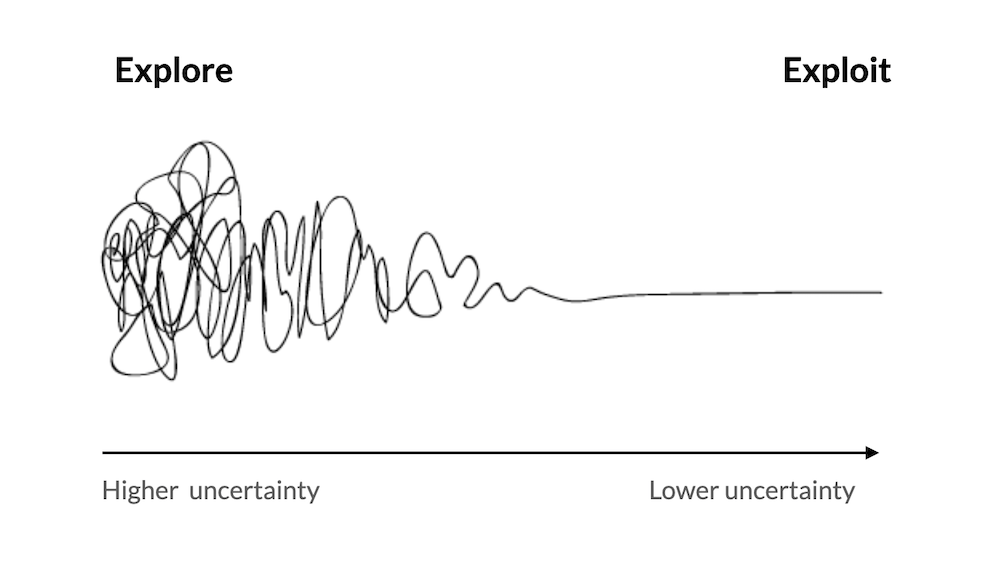
One phenomenon of network science that stands out as, well, common sense, is this thing that has a few different names. Most things, as they are only just beginning to be understood or to be useful, they have lots of different names for mostly the same thing. So for this reason, my shorthand for this is "Lévy things". A Lévy flight refers to the way our eyes jump around when we look at things, or the way animals forage. The pattern is one where you make small jumps in a limited area, then a long jump to another area, and small jumps in that new area, then a long jump to another, and so on.

"Lévy things" shows up in relation to many other word-forms - foraging behavior, foraging patterns, explore-exploit mode switching, random walks, Drunkard's walk, Brownian motion, chaos theory - and I'll use these sometimes interchangeably.

The thing that's most intriguing about this phenomenon is that it's making simple something we thought was really complicated. A "random walk" for example, sounds like it's mostly impossible to predict; that's the point of the word random, truly random. But lots of things that look random, especially in the biological world, they're really goverened by Lévy patterns, and if you plug a Lévy pattern into the behavior, it becomes way less random than you thought. And that means you can predict way more than you thought, like many aspects of seemingly unexplainable human behavior. This is also related to fractals, but because we know even less about fractals than we do Lévy flights, it's hard to say exactly how the two are related (for a non-expert). 

Startng with a simple example, from a long time ago - 


Tiny eye movements are under a surprising degree of cognitive control
Apr 2023, phys.org

A very subtle and seemingly random type of eye movement called ocular drift can be influenced by prior knowledge of the expected visual target, suggesting a surprising level of cognitive control over the eyes.

(I guess ocular drift is like a saccade but not)

Most studies of cognitive control over eye movement have covered more obvious movements, such as the "saccade" movements in which the eyes dart across large parts of the visual field. Ocular drift is tiny jitters of the eye that occur even when gaze seems fixed, and thought to improve detection of small, stationary details in a visual scene by scanning across them, effectively converting spatial details into trains of visual signals in time.

via Weill Cornell Medical College: Yen-Chu Lin et al, Cognitive influences on fixational eye movements, Current Biology (2023). DOI: 10.1016/j.cub.2023.03.026


Study shows same movement patterns used by wide range of organisms, with implications for cognition and robotics
Oct 2023, phys.org

While watching electric knifefish in an observation tank, the researchers noticed how when it was dark, the fish shimmied back and forth significantly more frequently. When lights were on, the fish swayed gently with only occasional bursts of rapid movement. Wiggling rapidly allows them to actively sense their surroundings, especially in dark water. In the light, they still make such rapid movements, just far less frequently. 

"We found that the best strategy is to briefly switch into explore mode when uncertainty is too high, and then switch back to exploit mode when uncertainty is back down." 

"If you go to a grocery store, you'll notice people standing in line will change between being stationary and moving around while waiting," Cowan said. "We think that's the same thing going on, that to maintain a stable balance you actually have to occasionally move around and excite your sensors like the knifefish. We found the statistical characteristics of those movements are ubiquitous across a wide range of animals, including humans." 

"Not a single study that we found in the literature violated the rules we discovered in the electric fish, not even single-celled organisms like amoeba sensing an electric field."

via Johns Hopkins University: Mode switching in organisms for solving explore-versus-exploit problems, Nature Machine Intelligence (2023). DOI: 10.1038/s42256-023-00745-y


Exploration—not work—could be key to a vibrant local economy
Mar 2024, phys.org

Suprise!

Infrequent trips to places like restaurants and sports facilities - not the everyday office visit or school drop-off - accounted for the majority of differences in economic outcomes between neighborhoods.

The activities with the strongest predictive power included French and New American restaurants, golf courses, hockey rinks, soccer games, and bagel shops. These kinds of activities accounted for just 2% of trips but explained more than 50% of the variation in economic outcomes between neighborhoods.

"Those irregular and infrequent activities are correlated with explorative behavior, the tendency of some groups to seek out opportunities, connect with different people, and create new businesses."

Again, trips to the office - where we earn our money - were not strongly associated with income or property values. Rather, it's how we spend our free time that drives the economic vibrancy of cities.

(Please don't tell the return-to-office people this or the people who run nyc).  

via University of Florida, MIT, and Northeastern: Shenhao Wang et al, Infrequent activities predict economic outcomes in major American cities, Nature Cities (2024). DOI: 10.1038/s44284-024-00051-7


Study uncovers neural mechanisms underlying foraging behavior in freely moving animals
Apr 2024, phys.org

They use an integrated wireless system for recording brain activity in the frontal areas of macaque brains to examine foraging tasks in real time.

Results indicate that foraging strategies are based on a cortical model of reward dynamics as animals freely explore their environment.

This research can potentially move in the direction of prosthetic devices to influence or bias choice, even noninvasively.

via Rice University Center for Neural Systems Restoration: Neda Shahidi et al, Population coding of strategic variables during foraging in freely moving macaques, Nature Neuroscience (2024). DOI: 10.1038/s41593-024-01575-w

Wednesday, July 31, 2024

Social Math and the Particle Physics of People


As a teenager I spent my lunch hour staring at strangers in the mall, trying to figure out their relationship to each other based on no criteria whatsoever, mostly because I was reading Deepak Chopra, the Celestine Prophecy, and Carlos Castaneda, and I thought maybe you really could develop superpowers and see invisible energy fields connecting people together. I did not develop Kirlian vision, but I did learn how to read mostly invisible body language and subtle interpersonal dynamics. Maybe there was some rudimentary social network mapping going on as well:


Math can help people identify the bonds of friendship
Apr 2023, phys.org

People use statistical information to determine bonds between people. It found that children as young as five can enter a room and use statistics on social cues to determine whether two people are friends.

Researchers presented participants with diagrams of social networks that showed lines drawn between two main characters and other people in the group. Participants were told that these lines indicated friendship, and importantly, researchers did not show a line connecting the two main characters. Researchers then asked participants how likely it was that the two main characters were friends.

Both children and adults thought the two main characters were friends when they had a lot of overlap in their social connections in common. This pattern was found in children as young as five years old.

Participants were also able to conclude the strength of social connections from the size of the network. For example, when a character had many mutual connections with someone with a smaller network, participants saw this as more meaningful than having many mutual connections with someone with a larger social network.

via University of Waterloo: Claudia G. Sehl et al, The social network: How people infer relationships from mutual connections., Journal of Experimental Psychology: General (2022). DOI: 10.1037/xge0001330

Totally unrelated image credit: AI Art - Artificial Meat_2 - 2024


Spike in major league home runs tied to climate change
Apr 2023, phys.org

With enough data, you can see all kinds of things

While the researchers attribute only 1% of recent home runs to climate change, they found that rising temperatures could account for 10% or more of home runs by 2100 if greenhouse gas emissions and climate change continue unabated.

"There's a very clear physical mechanism at play in which warmer temperatures reduce the density of air. Baseball is a game of ballistics, and a batted ball is going to fly farther on a warm day," said senior author Justin Mankin, an assistant professor of geography.

The researchers analyzed more than 100,000 major league games and 220,000 individual hits to correlate the number of home runs with the occurrence of unseasonably warm temperatures. 

via Dartmouth: Christopher W. Callahan et al, Global warming, home runs, and the future of America's pastime, Bulletin of the American Meteorological Society (2023). DOI: 10.1175/BAMS-D-22-0235.1


The more stakeholders are included in policy planning, the better their policies protect them
Jun 2023, phys.org

This relates to network science in that it relies on a big complex system (of people and decision making) for maximum effect

"It's a big deal that we found empirical evidence that stakeholder integration leads to better protection. There are very few published papers that show this connection empirically."

"I was pretty stunned. I thought this was going to be a different paper." (Surprise!)

via University of California Santa Barbara: Debra Perrone et al, Stakeholder integration predicts better outcomes from groundwater sustainability policy, Nature Communications (2023). DOI: 10.1038/s41467-023-39363-y

AI Art - Artificial Meat_3 - 2024

Ridesourcing platforms thrive on socio-economic inequality, say researchers
Apr 2024, phys.org

Platforms that offer rides to passengers, such as Uber and DiDi, thrive on socio-economic inequality. It explains why in some cities ridesourcing services can be big players in the mobility system, while in other cities they don't get off the ground. 

"In cities like Amsterdam, with relatively low inequality, short travel distances and well-established bicycle and public transport networks, Uber is unlikely to flourish," researcher Arjan de Ruijter explains. "Therefore, transport authorities in such cities should rather focus on providing shared bikes and scooters to improve station access."

Conversely, in cities marked by significant inequality, like Johannesburg or Rio de Janeiro, Uber-like ridesourcing platforms thrive. Various explanations, taking into account driver's and passenger's behavior, emerge in the study. The platform capitalizes on a workforce willing to accept lower wages, leading to a service with limited waiting times for passengers. Moreover, it acknowledges the demand for mobility on demand among the affluent segments of unequal societies, willing to pay for a premium-like service.

"In a society with high inequality, companies can charge higher commissions to drivers, as drivers have limited alternative labor opportunities."

"On the other hand, in societies with low inequality, all else being equal, pricing strategies must attract more selective job seekers, resulting in lower commission rates."

via Delft University of Technology: Arjan de Ruijter et al, Ridesourcing platforms thrive on socio-economic inequality, Scientific Reports (2024). DOI: 10.1038/s41598-024-57540-x


Families will change dramatically over the years to come, says study
Jan 2024, phys.org

Gentle reminder 

  • The number of relatives that an individual has is expected to decrease by more than 35% in the near future. 
  • In 1950, a 65-year-old woman had an average of 41 living relatives. By 2095, a woman of the same age will have an average of only 25 living relatives.
  • The number of cousins, nieces, nephews and grandchildren will decline sharply, while the number of great-grandparents and grandparents will increase significantly.
  • The effects will be felt less in North America and Europe and more in South America and the Caribbean. 

via Max Planck Institute for Demographic Research in Rostock, University of Buenos Aires, and University of Amsterdam: Diego Alburez-Gutierrez et al, Projections of human kinship for all countries, Proceedings of the National Academy of Sciences (2023). DOI: 10.1073/pnas.2315722120