Tuesday, May 9, 2023

Poisoning the Well


I almost feel irresponsible for posting this picture above, so a mandatory public service announcement is in order: Do not put bleach in your air vents.

And now for something totally different:

Two types of dataset poisoning attacks that can corrupt AI system results
Mar 2023, phys.org

The researchers began by noting that ownership of URLs on the Internet often expire—including those that have been used as sources by AI systems. That leaves them available for purchase by nefarious types looking to disrupt AI systems. If such URLs are purchased and are then used to create websites with false information, the AI system will add that information to its knowledge bank just as easily as it will true information—and that will lead to the AI system producing less then desirable results.

The research team calls this type of attack split view poisoning. 

There is another way that AI systems could be subverted—by manipulating data in well known data repositories such as Wikipedia. [This has been a tactic by authoritarian governments since its inception.]

via Google, ETH Zurich, NVIDIA and Robust Intelligence: Nicholas Carlini et al, Poisoning Web-Scale Training Datasets is Practical, arXiv (2023). DOI: 10.48550/arxiv.2302.10149

Post Script:
Another public service announcement -- the datasets used by today's deep learning artificial intelligence are not stored locally, they are stored as URLs which have to be accessed at the time of execution.

In other words, the Stable Diffusion LAION dataset is not a bunch of pictures; instead, it's a bunch of url's of pictures, like a url with ".jpg" at the end. This is good because it makes the memory storage for 5 billion images much smaller, because you're storing the link to the picture, not the actual picture. 

For anyone who's done anything on the internet for more than 5 years, you know what link rot is, and why it should make you really confused as to how people think the current crop of AI magic will continue to work as all the urls rot out, making the dataset smaller and smaller, and the quality of the output worse and worse. 

(And this isn't even considering the intentional data poisoning attacks described above.)

Also, double check the thumbnail for this post, which is an ad-poisoning injection about "this one trick" to get the dust out of your air vents by pouring bleach in them, itself designed not to advertise a product, but simply to get you to click so the broker can charge both parties for clickthroughs, even though no "eyeballs" took place, and as much as this shouldn't be happening, it is, and it's now in The Big Dataset in the Sky, poisoning our artificial intelligent systems. 

What Ever Happened to Good Old Fashioned Brainwashing


AKA "Green Behavior"

Veganism may not save the planet: Study suggests limited meat consumption better for environment, animals
Feb 2023, phys.org

Here to think about how "-washing" is changing its meaning -- Whitewashing is where you wash something in white to make it sound better; you dilute it. From there we get Greenwashing, where you wash it in green to make it sound earth-friendly. But there's another -washing, which is Brainwashing, and maybe more of the -washings to come will be about brainwashing than about "cleaning things up".

The paper found that a diet of mostly plants with local and humanely raised meat is likely the most ethical way to eat if we want to save the environment and protect human rights.

"There's nothing sustainable about this plant-based model," said Amy Trauger, author of the study and a professor in the Franklin College of Arts and Sciences. "It is really just a lot of greenwashing. You really don't have to look very far to see how problematic this narrative is."

The soybeans for tofu and palm oil for butter substitute are not from the U.S. ... Trader Joe's stores in New Jersey have have not yet responded just kidding.

via University of Georgia: Amy Trauger, The vegan industrial complex: the political ecology of not eating animals, Journal of Political Ecology (2022). DOI: 10.2458/jpe.3052


Totally Unrelated Post Script:
Childhood trauma linked to civic environmental engagement, green behavior
Jan 2023, phys.org

"Green Behavior" they say.

via University of Colorado at Boulder: Urooj S. Raja et al, Childhood trauma and other formative life experiences predict environmental engagement, Scientific Reports (2022). DOI: 10.1038/s41598-022-24517-7

Post Post Script:
Most existing methods found to be ineffective for counteracting conspiracy beliefs
Apr 2023, phys.org

"One of the most important findings of our review is that traditional fact-checking and counterarguments are the least effective means of combating conspiracy beliefs. We found that preventative measures, such as exposing participants to counterarguments before they encountered misinformation, were the most effective strategies to challenge conspiracy beliefs."

via University College Cork in Ireland: The efficacy of interventions in reducing belief in conspiracy theories: A systematic review, PLOS ONE (2023). DOI: 10.1371/journal.pone.0280902

Artificial Atoms and the Quantum Simulator


Quantum breakthrough could revolutionise computing
Feb 2023, BBC News

Good distinction:
"It is not just solely a physics problem anymore"
"It is an engineering problem, a computer science problem and also a mathematical problem.
-Sussex University PhD student Sahra Kulmiya
And then -- a marketing problem.

Image credit: Rita Mcbride Laser Wormhole


New analog quantum computers to solve previously unsolvable problems
Jan 2023, phys.org

To demonstrate the power of analog quantum computation using their new Quantum Simulator platform, the researchers first studied a simple circuit comprising two quantum components coupled together.

The device simulates a model of two atoms coupled together by a peculiar quantum interaction. By tuning electrical voltages, the researchers were able to produce a new state of matter in which electrons appear to have only a 1/3 fraction of their usual electrical charge—so-called "Z3 parafermions." These elusive states have been proposed as a basis for future topological quantum computation, but never before created in the lab in an electronic device.

via University College Dublin: Andrew Mitchell, Quantum simulation of an exotic quantum critical point in a two-site charge Kondo circuit, Nature Physics (2023). DOI: 10.1038/s41567-022-01905-4.

Ancient Mathematics is the New Mathematics


A tool to detect higher-order phenomena in real-world data
Jan 2023, phys.org

Researchers' multivariate time series method was able to detect oscillations between chaotic and synchronized neural interactions occurring in a brain at rest, between periods of financial stability and crisis. In the epidemiological example, or interactions between the spread of different diseases, like flu and pertussis.

"We are able to use ancient mathematics in new ways thanks to modern computing power, and access to big data. We are creating a new mathematics."

via Ecole Polytechnique Federale de Lausanne, Neuro-X Institute, Austria's Central European University and Italy's CENTAI Institute: Andrea Santoro et al, Higher-order organization of multivariate time series, Nature Physics (2023). DOI: 10.1038/s41567-022-01852-0

Image credit: Anatoly Fomenko


Harnessing incoherence to make sense of real-world networks
Mar 2023, phys.org

Mapping the hierarchies and also the incoherence within a system will enable us to predict the system's strong and weak points.

Most real-world systems are neither perfectly coherent nor completely incoherent, but lie somewhere in between. In a food web, for instance, this might occur because of omnivorous animals that will eat both plants and other animals.

It was possible to use this trophic incoherence to estimate the point at which a network becomes strongly connected. They demonstrated that the method works for any type of network, including those of neurons, people, species, metabolites, genes and words...

"This modeling approach could be used to disrupt networks as well, because the points at which connectivity becomes strong can be targeted. Neurologists, for example, might find new ways to treat epilepsy by pinpointing specific connections responsible for maintaining seizures."

via University of Birmingham: Niall Rodgers et al, Strong connectivity in real directed networks, Proceedings of the National Academy of Sciences (2023). DOI: 10.1073/pnas.2215752120

Thursday, May 4, 2023

MOF-Mania


Nothing says synthetic biology, artificial life, or humanoid biobots like metal-organic frameworks (MOFs). It's in the name. 


Designing the perfect membrane for clean separation of gases
Jun 2022, phys.org

MMOF - mixed-matrix metal-organic framework (MOF nanosheets in a polymer matrix)

via King Abdullah University of Science and Technology: Shuvo Jit Datta et al, Rational design of mixed-matrix metal-organic framework membranes for molecular separations, Science (2022). DOI: 10.1126/science.abe0192. www.science.org/doi/10.1126/science.abe0192


Researchers use biomolecule-loaded metal-organic frameworks nanopatterns to aid artificial stem cell differentiation
Jun 2022, phys.org

MOFs, or metal organic frameworks, are hybrid crystalline porous materials constructed using metal ions and organic ligands. Due to their porous nature, MOFs are excellent for trapping and releasing molecules of interest over a long period of time. This gave the team the idea to use MOFs for storing and releasing from nanopit arrays biocompatible nanoparticles necessary for stem cell differentiation.

via Chung-Ang University, Republic of Korea: Yeon-Woo Cho et al, Single metal-organic framework–embedded nanopit arrays: A new way to control neural stem cell differentiation, Science Advances (2022). DOI: 10.1126/sciadv.abj7736


GTUB3 is the first microporous, metal-organic solid that is both conductive and photoluminescent
Dec 2022, phys.org

The problem to date is that the majority of MOFs are very poor conductors of electricity. The new material created by the researchers, called GTUB3, is both a good conductor as well as chemically and thermally extremely stable. What makes it unique is that it is also photoluminescent, meaning that it glows when irradiated with light. As a result, it could also be used in optoelectronic applications and solar cells.

via Technical University of Berlin: Yunus Zorlu et al, Electrically Conductive Photoluminescent Porphyrin Phosphonate Metal–Organic Frameworks, Advanced Optical Materials (2022). DOI: 10.1002/adom.202200213


New AI model transforms understanding of metal-organic frameworks
Mar 2023, phys.org

"We pre-trained the MOFTransformer with a million hypothetical MOFs to learn their essential characteristics, which we represented as a sentence. The model was then trained to complete these sentences to give the MOF's correct characteristics."

via Ecole Polytechnique Federale de Lausanne and KAIST: Jihan Kim, A multi-modal pre-training transformer for universal transfer learning in metal–organic frameworks, Nature Machine Intelligence (2023). DOI: 10.1038/s42256-023-00628-2.


Double Digital


DfAI: The missing piece of artificial intelligence engineering
Jan 2023, phys.org
https://techxplore.com/news/2023-01-dfai-piece-artificial-intelligence.html

They don't mention digital twins but they should:

DfAI - Design for Artificial Intelligence 

It's a data-rich process that captures intelligence throughout the lifecycle of the design, whether it's an airplane or an umbrella. But not enough companies are using it. This group says we need to raise AI literacy in industry, redesign engineering systems to better integrate with AI; and enhance the engineering AI development process.

And as robots take our jobs, they do tend to create new jobs in the process. Enter the "design repository curator".

via Carnegie Mellon University Mechanical Engineering and Re:Build Manufacturing: Glen Williams et al, Design for Artificial Intelligence: Proposing a Conceptual Framework Grounded in Data Wrangling, Journal of Computing and Information Science in Engineering (2022). DOI: 10.1115/1.4055854


How digital twins could protect manufacturers from cyberattacks
Feb 2023, phys.org

In addition to spotting routine indicators of wear and tear, digital twins could help find something more within manufacturing data, the authors of the study say.

"Because manufacturing processes produce such rich data sets -- temperature, voltage, current -- and they are so repetitive, there are opportunities to detect anomalies that stick out, including cyberattacks," 

via National Institute of Standards and Technology: E. C. Balta et al, Cyber-Attack Detection Digital Twins for Cyber-Physical Manufacturing Systems. IEEE Transactions on Automation Science and Engineering (2023). DOI: 10.1109/TASE.2023.3243147


Digital twin opens way to effective treatment of inflammatory diseases
Feb 2023, phys.org

In an inflammatory disease like rheumatoid arthritis, Crohn's disease or ulcerative colitis, thousands of genes alter the way they interact in different organs and cell types. Moreover, the pathological process varies from one patient to another with the same diagnosis, and even within the same patient at different times.

Every physiological process can be described with mathematical equations [earlier they call them "molecular programs"]. This advanced digital modeling technique can be adjusted to a patient's unique circumstances by analyzing the activity of each and every gene in thousands of individual cells from blood and tissue. Such a digital twin can be used to calculate the physiological outcome if a condition changes, such as the dosage of a drug.

In the current study, the researchers combined analyses of a mouse model of rheumatoid arthritis and digital twins of human patients with various inflammatory diseases.
"Even though only the joints were inflamed in mice, we found that thousands of genes changed their activity in different cell types in ten organs, including the skin, spleen, liver and lungs," says Dr. Benson. "As far as I'm aware, this is the first time science has obtained such a broad picture of how many organs are affected in rheumatoid arthritis. This is partly due to the difficulty of physically sampling so many different organs."

via Karolinska Institute Department of Clinical Science, Intervention and Technology: Mikael Benson, Multi-organ single cell analysis reveals an on/off switch system with potential for personalized treatment of immunological diseases, Cell Reports Medicine (2023). DOI: 10.1016/j.xcrm.2023.100956


Advances in brain modeling open a path to digital twin approaches for brain medicine
Mar 2023, phys.org

To create personalized brain models, the researchers use a simulation technology called The Virtual Brain (TVB), which HBP scientist Viktor Jirsa has developed together with collaborators. For each patient, the computational models are created from data of the individually measured anatomy, structural connectivity and brain dynamics.

via Human Brain Project and AMU Marseille: Viktor Jirsa et al, Personalised virtual brain models in epilepsy, The Lancet Neurology (2023). DOI: 10.1016/S1474-4422(23)00008-X

Fingers For All


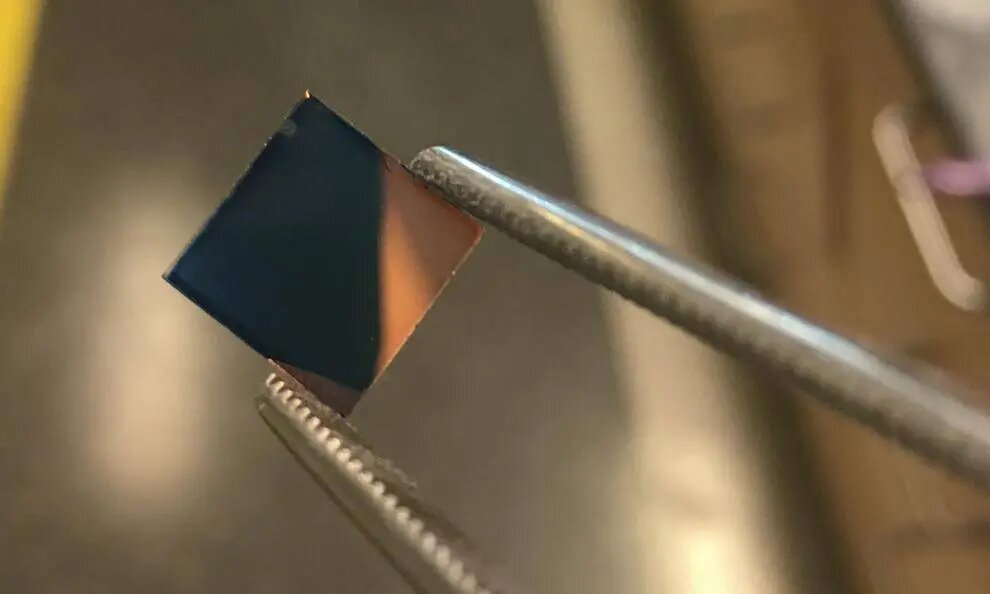
Gallery of close-up photos of scientists holding small things in their rubber-gloved fingers. I wish I could articulate my fascination with these pictures, something about the essence of discovery, the seed of wonder? It's close up so it's under enhanced scrutiny by the viewer. Maybe it's the difference between this little thing being a big deal, and yet being so tiny. What's the difference between a photograph of the Large Hadron Collider and a photograph of this "artificial fairy" above? You can hold it in your hands, and not just your hands, in between your fingers. And also it's being held, controlled, protected, by the very hands that made it. Maybe just because it's the scientists fingers, not their face or their lab coat or their million dollar petaflopping supercomputers,  but their fingers. The physical products of scientific endeavor, the pinnacle of human technology, being held by the most simple piece of "technology" on this Earth -- the human hand.  

Above image: Artificial fairy - Hao Zeng, Jianfeng Yang, Jianfeng Yang at Tampere University - 2023

Gnat Robot includes a 2 mg gyroscope, 3 mg microprocessor, and 1 mg visual optic flow sensor - Fuller, Yu & Talwekar U of Wash - 2022 [link]

Graphene device grown on a silicon carbide substrate chip - Jess Hunt-Ralston at Georgia Institute of Technology - 2022 [link]

Printable transparent plastic - James Ponder Georgia Tech - 2022 [link]

Recycling batteries - Chen Feng and Marilyn Sargent at Lawrence Berkeley National Laboratory - 2023 [link]

Electricity-generating laminate for ambient energy harvesting - University of Melbourne - 2023 [link]

Enzymatic recycling platform efficiently deconstructs raw PET plastic - Dennis Schroeder NREL - 2022 [link]

Emma Rothkopf 20 microliter sample at Brown University - 2023 [link]

Thermally resistant copper sandwich - Carnegie Mellon University College of Engineering - 2023 [link]

Smart bandage by Caltech - 2023 [link]

Prototype fuel cell wrapped in fleece - Fussenegger Lab at ETH Zurich - 2023 [link]

Covalent organic framework material - Gustavo Raskosky at Rice University - 2023 [link]