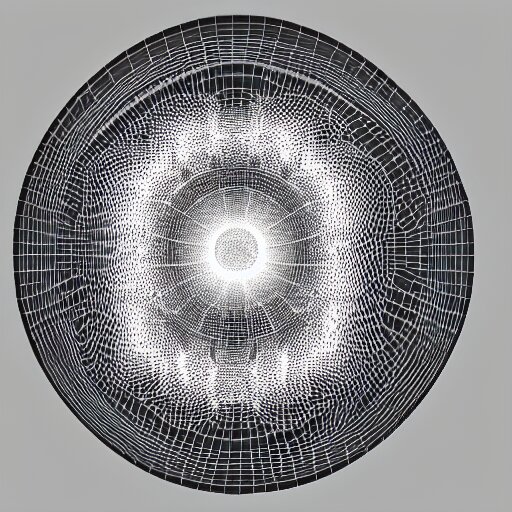
Wednesday, May 3, 2023

Reality Engines


All procedural generation of artificially intelligent content starts with a random number, which is like the seed from which all the rest grows, and that way each one can be different, and unique. But as our computers become more intelligent, that number isn't random enough. 

The problem is that randomness is not an absolute thing, and it's easily described by the law of large numbers -- Flip a coin 100 times and you have a 50% chance of it landing on heads (or 100% chance of 0.5 heads!), but flip it 1 trillion trillion times and it's no longer 50% but some different number caused by any variations in the system, like the printing on the respective faces of the coin adding extra weight to one side, or the flipping mechanism having its own pattern, or even errors in identifying, where one side is more commonly misidentified as the other -- After trillions of coin flips, other variables sneak in, and they take away the randomness. 

As our technology gets more sensitive and also more complex, it creates more spaces for these variables to sneak into the randomness. 

And we can't be each having non-random reality instantiations. That would be like two people having been given the same bank account number, but for their whole reality, and the multiple realities that we'll be living in all at the same time, soon enough. Imagine if your digital twin got mixed up with someone else's, and your automated medication regimen executed by ingestible programmable drug delivery nanobots changes in accordance with the other person's digital twin, but for your body, and now you're dead. 

That's not something we want to roll the dice with. 


Quantum random number generator sets benchmark for size, performance
Jul 2021, phys.org

via American Institute of Physics: "18.8 Gbps real-time quantum random number generator with a photonic integrated chip," Applied Physics Letters (2021). DOI: 10.1063/5.0056027


Researchers use tiny magnetic swirls to generate true random numbers
Feb 2022, phys.org

Brown University: Kang Wang et al, Single skyrmion true random number generator using local dynamics and interaction between skyrmions, Nature Communications (2022). DOI: 10.1038/s41467-022-28334-4


Using quantum fluctuations to generate random numbers faster
Apr 2023, phys.org

via Ghent University Interuniversity Microelectronics Center, Technical University of Denmark and Politecnico & Università di Bari: Cédric Bruynsteen et al, 100-Gbit/s Integrated Quantum Random Number Generator Based on Vacuum Fluctuations, PRX Quantum (2023). DOI: 10.1103/PRXQuantum.4.010330


Tuesday, May 2, 2023

More Moiré


At the confluence of twisted magic angle nanosandwiches and the much bigger news of the accidental Kuhning of the universe comes an unlikely character, the moiré lattice.

It's a grid, the two-dimensional piece of molecular paper epitomized as the graphene sheet, but it's two of them sandwiched on top of each other, and then turning one slightly so the grid no longer matches up. It's like the chain link fence that creates undulating optical illusions when layered with another fence; these two nanosheets do weird things to the field that exist between them. 

Moiré lattices are being used to create weird crystals, so they're a big part of optoelectronics because crystals manipulate lasers. And they're also providing a novel model of physical interaction that's unexpectedly mirrored in the fabric of spacetime, which might give us a very different idea about how the universe works. 


New quasiparticle discovered in moiré patterns
Nov 2022, phys.org

They found an exciton in there - an electrically neutral quasiparticle that can carry energy and consists of an electron and electron "hole" that can be created for example by light impinging certain semiconductors and other materials.

Coming soon -  "post-silicon nanoscale optoelectronic devices"

via University of Texas at Austin: Mit H. Naik et al, Intralayer charge-transfer moiré excitons in van der Waals superlattices, Nature (2022). DOI: 10.1038/s41586-022-04991-9


Moiré superlattices show superpower in photonics and optoelectronics
Mar 2023, phys.org

"The era of moiré photonics and optoelectronics is coming."

Moiré superlattices are artificial quantum materials formed by vertically stacking two or more two-dimensional (2D) layered materials with a slight lattice mismatch and/or a small rotational twist. They introduce a potential landscape of much larger length scale than the crystal periodicity of the constituent 2D layers, providing a novel paradigm for engineering band structures and hence a plethora of exotic quantum phenomena.

via Chinese Academy of Sciences:  Luojun Du et al, Moiré photonics and optoelectronics, Science (2023). DOI: 10.1126/science.adg0014.

See also:

Post Script:
New one for me - "Ab initio" calculations ("from the beginning) are computations of electronic orbitals with no other hypotheses than Coulomb interactions between all electrons and nuclei with electrons obeying Fermi statistics with the Pauli exclusion principle.

Or - the only inputs into an ab initio calculation are physical constants; Ab initio quantum chemistry methods attempt to solve the electronic Schrödinger equation given the positions of the nuclei and the number of electrons [wiki]

Here's some examples:
Artist Frank Michielli does some cool fence-art


Engineering Everything


Engineered nanoparticles could help store excess carbon dioxide in the ocean
Nov 2022, phys.org

Hochella and his colleagues examined the scientific evidence for seeding the oceans with iron-rich engineered fertilizer particles near ocean plankton, encouraging phytoplankton to act as a carbon sink.

Researchers' analysis of 123 published studies showed that numerous non-toxic metal-oxygen materials could safely enhance plankton growth.

via Department of Energy's Pacific Northwest National Laboratory: Peyman Babakhani et al, Potential use of engineered nanoparticles in ocean fertilization for large-scale atmospheric carbon dioxide removal, Nature Nanotechnology (2022). DOI: 10.1038/s41565-022-01226-w


Cocaine synthesized in a tobacco plant
Nov 2022, phys.org

Cocaine that winds up in its leaves is not produced by elements in the plant converting 4-(1-methyl-2-pyrrolidinyl)-3-oxobutanoic acid to hyoscyamine, as has been thought. They found that it is instead produced by the two enzymes, EnMT4 and EnCYP81AN15.

To prove their discovery, the group genetically engineered a tobacco plant to produce the two enzymes in its leaves, which resulted in the production of small amounts of cocaine 

The team also notes that the amount of cocaine produced by the tobacco plant was far too low for use on an industrial scale; thus, their work will continue. Not mentioned in the paper is the possibility of synthesizing the two enzymes produced by both the coca and engineered tobacco plant as a more direct way to synthesize cocaine.

via Chinese Academy of Sciences: Yong-Jiang Wang et al, Discovery and Engineering of the Cocaine Biosynthetic Pathway, Journal of the American Chemical Society (2022). DOI: 10.1021/jacs.2c09091


Monday, May 1, 2023

The Photonic Phreakout


Optical this and photon that, opto-genetics, opto-electronics, opto-dildonics. Optical quantum computers made of crystals and light, the fastest computers you can imagine, tuned lasers that can bleep your brain through your retina and treat depression, and optical tractor beams, that's right, aka quantum tweezers.

This is not to detract from the renewed interest in the fundamental nature of time, by way of "time crystals", and of something I will call time lasers, because where there's crystals there's lasers, but that idea hasn't been discovered yet. 


Laser attack blinds autonomous vehicles, deleting pedestrians and confusing cars
Oct 2022, phys.org

Expertly timed lasers shined at an approaching lidar system can create a blind spot in front of the vehicle large enough to completely hide moving pedestrians and other obstacles

via University of Florida, the University of Michigan and the University of Electro-Communications in Japan: Yulong Cao et al, You Can't See Me: Physical Removal Attacks on LiDAR-based Autonomous Vehicles Driving Frameworks, arXiv (2022). DOI: 10.48550/arxiv.2210.09482.

 
Researchers create an optical tractor beam that pulls macroscopic objects
Jan 2023, phys.org

Optical manipulation such as levitation and rotation: Optical tweezers, for example, are commonly used scientific instruments that use laser light to hold and manipulate tiny objects such as atoms or cells. We could also use laser light to create an optical tractor beam.

via QingDao University of Science and Technology in China: Lei Wang et al, Macroscopic laser pulling based on the Knudsen force in rarefied gas, Optics Express (2022). DOI: 10.1364/OE.480019


Deep learning-designed diffractive processor computes hundreds of transformations in parallel
Jan 2023, phys.org

Optical computers use light instead of electricity to perform computations, and now they can make massively parallel, wavelength-multiplexed diffractive processors.

via SPIE International Society for Optics and Photonics and UCLA: Jingxi Li et al, Massively parallel universal linear transformations using a wavelength-multiplexed diffractive optical network, Advanced Photonics (2023). DOI: 10.1117/1.AP.5.1.016003

AI Art - Cymatics - 2022

A new type of photonic time crystal gives light a boost
Apr 2023, phys.org

While some physicists were initially skeptical that time crystals could exist, recent experiments have succeeding in creating them.

"We found that reducing the dimensionality from a 3D to a 2D structure made the implementation significantly easier, ..."

via Aalto University, Karlsruhe Institute of Technology, and Stanford University: Xuchen Wang et al, Metasurface-Based Realization of Photonic Time Crystals, Science Advances (2023). DOI: 10.1126/sciadv.adg7541.


Optical switching at record speeds opens door for ultrafast, light-based electronics and computers
Mar 2023, phys.org

Imagine a home computer operating 1 million times faster than the most expensive hardware on the market. Light-based optical computing with optical transistors is a marked improvement from the semiconductor-based transistors that currently run the world.

Data transfer speeds exceeding a petahertz, measured at the attosecond time scale.

via University of Arizona: Dandan Hui et al, Ultrafast optical switching and data encoding on synthesized light fields, Science Advances (2023). DOI: 10.1126/sciadv.adf1015


Recreating the double-slit experiment that proved the wave nature of light in time, instead of space
Apr 2023, phys.org

Now, a team led by Imperial College London physicists has performed the experiment using "slits" in time rather than space. They achieved this by firing light through a material that changes its properties in femtoseconds (quadrillionths of a second), only allowing light to pass through at specific times in quick succession.

The team next want to explore the phenomenon in a "time crystal," which is analogous to an atomic crystal, but where the optical properties vary in time.

Co-author Professor Stefan Maier said, "The concept of time crystals has the potential to lead to ultrafast, parallelized optical switches."

via Imperial College London: Romain Tirole et al, Double-slit time diffraction at optical frequencies, Nature Physics (2023). DOI: 10.1038/s41567-023-01993-w. 

Light shaped into a twisted smoke ring - Y Shen and Z Zhu at SPIE King's College - 2023

Post Script:
Topology also plays a big part in the coming light hype cycle -- you might know topology as Gödel, Escher, Bach's Eternal Golden Braid, but it also has a strong link to the hyperbolic geometries of hallucinogenic hero doses. They make quantum computers work better, so we're trying to tie light into knots to make mega-sentient intelligentities, faster.

Photonic hopfions: Light shaped as a smoke ring that behaves like a particle
Jan 2023, phys.org

Topology, hyperbolic geometry, toroids, skyrmions, and now -- new, very unusual, structured-light family of 3D topological solitons, the photonic hopfions, where the topological textures and topological numbers can be freely and independently tuned. 

via SPIE International Society for Optics and Photonics, University of Southampton, and King's College London: Yijie Shen et al, Topological transformation and free-space transport of photonic hopfions, Advanced Photonics (2023). DOI: 10.1117/1.AP.5.1.015001


Thursday, April 6, 2023

The Science Fiction That Writes Itself


Human brain organoids implanted into mouse cortex respond to visual stimuli for first time
Dec 2022, phys.org

Mouse blood vessels grew into the organoid providing necessary nutrients and oxygen to the implant.
They are compatible, they latched on and are growing into the brain and working like normal brains.

I'll just copy the first paragraph exactly as-is, because this is what science fiction looks like as it's happening in real time:

A team of engineers and neuroscientists has demonstrated for the first time that human brain organoids implanted in mice have established functional connectivity to the animals' cortex and responded to external sensory stimuli. The implanted organoids reacted to visual stimuli in the same way as surrounding tissues, an observation that researchers were able to make in real time over several months thanks to an innovative experimental setup that combines transparent graphene microelectrode arrays and two-photon imaging.

via University of California San Diego: Madison N. Wilson et al, Multimodal monitoring of human cortical organoids implanted in mice reveal functional connection with visual cortex, Nature Communications (2022). DOI: 10.1038/s41467-022-35536-3

Image credit: Jared Michael


Lab-grown retinal eye cells make successful connections, open door for clinical trials to treat blindness
Jan 2023, phys.org

Organoid photoreceptor cells can reach out toward new neighbors with characteristic biological cords called axons, and plug into other retinal cell types in order to communicate.

via University of Wisconsin-Madison: Allison L. Ludwig et al, Re-formation of synaptic connectivity in dissociated human stem cell-derived retinal organoid cultures, Proceedings of the National Academy of Sciences (2023). DOI: 10.1073/pnas.2213418120

The Superluminal Observer


From the "rebel physicist" at University of Warsaw, and posted back in 2020, here's an attempt to explain what it's like to be the object that moves faster than light. 

Three time dimensions, one space dimension: Relativity of superluminal observers in 1+3 spacetime
Dec 2022, phys.org

The Superluminal World - Stretch your brain into this, the collapse of 3D space into 1D, or rather the flip from space to time dimensions.

I don't know why we had to wait for someone to say this, but why not? Why can't superluminal objects exist?

What happens when we assume—at least theoretically—that the world could be observable from superluminal frames of reference? There is a chance that this would allow the incorporation of the basic principles of quantum mechanics into the special theory of relativity. This revolutionary hypothesis of prof. Andrzej Dragan and prof. Artur Ekert from the University of Oxford presented for the first time in the article "Quantum principle of relativity" published two years ago in the New Journal of Physics. the latest conclusion is in the journal Classical and Quantum Gravity, titled "Relativity of superluminal observers in 1 + 3 spacetime", and is authored by a group of 5 physicists.

In their latest publication in the journal Classical and Quantum Gravity, titled "Relativity of superluminal observers in 1 + 3 spacetime", a group of 5 physicists goes a step further, presenting conclusions about the full four-dimensional spacetime.

via University of Warsaw and Center for Quantum Technologies of the National University of Singapore: Andrzej Dragan et al, Relativity of superluminal observers in 1+3 spacetime, Classical and Quantum Gravity (2022). DOI: 10.1088/1361-6382/acad60

Image credit: Neutron star merger - NASA's Goddard Space Flight Center, CI Lab - 2022


Post Script:
Time-synchronization is hard:
Network-crashing leap seconds to be abandoned by 2035, for at least a century
Nov 2022, Ars Technica

International Bureau of Weights and Measures (BIPM in its native French) just decided that Coordinated Universal Time, or UTC, would run without a leap second until 2135. 

Leap seconds in 2012 and 2017 caused multi-hour outages at companies including Reddit, Qantas, and Cloudflare. Many companies implemented a version of "leap smearing" to smooth out a leap second addition into micro-seconds spread across the globe throughout a day.


The Panoptic Phenotype


Flexible strain sensor enabled by carbon nanofibers can 'read lips'
Nov 2022, phys.org

Flexible strain sensors unobtrusively monitor tiny vibrations of human skin -- "The lip-language recognition system can directly and quickly translate sentences for people with damaged vocal cords." 

Membrane made from stacking parallel and randomly aligned carbon nanofibers (CNF) that achieves both high sensitivity and wide strain detection range. (The random alignment is the key.)

via Tsinghua University Press: Peng Bi et al, Ultra-sensitive and wide applicable strain sensor enabled by carbon nanofibers with dual alignment for human machine interfaces, Nano Research (2022). DOI: 10.1007/s12274-022-5162-0

Image credit: AI Art - Neofuturistic Beavers in Mandelbub by Caravaggio 1 - 2022


Spray-on smart skin uses AI to rapidly understand hand tasks
Dec 2022, phys.org

Stretchable, electrically sensitive mesh network embedded in polyurethane sprayed onto the back of the hand, comprised of millions of nanowires of silver coated with gold that are in contact with each other to form dynamic electrical pathways. This mesh is electrically active, biocompatible, breathable, and stays on unless rubbed in soap and water. It conforms intimately to the wrinkles and folds of each human finger that wears it. Then a light-weight Bluetooth module can be simply attached to the mesh which can wirelessly transfer the signal changes.

As the fingers bend and twist, the nanowires in the mesh get squeezed together and stretched apart, changing the electrical conductivity of the mesh. These changes can be measured and analyzed to tell us precisely how a hand or a finger or a joint is moving," 

via Stanford University: Kyun Kyu Kim et al, A substrate-less nanomesh receptor with meta-learning for rapid hand task recognition, Nature Electronics (2022). DOI: 10.1038/s41928-022-00888-7


Study shows that bioprinted artificial skin can be used in cosmetics and drugs testing
Jan 2023, phys.org

"Skin-like" - Bioengineered artificial skin (for testing safety of drugs and cosmetics)

via University of São Paulo's School of Pharmaceutical Sciences (FCF-USP) in Brazil: Julia de Toledo Bagatin et al, Bioprinted and manual human epidermis production: A compared performance for skin irritation tests, Bioprinting (2022). DOI: 10.1016/j.bprint.2022.e00251


Multi-layered 'space skin' can help future satellites and spacecraft harvest energy
Jan 2023, phys.org

Multifunctional Nanobarrier Structure (MFNS) nanocoatings can reduce the operating temperatures of space-qualified structures from 120 degrees Celsius to 60 degrees Celsius.

"Our new nano barrier is able to not only provide radiation and thermal protection but also harvest energy for use at a later date."

via University of Surrey: Michal Delkowski et al, Multifunctional Nanostructures with Controllable Band Gap Giving Highly Stable Infrared Emissivity for Smart Thermal Management, ACS Nano (2023). DOI: 10.1021/acsnano.2c09737