Monday, June 3, 2013

Second Skins et al

(1) Human beings owe their first skin to biological evolution.

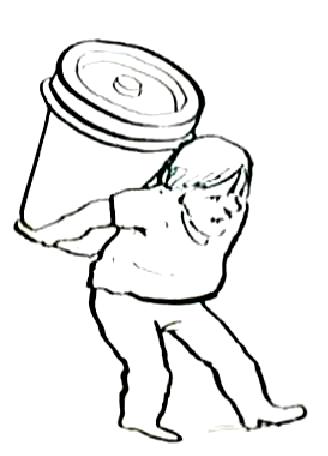
Misha Gordon, Crowd_18, 1987-1991, via 

The perception of the second skin, in its relevant functions, is based on scientific achievements. It is (2) the atmosphere of planet Earth, a product of the biogeochemical processes during the past 4 billion years. The properties of the second skin, together with the given astrophysical boundary conditions and the terrestrial and aquatic ecosystems on the planet’s surface, determine the climate.

In the cultural evolution, one can distinguish two main steps of designing new “skins”. The biological skin, a heritage of the primates, was expanded in a first step with (3) clothing, the third skin, serving not only as protection against coldness, mechanical wounds, and sun radiation, but also eventually as embellishment and status symbol in social communication.

The second step was the building of (4) houses. This fourth skin is a technical extension of the third, offering a better protection, moving toward an optimal inner climate independent of the changes outside of the house. Analogous to the clothing, the house has become a medium for the status of its residents. The house gives signals of attraction or repulsion to the viewers. (p235-6)

Metabolism of the Anthroposphere, Second Edition
Peter Baccini and Paul H. Brunner


Thursday, May 30, 2013

Crowdsourcing Redemption

aka Zizek's Charity

redemption, via

"Charity has become a basic constituent of our economy", our cultural capitalism.

It brings the two dimensions together into one and the same thing, so that the very act of consumerism contains its opposite.

Starbucks very blatantly reminds you; it's not what you're buying, but what you're buying into.

First as Tragedy Then as Farce, Slavoj Zizek, 2009
RSA Animate version [flv]

"...the worst slave-owners were those who were kind to their slaves, and so prevented the horror of the system being realised by those who suffered from it, and understood by those who contemplated it."

Indeed, their remedies are part of the disease.

Oscar Wilde, The Soul of Man under Socialism, 1891


and now...

Researchers present causal evidence on how markets affect moral values
May 10, 2013

Prof. Dr. Armin Falk from the University of Bonn and Prof. Dr. Nora Szech from the University of Bamberg, both economists, have shown in an experiment that markets erode moral concerns. In comparison to non-market decisions, moral standards are significantly lower if people participate in markets.

[link to the full article to read about how researchers killed lots of rats to support their idea]

Morals and Markets
Armin Falk and Nora Szech
Science 10 May 2013: 
Vol. 340 no. 6133 pp. 707-711 
DOI: 10.1126/science.1231566
http://www.sciencemag.org/content/340/6133/707


Wednesday, May 29, 2013

Nanoflage


Nano-Flowers
Mulmudi Hemant Kumar, Nanyang Technological University (First Place)

This lush bouquet is actually a false-color image of nanoflowers made from zinc-doped tin oxide. As structures, nanoflowers offer an enormous amount of surface area packed into a very small space, and could be useful in solar cells and batteries.

Castle Ruins Over a Field of Nanotubes
Julien Schweicher, University of California, San Francisco

What looks like the wreckage of an interplanetary war is actually a scanning electron microscope image of a titanium dioxide nanotubular layer, after exposure to a buffered oxide etch solution.

Tetraaniline in Full Bloom
Yue Wang, University of California, Los Angeles (First Place)

Be glad you can't smell this flower. It's made from thin sheets of aniline, a compound that smells like rotten fish. In this false-color image, the aggregated sheets in the upper right corner form a cluster looks like a flower, while other flexible sheets looks more like stems and leaves. These shapes combine high surface area with electrical conductivity, making this material ideal for organic supercapacitors and sensors.

Science as Art: Nanoscale Materials Imitate Everything From Flowers to Frost
Nadia Drake 04.15.13
Images courtesy of the Materials Research Society Science as Art Competition and Mulmudi Hemant Kumar, Nanyang Technological University.

Reverse Engineering


Moore's Law predicts life originated billions of years before Earth
Robert T. Gonzalez, 04.18.13
A new study co-authored by a geneticist at the National Institutes of Health concludes that life originated elsewhere in the Universe around 9.8 billion years ago – roughly five-billion years before the Earth was even formed.

Life Before Earth
NIH geneticist Alexei A. Sharov and theoretical biologist Richard Gordon
(Submitted 28 Mar 2013) [link]


...origin of life can be estimated by examining genetic complexity through the lens of Moore's Law and backtracking to some point of temporal origin.

"Genome complexity reaches zero, which corresponds to just one base pair, at time ca. 9.7 billion years ago... ±2.5 billion years."

Earth is on the order of just 4.5-billion years old. Ipso facto, say the researchers, life originated somewhere besides Earth, evolving not on a geologic time scale, but a cosmic one.

[crit, i09.com]
One thing that worries me about this paper is that it makes no effort, as far as I can tell, to distinguish between complexity and progress, an important distinction that many people fail to recognize.

Another issue: the idea that the complexity of life on Earth has increased at the same rate throughout history is highly suspect.

...how little consensus there is on what complexity actually is.


Tuesday, May 28, 2013

On Crowdsourcing


wondergrounder

Ford challenges developers to create efficiency app
Alisa Priddle, March 29, 2013 

[...seems to be more about Ford using its consumers to do 'real-world' research and development, using Apple and Google products which the consumers themselves also pay for, of course...I call that freesearch]

Ford is offering up to $50,000 to developers who deliver hardware or software that helps drivers understand the effect of the elements and driving habits on their fuel economy.

"We need to help customers understand the concept of personal fuel economy, based on their own individualized experiences, and give them tools to see, learn and act upon all the information available to know what to expect, how to improve, and even offer guidance in their shopping process," Farley said.

The announcement follows consumer complaints, class action lawsuits and a U.S. Environmental Protection Agency investigation into the gap between mileage posted on new vehicle stickers and what drivers claim they are getting.

BONUS [see "real-world"]
Ford has said it is working with the EPA and discussing whether the government tests need to be revised to better reflect real-world conditions.

Mimetic Pedagogy

Teachers' gestures boost math learning
March 29, 2013


co-authored by Kimberly Fenn, Michigan State University, assistant professor of psychology

Teachers in the United States tend to use gestures less than teachers in other countries.

Half of the students were shown videos of an instructor teaching math problems using only speech. The others were shown videos of the instructor teaching the same problems using both speech and gestures.

Students who learned from the gesture videos performed better on a test given immediately afterward than those who learned from the speech-only video. Another test was given 24 hours later, and the gesture students actually showed improvement in their performance while the speech-only students did not.

Fenn noted that U.S. students lag behind those in many other Western countries in math and have a particularly hard time mastering equivalence problems in early grades. "So if we can help them grasp this foundational knowledge earlier," she said, "it will help them as they learn algebra and higher levels of mathematics."

Thursday, May 16, 2013

Dreamwatchers


Scientists 'read dreams' using brain scans
Rebecca Morelle, BBC World, 4 April 2013

glow in the dark transparent brain_Kwanghun Chung et al


Brain activity correlated with the images that people saw in their dreams
60% accuracy

The team used MRI scans to monitor three people as they slept.

Just as the volunteers started to fall asleep inside the scanners, they were woken up and asked to recount what they had seen.

Each image mentioned, from bronze statues to keys and ice picks, was noted, no matter how surreal.

This was repeated more than 200 times for each participant.

The researchers used the results to build a database, where they grouped together objects into similar visual categories. For example, hotel, house and building were grouped together as "structures".

The scientists then scanned the volunteers again, but this time, while they were awake and looking at images on a computer screen.

With this, they were able to see the specific patterns of brain activity that correlated with the visual imagery.