Thursday, January 11, 2024

Fundamental Organizational Principles and the Networking of Science


Do higher-order interactions promote synchronization?
Apr 2023, phys.org

Researchers use networks to model the dynamics of coupled systems ranging from food webs to neurological processes. Those models originally focused on pairwise interactions, or behaviors that emerge from interactions between two entities. But in the last few years, network theorists have been asking, what about phenomena that involve three or more?


Network theorists call these phenomena "higher-order interactions." Now scientists show how the choice of network representation can influence the observed effects, focusing on the phenomenon of synchronization, which emerges in systems from circadian clocks to vascular networks.

They compared hypergraphs of "hyperedges" to connect three or more nodes, and simplicial complexes, more structured and using triangles to represent  connections. 

In the paper, Zhang and his colleagues reported that networks modeled with hypergraphs easily give rise to synchronization, while simplicial complexes tend to complicate the process due to their highly heterogeneous structure. That suggests choices in higher-order representations can influence the outcome, and Zhang suspects the results can be extended to other dynamical processes such as diffusion or contagion.

"Structural heterogeneity is important not just in synchronization, but is fundamental to most dynamic processes," he says. "Whether we model the system as a hypergraph or simplicial complex can drastically affect our conclusions."

via Santa Fe Institute: Yuanzhao Zhang et al, Higher-order interactions shape collective dynamics differently in hypergraphs and simplicial complexes, Nature Communications (2023). DOI: 10.1038/s41467-023-37190-9


Researchers investigate the veracity of 'six degrees of separation'
Jun 2023, phys.org

I don't think I understand why 6 and not another number; but it appears that the big deal here is that the mechanism behind 'why 6' is based on a cost-benefit algorithm.

The intriguing phenomenon, they show, is linked to another social experience we all know too well -- the struggle of cost vs. benefit in establishing new social ties.

"6 Degrees" is from Stanley Milgram at Harvard in 1967 who used the United States Postal System to perform experiments on and model our social network.

(This point in itself is interesting to consider, in light of having the access to the electronic communications network that is the internet, and which later proved these experiments on the scale of millions not hundreds, that we did have already such a pervasive, well-functioning network at hand, in the form of the United States Postal Service.)  

Milgram sent letters to random people, with instructions to try and make it back to one of his professor-friends somewhere else across the country. The experiment found that it only takes about six handshakes to bridge between two random people.

So what is the common denominator?

The objective of using a social network for the individual, is not simply to pursue a large number of connections, but to obtain the right connections, for example, seeking a junction that bridges between many pathways, and hence funnels much of the flow of information in the network.

But social capital does not come for free. It requires constant maintenance. A constant buzz driven by the ambition for social centrality.

"We discovered an amazing result: this process always ends with social paths centered around the number six. This is quite surprising." (Dark side reminder: "Indeed, within six infection cycles, a virus can cross the globe.")

via Bar-Ilan University as well as collaborators from Israel, Spain, Italy, Russia, Slovenia and Chile: I. Samoylenko et al, Why Are There Six Degrees of Separation in a Social Network?, Physical Review X (2023). DOI: 10.1103/PhysRevX.13.021032

Post Script: The book Bursts by Albert-László Barabási does a great job of looking at these kinds of social network effects, following the travels of the Where's George campaign of dollar bills through the US for example. He took the incipient revelations of network science (the 6 degrees rule) and gave it a temporal dimension -- he showed how our activities can be measured in short bursts followed by not much activity at all. It's not just the '2-dimensional' shape of the network, but the extra time dimension that defines the salient behavior of the social network.
Bursts: The Hidden Pattern Behind Everything We Do
Albert-László Barabási, 2010


Researchers identify mathematical rule behind the distribution of neurons in our brains
Aug 2023, phys.org

I don't see the word network science in here but it is --

Researchers have uncovered the ubiquitous lognormal distribution of neuron densities across and within cortical areas in the mammalian brain, suggesting a fundamental organizational principle.

via Human Brain Project, Forschungszentrum Jülich and the University of Cologne: Aitor Morales-Gregorio et al, Ubiquitous lognormal distribution of neuron densities in mammalian cerebral cortex, Cerebral Cortex (2023). DOI: 10.1093/cercor/bhad160


Wednesday, January 10, 2024

Going On About Language


Speech and sun: New research on climate and how we speak
Aug 2023, phys.org

They evaluated  humidity, altitude, temperature, precipitation and density of vegetation across 1,000 globally distributed languages, documented over 300 years. How were these environmental conditions affecting speech over time?

"The representation of a diversity of languages were scattered geographically over the widest possible range of global environments," Benedict said. "Ian went to great lengths to specifically build the linguistic data set to provide that geographic diversity. We tried to be intentional about making sure that we had languages in all environmental areas that are implicated in the potential development of these linguistic features."
  • greater reliance on vowels in areas with high temperature and humidity,
  • more use of ejective consonants within higher altitude areas,
  • more complex tone systems in humid areas,
  • fewer complex consonants used in areas with more precipitation and a higher temperature.
"If we think about time scales of a century or more of habitual mask use in areas where diseases are common, or you know, air quality is such that it's a standard practice, I would expect to see changes in the way that we communicate with each other," Benedict said.

"There's some research on bird song which shows that with birds that live in both urban and rural settings, the birds that live in urban areas tend to pitch their songs a little higher to get above the background noise of cars and things like that," Maddieson said. "We know that some species do adapt to these relatively recent changes because the lifespan of a bird is much less than human lifeform."
via University of New Mexico's Department of Linguistics and College of University Libraries and Learning Sciences: Ian Maddieson et al, Demonstrating environmental impacts on the sound structure of languages: challenges and solutions, Frontiers in Psychology (2023). DOI: 10.3389/fpsyg.2023.1200463


Speech study finds classic Georgia accent fading fast
Sep 2023, phys.org

The analysis was carried out with recordings of white individuals native to Georgia, born from the late 19th century to the early 2000s. The researchers focused on the way the recorded speakers pronounced vowels. The team found that older Georgians pronounced the word "prize" as prahz and "face" as fuh-eece, but the youngest speakers use prah-eez and fayce. These are distinctive features of the traditional Southern drawl. (These are called dpithong by the way, when a one-syllable word seems to have two syllables.)

"Using transcribed audio, we can use a computer to estimate where you put your tongue in your mouth when you pronounce each vowel, which gives us a quantitative metric of accent.")

via University of Georgia and Georgia Tech: Margaret E. L. Renwick et al, Boomer Peak or Gen X Cliff? From SVS to LBMS in Georgia English, Language Variation and Change (2023). DOI: 10.1017/S095439452300011X

AI Art - Cosmic Rainbow - 2023

Social vs. language role: Researchers question function of two brain areas
Sep 2023, phys.org

Ouch, just got way more complicated:

"A research team led by Prof. Lin Nan from the Institute of Psychology of the Chinese Academy of Sciences found that during sentence processing, the neural activity of two canonical language areas—the left ventral temporoparietal junction (vTPJ) and the lateral anterior temporal lobe (lATL)—is associated with social-semantic working memory rather than language processing per se."

These regions were sensitive to sentences only if the sentences conveyed social meaning. 

These findings are likely to force a major reconsideration of the functional organization of the cortical language network

via Institute of Psychology of the Chinese Academy of Sciences: Zhang, G. et al, A social-semantic working-memory account for two canonical language areas, Nature Human Behaviour (2023). DOI: 10.1038/s41562-023-01704-8.

Post Script: For smell-related language, it gets even more complicated because social smells are already confusing but now there's two kinds of language also, "regular" and "social".


Why all languages have words for 'this' and 'that'
Oct 2023, phys.org

First, things you didn't know you needed to know: Languages around the world have words for "this" and "that" 

But better, "this" means within reach and "that" means outside of reach.

via University of East Anglia: Spatial Communication Systems Across Languages Reflect Universal Action Constraints, Nature Human Behaviour (2023). DOI: 10.1038/s41562-023-01697-4

On the Language of Color


Do people and monkeys see colors the same way?
May 2023, phys.org

Humans can perceive a greater range of blue tones than monkeys.

Recent evolutionary adaptations.

A certain short-wave or blue sensitive cone circuit found in humans is absent in marmosets. It is also different from the circuit seen in the macaque monkey.

via University of Washington School of Medicine, Medical University of Vienna, University of Sydney, and the Save Sight Institute: Yeon Jin Kim et al, Comparative connectomics reveals noncanonical wiring for color vision in human foveal retina, Proceedings of the National Academy of Sciences (2023). DOI: 10.1073/pnas.2300545120


Researchers find languages can acquire new color concepts after exposure to other languages
Nov 2023, phys.org

Among members of the Tsimane' society, who live in a remote part of the Bolivian Amazon rainforest, the researchers found that those who had learned Spanish as a second language began to classify colors into more words, making color distinctions that are not commonly used by Tsimane' who are monolingual.

In the most striking finding, Tsimane' who were bilingual began using two different words to describe blue and green, which monolingual Tsimane' speakers do not typically do. And, instead of borrowing Spanish words for blue and green, they repurposed words from their own language to describe those colors. 

"It's a great example of one of the main benefits of learning a second language, which is that you open a different worldview and different concepts that then you can import to your native language." 

via MIT, Speech and Hearing Bioscience and Technology Program at Harvard, University of Texas at Austin, and the National Eye Institute: Saima Malik-Moraleda et al, Concepts Are Restructured During Language Contact: The Birth of Blue and Other Color Concepts in Tsimane'-Spanish Bilinguals, Psychological Science (2023). DOI: 10.1177/09567976231199742

Older Posts About the Language of Color:


Gravity Is Dead


AKA Kuhning the Universe

Smoking-gun evidence for modified gravity at low acceleration from Gaia observations of wide binary stars
Aug 2023, phys.org

Conclusive evidence for the breakdown of standard gravity in the low acceleration limit from a verifiable analysis of the orbital motions of long-period, widely separated, binary stars.

Them fightin words.

(Although this was suggested 40 years ago by theoretical physicist Mordehai Milgrom at the Weizmann Institute in Israel in a new theoretical framework called modified Newtonian dynamics (MOND) or Milgromian dynamics in current usage.)

The significance is very high meeting the conventional criteria of 5 sigma for a scientific discovery.

via Sejong University in Seoul: Kyu-Hyun Chae, Breakdown of the Newton–Einstein Standard Gravity at Low Acceleration in Internal Dynamics of Wide Binary Stars, The Astrophysical Journal (2023). DOI: 10.3847/1538-4357/ace101

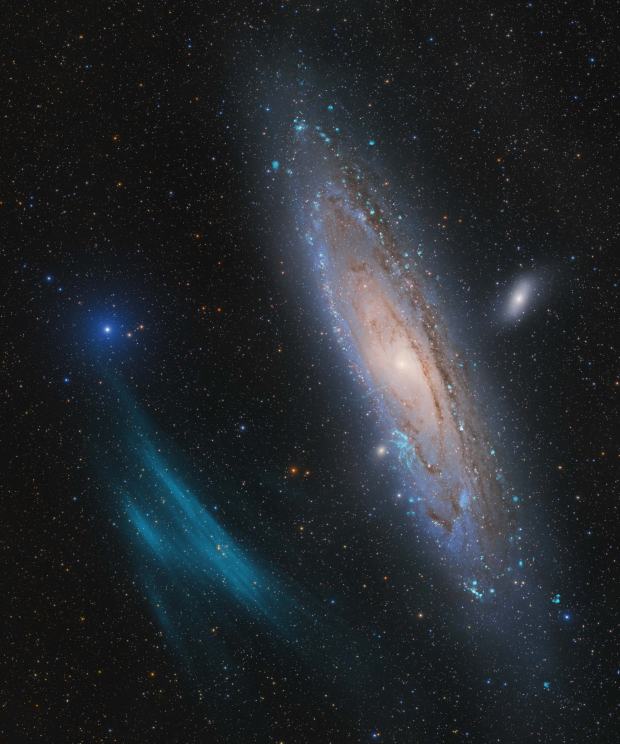
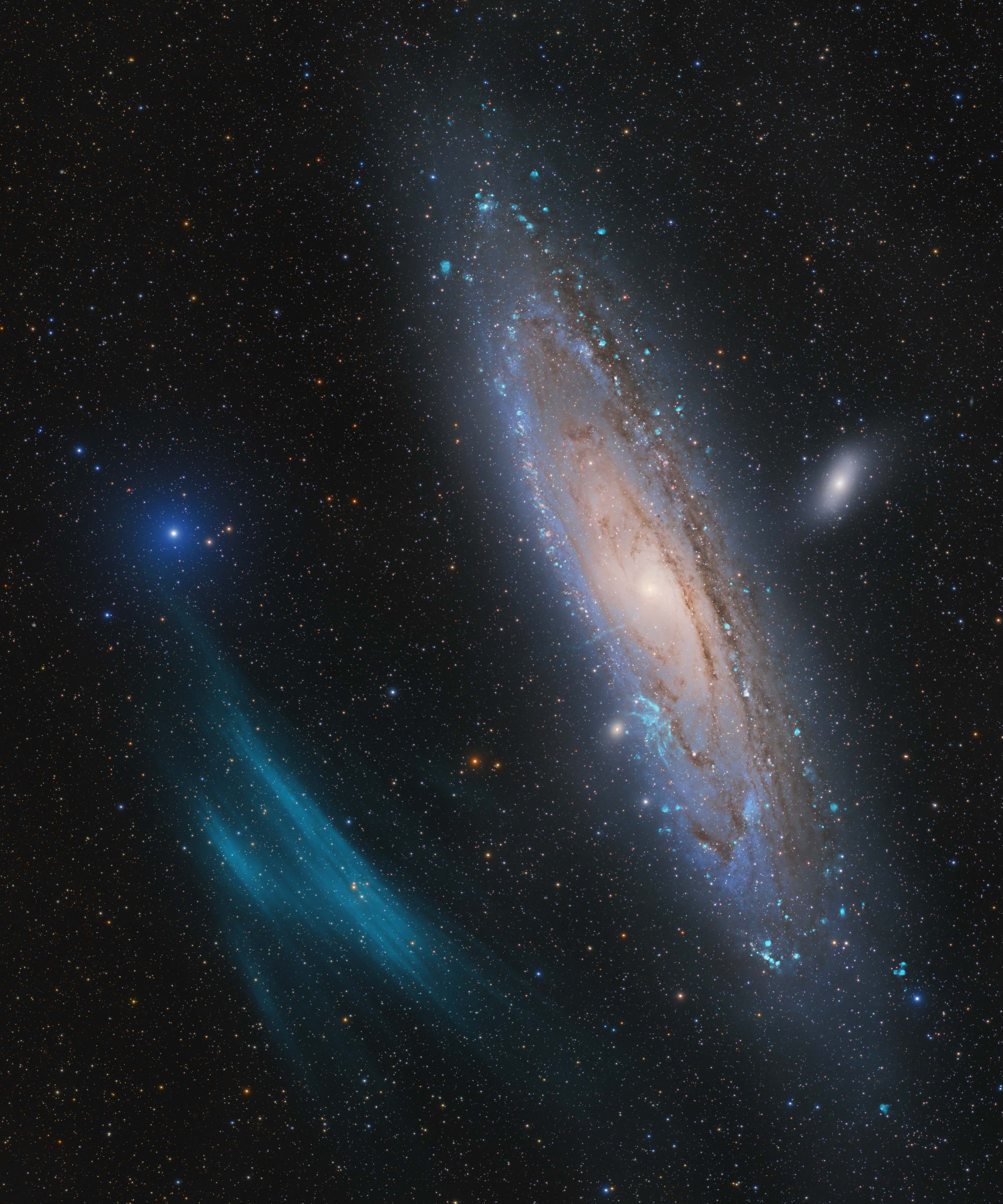
Image credit: Andromeda, Unexpected - Plasma Arc and Winner of the Astronomy Photographer of the Year by Marcel Drechsler, Xavier Strottner, Yanin Sainty - 2023 [link]

Mostly Unrelated Post Script: 
Evidence found of electromagnetic fields from electrical towers disrupting pollinating honeybees
May 2023, phys.org

Man come on.

So Many Metas


A somewhat systematic review of previous systematic reviews and meta-analyses about nutrition and Alzheimer's
May 2023, phys.org

The team conducted a review of systematic reviews aka meta-analysis studies around the topic of nutrition in disease. (So their's is a meta-meta-analysis.)

This is why kids need to go to school:

There is a risk that a systematic review of multiple meta-data studies could artificially weight specific study findings if they are included multiple times across the different meta-analyses.

What may be important to know is that both of these meta-analyses included the same study from 2015, titled "Intakes of fish and polyunsaturated fatty acids and mild-to-severe cognitive impairment risks: A dose-response meta-analysis of 21 cohort studies," which is itself a meta-analysis that could contain studies included in other meta-analyses covered by the current study.

Note: This is 100% related to the AI-feeding-AI problem we're not even beginning to talk about yet -- because when you use meta-analysis of past meta-analyses, you risk multiplying the dirty data. 

via International Education College of Zhejiang Chinese Medical University, Hangzhou: Inmaculada Xu Lou et al, Effect of nutrition in Alzheimer's disease: A systematic review, Frontiers in Neuroscience (2023). DOI: 10.3389/fnins.2023.1147177


Do measurements produce the reality they show us?
Aug 2023, phys.org

The observable values of a physical system depend on the dynamics of the measurement interaction by which they are observed. "This is a major step towards explaining the meaning of 'superposition' in quantum mechanics".

"Our results show that the physical reality of an object cannot be separated from the context of all its interactions with the environment, past, present and future, providing strong evidence against the widespread belief that our world can be reduced to a mere configuration of material building blocks," said Hofmann.

I've never heard it this way - 

Fully resolved measurements require a complete randomization of the system dynamics; this corresponds to a superposition of all possible system dynamics. 

"Context-dependent realities can explain a wide range of seemingly paradoxical quantum effects. We are now working on better explanations of these phenomena. Ultimately, the goal is to develop a more intuitive understanding of the fundamental concepts of quantum mechanics that avoids the misunderstandings caused by a naïve belief in the reality of microscopic objects," said Hofmann.

Hiroshima University: Tomonori Matsushita et al, Dependence of measurement outcomes on the dynamics of quantum coherent interactions between the system and the meter, Physical Review Research (2023). DOI: 10.1103/PhysRevResearch.5.033064


From stock markets to brain scans, new research harmonizes hundreds of scientific methods to understand complex systems
Sep 2023, phys.org

They looked at hundreds of different methods for measuring interaction patterns in complex system, and worked out which ones are most useful for understanding a given system. They call it the scientific orchestra, and each method is an instrument, and they thought maybe some instruments are better for certain kinds of data, so they tried to find out.

We're talking about methods like Brownian motion, coupled maps, coupled oscillators, simulated fMRI, simulated climate, wave equations, or uncorrelated noise to understand data like stock markets, river flow, brain waves, earthquakes.

In total, we applied our 237 methods to more than 1,000 datasets. By analyzing how these methods behave when applied to such diverse scientific systems, we found a way for them to "play in harmony" for the first time.

They found that the methods were grouped differently than what we traditionally think, and that when properly orchestrated, the full ensemble of scientific methods demonstrated improved performance over any single method on its own.

via Centre for Complex Systems, The University of Sydney: Oliver M. Cliff et al, Unifying pairwise interactions in complex dynamics, Nature Computational Science (2023). DOI: 10.1038/s43588-023-00519-x

AI Art - Mechanical Goddess - 2024

Five factors that assess well-being of science predict support for increasing US science funding
Sep 2023, phys.org

Drawing on 13 questions in APPC's 2022 nationally representative Annenberg Science Knowledge survey (ASK) survey of 1,154 U.S. adults, researchers identified five factors that form a Factors Assessing Science's Self-Preservation (FASS) model. The model can be used to assess the extent to which public perceptions align with the self-presentation of science and scientists live up to the ways in which they define themselves and their work to the public.
  • credible
  • prudent
  • unbiased
  • self-correcting
  • beneficial
via Annenberg Public Policy Center of the University of Pennsylvania: Yotam Ophir et al, Factors Assessing Science's Self-Presentation model and their effect on conservatives' and liberals' support for funding science, Proceedings of the National Academy of Sciences (2023). DOI: 10.1073/pnas.2213838120


Artificial intelligence predicts the future of artificial intelligence research
Oct 2023, phys.org

(Asimov's Foundation no?)

An algorithm that not only assists researchers in orienting themselves systematically but also predictively guides them in the direction in which their own research field is likely to evolve.

Science4Cast is a graph-based representation of knowledge which becomes more complex over time as more scientific articles are published. Each node in the graph represents a concept in AI, and the connections between nodes indicate whether and when two concepts were studied together.

For example, the question "What will happen" can be described as a mathematical question about the further development of the graph. Science4Cast is fed with real data from over 100,000 scientific publications spanning a 30-year period, resulting in a total of 64,000 nodes. 

via Max-Planck Institute for the Science of Light in Erlangen: Mario Krenn et al, Forecasting the future of artificial intelligence with machine learning-based link prediction in an exponentially growing knowledge network, Nature Machine Intelligence (2023). DOI: 10.1038/s42256-023-00735-0

Something Cannibalistic


Toothpaste containing synthetic tooth minerals can prevent cavities as effectively as fluoride: Clinical trial
Jul 2023, phys.org

Tooth-toothpaste

via Department of Integrated Dentistry, Poznan University of Medical Sciences, Poznan, Poland: Caries-preventing effect of a hydroxyapatite-toothpaste in adults: A 18 months double-blinded randomized clinical trial, Frontiers in Public Health (2023). DOI: 10.3389/fpubh.2023.1199728.


Transparent mouse - Helmholtz Munich - 2023

Transparent mouse could improve cancer drug tests
Jul 2023, BBC News

Prof Ali Ertürk of the Helmholtz Munich research centre worked out how to make a dead mouse transparent in 2018.

People Planning


You're looking at a picture of a "desire line" created by people who don't really care about urban planning. Although I find this hard to believe, it is said that at Harvard, they don't make sidewalks for the first year after construction, so they can see "where the people want to go". The people, like water follows the path of least resistance, end up carving these "desire lines" into the landscape, and show the landscape designers where to put their sidewalks. It's like when Japan used slime mold to show them how to design the Tokyo subway network, or how when it snows you can see the parts of the road that don't need to be road because they are untouched. Desire lines show us the difference between what people want and what designers or executives or artificially intelligent algorithms tell us we want.

For all the anti-urban planners out there:

Depression is more common in the suburbs than in city centers, finds new research
May 2023, phys.org

It's true, the suburbs kinda suck.

But because this was published in the Conversation, part of me thinks it's just deep-brain, deep-pocket propaganda from commercial real estate interests to get people to move back into the city.

To find out which factors in the built environment were the most important for psychological well-being so that cities can be designed better to be both sustainable and supportive of mental health, they categorized satellite images of all buildings in Denmark over 30 years (1987-2017) and combined the resulting map with individual residential addresses, and health and socio-economic registers.

The results show the highest risk was found in the low-rise and single-family housing suburbs.

"We think the relative higher risks of depression found in sprawling, low-rise suburbs may be partly down to long car commutes, less public open space and not high enough resident density to enable many local commercial places where people can gather together, such as shops, cafes and restaurants. But of course, there may be many other factors, too."

They recommend to invest in high-rise housing where lifestyles are not dependent on private car ownership, combined with thoughtful spatial design to increase access to shorelines, canals, lakes or urban parks. We could also improve existing suburbs' accessibility to both urban services and to public open spaces, and to make sure there are more walkable neighborhoods in these car-centered areas.

In Copenhagen, people grab a beer or pastry and hang out with friends along the canal. These areas are at the fringe of both shops and nature—making the spaces social.

via Yale, Stockholm and Gävle universities in Sweden, and Aarhus University in Denmark: Tzu-Hsin Karen Chen et al, Higher depression risks in medium- than in high-density urban form across Denmark, Science Advances (2023). DOI: 10.1126/sciadv.adf3760


New study suggests clues to urban resiliency lie within ancient cities
Jul 2023, phys.org

They study the Prehispanic Mesoamerica Mayan archaeological site of Caracol in Belize, which flourished for many centuries and was then replaced by smaller cities that subsequently arose and flourished.

Most of the collapses of Mayan cities are associated with autocracy and inequality.

via University of Houston: Diane Z. Chase et al, Mesoamerican urbanism revisited: Environmental change, adaptation, resilience, persistence, and collapse, Proceedings of the National Academy of Sciences (2023). DOI: 10.1073/pnas.2211558120


AI system found to outperform humans in creating urban planning designs
Sep 2023, phys.org

One of the most obvious use cases: 

Apparently, the ideal urban plan du-jour is the "15 minute" plan, where everything is within 15 walking minutes of everyone's house (hold on, this almost sounds like most "organically-grown" European cities, maybe I'm confused).

*I'm not sure I can be 100% on-board with "the ideal urban plan"; I am suspicious that such a thing exists. 

via Tsinghua University in China and MIT Senseable City Lab: Yu Zheng et al, Spatial planning of urban communities via deep reinforcement learning, Nature Computational Science (2023). DOI: 10.1038/s43588-023-00503-5

Also: Paolo Santi, AI improves the design of urban communities, Nature Computational Science (2023). DOI: 10.1038/s43588-023-00515-1


Population ecologist warns that humanity is on the verge of massive population correction
Aug 2023, phys.org

Rees notes that there are already signs of stress due to overpopulation -- the planet is growing warmer and critical resources are at risk, such as the availability of fossil fuels as well as food and water. He notes also that many of Earth's cycles are being disrupted, such as weather patterns and the global nutrient cycle.

Taken together, he suggests that planet Earth is headed for a major population correction -- perhaps before the end of this century. Such a correction, he notes, would be a drastic reduction in human population. He adds that such a reduction could come about in one or more ways, through war, famine, habitat instability or disease. 
In Calhoun's rat studies, many of the rodents simply withdrew from society, refusing to work, or even attempt to procreate.

via University of British Columbia's School of Community and Regional Planning: William E. Rees, The Human Ecology of Overshoot: Why a Major 'Population Correction' Is Inevitable, World (2023). DOI: 10.3390/world4030032