Thursday, August 8, 2024

Widespread Marketing Makes Tech Sector Indispensable, Indefatigable, Infallible


Widespread machine learning methods behind 'link prediction' are performing very poorly, researchers find
Feb 2024, phys.org

Marketing vs Sciencing: 
  • Link prediction is a widespread machine learning task that evaluates the links in a network and tries to predict what the next links will be.
  • New research establishes that the metric used to measure link prediction performance is missing crucial information, and link prediction tasks are performing significantly worse than popular literature indicates.
  • They recommend that machine learning researchers stop using the standard practice metric for measuring link prediction ("area under curve" or AUC) and introduce a new metric. 
  • Authors discovered fundamental mathematical limitations to using low dimensional embeddings for link predictions, and that AUC can not measure these limitations, and conclude that AUC does not accurately measure link prediction performance.
  • They recommend a new metric called VCMPR
via University of California Santa Cruz and University of Pennsylvania: Menand, Nicolas et al, Link prediction using low-dimensional node embeddings: the measurement problem, Proceedings of the National Academy of Sciences (2024). DOI: 10.1073/pnas.2312527121. 


Wednesday, August 7, 2024

To Live and Die in Biostats


Learning for life: The higher the level of education, the lower the risk of dying
Jan 2024, phys.org

I love hearing health benefits measured in the amount of cigarettes you smoke

"Not going to school at all is as bad for you as drinking five or more alcoholic drinks per day or smoking ten cigarettes a day for 10 years."

via Norwegian University of Science and Technology: Effects of education on adult mortality: a global systematic review and meta-analysis, The Lancet Public Health (2024). DOI: 10.1016/S2468-2667(23)00306-7


Every Move You Make


Network science is one of the most rapidly advancing fields of science, and looks more every day to be critical to plugging major holes in the most fundamental of physics, of sociology, of cognition, you name it.

Image credit: I use the same thumbnail every time, can't get more illustrative than that.

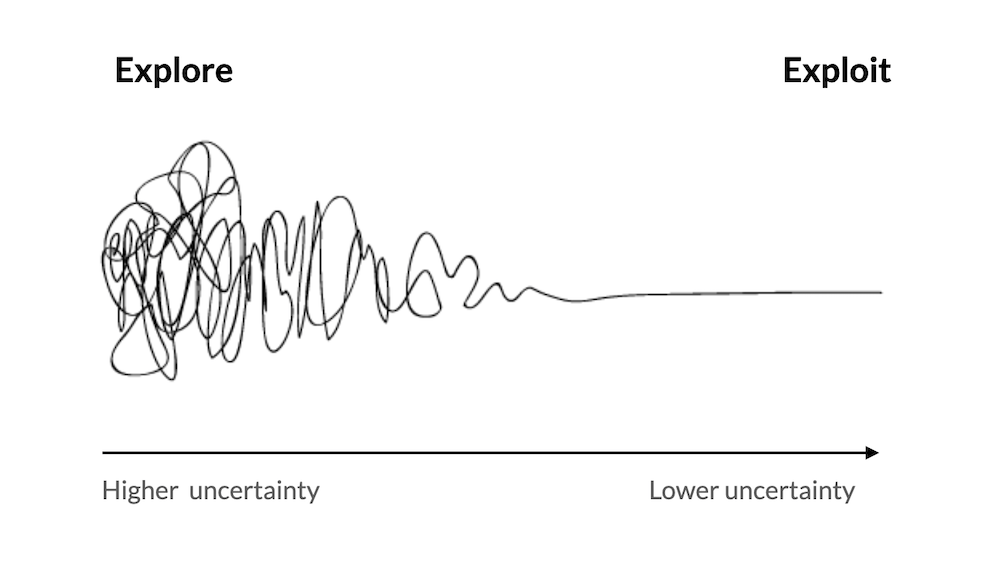
One phenomenon of network science that stands out as, well, common sense, is this thing that has a few different names. Most things, as they are only just beginning to be understood or to be useful, they have lots of different names for mostly the same thing. So for this reason, my shorthand for this is "Lévy things". A Lévy flight refers to the way our eyes jump around when we look at things, or the way animals forage. The pattern is one where you make small jumps in a limited area, then a long jump to another area, and small jumps in that new area, then a long jump to another, and so on.

"Lévy things" shows up in relation to many other word-forms - foraging behavior, foraging patterns, explore-exploit mode switching, random walks, Drunkard's walk, Brownian motion, chaos theory - and I'll use these sometimes interchangeably.

The thing that's most intriguing about this phenomenon is that it's making simple something we thought was really complicated. A "random walk" for example, sounds like it's mostly impossible to predict; that's the point of the word random, truly random. But lots of things that look random, especially in the biological world, they're really goverened by Lévy patterns, and if you plug a Lévy pattern into the behavior, it becomes way less random than you thought. And that means you can predict way more than you thought, like many aspects of seemingly unexplainable human behavior. This is also related to fractals, but because we know even less about fractals than we do Lévy flights, it's hard to say exactly how the two are related (for a non-expert). 

Startng with a simple example, from a long time ago - 


Tiny eye movements are under a surprising degree of cognitive control
Apr 2023, phys.org

A very subtle and seemingly random type of eye movement called ocular drift can be influenced by prior knowledge of the expected visual target, suggesting a surprising level of cognitive control over the eyes.

(I guess ocular drift is like a saccade but not)

Most studies of cognitive control over eye movement have covered more obvious movements, such as the "saccade" movements in which the eyes dart across large parts of the visual field. Ocular drift is tiny jitters of the eye that occur even when gaze seems fixed, and thought to improve detection of small, stationary details in a visual scene by scanning across them, effectively converting spatial details into trains of visual signals in time.

via Weill Cornell Medical College: Yen-Chu Lin et al, Cognitive influences on fixational eye movements, Current Biology (2023). DOI: 10.1016/j.cub.2023.03.026


Study shows same movement patterns used by wide range of organisms, with implications for cognition and robotics
Oct 2023, phys.org

While watching electric knifefish in an observation tank, the researchers noticed how when it was dark, the fish shimmied back and forth significantly more frequently. When lights were on, the fish swayed gently with only occasional bursts of rapid movement. Wiggling rapidly allows them to actively sense their surroundings, especially in dark water. In the light, they still make such rapid movements, just far less frequently. 

"We found that the best strategy is to briefly switch into explore mode when uncertainty is too high, and then switch back to exploit mode when uncertainty is back down." 

"If you go to a grocery store, you'll notice people standing in line will change between being stationary and moving around while waiting," Cowan said. "We think that's the same thing going on, that to maintain a stable balance you actually have to occasionally move around and excite your sensors like the knifefish. We found the statistical characteristics of those movements are ubiquitous across a wide range of animals, including humans." 

"Not a single study that we found in the literature violated the rules we discovered in the electric fish, not even single-celled organisms like amoeba sensing an electric field."

via Johns Hopkins University: Mode switching in organisms for solving explore-versus-exploit problems, Nature Machine Intelligence (2023). DOI: 10.1038/s42256-023-00745-y


Exploration—not work—could be key to a vibrant local economy
Mar 2024, phys.org

Suprise!

Infrequent trips to places like restaurants and sports facilities - not the everyday office visit or school drop-off - accounted for the majority of differences in economic outcomes between neighborhoods.

The activities with the strongest predictive power included French and New American restaurants, golf courses, hockey rinks, soccer games, and bagel shops. These kinds of activities accounted for just 2% of trips but explained more than 50% of the variation in economic outcomes between neighborhoods.

"Those irregular and infrequent activities are correlated with explorative behavior, the tendency of some groups to seek out opportunities, connect with different people, and create new businesses."

Again, trips to the office - where we earn our money - were not strongly associated with income or property values. Rather, it's how we spend our free time that drives the economic vibrancy of cities.

(Please don't tell the return-to-office people this or the people who run nyc).  

via University of Florida, MIT, and Northeastern: Shenhao Wang et al, Infrequent activities predict economic outcomes in major American cities, Nature Cities (2024). DOI: 10.1038/s44284-024-00051-7


Study uncovers neural mechanisms underlying foraging behavior in freely moving animals
Apr 2024, phys.org

They use an integrated wireless system for recording brain activity in the frontal areas of macaque brains to examine foraging tasks in real time.

Results indicate that foraging strategies are based on a cortical model of reward dynamics as animals freely explore their environment.

This research can potentially move in the direction of prosthetic devices to influence or bias choice, even noninvasively.

via Rice University Center for Neural Systems Restoration: Neda Shahidi et al, Population coding of strategic variables during foraging in freely moving macaques, Nature Neuroscience (2024). DOI: 10.1038/s41593-024-01575-w

Tuesday, August 6, 2024

Repeat After Me


Lapsus$: GTA 6 hacker handed indefinite hospital order
Dec 2023, BBC News

The jury was told that while he was on bail for hacking Nvidia and BT/EE and in police protection at a Travelodge hotel, he continued hacking and carried out his most infamous hack.

Despite having his laptop confiscated, Kurtaj managed to breach Rockstar, the company behind GTA, using an Amazon Firestick, his hotel TV and a mobile phone.


Transparent brain implant can read deep neural activity from the surface
Jan 2024, phys.org

Transgenic mice don't be afraid:

The implant is a thin, transparent and flexible polymer strip that conforms to the brain's surface. The strip is embedded with a high-density array of tiny, circular graphene electrodes, each measuring 20 micrometers in diameter. Each electrode is connected by a micrometers-thin graphene wire to a circuit board. In tests on transgenic mice, ...

Why it's non-invasive:

"The neural network model is trained to learn the relationship between the surface electrical recordings and the calcium ion activity of the neurons at depth," said Kuzum. "Once it learns that relationship, we can use the model to predict the depth activity from the surface."

via University of California San Diego: High-density Transparent Graphene Arrays for Predicting Cellular Calcium Activity at Depth from Surface Potential Recordings, Nature Nanotechnology (2024). DOI: 10.1038/s41565-023-01576-z

Monday, August 5, 2024

Ambient Computing


In addition to the noticeable drop in "wearables" papers released sometime around the pandemic, "ambient energy harvesting" seemed to have the same thing. There wasn't as much papers on this, so it wasn't as noticeable as "wearables". It's like all the papers on these two topics just disappeared for at least a year, maybe two. But now we're getting back into it, so here's a few circa 2024.

The first one is an example of the way The Internet of Everything is going to work. This device can do very (very) basic voice recognition with nothing resembling what we would today call a computer. It just measures the sound energy vibrations when you say the word. Actual things, like coffee cups, pencils, windows and park benches, will be like this, so that everything computes. And it's using ambient energy like sound waves, temperature differences, your own body's electricity, or light, so it doesn't need a power source or maybe even a battery. It would be very hard to convince a person from 1920 that in 2020 the internet would exist, or video chat, or the International Space Station. So for us to think of a world where everything, the matter itself, is a computer, it's hard to imagine, but it's coming, and this is it right here. 


Sound-powered sensors stand to save millions of batteries
Jan 2024, phys.org

"The sensor works purely mechanically and doesn't require an external energy source. It simply utilizes the vibrational energy contained in sound waves"

This energy is then sufficient to generate a tiny electrical pulse that switches on an electronic device that has been switched off.

But it's better than you think - 

It can distinguish between the spoken words "three" and "four." Because the word "four" has more sound energy that resonates with the sensor compared to the word "three," it causes the sensor to vibrate, whereas "three" does not. That means the word "four" could switch on a device or trigger further processes. Nothing would happen with "three."

Newer variants of the sensor should be able to distinguish between up to twelve different words, such as standard machine commands like "on," "off," "up" and "down." 

It's a metamaterial but not one made of rare earths; instead it's made of silicon plates connected to each other via tiny bars that act like springs.

"Our sensor consists purely of silicone and contains neither toxic heavy metals nor any rare earths, as conventional electronic sensors do" 

via ETH Zurich: Tena Dubček et al, In‐Sensor Passive Speech Classification with Phononic Metamaterials, Advanced Functional Materials (2024). DOI: 10.1002/adfm.202311877


Dual-energy harvesting device could power future wireless medical implants
Feb 2024, phys.org

The new device can harvest energy from magnetic field and ultrasound sources simultaneously, converting this energy to electricity to power implants; it can generate 300% higher power than the current state-of-the-art devices.

via Pennsylvania State University: Sumanta Kumar Kumar Karan et al, Magnetic field and ultrasound induced simultaneous wireless energy harvesting, Energy & Environmental Science (2024). DOI: 10.1039/D3EE03889K


This device gathers, stores electricity in remote settings
Apr 2024, phys.org

Novel type of battery called a pyroelectrochemical cell, which uses a composite material of porous polyvinylidene fluoride and barium titanate nanoparticles. This material's electrical properties change as it's heated or cooled, which decreases or increases the polarization of the pyroelectric separator. It's charged by changing temperatures in the surrounding environment, whether it's inside a car or aircraft or just under the soil in an agricultural environment. 

via University of Utah: Tim Kowalchik et al, Direct conversion of thermal energy to stored electrochemical energy via a self-charging pyroelectrochemical cell, Energy & Environmental Science (2024). DOI: 10.1039/D3EE03497F


Salt battery harvests osmotic energy where the river meets the sea
Apr 2024, phys.org

Salt gradients and osmotic energy are sort of ambient energy harvesting.

(Estuaries are where freshwater rivers meet the salty sea; I think any gradient is a reservoir of ambient energy harvesting.)

via School of Chemistry and Chemical Engineering at Guangxi University China: Decoupled Ionic and Electronic Pathways for Enhanced Osmotic Energy Harvesting, ACS Energy Letters (2024). DOI: 10.1021/acsenergylett.4c00320

Sulfur Makes and Sulfur Takes


You can't make it up - the pollution that's been part of the climate change problem, is also part of the solution to the climate change problem. 

And even better, literally see use of the word "Termination Shock" in the wild:

Reduced sulfur content in shipping fuel associated with increased maritime atmospheric warming
May 2024, phys.org

The International Maritime Organization's 2020 regulation (IMO 2020) reduced the maximum sulfur content allowed in shipping fuel from 3.5% to 0.5% to help reduce air pollution, but they also cool the Earth's surface in two ways by directly reflecting sunlight back to space and by affecting cloud cover.

They calculated the effect of IMO 2020 on the atmospheric levels of sulfate aerosols over the ocean and how this affected cloud composition, and found substantial reductions in both the levels of atmospheric aerosols and the cloud droplet number density, with the greatest reductions in the North Atlantic, the Caribbean Sea, and the South China Sea - the regions with the busiest shipping lanes. 

Then they estimated the effect of IMO 2020 on Earth's energy budget since 2020, and calculated that the estimated effect is equivalent to 80% of the observed increase in the heat energy retained on Earth over that period.

The authors suggest that the substantial modeled effect of IMO 2020 on Earth's energy budget demonstrates the potential effectiveness of marine cloud brightening as a strategy to temporarily cool the climate. However, they also warn that the intended reduction in sulfur dioxide emissions due to IMO 2020 potentially causing an inadvertent increase in marine atmospheric temperature is an example of a geoengineering termination shock, which could affect regional weather patterns.

via University of Maryland Sciences and Exploration Directorate, Goddard Space Flight Center: Tianle Yuan, Abrupt reduction in shipping emission as an inadvertent geoengineering termination shock produces substantial radiative warming, Communications Earth & Environment (2024). DOI: 10.1038/s43247-024-01442-3.


Computer models show heat waves in north Pacific may be due to China reducing aerosols
May 2024, phys.org

The research team noted that the onset of the heat waves appeared to follow successful efforts by the Chinese government to reduce aerosol emissions from their country's factories. Beginning around 2010, factories and power generating plants in China began dramatically reducing emissions of aerosols such as sulfate, resulting in much cleaner air.

The models also showed why - as less heat was reflected back into space over China, warming of coastal regions in Asia began, resulting in the development of high-pressure systems. That in turn made low-pressure systems in the middle Pacific more intense. And that resulted in the Aleutian Low growing bigger and moving south which weakened the westerly winds that typically cool the sea surface. The result was hotter conditions.

via Ocean University of China: Hai Wang et al, Atmosphere teleconnections from abatement of China aerosol emissions exacerbate Northeast Pacific warm blob events, Proceedings of the National Academy of Sciences (2024). DOI: 10.1073/pnas.2313797121


Marine cloud brightening models show unexpected consequences of geoengineering
Jun 2024, phys.org

Here for the lexcion:
Marine Cloud Brightening (MCB) - injecting massive amounts of sea salt into the lower atmosphere to serve as tiny mirrors, bouncing heat and light from the sun back out into space.

The work involved configuring established climate models to show what would happen if artificial stratocumulus clouds were created under two different scenarios, both over the North Pacific: one over the temperate latitudes and the other over sub-tropical waters. Under both scenarios, the artificial clouds were generated and maintained for nine months every year for 30 years.

The researchers found that the artificial clouds would reduce temperatures in the western U.S., primarily California - reducing risk of dangerously high temperatures by as much as 55%. But they also found the same clouds would reduce rainfall amounts, both in the U.S. and other parts of the world.

The research team also found that if the MCB project continued to the year 2050, its benefits would taper off and heat waves in Europe would become much more common, showing that engineering projects can lead to unforeseen consequences in other parts of the world.

via University of California San Diego and the National Center for Atmospheric Research: Jessica S. Wan et al, Diminished efficacy of regional marine cloud brightening in a warmer world, Nature Climate Change (2024). DOI: 10.1038/s41558-024-02046-7


We have been very busy:
Climate engineering off US coast could increase heatwaves in Europe
Jun 2024, The Guardian

The recent sharp rise in global temperatures has prompted some research institutions and private organisations to engage in geoengineering research that used to be virtually taboo.

In Australia, scientists have been trialling marine cloud brightening strategies for at least four years to try to cool the Great Barrier Reef and slow its bleaching.

“There is really no solar geoengineering governance right now"
--Jessica Wan, UC San Diego’s Scripps Institution of Oceanography

Sunday, August 4, 2024

Paradigms Afoot


AKA To Kuhn the Universe

Yes this is old news, but it's a big deal so it can't be ignored. The first article is like the basis of teleportation, where we make molecules dance from a million miles away, but instantly. The second article is about how the paradigm that's scripted science fo the past 300 hundred years or so (gravity and classical physics) is collapsing... "Shifting" if you prefer your revolutions to sound less hyperbolic. 

Physicists 'entangle' individual molecules for the first time, hastening possibilities for quantum computing
Dec 2023, phys.org

They first picked a molecular species that is both polar and can be cooled with lasers. Individual molecules were then picked up with optical tweezers. Next, they encoded a qubit into a non-rotating and rotating state of the molecule. Then they used microwave pulses to make individual molecules interact with one another. Then they implement a two-qubit gate that entangled two molecules.

via Princeton: Connor M. Holland et al, On-demand entanglement of molecules in a reconfigurable optical tweezer array, Science (2023). DOI: 10.1126/science.adf4272.

Also: Yicheng Bao et al, Dipolar spin-exchange and entanglement between molecules in an optical tweezer array, Science (2023). DOI: 10.1126/science.adf8999.

Also: Augusto Smerzi et al, Entanglement with tweezed molecules, Science (2023). DOI: 10.1126/science.adl4179.


Scientists closer to finding quantum gravity theory after measuring gravity on microscopic level
Feb 2024, phys.org

Scientists  have successfully detected a weak gravitational pull on a tiny particle using superconducting traps and levitating magnets to detect a weak gravitational pull of 30aN, on a tiny particle measuring 0.43mg, and at a hundredth of a degree above absolute zero.

via University of Southampton and Leiden University in the Netherlands: Tim Fuchs et al, Measuring gravity with milligram levitated masses, Science Advances (2024). DOI: 10.1126/sciadv.adk2949. 


New research suggests that our universe has no dark matter
Mar 2024, phys.org

Rajendra Gupta, a physics professor at the Faculty of Science, used a combination of the covarying coupling constants (CCC) and "tired light" (TL) theories (the CCC+TL model) to reach this conclusion.

This model combines two ideas—about how the forces of nature decrease over cosmic time and about light losing energy when it travels a long distance. It's been tested and has been shown to match up with several observations, such as about how galaxies are spread out and how light from the early universe has evolved.

This discovery challenges the prevailing understanding of the universe, which suggests that roughly 27% of it is composed of dark matter and less than 5% of ordinary matter, remaining being the dark energy.

"In standard cosmology, the accelerated expansion of the universe is said to be caused by dark energy but is in fact due to the weakening forces of nature as it expands, not due to dark energy."

via University of Ottawa: Rajendra P. Gupta, Testing CCC+TL Cosmology with Observed Baryon Acoustic Oscillation Features, The Astrophysical Journal (2024). DOI: 10.3847/1538-4357/ad1bc6