Thursday, May 4, 2023

MOF-Mania


Nothing says synthetic biology, artificial life, or humanoid biobots like metal-organic frameworks (MOFs). It's in the name. 


Designing the perfect membrane for clean separation of gases
Jun 2022, phys.org

MMOF - mixed-matrix metal-organic framework (MOF nanosheets in a polymer matrix)

via King Abdullah University of Science and Technology: Shuvo Jit Datta et al, Rational design of mixed-matrix metal-organic framework membranes for molecular separations, Science (2022). DOI: 10.1126/science.abe0192. www.science.org/doi/10.1126/science.abe0192


Researchers use biomolecule-loaded metal-organic frameworks nanopatterns to aid artificial stem cell differentiation
Jun 2022, phys.org

MOFs, or metal organic frameworks, are hybrid crystalline porous materials constructed using metal ions and organic ligands. Due to their porous nature, MOFs are excellent for trapping and releasing molecules of interest over a long period of time. This gave the team the idea to use MOFs for storing and releasing from nanopit arrays biocompatible nanoparticles necessary for stem cell differentiation.

via Chung-Ang University, Republic of Korea: Yeon-Woo Cho et al, Single metal-organic framework–embedded nanopit arrays: A new way to control neural stem cell differentiation, Science Advances (2022). DOI: 10.1126/sciadv.abj7736


GTUB3 is the first microporous, metal-organic solid that is both conductive and photoluminescent
Dec 2022, phys.org

The problem to date is that the majority of MOFs are very poor conductors of electricity. The new material created by the researchers, called GTUB3, is both a good conductor as well as chemically and thermally extremely stable. What makes it unique is that it is also photoluminescent, meaning that it glows when irradiated with light. As a result, it could also be used in optoelectronic applications and solar cells.

via Technical University of Berlin: Yunus Zorlu et al, Electrically Conductive Photoluminescent Porphyrin Phosphonate Metal–Organic Frameworks, Advanced Optical Materials (2022). DOI: 10.1002/adom.202200213


New AI model transforms understanding of metal-organic frameworks
Mar 2023, phys.org

"We pre-trained the MOFTransformer with a million hypothetical MOFs to learn their essential characteristics, which we represented as a sentence. The model was then trained to complete these sentences to give the MOF's correct characteristics."

via Ecole Polytechnique Federale de Lausanne and KAIST: Jihan Kim, A multi-modal pre-training transformer for universal transfer learning in metal–organic frameworks, Nature Machine Intelligence (2023). DOI: 10.1038/s42256-023-00628-2.


Double Digital


DfAI: The missing piece of artificial intelligence engineering
Jan 2023, phys.org
https://techxplore.com/news/2023-01-dfai-piece-artificial-intelligence.html

They don't mention digital twins but they should:

DfAI - Design for Artificial Intelligence 

It's a data-rich process that captures intelligence throughout the lifecycle of the design, whether it's an airplane or an umbrella. But not enough companies are using it. This group says we need to raise AI literacy in industry, redesign engineering systems to better integrate with AI; and enhance the engineering AI development process.

And as robots take our jobs, they do tend to create new jobs in the process. Enter the "design repository curator".

via Carnegie Mellon University Mechanical Engineering and Re:Build Manufacturing: Glen Williams et al, Design for Artificial Intelligence: Proposing a Conceptual Framework Grounded in Data Wrangling, Journal of Computing and Information Science in Engineering (2022). DOI: 10.1115/1.4055854


How digital twins could protect manufacturers from cyberattacks
Feb 2023, phys.org

In addition to spotting routine indicators of wear and tear, digital twins could help find something more within manufacturing data, the authors of the study say.

"Because manufacturing processes produce such rich data sets -- temperature, voltage, current -- and they are so repetitive, there are opportunities to detect anomalies that stick out, including cyberattacks," 

via National Institute of Standards and Technology: E. C. Balta et al, Cyber-Attack Detection Digital Twins for Cyber-Physical Manufacturing Systems. IEEE Transactions on Automation Science and Engineering (2023). DOI: 10.1109/TASE.2023.3243147


Digital twin opens way to effective treatment of inflammatory diseases
Feb 2023, phys.org

In an inflammatory disease like rheumatoid arthritis, Crohn's disease or ulcerative colitis, thousands of genes alter the way they interact in different organs and cell types. Moreover, the pathological process varies from one patient to another with the same diagnosis, and even within the same patient at different times.

Every physiological process can be described with mathematical equations [earlier they call them "molecular programs"]. This advanced digital modeling technique can be adjusted to a patient's unique circumstances by analyzing the activity of each and every gene in thousands of individual cells from blood and tissue. Such a digital twin can be used to calculate the physiological outcome if a condition changes, such as the dosage of a drug.

In the current study, the researchers combined analyses of a mouse model of rheumatoid arthritis and digital twins of human patients with various inflammatory diseases.
"Even though only the joints were inflamed in mice, we found that thousands of genes changed their activity in different cell types in ten organs, including the skin, spleen, liver and lungs," says Dr. Benson. "As far as I'm aware, this is the first time science has obtained such a broad picture of how many organs are affected in rheumatoid arthritis. This is partly due to the difficulty of physically sampling so many different organs."

via Karolinska Institute Department of Clinical Science, Intervention and Technology: Mikael Benson, Multi-organ single cell analysis reveals an on/off switch system with potential for personalized treatment of immunological diseases, Cell Reports Medicine (2023). DOI: 10.1016/j.xcrm.2023.100956


Advances in brain modeling open a path to digital twin approaches for brain medicine
Mar 2023, phys.org

To create personalized brain models, the researchers use a simulation technology called The Virtual Brain (TVB), which HBP scientist Viktor Jirsa has developed together with collaborators. For each patient, the computational models are created from data of the individually measured anatomy, structural connectivity and brain dynamics.

via Human Brain Project and AMU Marseille: Viktor Jirsa et al, Personalised virtual brain models in epilepsy, The Lancet Neurology (2023). DOI: 10.1016/S1474-4422(23)00008-X

Fingers For All


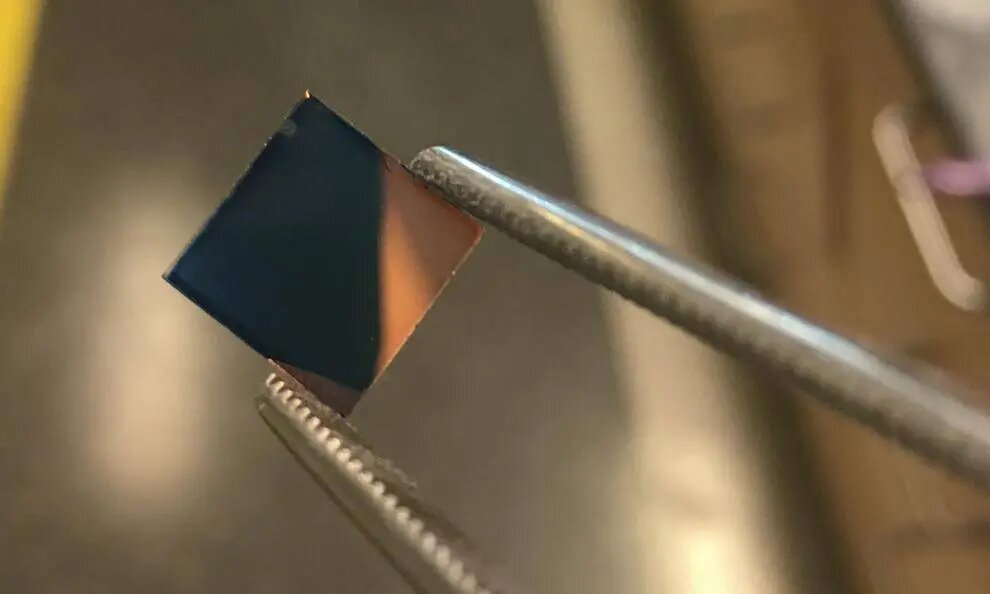
Gallery of close-up photos of scientists holding small things in their rubber-gloved fingers. I wish I could articulate my fascination with these pictures, something about the essence of discovery, the seed of wonder? It's close up so it's under enhanced scrutiny by the viewer. Maybe it's the difference between this little thing being a big deal, and yet being so tiny. What's the difference between a photograph of the Large Hadron Collider and a photograph of this "artificial fairy" above? You can hold it in your hands, and not just your hands, in between your fingers. And also it's being held, controlled, protected, by the very hands that made it. Maybe just because it's the scientists fingers, not their face or their lab coat or their million dollar petaflopping supercomputers,  but their fingers. The physical products of scientific endeavor, the pinnacle of human technology, being held by the most simple piece of "technology" on this Earth -- the human hand.  

Above image: Artificial fairy - Hao Zeng, Jianfeng Yang, Jianfeng Yang at Tampere University - 2023

Gnat Robot includes a 2 mg gyroscope, 3 mg microprocessor, and 1 mg visual optic flow sensor - Fuller, Yu & Talwekar U of Wash - 2022 [link]

Graphene device grown on a silicon carbide substrate chip - Jess Hunt-Ralston at Georgia Institute of Technology - 2022 [link]

Printable transparent plastic - James Ponder Georgia Tech - 2022 [link]

Recycling batteries - Chen Feng and Marilyn Sargent at Lawrence Berkeley National Laboratory - 2023 [link]

Electricity-generating laminate for ambient energy harvesting - University of Melbourne - 2023 [link]

Enzymatic recycling platform efficiently deconstructs raw PET plastic - Dennis Schroeder NREL - 2022 [link]

Emma Rothkopf 20 microliter sample at Brown University - 2023 [link]

Thermally resistant copper sandwich - Carnegie Mellon University College of Engineering - 2023 [link]

Smart bandage by Caltech - 2023 [link]

Prototype fuel cell wrapped in fleece - Fussenegger Lab at ETH Zurich - 2023 [link]

Covalent organic framework material - Gustavo Raskosky at Rice University - 2023 [link]


Wednesday, May 3, 2023

Reality Engines


All procedural generation of artificially intelligent content starts with a random number, which is like the seed from which all the rest grows, and that way each one can be different, and unique. But as our computers become more intelligent, that number isn't random enough. 

The problem is that randomness is not an absolute thing, and it's easily described by the law of large numbers -- Flip a coin 100 times and you have a 50% chance of it landing on heads (or 100% chance of 0.5 heads!), but flip it 1 trillion trillion times and it's no longer 50% but some different number caused by any variations in the system, like the printing on the respective faces of the coin adding extra weight to one side, or the flipping mechanism having its own pattern, or even errors in identifying, where one side is more commonly misidentified as the other -- After trillions of coin flips, other variables sneak in, and they take away the randomness. 

As our technology gets more sensitive and also more complex, it creates more spaces for these variables to sneak into the randomness. 

And we can't be each having non-random reality instantiations. That would be like two people having been given the same bank account number, but for their whole reality, and the multiple realities that we'll be living in all at the same time, soon enough. Imagine if your digital twin got mixed up with someone else's, and your automated medication regimen executed by ingestible programmable drug delivery nanobots changes in accordance with the other person's digital twin, but for your body, and now you're dead. 

That's not something we want to roll the dice with. 


Quantum random number generator sets benchmark for size, performance
Jul 2021, phys.org

via American Institute of Physics: "18.8 Gbps real-time quantum random number generator with a photonic integrated chip," Applied Physics Letters (2021). DOI: 10.1063/5.0056027


Researchers use tiny magnetic swirls to generate true random numbers
Feb 2022, phys.org

Brown University: Kang Wang et al, Single skyrmion true random number generator using local dynamics and interaction between skyrmions, Nature Communications (2022). DOI: 10.1038/s41467-022-28334-4


Using quantum fluctuations to generate random numbers faster
Apr 2023, phys.org

via Ghent University Interuniversity Microelectronics Center, Technical University of Denmark and Politecnico & Università di Bari: Cédric Bruynsteen et al, 100-Gbit/s Integrated Quantum Random Number Generator Based on Vacuum Fluctuations, PRX Quantum (2023). DOI: 10.1103/PRXQuantum.4.010330


Tuesday, May 2, 2023

More Moiré


At the confluence of twisted magic angle nanosandwiches and the much bigger news of the accidental Kuhning of the universe comes an unlikely character, the moiré lattice.

It's a grid, the two-dimensional piece of molecular paper epitomized as the graphene sheet, but it's two of them sandwiched on top of each other, and then turning one slightly so the grid no longer matches up. It's like the chain link fence that creates undulating optical illusions when layered with another fence; these two nanosheets do weird things to the field that exist between them. 

Moiré lattices are being used to create weird crystals, so they're a big part of optoelectronics because crystals manipulate lasers. And they're also providing a novel model of physical interaction that's unexpectedly mirrored in the fabric of spacetime, which might give us a very different idea about how the universe works. 


New quasiparticle discovered in moiré patterns
Nov 2022, phys.org

They found an exciton in there - an electrically neutral quasiparticle that can carry energy and consists of an electron and electron "hole" that can be created for example by light impinging certain semiconductors and other materials.

Coming soon -  "post-silicon nanoscale optoelectronic devices"

via University of Texas at Austin: Mit H. Naik et al, Intralayer charge-transfer moiré excitons in van der Waals superlattices, Nature (2022). DOI: 10.1038/s41586-022-04991-9


Moiré superlattices show superpower in photonics and optoelectronics
Mar 2023, phys.org

"The era of moiré photonics and optoelectronics is coming."

Moiré superlattices are artificial quantum materials formed by vertically stacking two or more two-dimensional (2D) layered materials with a slight lattice mismatch and/or a small rotational twist. They introduce a potential landscape of much larger length scale than the crystal periodicity of the constituent 2D layers, providing a novel paradigm for engineering band structures and hence a plethora of exotic quantum phenomena.

via Chinese Academy of Sciences:  Luojun Du et al, Moiré photonics and optoelectronics, Science (2023). DOI: 10.1126/science.adg0014.

See also:

Post Script:
New one for me - "Ab initio" calculations ("from the beginning) are computations of electronic orbitals with no other hypotheses than Coulomb interactions between all electrons and nuclei with electrons obeying Fermi statistics with the Pauli exclusion principle.

Or - the only inputs into an ab initio calculation are physical constants; Ab initio quantum chemistry methods attempt to solve the electronic Schrödinger equation given the positions of the nuclei and the number of electrons [wiki]

Here's some examples:
Artist Frank Michielli does some cool fence-art


Engineering Everything


Engineered nanoparticles could help store excess carbon dioxide in the ocean
Nov 2022, phys.org

Hochella and his colleagues examined the scientific evidence for seeding the oceans with iron-rich engineered fertilizer particles near ocean plankton, encouraging phytoplankton to act as a carbon sink.

Researchers' analysis of 123 published studies showed that numerous non-toxic metal-oxygen materials could safely enhance plankton growth.

via Department of Energy's Pacific Northwest National Laboratory: Peyman Babakhani et al, Potential use of engineered nanoparticles in ocean fertilization for large-scale atmospheric carbon dioxide removal, Nature Nanotechnology (2022). DOI: 10.1038/s41565-022-01226-w


Cocaine synthesized in a tobacco plant
Nov 2022, phys.org

Cocaine that winds up in its leaves is not produced by elements in the plant converting 4-(1-methyl-2-pyrrolidinyl)-3-oxobutanoic acid to hyoscyamine, as has been thought. They found that it is instead produced by the two enzymes, EnMT4 and EnCYP81AN15.

To prove their discovery, the group genetically engineered a tobacco plant to produce the two enzymes in its leaves, which resulted in the production of small amounts of cocaine 

The team also notes that the amount of cocaine produced by the tobacco plant was far too low for use on an industrial scale; thus, their work will continue. Not mentioned in the paper is the possibility of synthesizing the two enzymes produced by both the coca and engineered tobacco plant as a more direct way to synthesize cocaine.

via Chinese Academy of Sciences: Yong-Jiang Wang et al, Discovery and Engineering of the Cocaine Biosynthetic Pathway, Journal of the American Chemical Society (2022). DOI: 10.1021/jacs.2c09091


Monday, May 1, 2023

The Photonic Phreakout


Optical this and photon that, opto-genetics, opto-electronics, opto-dildonics. Optical quantum computers made of crystals and light, the fastest computers you can imagine, tuned lasers that can bleep your brain through your retina and treat depression, and optical tractor beams, that's right, aka quantum tweezers.

This is not to detract from the renewed interest in the fundamental nature of time, by way of "time crystals", and of something I will call time lasers, because where there's crystals there's lasers, but that idea hasn't been discovered yet. 


Laser attack blinds autonomous vehicles, deleting pedestrians and confusing cars
Oct 2022, phys.org

Expertly timed lasers shined at an approaching lidar system can create a blind spot in front of the vehicle large enough to completely hide moving pedestrians and other obstacles

via University of Florida, the University of Michigan and the University of Electro-Communications in Japan: Yulong Cao et al, You Can't See Me: Physical Removal Attacks on LiDAR-based Autonomous Vehicles Driving Frameworks, arXiv (2022). DOI: 10.48550/arxiv.2210.09482.

 
Researchers create an optical tractor beam that pulls macroscopic objects
Jan 2023, phys.org

Optical manipulation such as levitation and rotation: Optical tweezers, for example, are commonly used scientific instruments that use laser light to hold and manipulate tiny objects such as atoms or cells. We could also use laser light to create an optical tractor beam.

via QingDao University of Science and Technology in China: Lei Wang et al, Macroscopic laser pulling based on the Knudsen force in rarefied gas, Optics Express (2022). DOI: 10.1364/OE.480019


Deep learning-designed diffractive processor computes hundreds of transformations in parallel
Jan 2023, phys.org

Optical computers use light instead of electricity to perform computations, and now they can make massively parallel, wavelength-multiplexed diffractive processors.

via SPIE International Society for Optics and Photonics and UCLA: Jingxi Li et al, Massively parallel universal linear transformations using a wavelength-multiplexed diffractive optical network, Advanced Photonics (2023). DOI: 10.1117/1.AP.5.1.016003

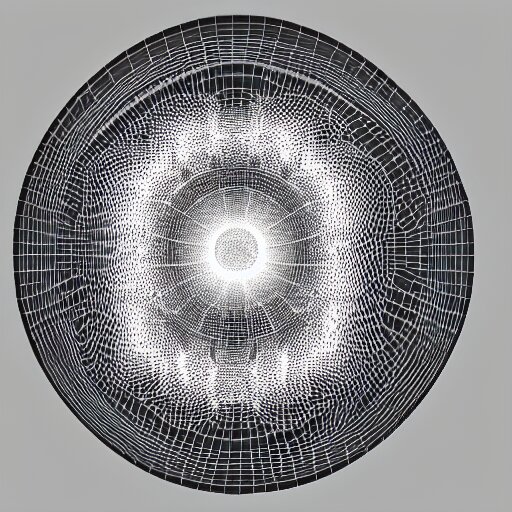
AI Art - Cymatics - 2022

A new type of photonic time crystal gives light a boost
Apr 2023, phys.org

While some physicists were initially skeptical that time crystals could exist, recent experiments have succeeding in creating them.

"We found that reducing the dimensionality from a 3D to a 2D structure made the implementation significantly easier, ..."

via Aalto University, Karlsruhe Institute of Technology, and Stanford University: Xuchen Wang et al, Metasurface-Based Realization of Photonic Time Crystals, Science Advances (2023). DOI: 10.1126/sciadv.adg7541.


Optical switching at record speeds opens door for ultrafast, light-based electronics and computers
Mar 2023, phys.org

Imagine a home computer operating 1 million times faster than the most expensive hardware on the market. Light-based optical computing with optical transistors is a marked improvement from the semiconductor-based transistors that currently run the world.

Data transfer speeds exceeding a petahertz, measured at the attosecond time scale.

via University of Arizona: Dandan Hui et al, Ultrafast optical switching and data encoding on synthesized light fields, Science Advances (2023). DOI: 10.1126/sciadv.adf1015


Recreating the double-slit experiment that proved the wave nature of light in time, instead of space
Apr 2023, phys.org

Now, a team led by Imperial College London physicists has performed the experiment using "slits" in time rather than space. They achieved this by firing light through a material that changes its properties in femtoseconds (quadrillionths of a second), only allowing light to pass through at specific times in quick succession.

The team next want to explore the phenomenon in a "time crystal," which is analogous to an atomic crystal, but where the optical properties vary in time.

Co-author Professor Stefan Maier said, "The concept of time crystals has the potential to lead to ultrafast, parallelized optical switches."

via Imperial College London: Romain Tirole et al, Double-slit time diffraction at optical frequencies, Nature Physics (2023). DOI: 10.1038/s41567-023-01993-w. 

Light shaped into a twisted smoke ring - Y Shen and Z Zhu at SPIE King's College - 2023

Post Script:
Topology also plays a big part in the coming light hype cycle -- you might know topology as Gödel, Escher, Bach's Eternal Golden Braid, but it also has a strong link to the hyperbolic geometries of hallucinogenic hero doses. They make quantum computers work better, so we're trying to tie light into knots to make mega-sentient intelligentities, faster.

Photonic hopfions: Light shaped as a smoke ring that behaves like a particle
Jan 2023, phys.org

Topology, hyperbolic geometry, toroids, skyrmions, and now -- new, very unusual, structured-light family of 3D topological solitons, the photonic hopfions, where the topological textures and topological numbers can be freely and independently tuned. 

via SPIE International Society for Optics and Photonics, University of Southampton, and King's College London: Yijie Shen et al, Topological transformation and free-space transport of photonic hopfions, Advanced Photonics (2023). DOI: 10.1117/1.AP.5.1.015001